Trommelaar, vaandeldrager en fluitist — History & Analysis
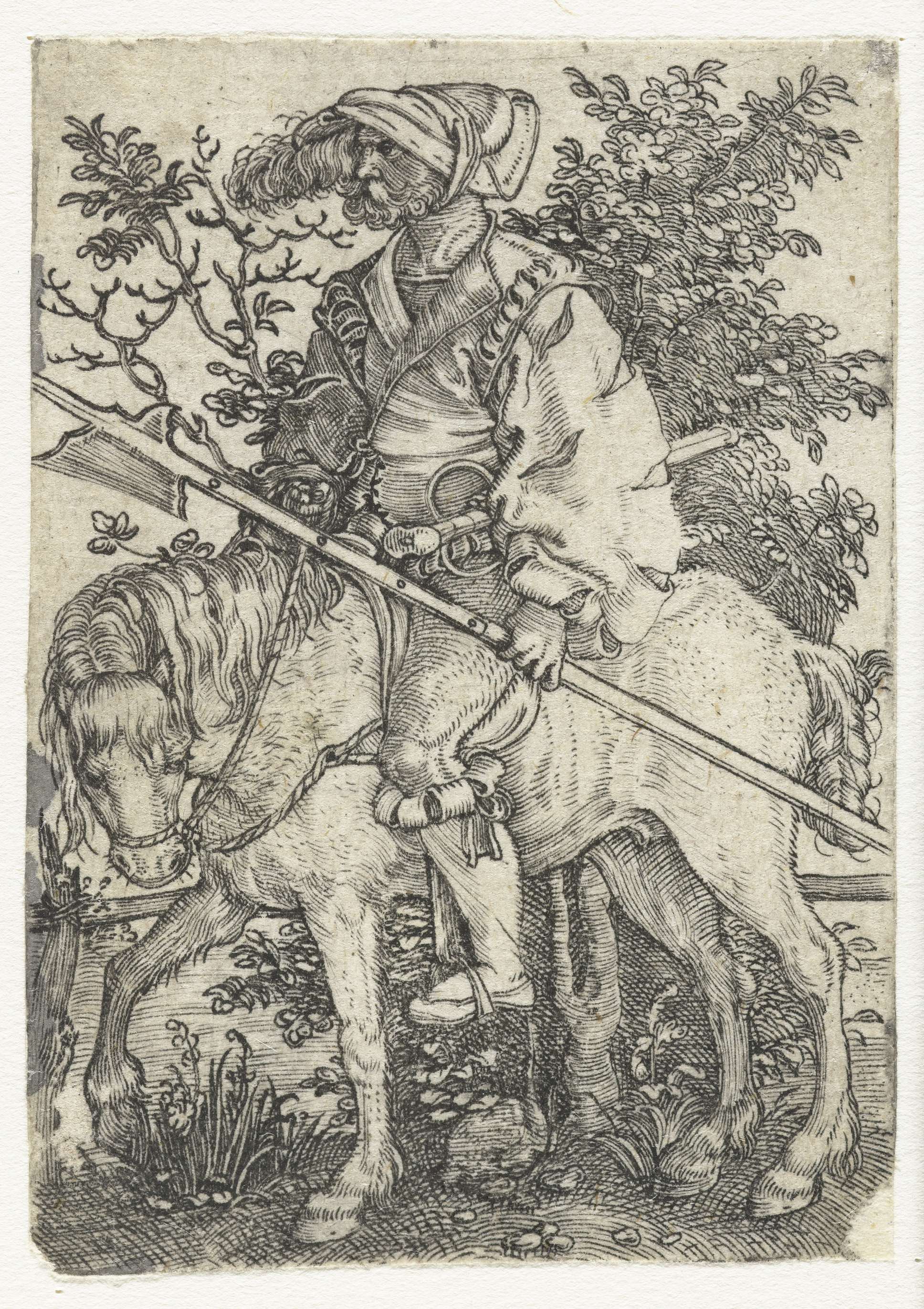
“Art reveals the soul when the world turns away.” In moments of grief, it is the artist’s brush that whispers the unspoken truths of the heart, capturing the fragility of existence. Look to the left, where a solitary drummer stands, his gaze fixed yet distant. The intricate detail of his uniform, with its ornate embellishments, contrasts sharply with the somber expression on his face. Notice how the muted earth tones envelop the figures, while the vibrant blue of the flag flutters defiantly above.
Each stroke brings to life a narrative of camaraderie and loss, invoking the viewer to ponder the deeper significance of their solemn duty. In the delicate interplay between light and shadow, one senses the weight of unexpressed emotions. The flutist's posture suggests a fleeting moment of pause, as if the music itself carries the burden of memories. Together, these figures resonate with the tension between valor and vulnerability, reminding us that even in a celebration, grief lingers in the background, uninvited yet undeniable.
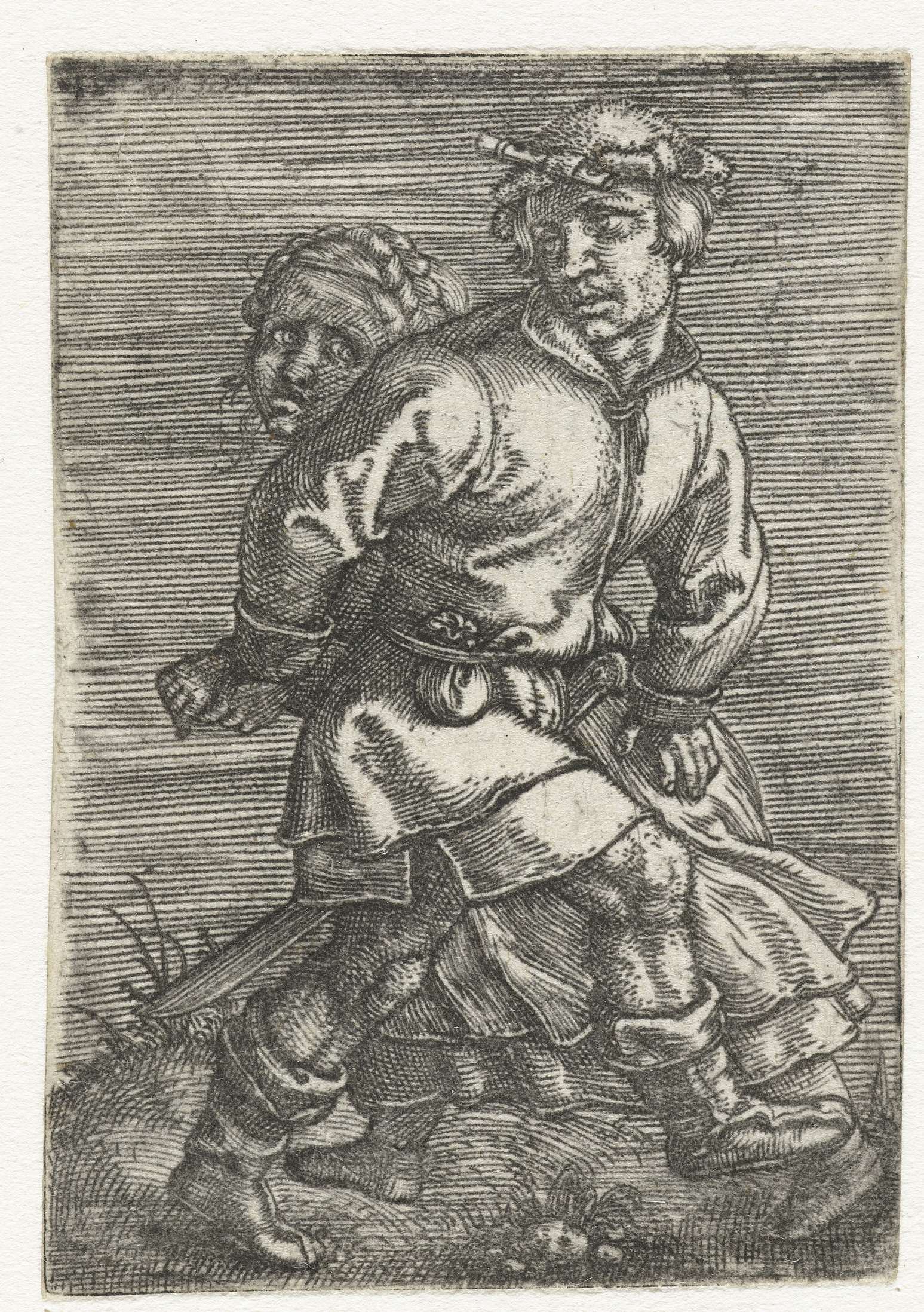
The harmony of their arrangement speaks to unity, but a subtle discord hints at their shared sorrow. In 1525, Barthel Beham painted this piece during a time of great upheaval in Europe. The Reformation was underway, challenging traditional beliefs and societal norms. As he navigated the pressures of creator and chronicler, his work reflected not only the artistic currents of the day but also the profound emotional landscape shaped by personal and communal grief.