Turkish Women At A Shrine — History & Analysis
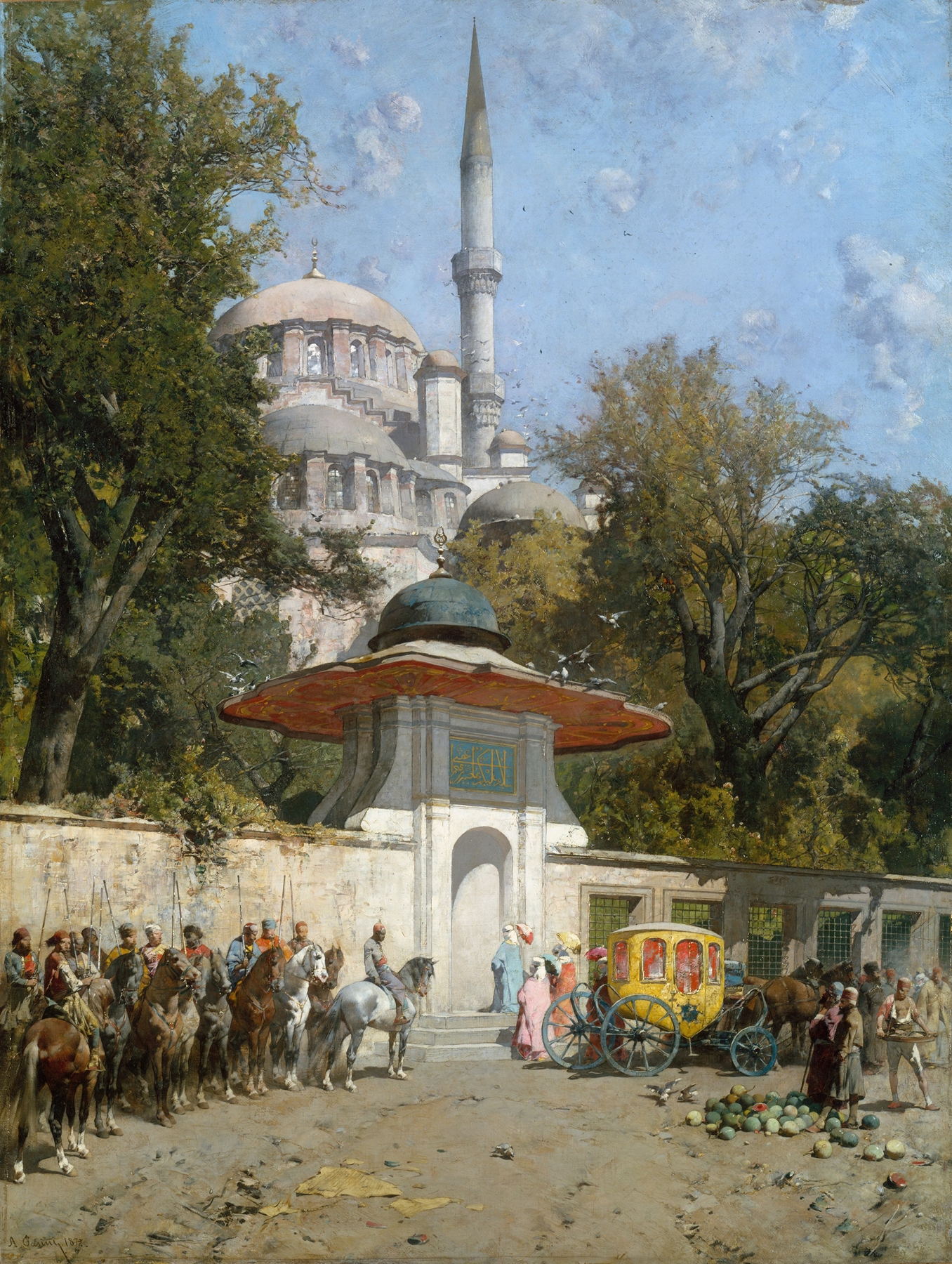
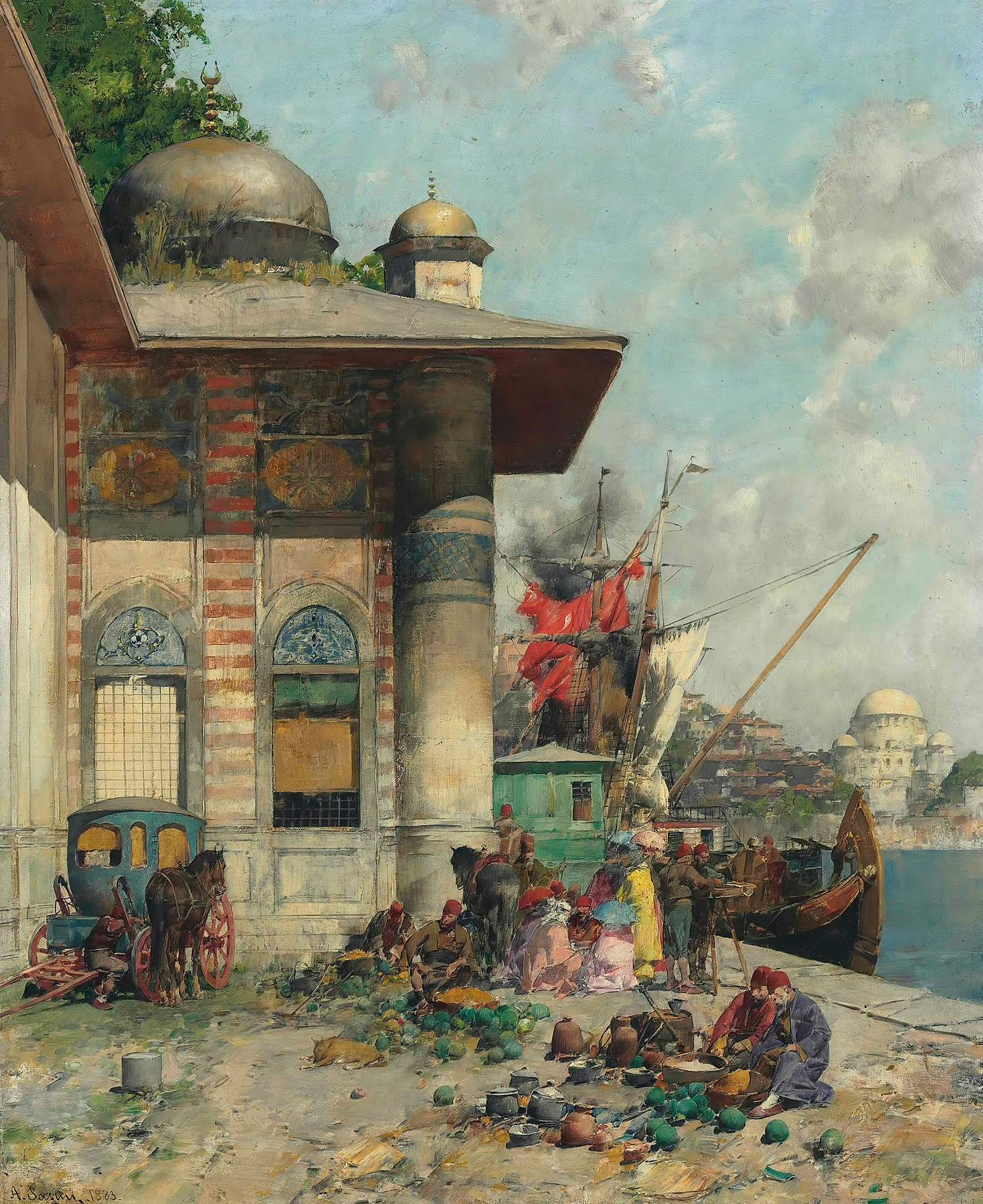
“Art reveals the soul when the world turns away.” In the stillness of observation, silence becomes a powerful conduit for emotion and introspection. Look to the center of the canvas, where the figures of the women gather, their heads adorned with delicate headscarves. The soft, muted palette of earth tones envelops them, creating a sense of unity and calm. Notice how the light subtly illuminates their faces, casting gentle shadows that evoke a sense of reverence.
Each woman's posture, whether leaning forward in contemplation or standing with a dignified grace, invites you to pause and ponder their shared experience. Beneath the quiet exterior, the painting speaks to the contrast between the sacred space of the shrine and the everyday lives of the women. Their expressions reveal a depth of emotion — perhaps devotion, loss, or the weight of tradition. The intricate details of their garments draw attention to cultural identity, while the empty space surrounding them hints at isolation and the unseen struggles they face.
In this moment, silence transcends mere absence of sound; it is an invitation to reflect on the intersection of faith, femininity, and societal expectations. In 1871, amid the sweeping changes of the art world, the artist found himself in Italy, deeply influenced by his travels in the East. During this period, he was exploring themes of cultural identity and the role of women in society. Turkish Women At A Shrine reflects not only his fascination with Eastern cultures but also the growing interest in Orientalism as an artistic movement, capturing a moment of profound significance during a time of personal and artistic evolution.