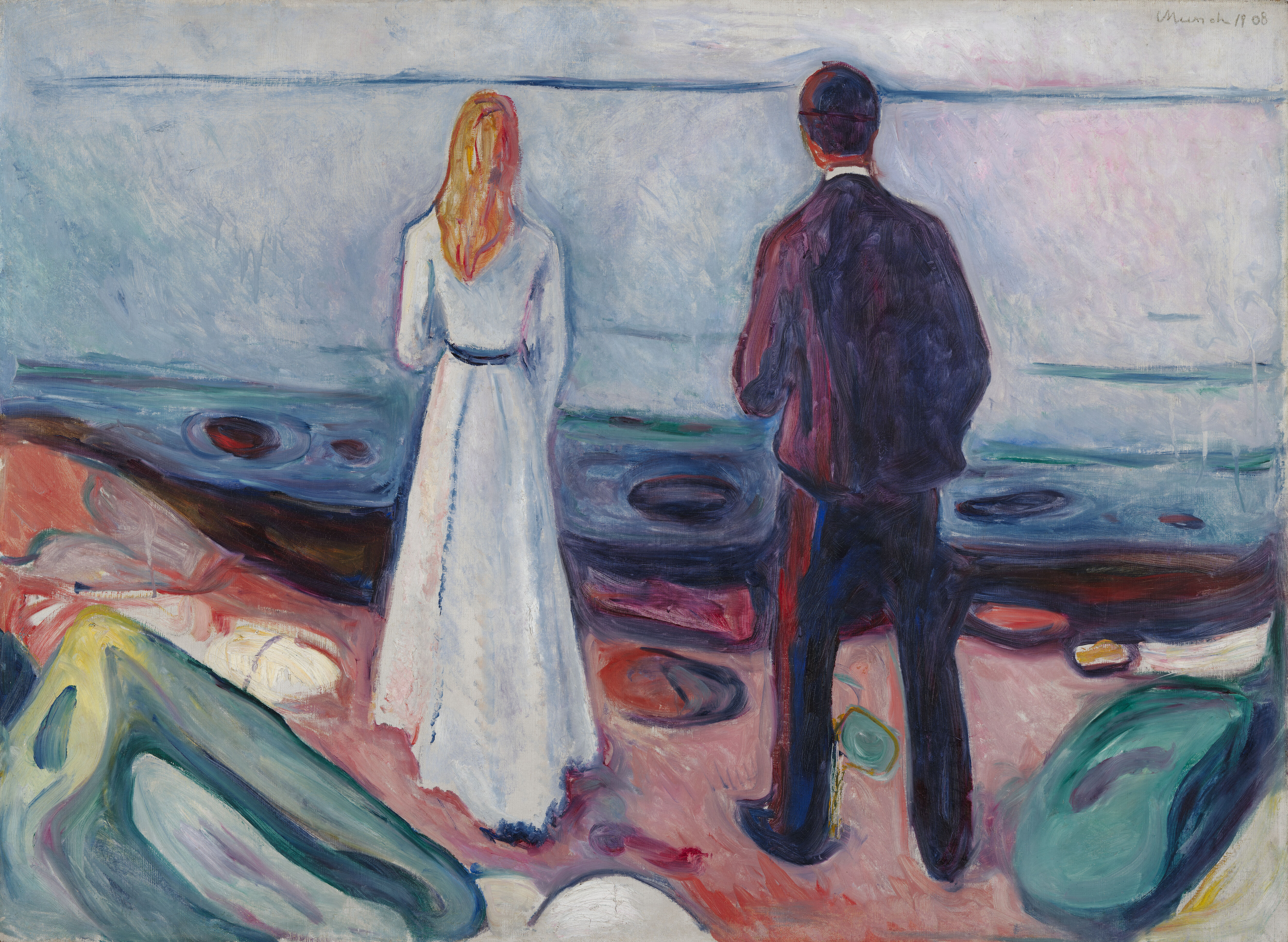
Can beauty exist without sorrow? In Edvard Munch's *Two Human Beings (The Lonely Ones)*, a haunting exploration of isolation unfolds, forcing us to confront the depths of human emotion intertwined with the complexities of connection and betrayal. Look closely at the two figures on the canvas; they occupy opposite sides, their bodies poised rigidly as if entangled in unspoken tension. The muted palette, dominated by somber greens and browns, amplifies the sense of melancholy enveloping them. Notice how the figures’ downturned faces and stiff postures create an emotional chasm, suggesting a profound distance despite their proximity. The deliberate brush strokes echo the turmoil within, as if the very air around them vibrates with unresolved feelings. In this artwork, Munch encapsulates the paradox of intimacy marred by betrayal. The absence of eye contact speaks volumes; it signifies a rupture in their connection, suggesting memories of shared joy now shadowed by disillusionment. Each figure seems trapped in their own world, reflecting the duality of love and loneliness. The starkness of their silhouettes against an amorphous background reinforces the idea that beauty can be tinged with pain, leading us to question the nature of human relationships. Between 1906 and 1908, Munch painted this piece during a period of personal turmoil, grappling with his own experiences of love and loss. Living in Norway at the time, he was navigating the complexities of modern art, influenced by Symbolism and Impressionism. The world around him was shifting, mirroring the emotional struggles depicted in his work, as he sought to capture the raw essence of human existence.