Une Conversation Aux Bords Du Nil — History & Analysis
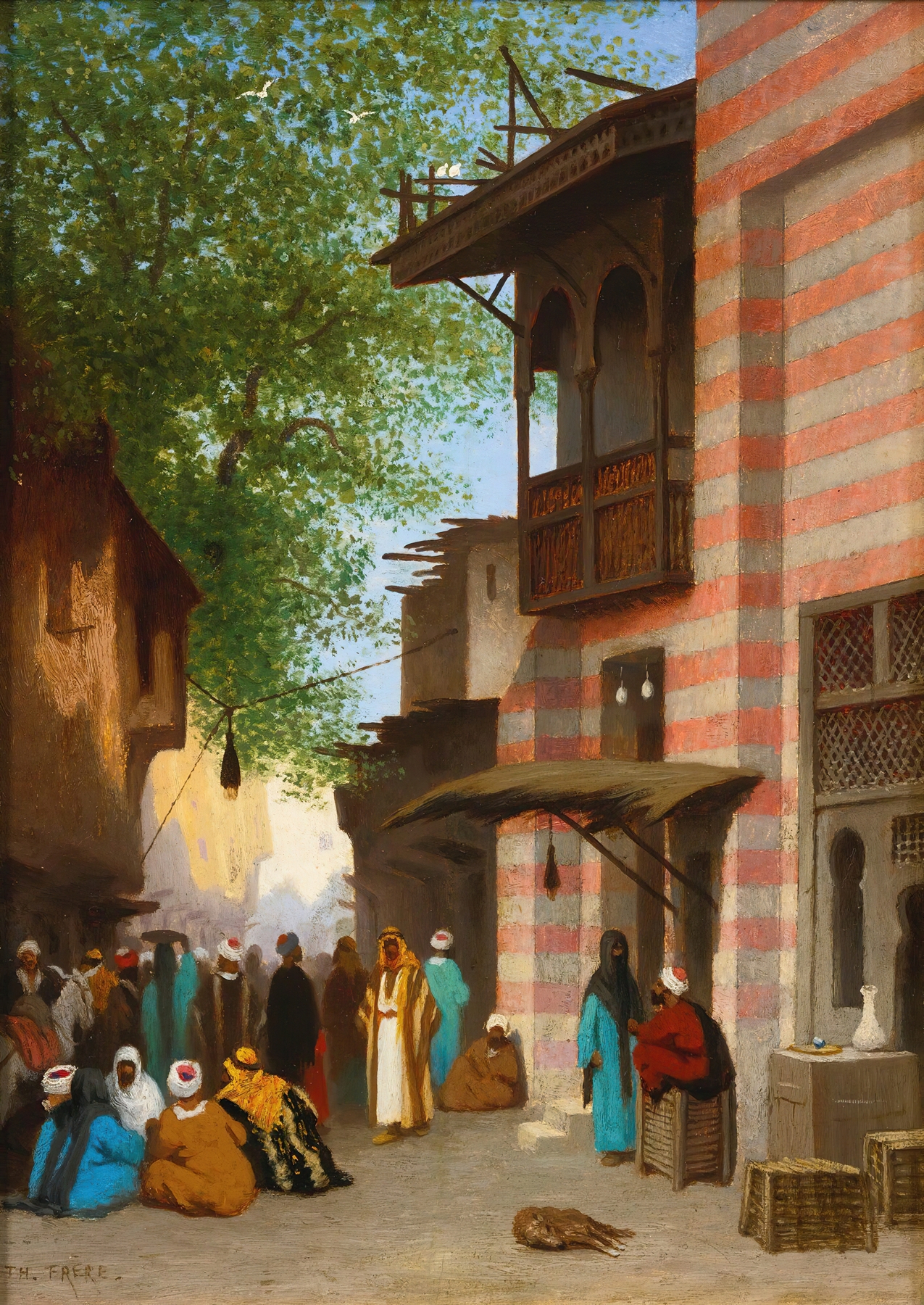
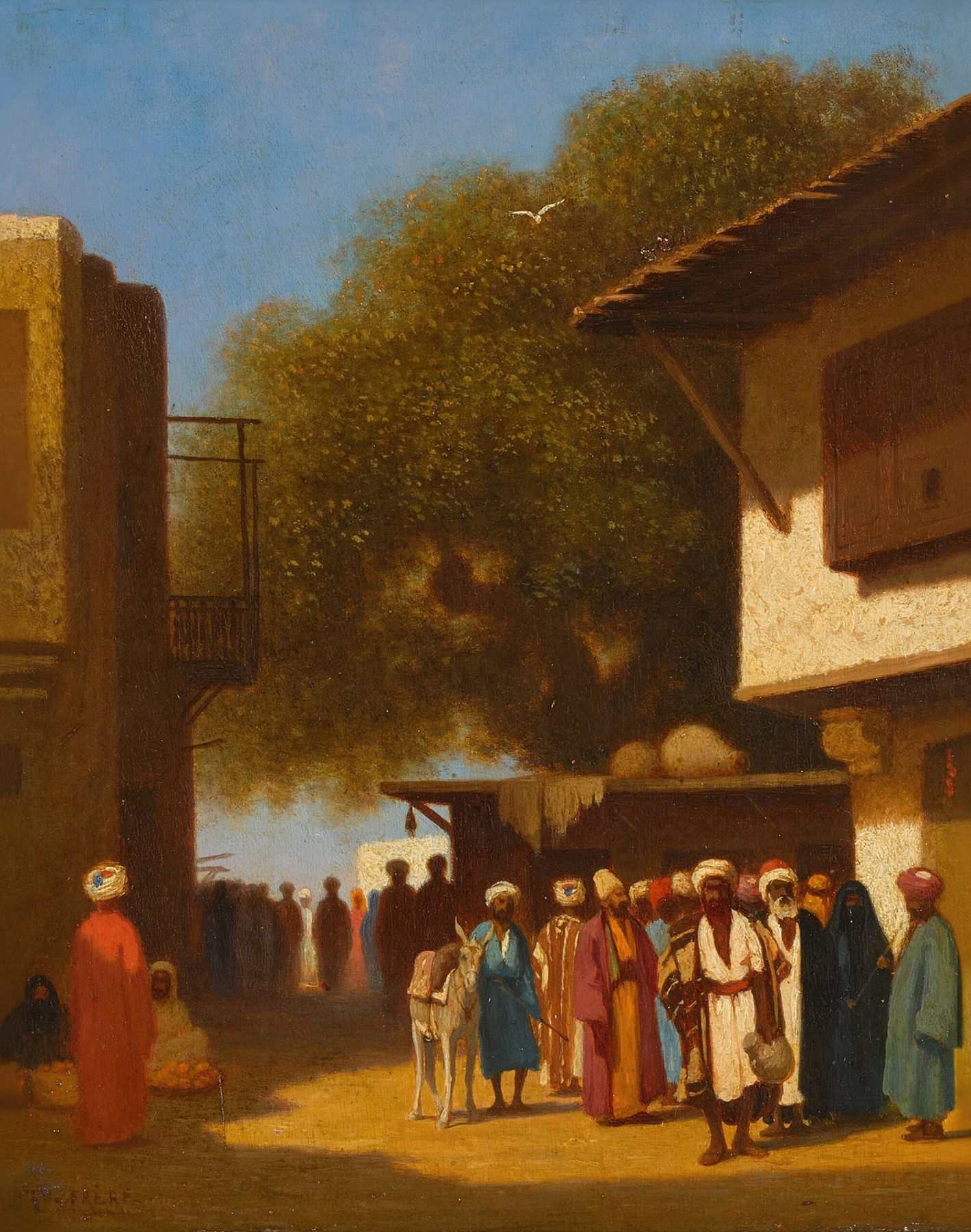
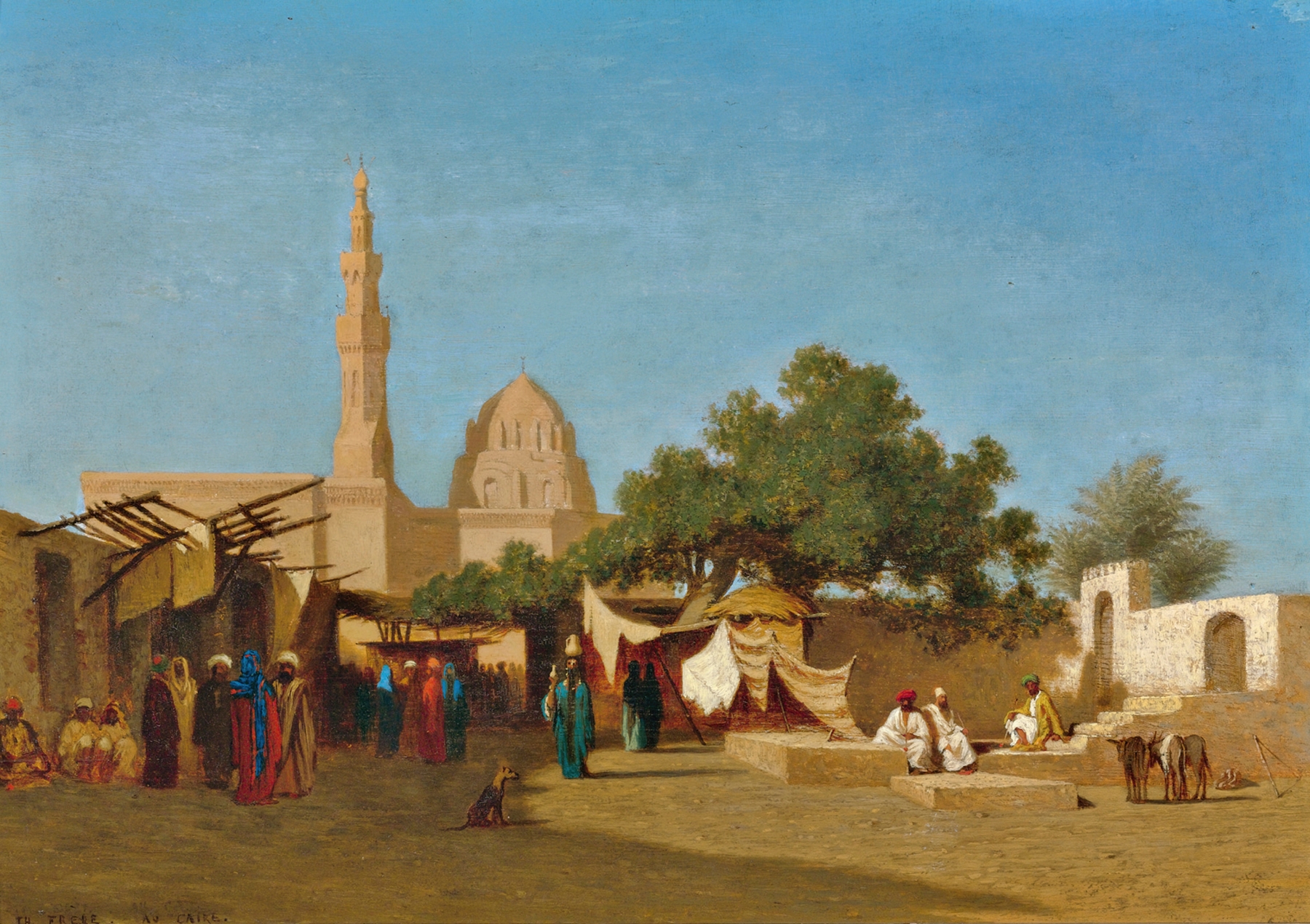
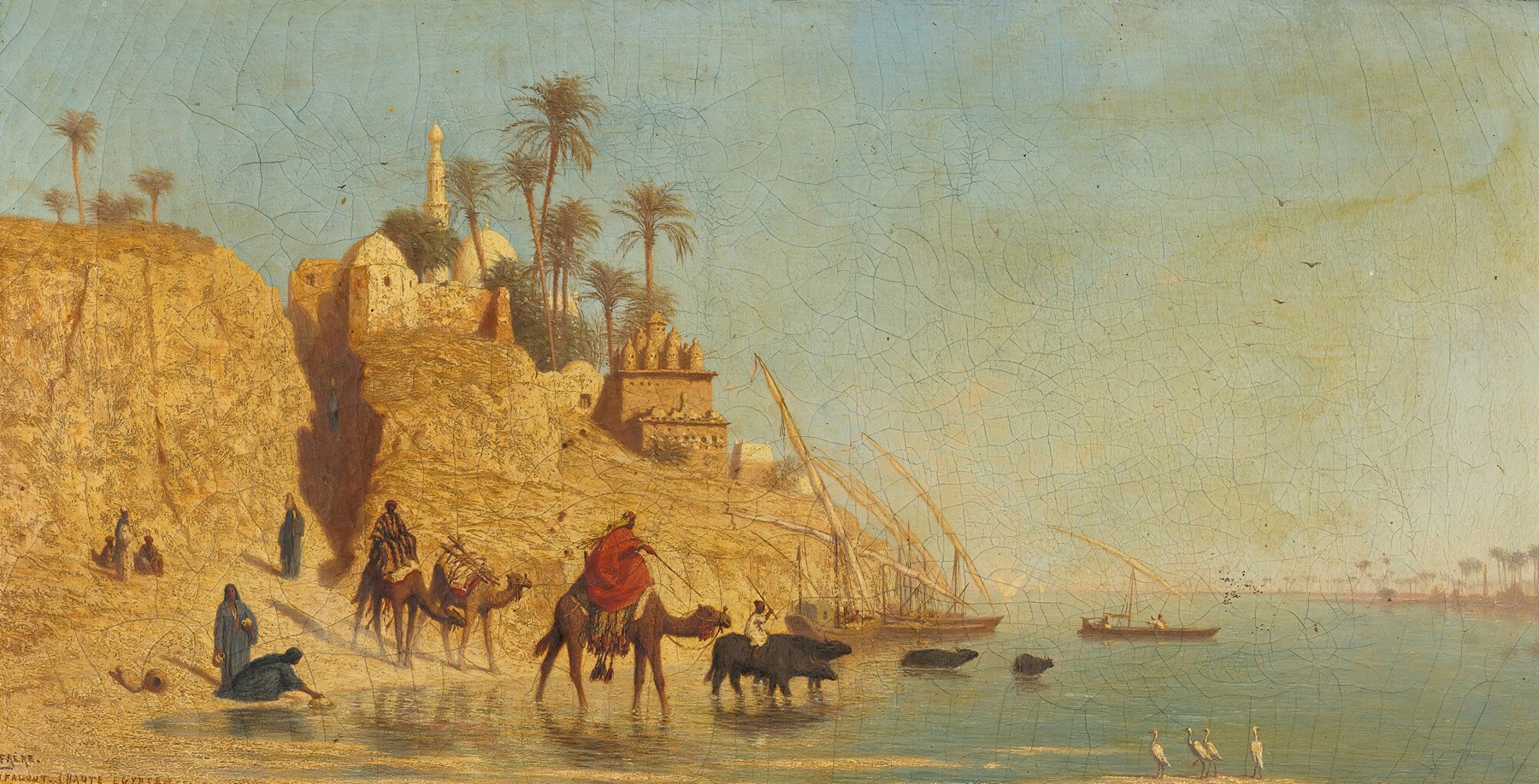
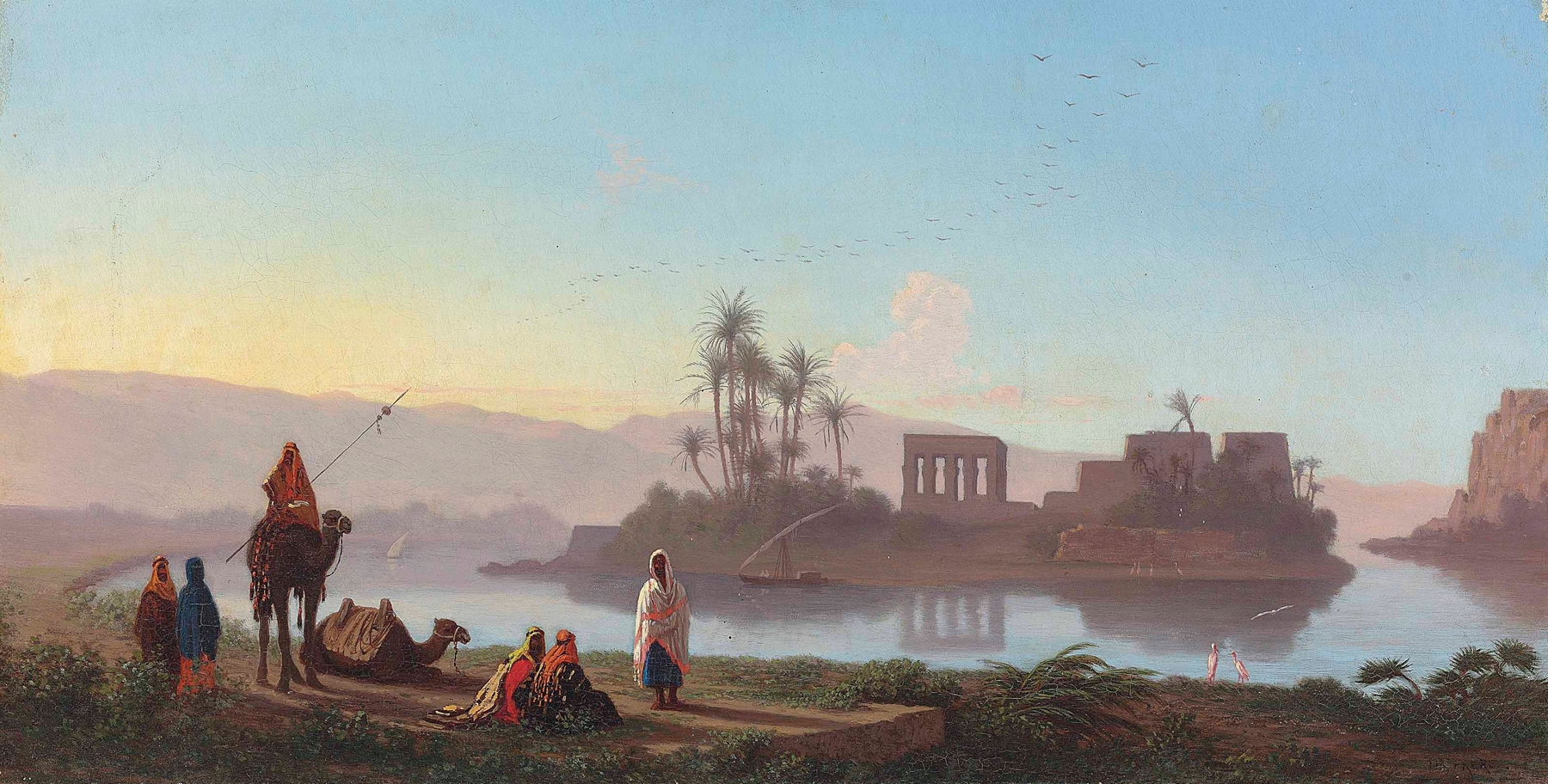
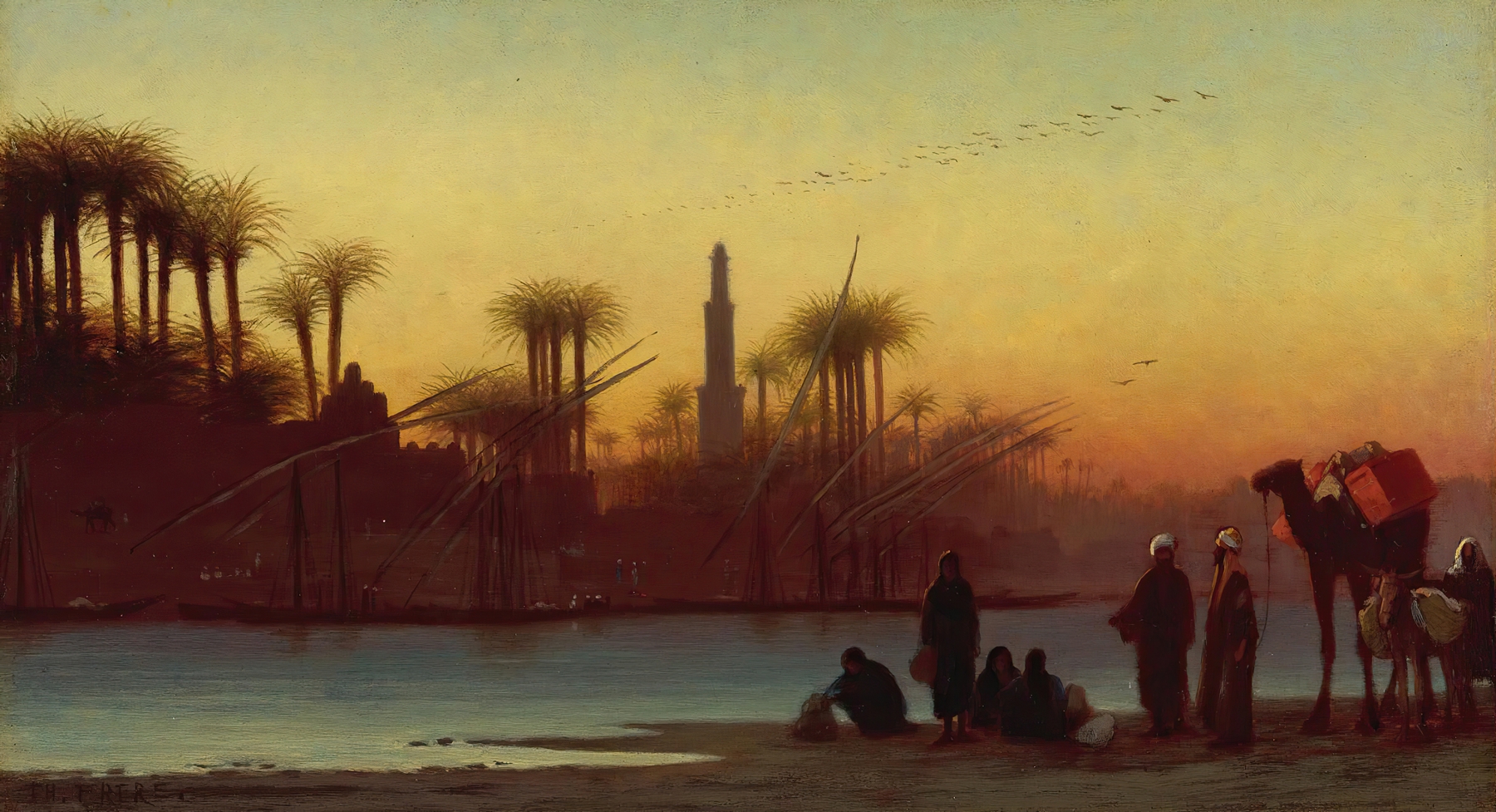
“Sometimes beauty is just pain, disguised in gold.” Memory, like a shimmering mirage, lingers at the fringes of our consciousness, evoking both warmth and longing. Look to the center of the canvas where two figures engage in conversation beneath the sprawling boughs of a tree. The soft, golden hues of sunlight bathe the scene, creating a tranquil atmosphere that invites intimacy. To the left, the glimmering waters of the Nile reflect the sky, drawing the eye with its gentle ripples.
Notice how the light dances upon the figures’ garments, illuminating rich textures that speak to their status and the culture surrounding them. Within this seemingly serene exchange lies a tension — the weight of unspoken words suspended in the air. The juxtaposition of the lush landscape with the subtle expressions on the figures’ faces hints at deeper narratives. Are they discussing love or loss?
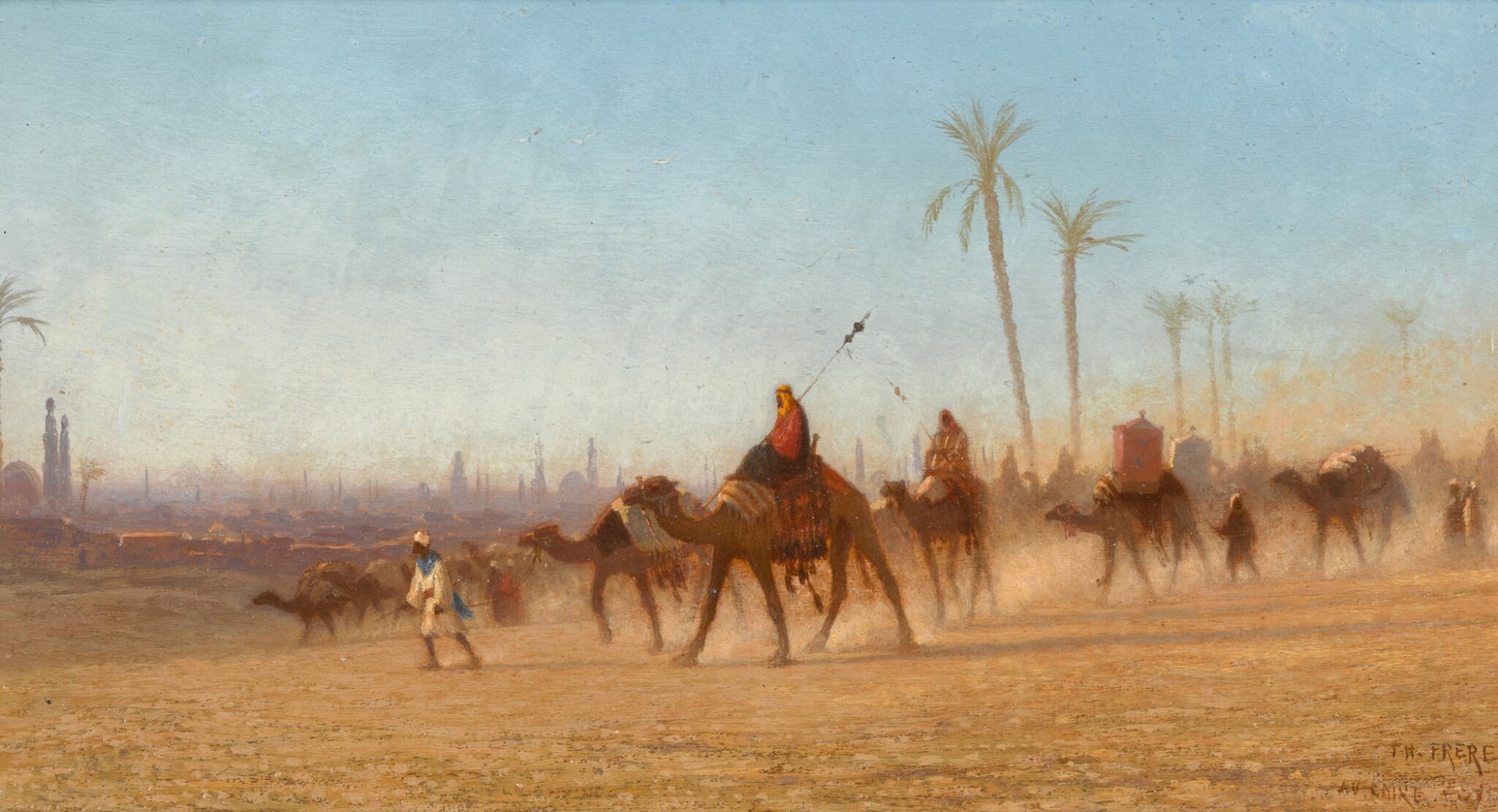
The warm colors evoke a sense of nostalgia, while the flowing lines suggest the passage of time, encapsulating both the beauty and fragility of human connection. During the period when this work was created, Charles Théodore Frère was immersed in the rich cultural tapestry of 19th-century France. Known for his Orientalist themes, he sought to capture the essence of distant lands while reflecting on modernity's impact on traditional life. The artist often traveled to North Africa, drawing inspiration from the landscapes and people he encountered, a juxtaposition that shaped his artistic vision during this dynamic era in the art world.