Vaandeldrager te paard met voetknecht — History & Analysis
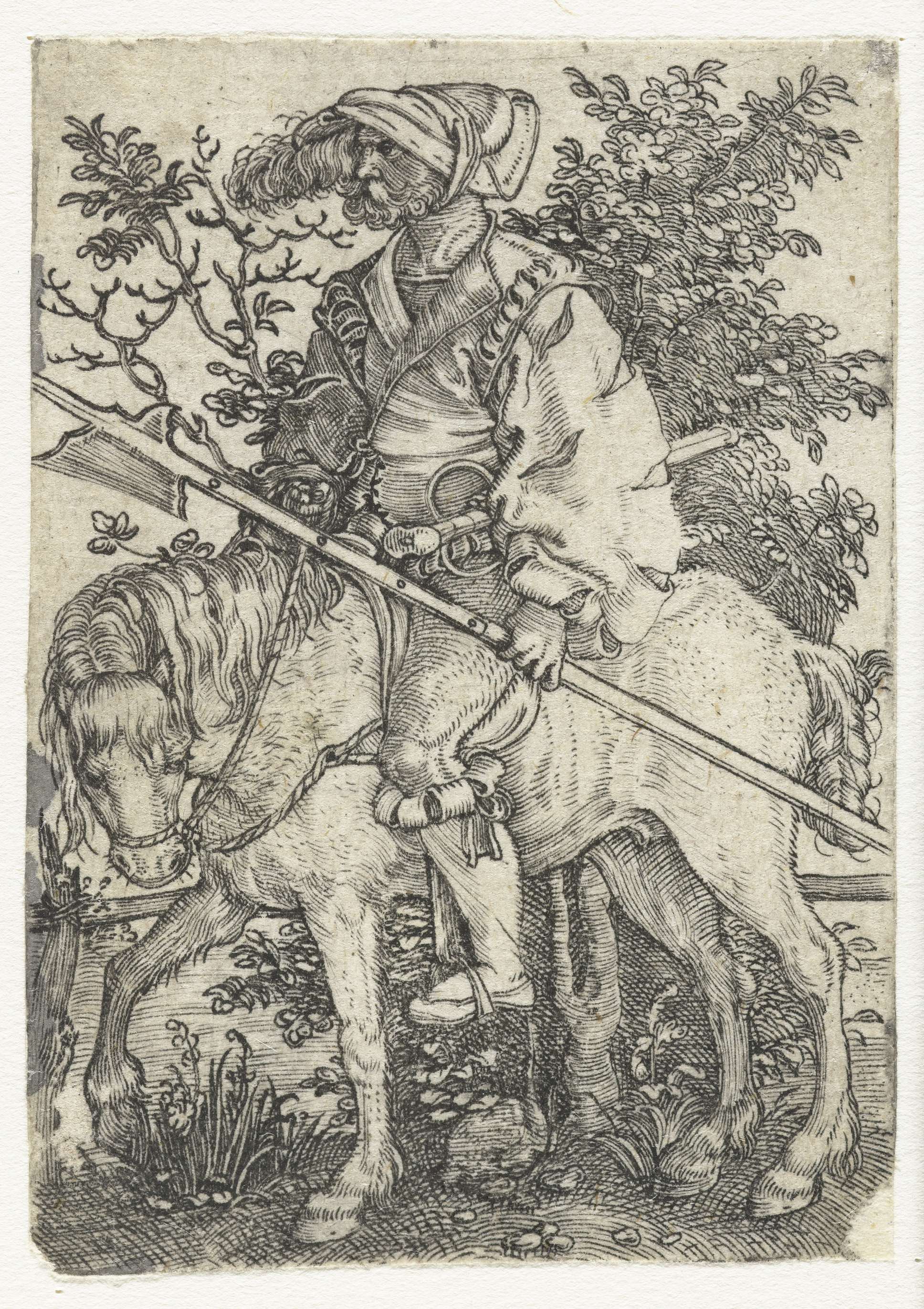
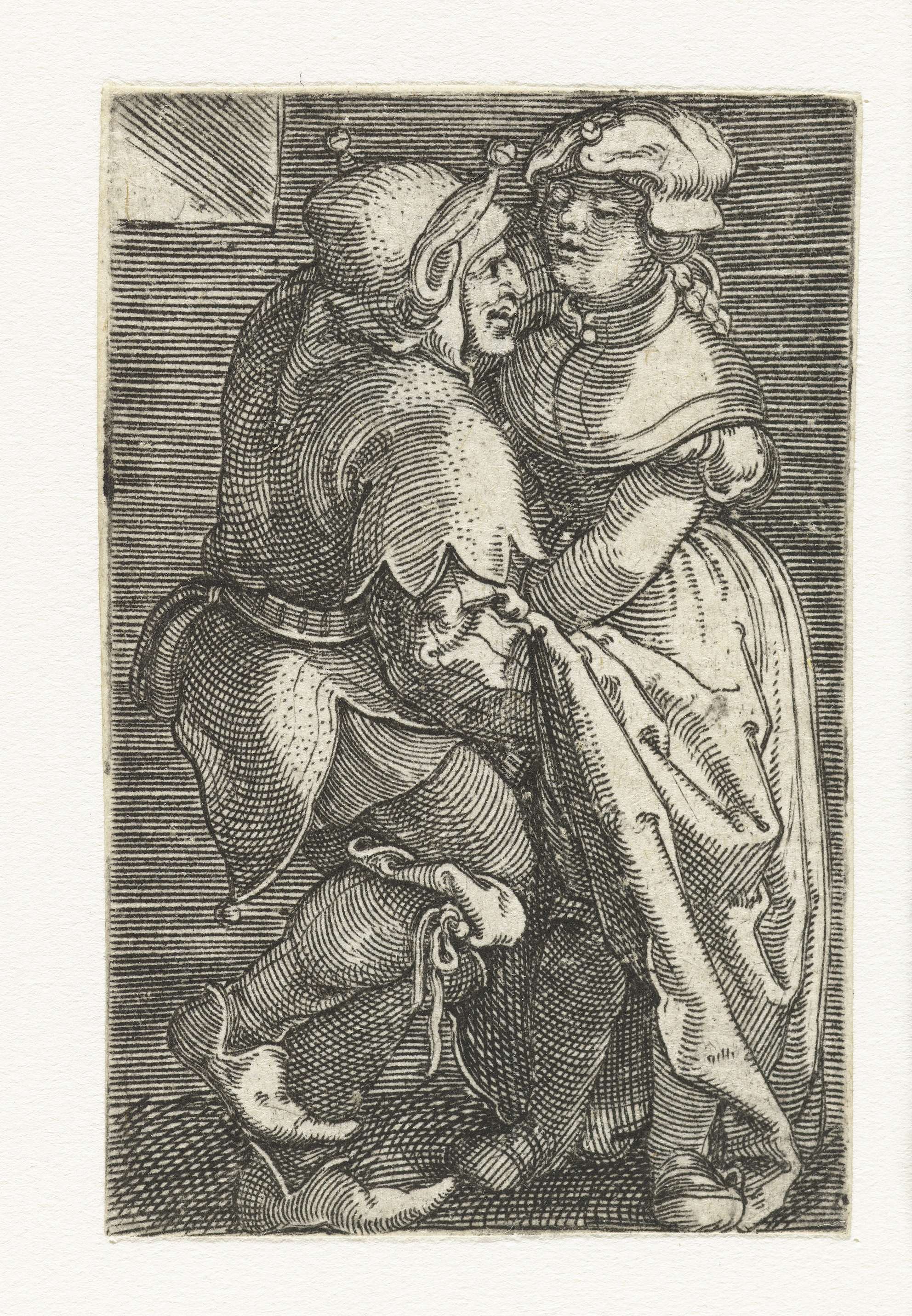
“Art reveals the soul when the world turns away.” In the stillness of a canvas, madness finds its expression, whispering secrets that only the eye can decipher. Amidst the chaos of life, Barthel Beham captures a moment that transcends mere appearance, inviting viewers to delve into the depths of human emotion. Look closely at the central figure on horseback, an imposing presence exuding both authority and vulnerability. The figure’s elaborate armor catches the light, shimmering with artistry that contrasts sharply against the muted tones of the background.
Notice the footman, slightly obscured but integral, whose gaze and posture suggest a hidden narrative of loyalty or perhaps trepidation. The composition draws the eye upward, creating a dynamic tension that dances between the two figures, underscored by a stark, atmospheric sky that looms overhead. As the narrative unfolds, one can sense the intricate layers of meaning embedded in every stroke. The contrast between the richly adorned knight and his plain attendant speaks of societal hierarchies, yet also hints at the madness of ambition and the burdens of servitude.
The tension in their relationship, poised between reverence and restraint, echoes the broader human condition — a reflection of how power often dances hand-in-hand with madness, an ever-present specter lurking beneath the surface. In 1521, Beham painted this piece during a period marked by intense personal and artistic evolution. Residing in Nuremberg, he grappled with the challenges of emerging Renaissance ideals while navigating the complexities of his own life, including the tumultuous socio-political landscape of the Holy Roman Empire. This work resonates with the tensions of its time, encapsulating a moment where individual expression clashed with the collective madness of the era.