Venice under sunset — History & Analysis
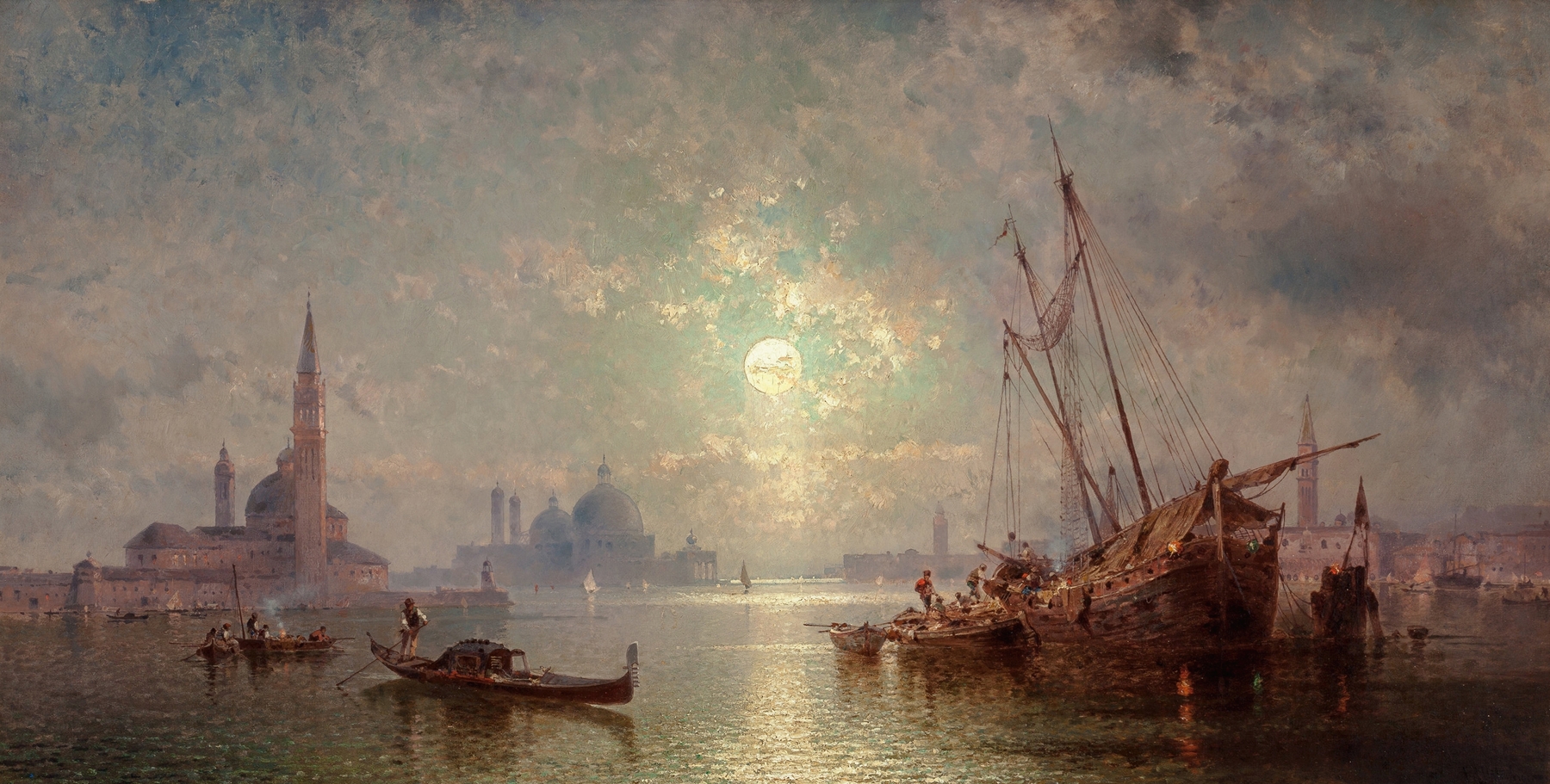
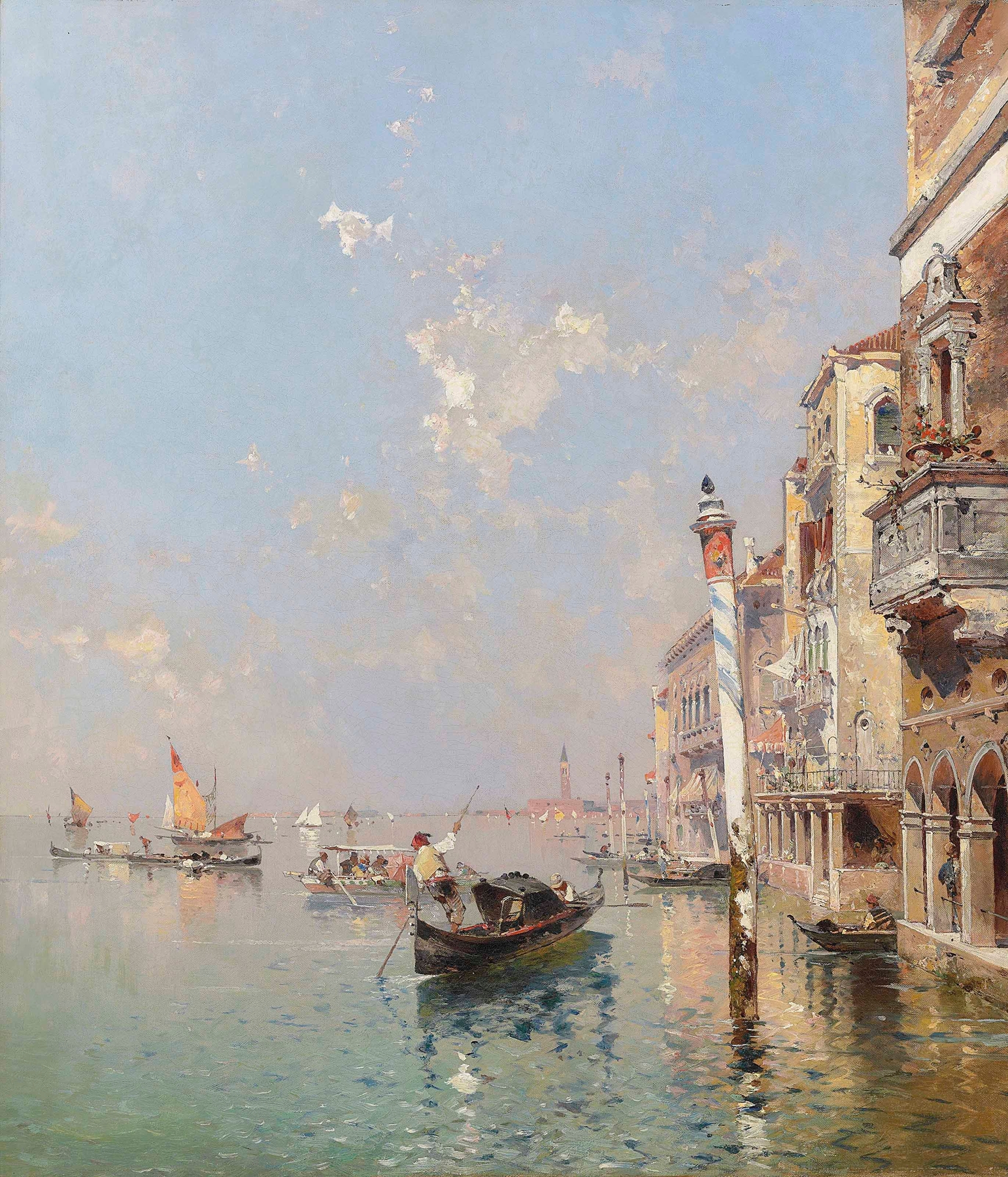
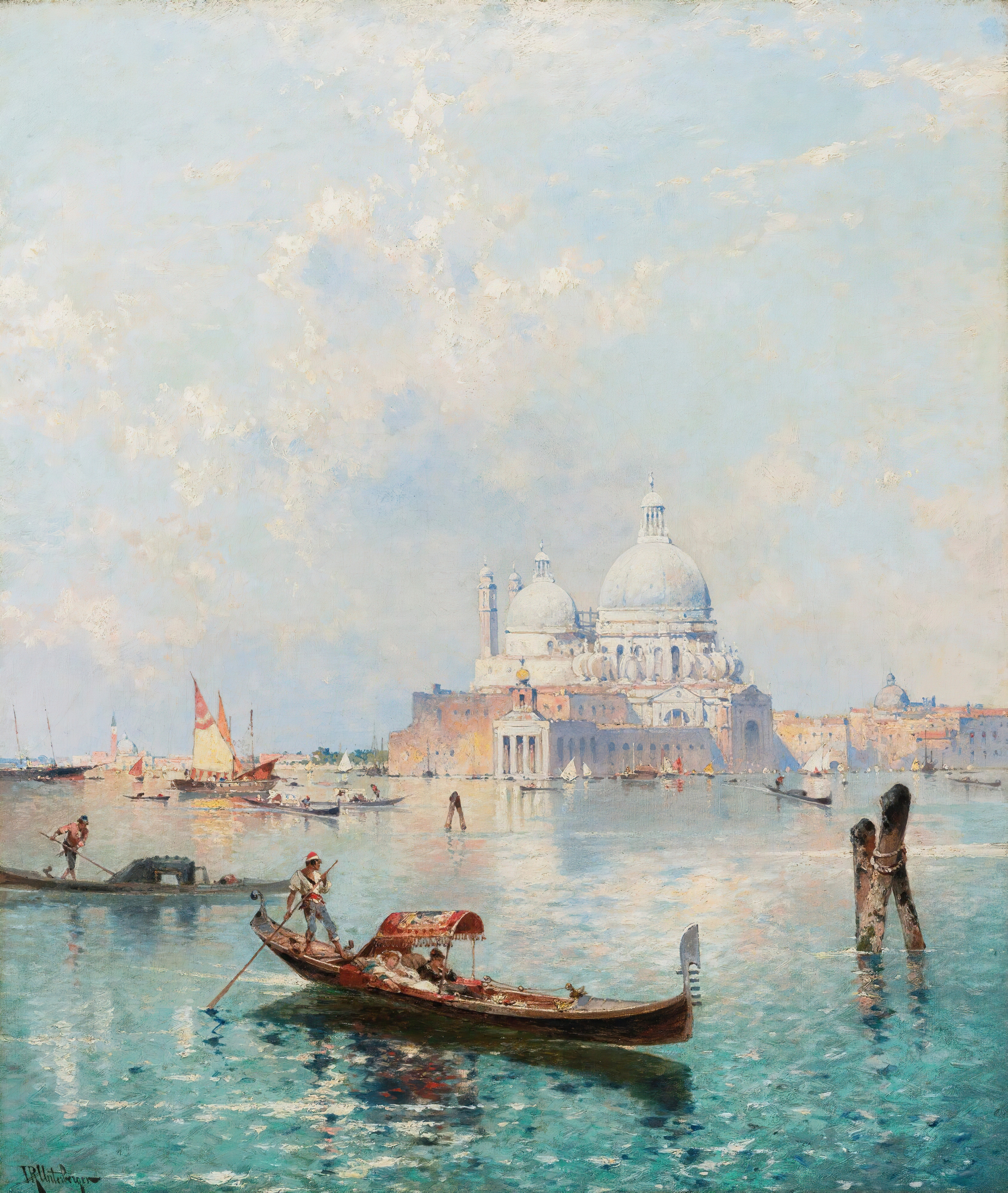
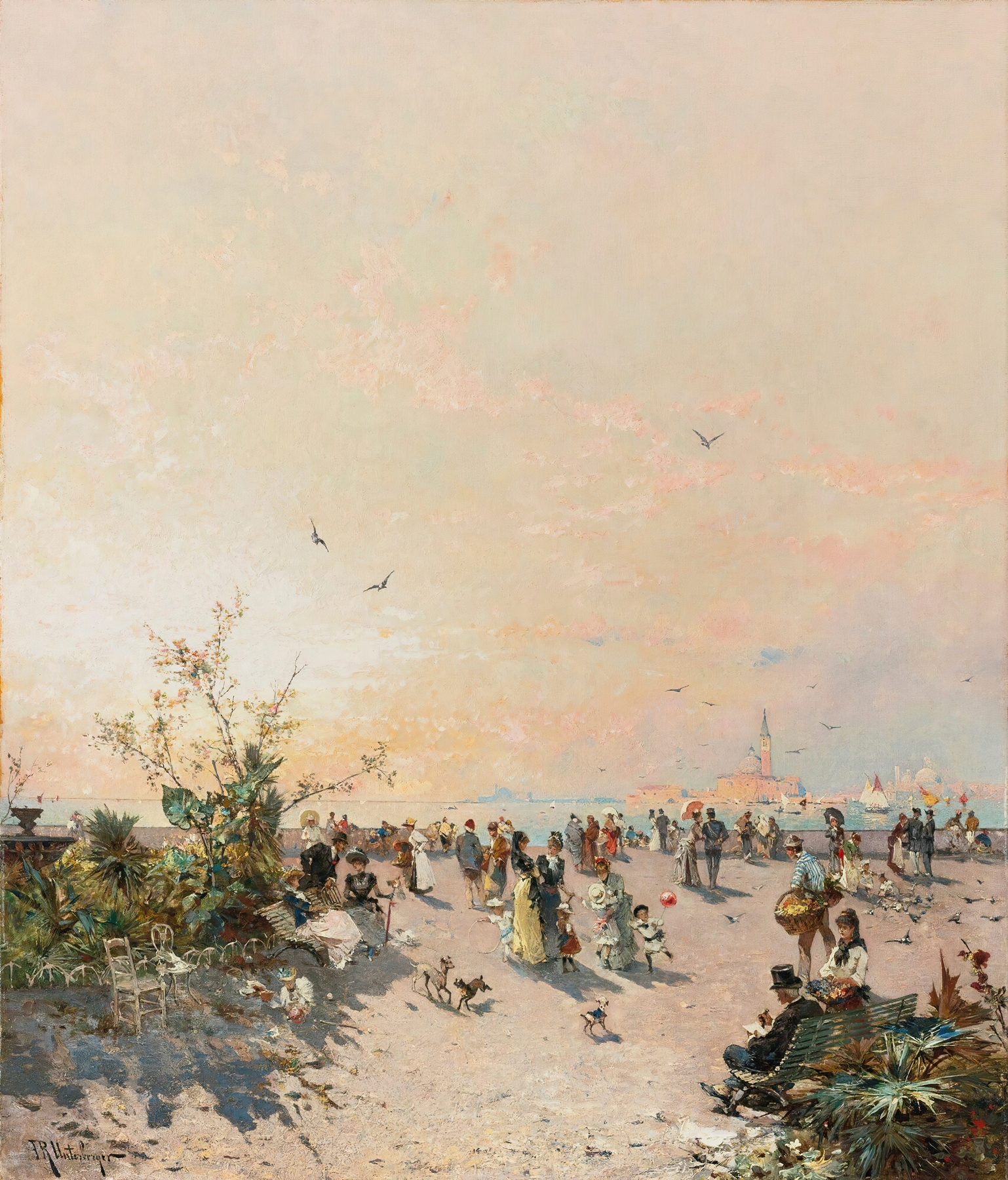
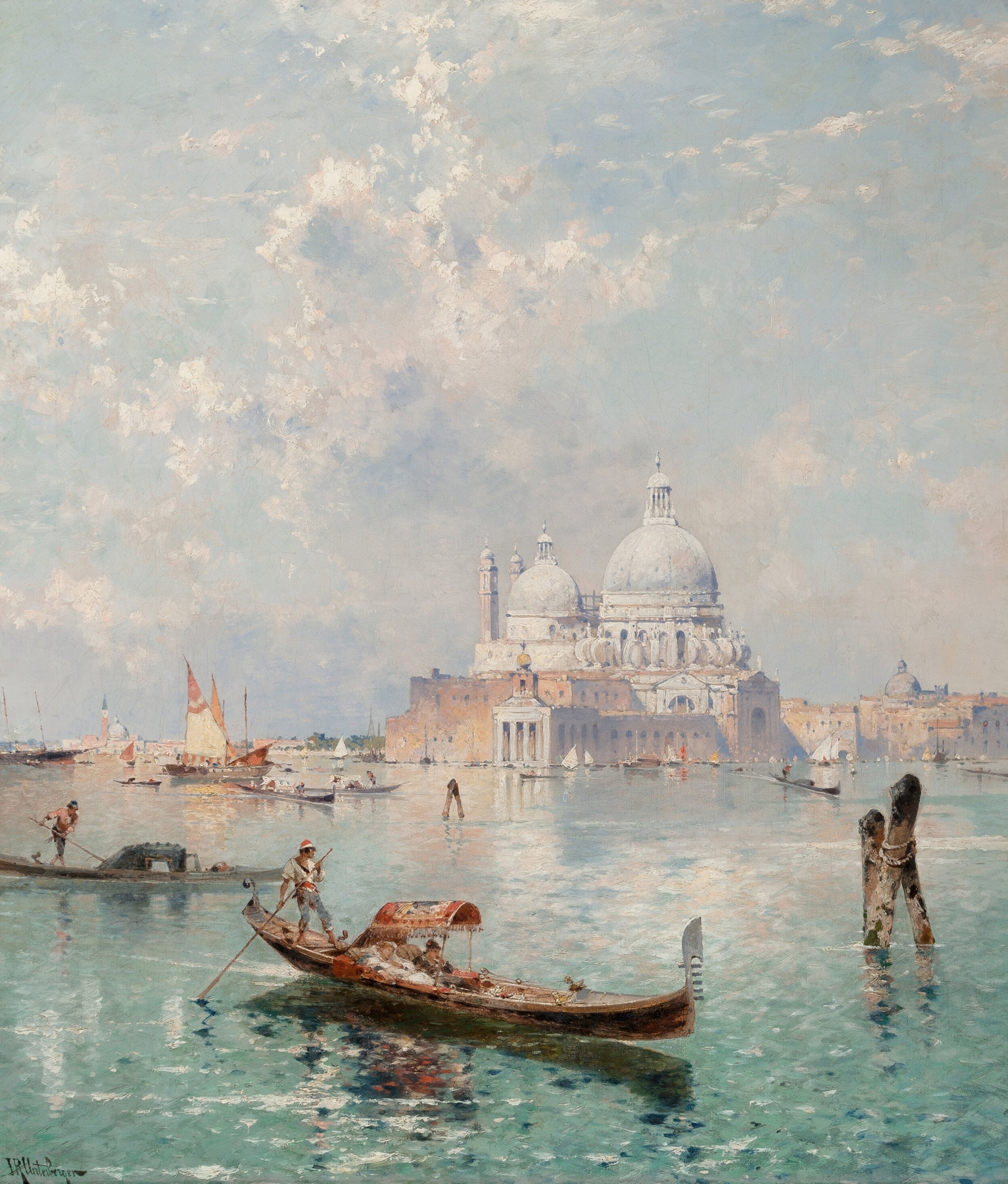
What if beauty was never meant to be finished? In the twilight of Venice, where the sun dips low and the sky transforms into a canvas of fiery hues, a fleeting moment of splendor hangs in the balance. Look to the left at the shimmering water, where soft strokes of orange and violet dance upon the surface, reflecting the masterpiece above. Notice the graceful gondolas, their forms silhouetted against the luminous backdrop, creating a harmony of movement and stillness.
The artist's meticulous brushwork brings the buildings alive, each edifice breathing with the warmth of the setting sun, while delicate highlights kiss the facades, revealing the intricate architecture that defines this city of canals. Delve deeper into the painting, and the tension between light and shadow becomes palpable. The luminous sunset embodies transformation, signaling the end of day but also the promise of night. The gondoliers, with their silent gestures, suggest stories untold, as if the city's secrets are woven into the very essence of twilight.
This contrast captures the ephemeral nature of beauty, inviting viewers to reflect on what is fleeting yet eternally impressive. Franz Richard Unterberger created this work during a time when the Romantic movement was still resonating across Europe, marked by an emphasis on emotional experiences and the sublime in nature. Though the exact date remains uncertain, his time in Venice inspired him to immortalize moments that celebrate its ethereal charm, encapsulating a world that straddles reality and dream. This era saw artists drawn to the interplay of light and landscape, marking a pivotal moment in the evolution of artistic expression.