Verso sera (Wild Horses by a River) — History & Analysis
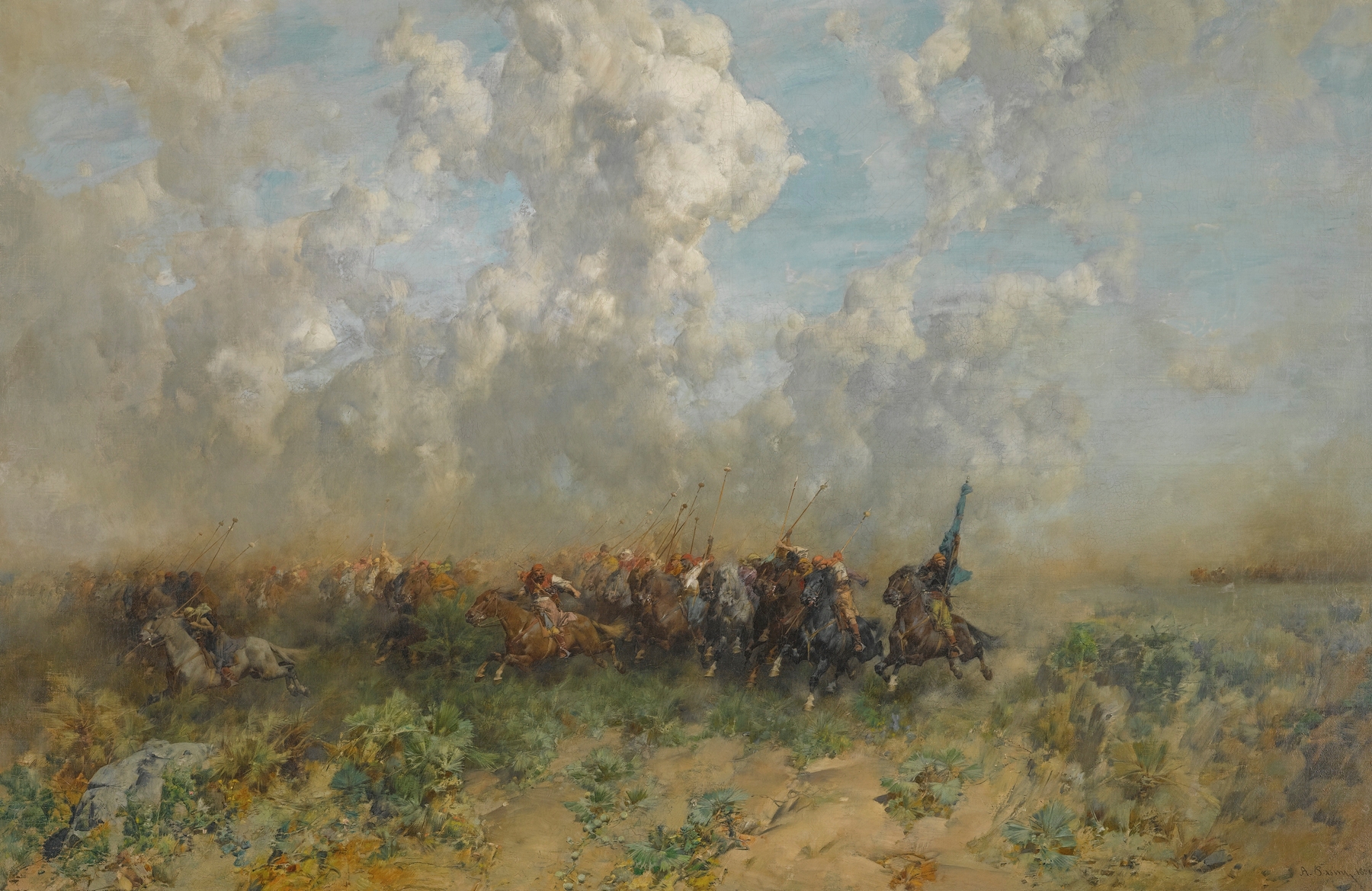
“Under the brush, chaos becomes grace.” In Verso sera (Wild Horses by a River), a tumultuous dance of wild horses unfurls, embodying the delicate balance between madness and serenity. The vivid energy of the scene invites contemplation of the untamed spirit that dwells within nature and, perhaps, within ourselves. Look to the left, where the dark silhouettes of the horses are stark against the vibrant embrace of the setting sun. The brushstrokes convey a sense of movement, each horse captured mid-gallop, muscles taut and flowing.
Notice how the golden twilight bathes the scene, lending warmth and depth to the rushing river that threads through the composition. The artist’s palette, rich with deep browns and fiery oranges, contrasts beautifully against the shimmering blues of the water, drawing the viewer’s gaze across the painting's dynamic landscape. Amid the chaos of the horses, subtle details emerge—a splash of water here, a shadow cast by the trees there—each adding layers to the wildness. The interplay of light and shadow not only heightens the motion but evokes the emotional cadence of freedom and vulnerability.
This juxtaposition of tranquility and wildness encapsulates a broader tension, reflecting the internal struggles of both humanity and nature in a rapidly changing world. In 1854, Alberto Pasini painted this work during a period of exploration and transformation in the art world. Living in Italy, he was influenced by Romanticism’s celebration of emotion and nature, while also engaging with the burgeoning realism that echoed the complexities of modern life. This piece stands as a testament to that era, capturing both the wild beauty of the horses and the tumult of the human experience within a landscape teetering between chaos and grace.