View across the Grand Canal to San Giorgio Maggiore — History & Analysis
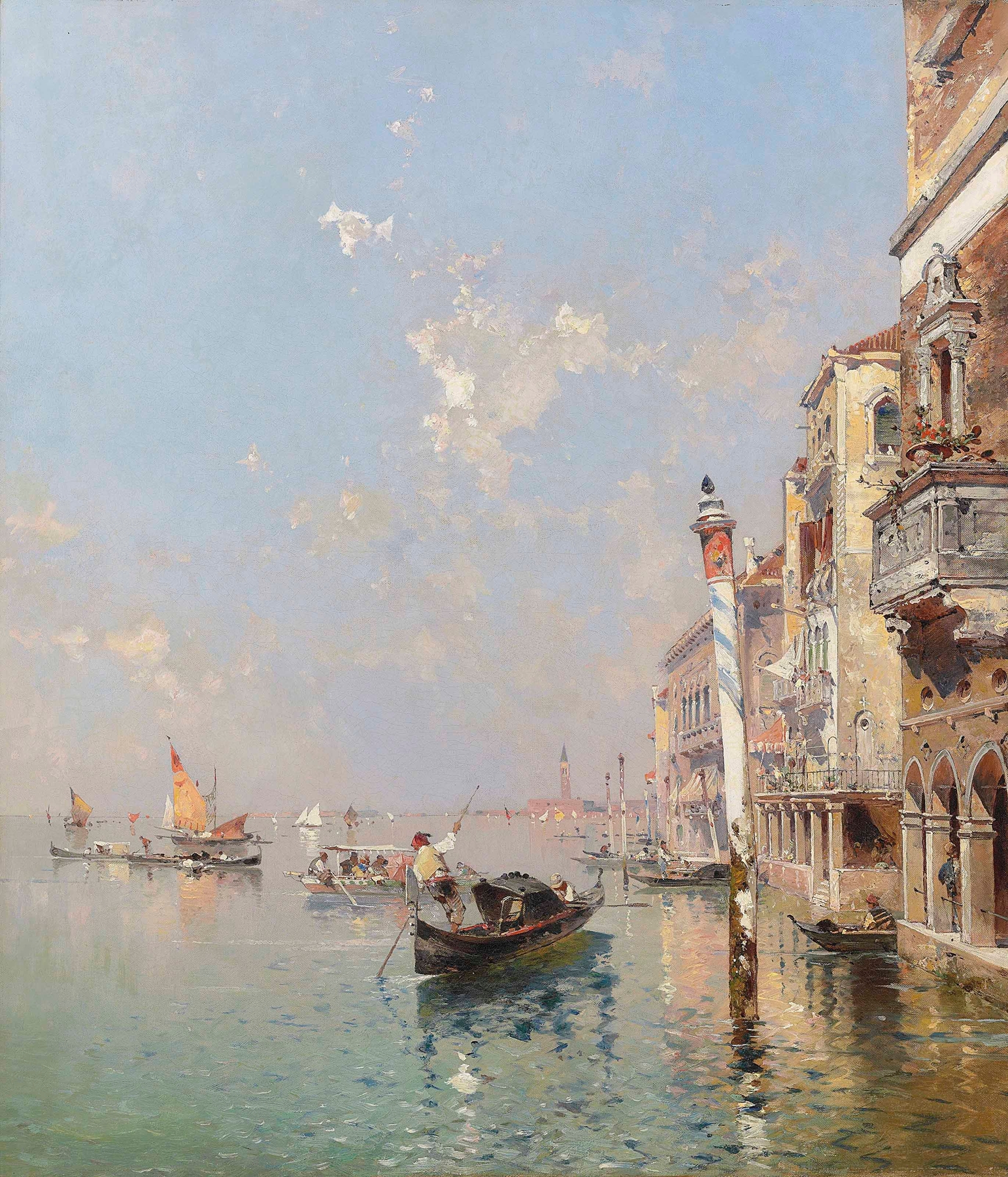
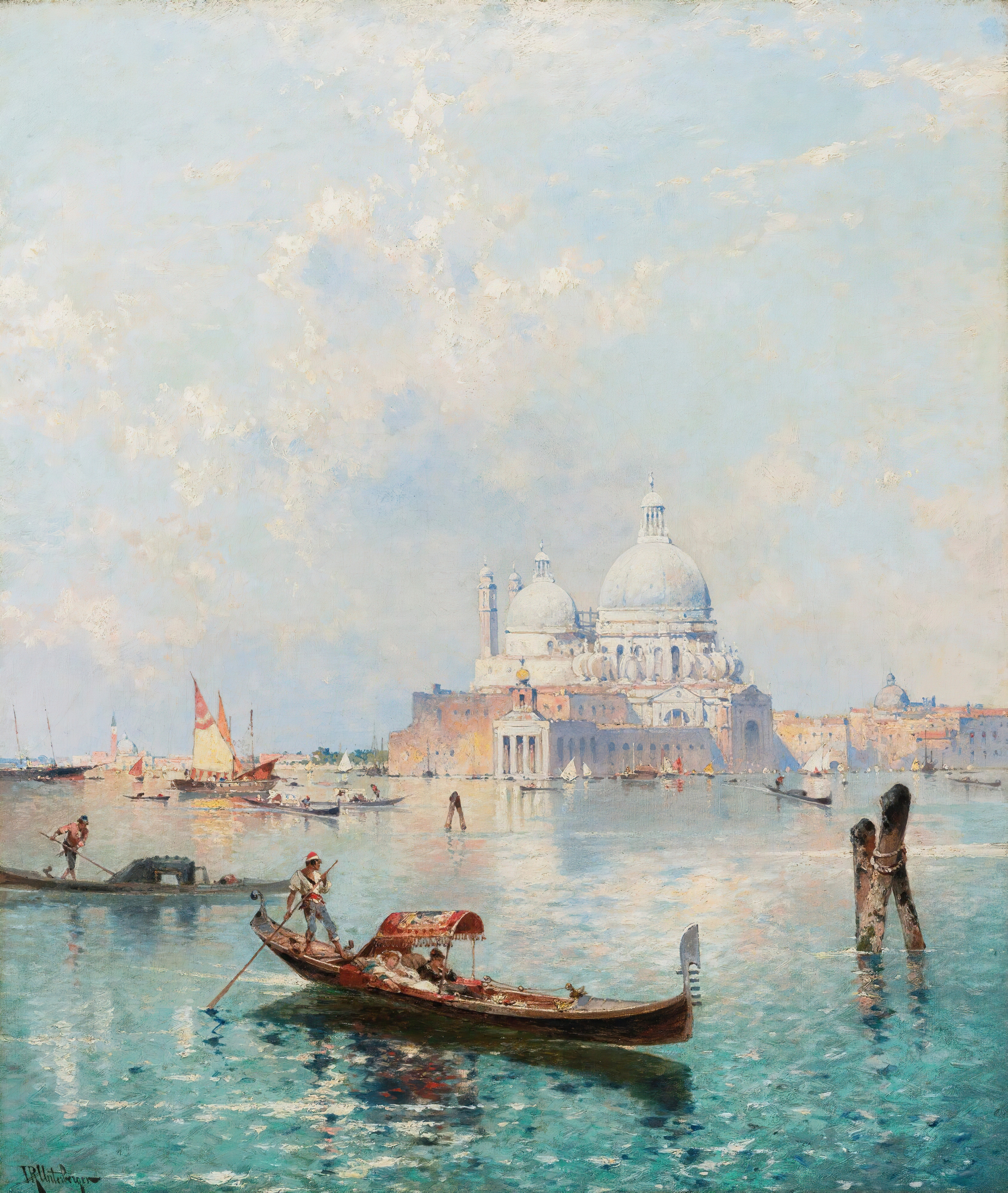
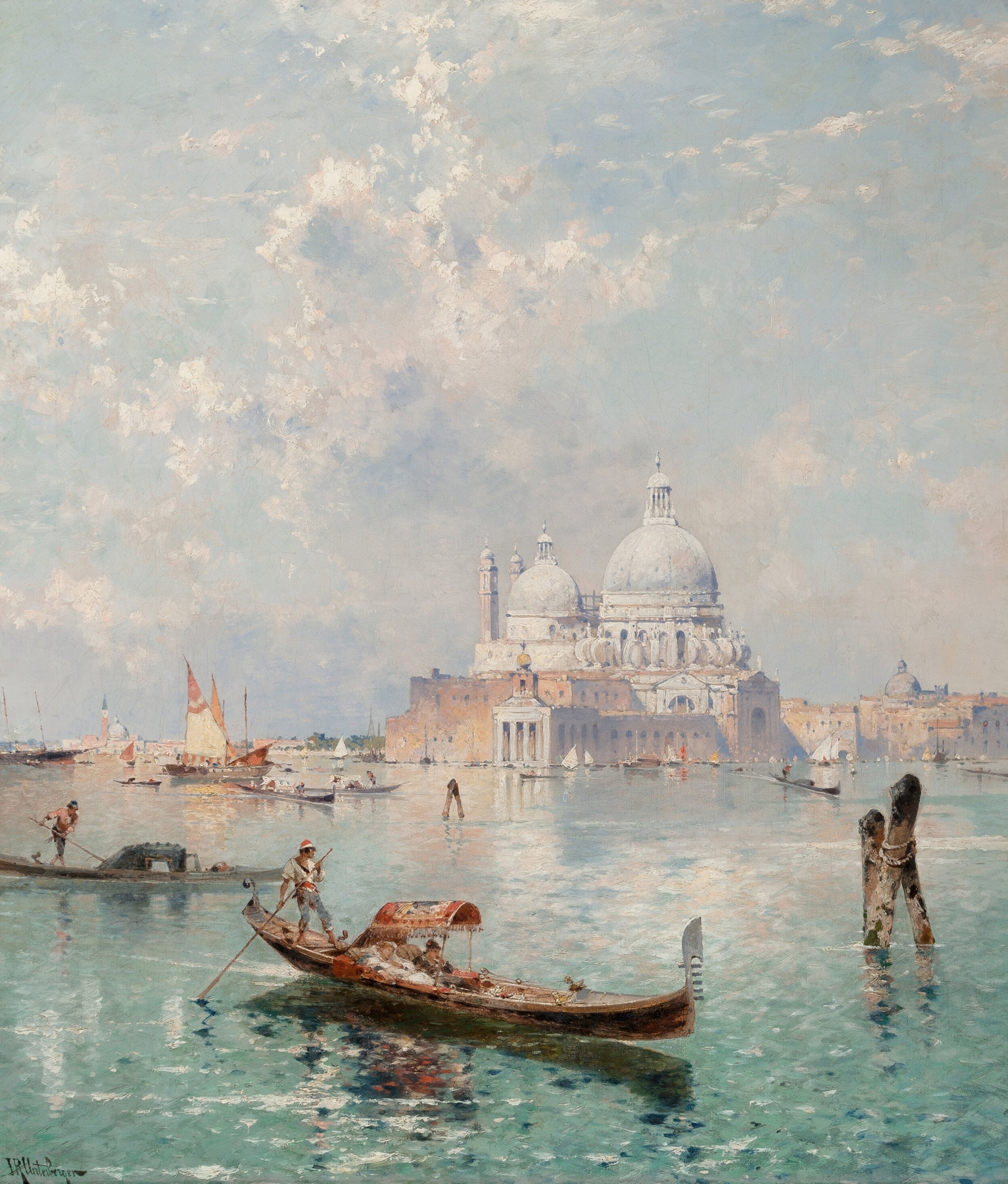
“Art reveals the soul when the world turns away.” In View across the Grand Canal to San Giorgio Maggiore, melancholy seeps through the tranquil waters, inviting viewers to linger in a moment suspended between the past and the present. Look to the left at the delicate brushstrokes capturing the play of sunlight on the rippling surface of the canal. Notice how the soft blues and greens harmonize with dusty pinks and warm golds, reflecting the glow of a setting sun. The towering silhouette of San Giorgio Maggiore stands resolute against the hazy skyline, commanding attention while simultaneously evoking a sense of nostalgia.
The meticulous detail in the architecture contrasts with the impressionistic quality of the water, showcasing the artist’s dual mastery in both realism and emotional resonance. As you explore further, the subtle tension between light and shadow emerges, reflecting a world caught in a moment of transition. The figures on the gondola, whose expressions remain unreadable, hint at stories untold, while the softly blurred horizon suggests the passage of time and the weight of forgotten memories. This work captures not just a scene but an emotional landscape, evoking feelings of longing and introspection.
In 1898, Unterberger created this piece during a time of significant artistic evolution, rooted in Venice, where he found inspiration in the interplay of light and architecture. The late 19th century was marked by a movement towards Impressionism, and he embraced it, blending it with his own unique vision. This painting reflects his exploration of the ephemeral beauty of landscapes, while contemporary events in Europe added layers of complexity to the emotional undertones embedded in his work.