View from Bastei — History & Analysis
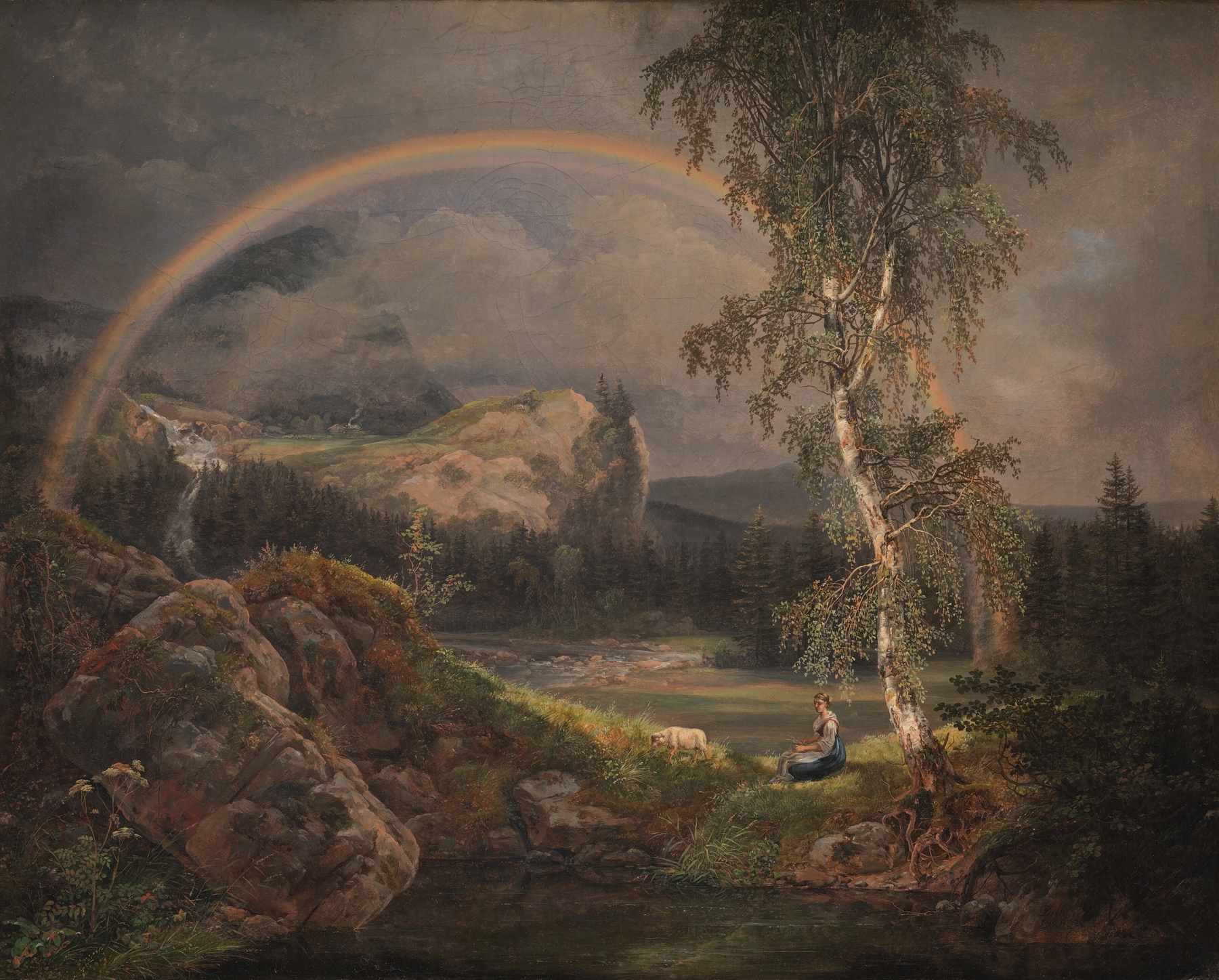
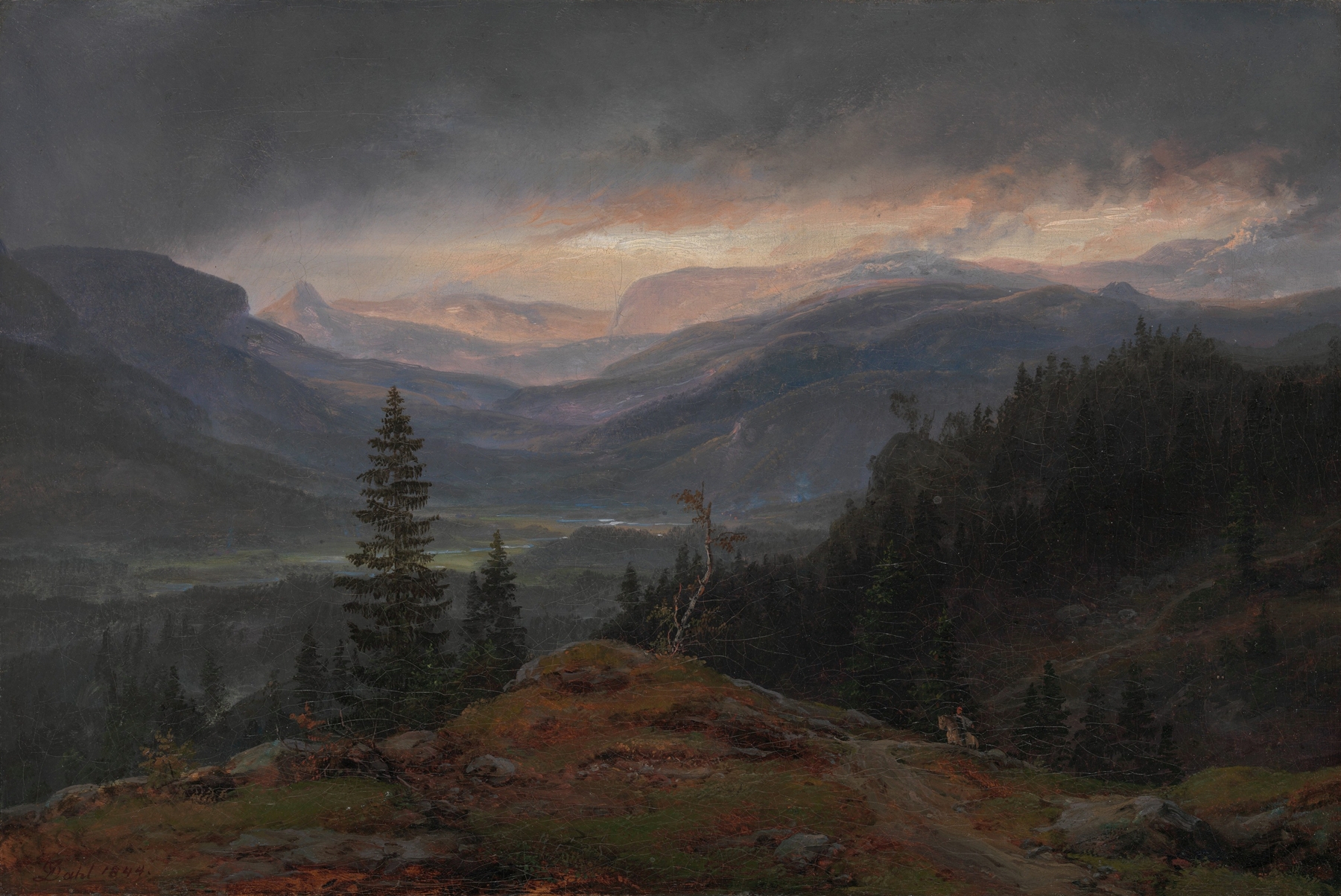
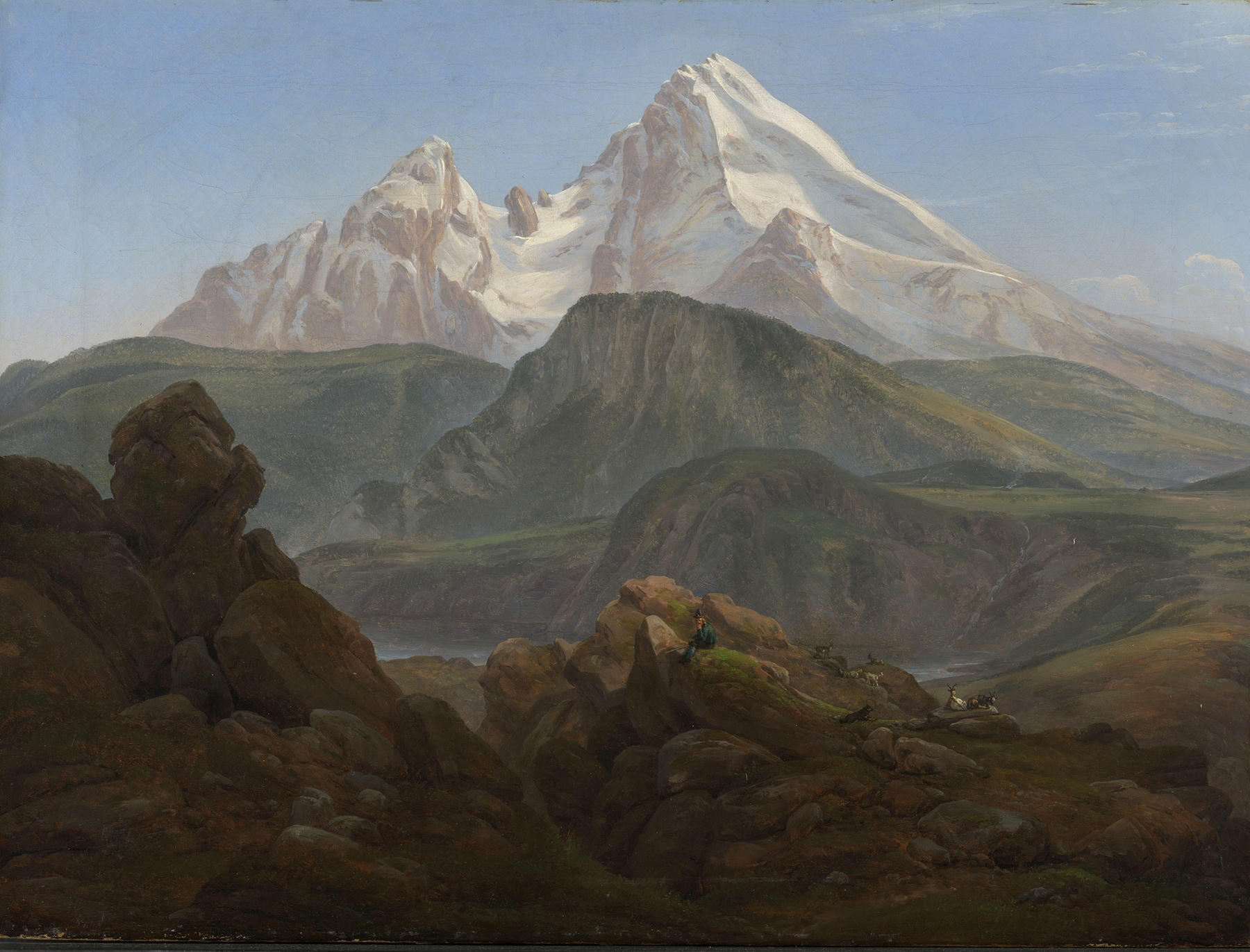
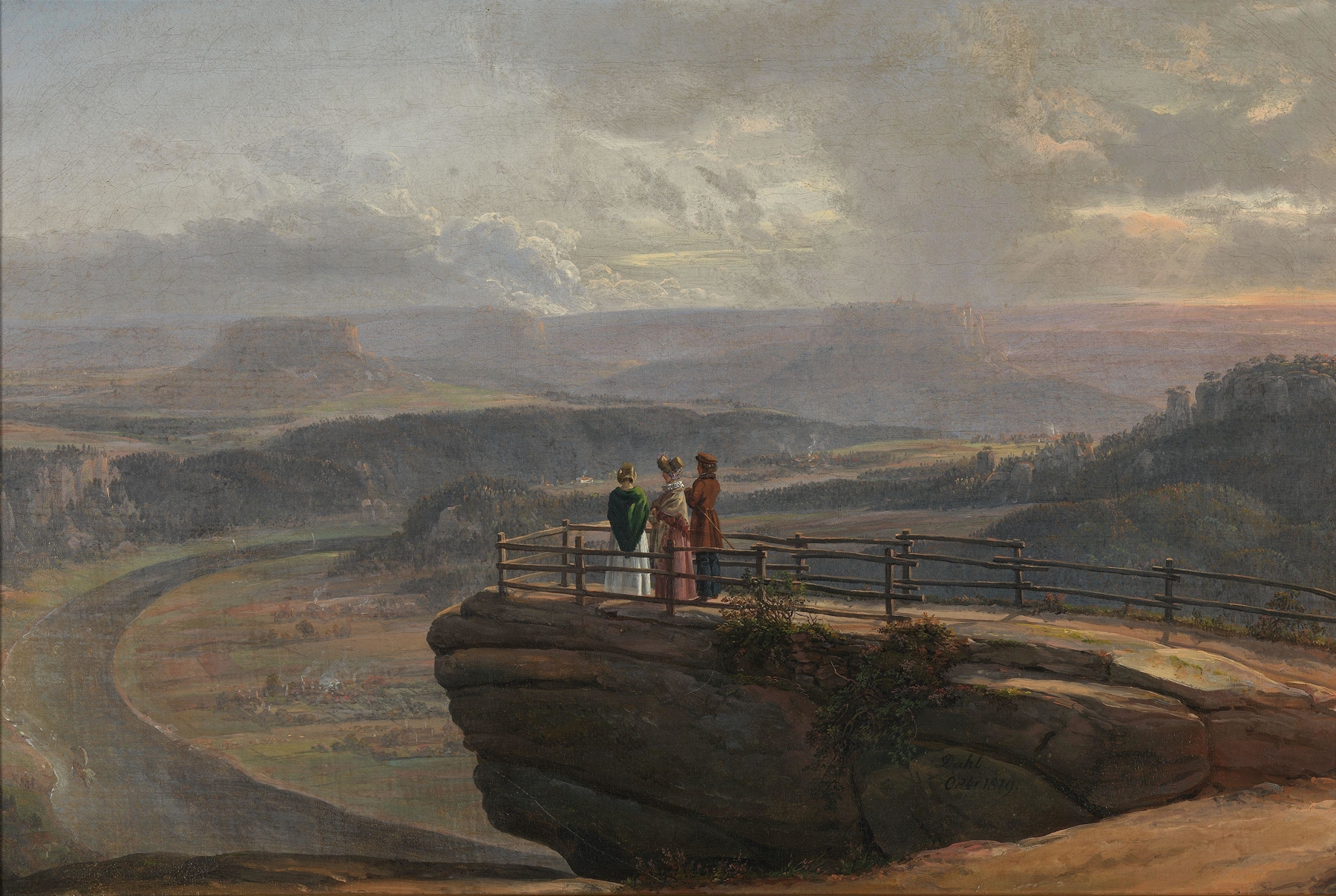
“Every silence here is a confession.” In that silence, one finds a gentle reverence for nature’s grandeur, a moment suspended in awe. Look to the left at the jagged rock formations rising from the lush valley, their dark surfaces softened by the morning light. Notice how the painter skillfully captures the interplay of light and shadow, with golden rays illuminating patches of green foliage and casting deeper hues on the craggy cliffs. The composition draws your eye toward the expansive panorama, inviting you to wander through the winding river below, framed by nature’s dramatic architecture.
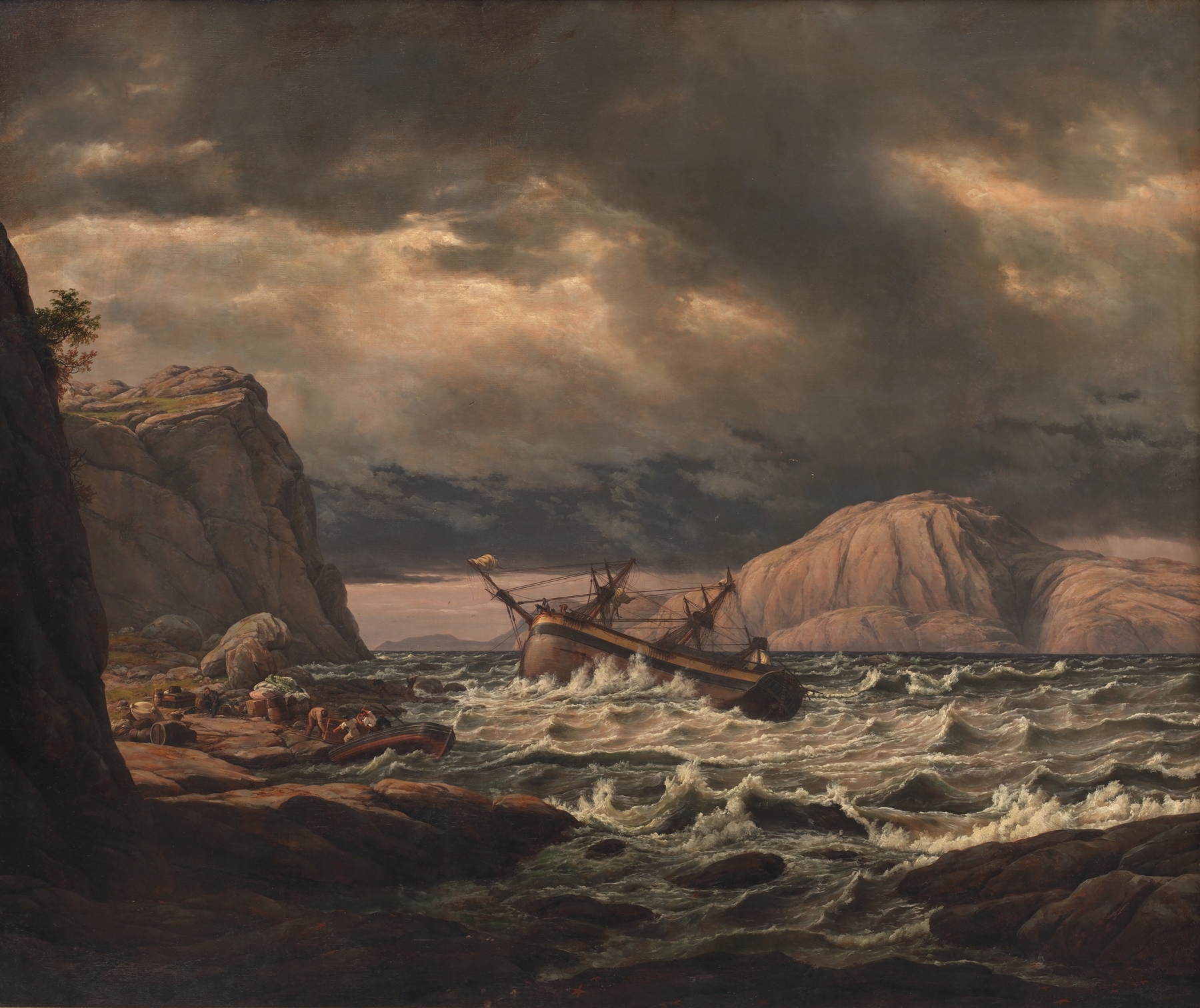
The painting reveals a tension between the tranquil beauty of the landscape and the formidable presence of the cliffs. The vastness of the sky invites contemplation, while the swirling clouds contrast sharply against the serenity of the valley, hinting at nature’s unpredictable temperament. Each brushstroke carries a whisper of emotion, from the delicate touches of pastel in the clouds to the robust texture of the rocks, underscoring a celebration of both fragility and strength.
In 1819, while residing in Dresden, Dahl created this masterpiece during a period when Romanticism was redefining the landscape genre. He sought to elevate nature’s splendor, influenced by the philosophical currents of the time that emphasized individual experience and emotional depth. This work exemplifies those ideals, presenting the viewer with a sublime vista that reflects both the artist's personal journey and the cultural fascination with the natural world.