View of Trafalgar Square — History & Analysis
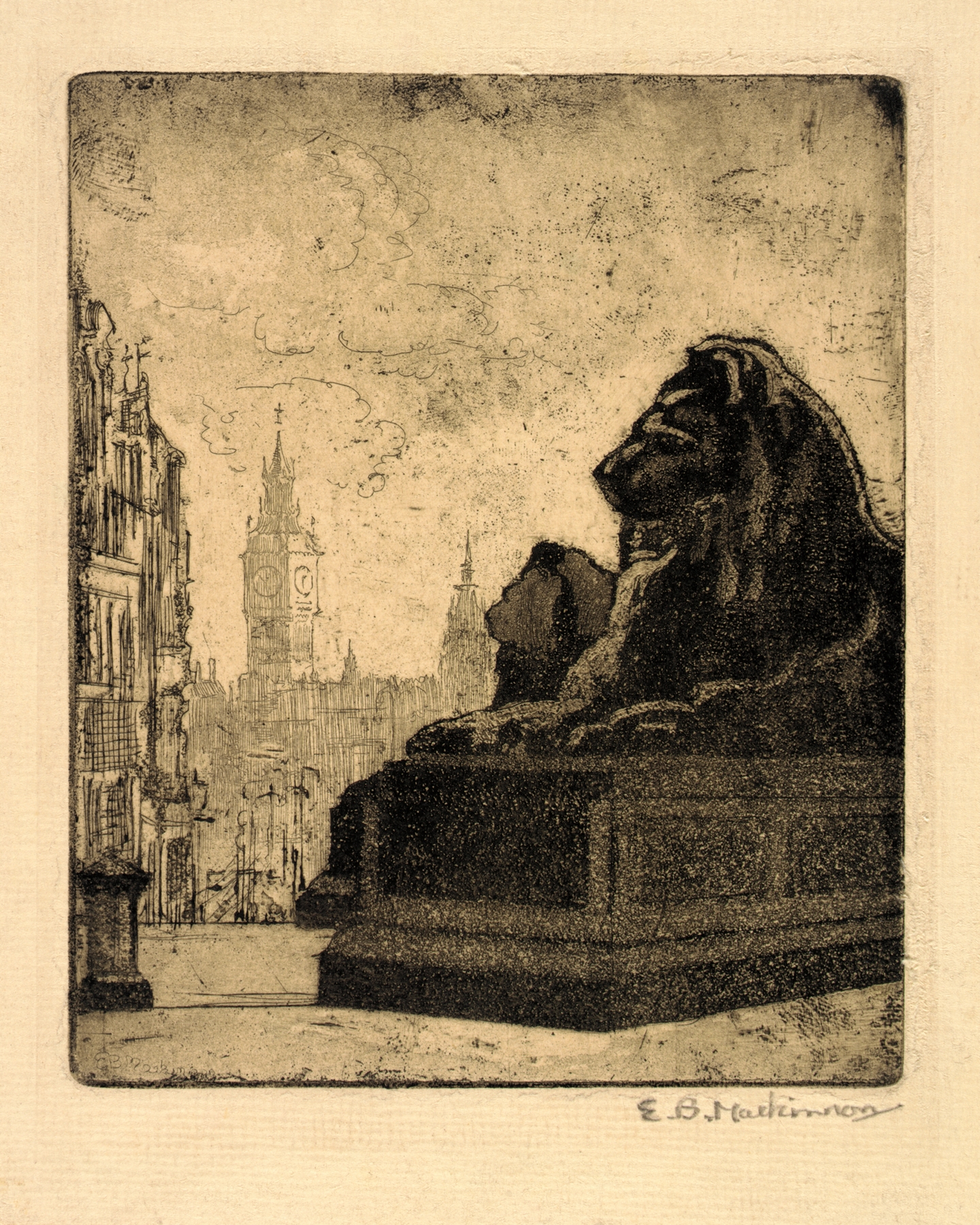
Could beauty survive in a century of chaos? In View of Trafalgar Square, a moment of serene light transcends the tumult of urban life, offering a glimpse into a world poised between the extraordinary and the ordinary. Look to the center of the canvas where the iconic Nelson's Column rises against a backdrop of softly painted clouds. The warm light bathes the square, illuminating the cobblestones below and casting delicate shadows that suggest the passage of time. Notice how the figures, small and scattered, seem almost ethereal, as if they are part of the light itself.
The artist employs a nuanced palette, blending soft blues and warm ochres, capturing the essence of a fleeting moment in this bustling locale. Delve deeper into the composition, and you will find an interplay of solitude and community. The quiet interactions of the pedestrians, some lost in thought, others engaged in conversation, reflect the myriad human experiences that converge in public spaces. The careful rendering of architectural details juxtaposes the fleeting figures, highlighting the transience of life against the permanence of the structures.
This duality evokes a poignant sense of nostalgia, reminding us of the moments we share yet often overlook. Esther Blaikie MacKinnon created this artwork during a period when Impressionism was shaping the art world, particularly in the late 19th and early 20th centuries. Living in London, she captured the essence of everyday life amidst a rapidly industrializing society, a time marked by both innovation and the struggle for artistic recognition. Her work reflects her unique perspective, merging a sense of place with the emotional resonance of light.