Views in Cornwall; View on the River Camel, Cornwall — History & Analysis
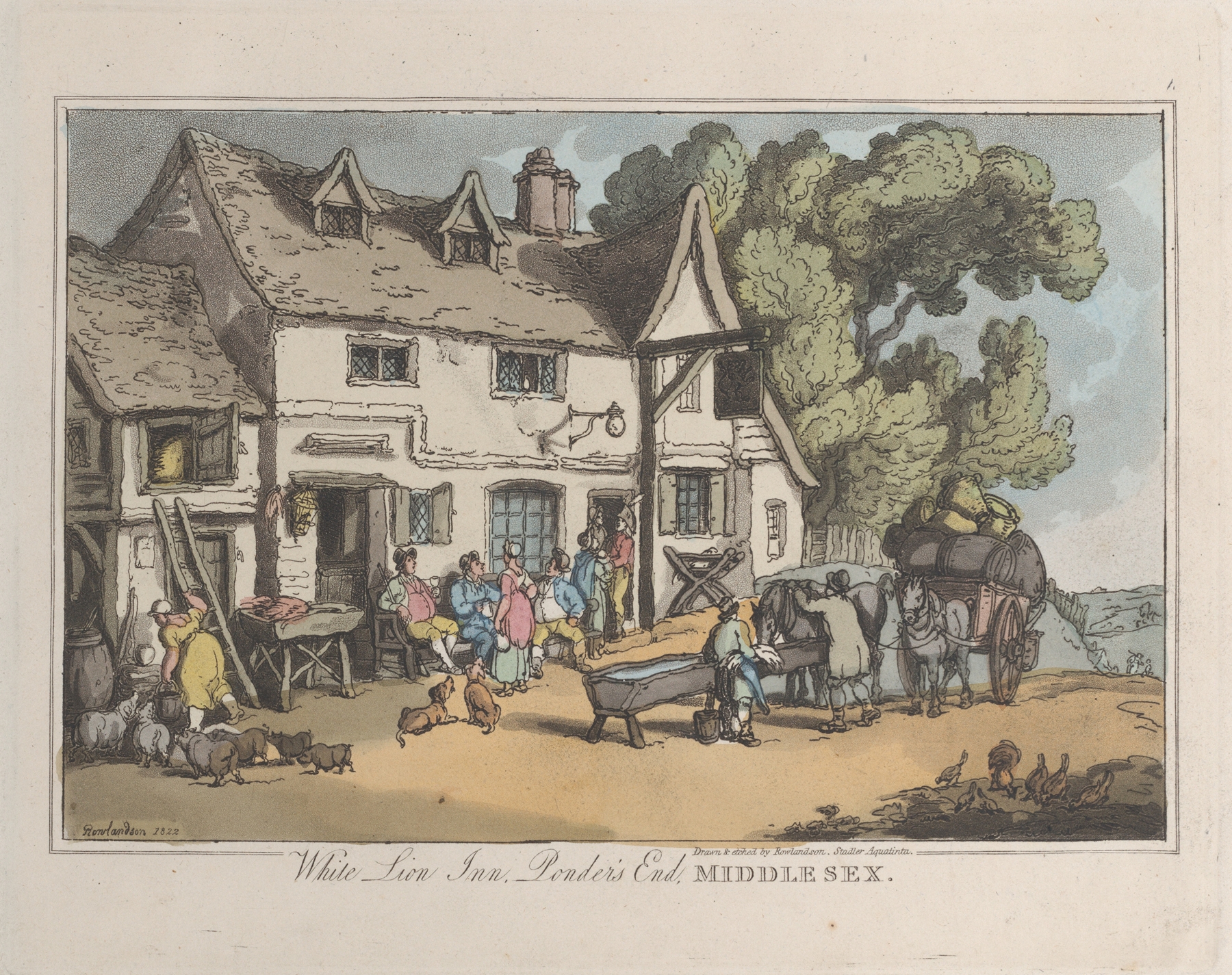
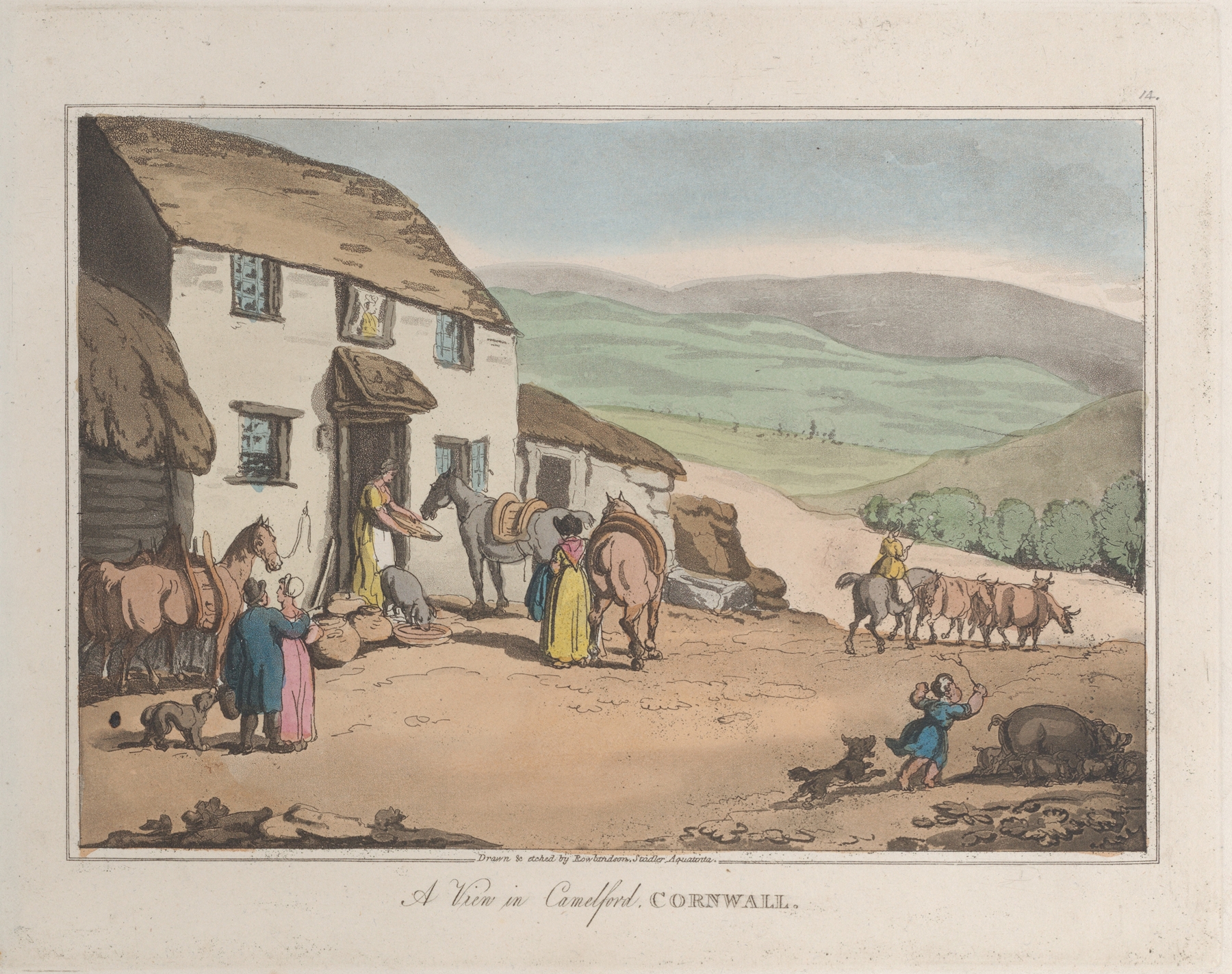
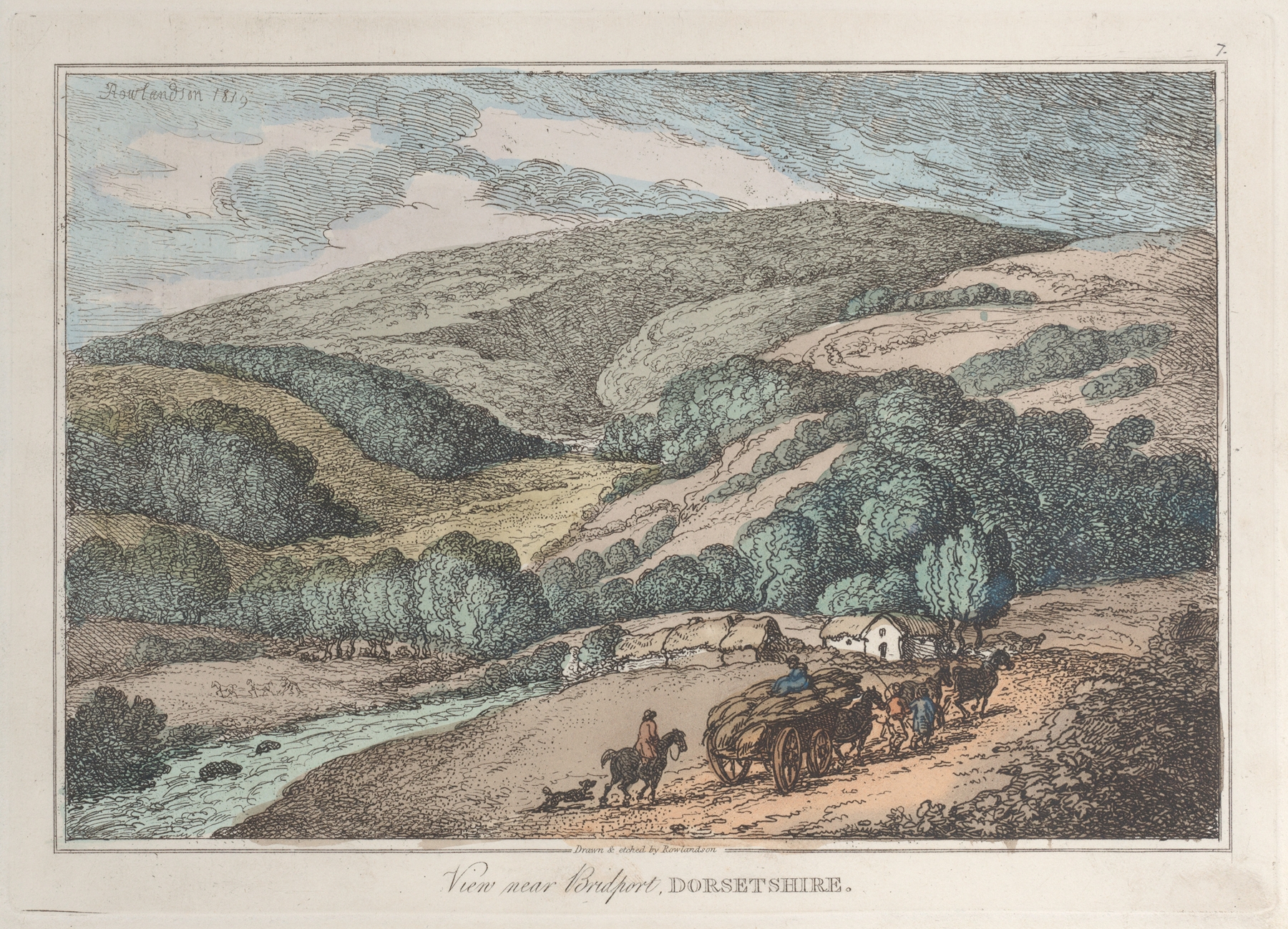
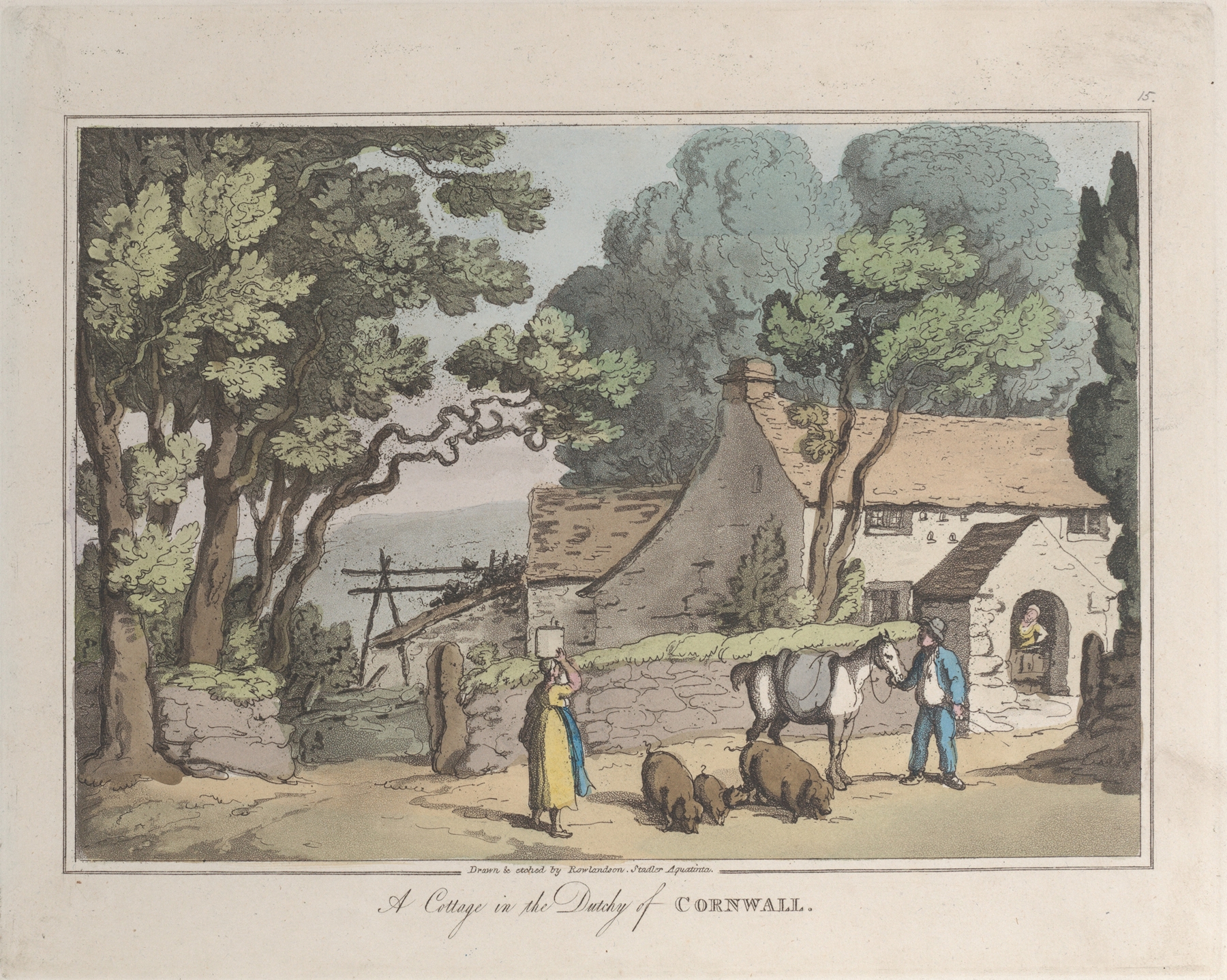
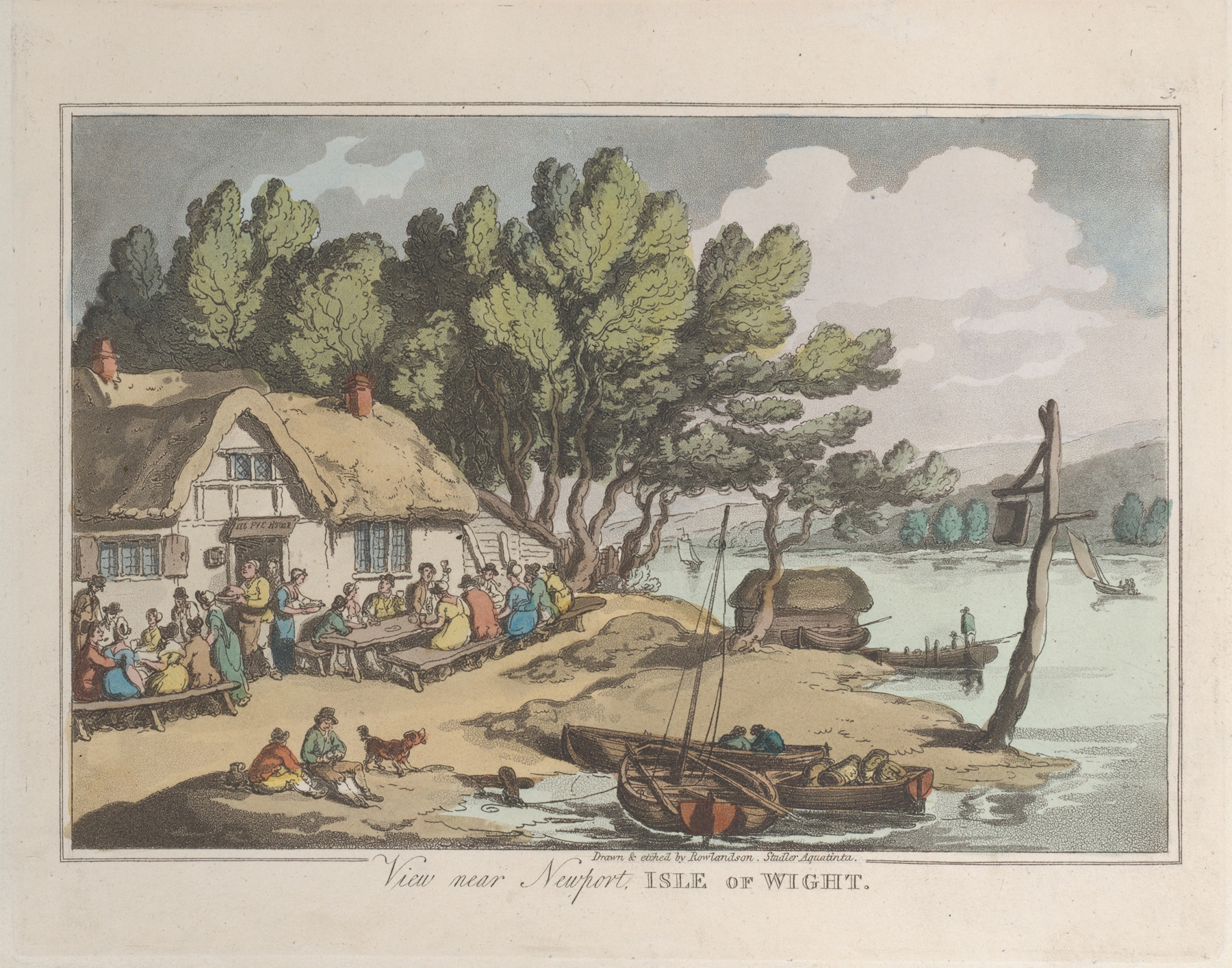
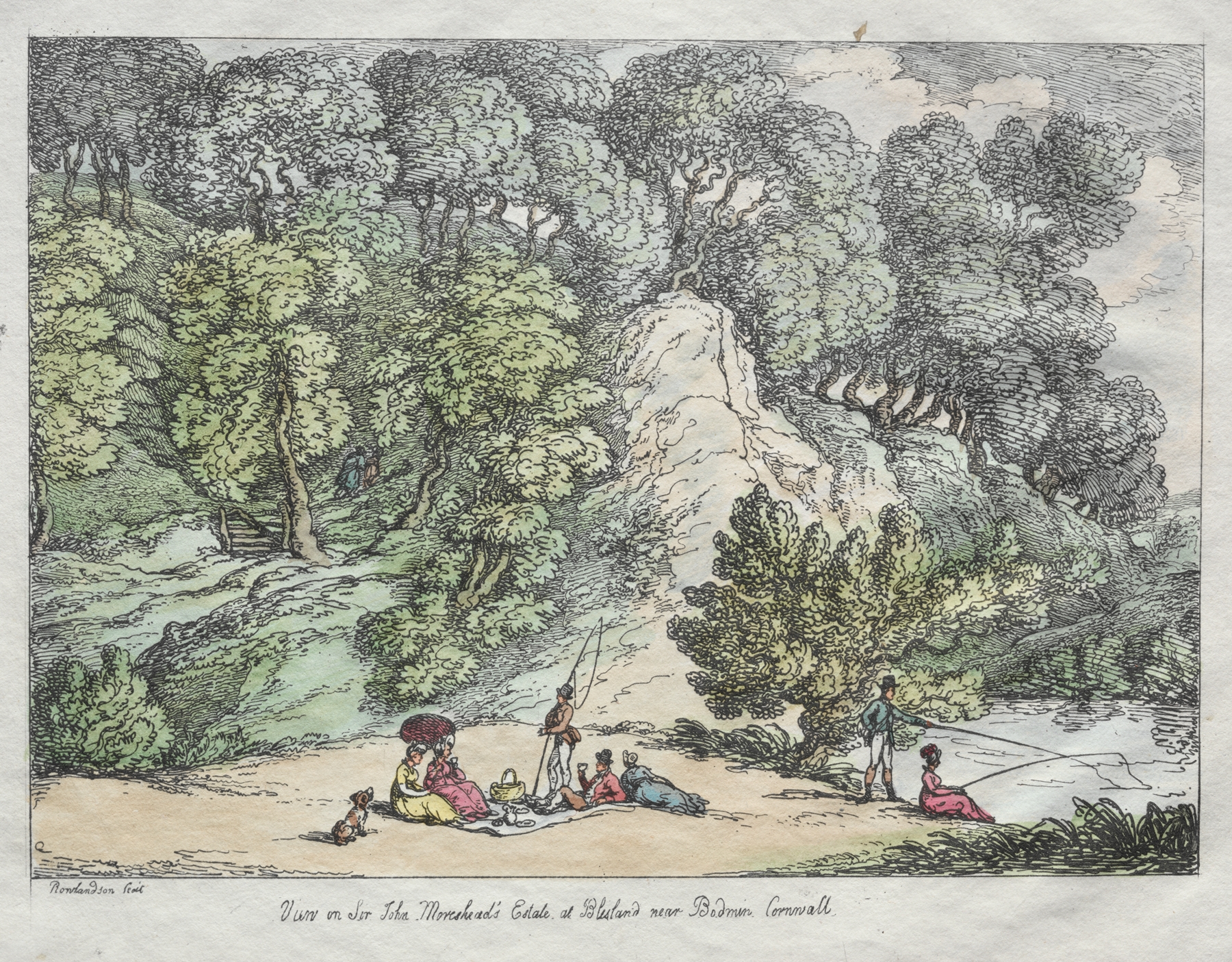
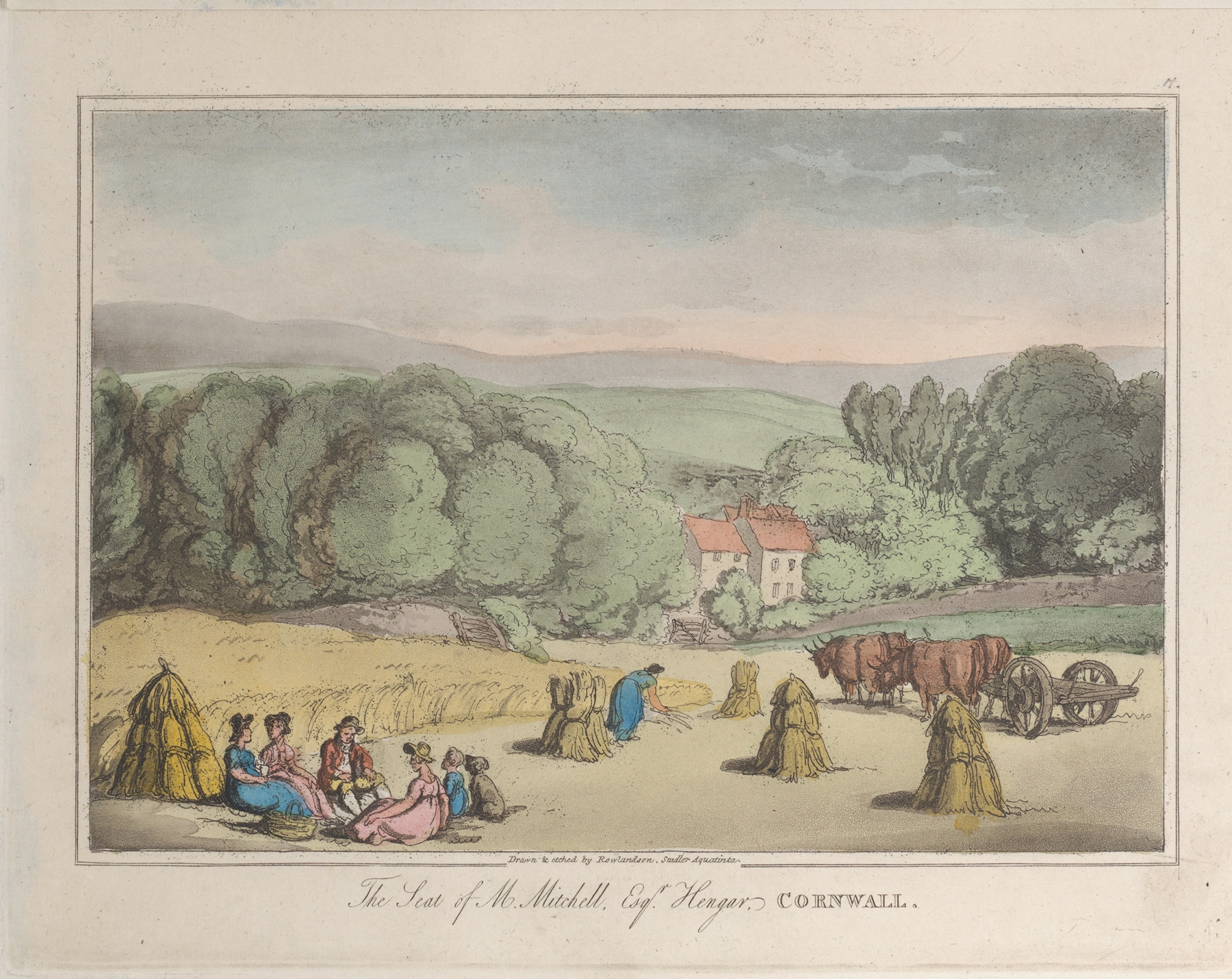
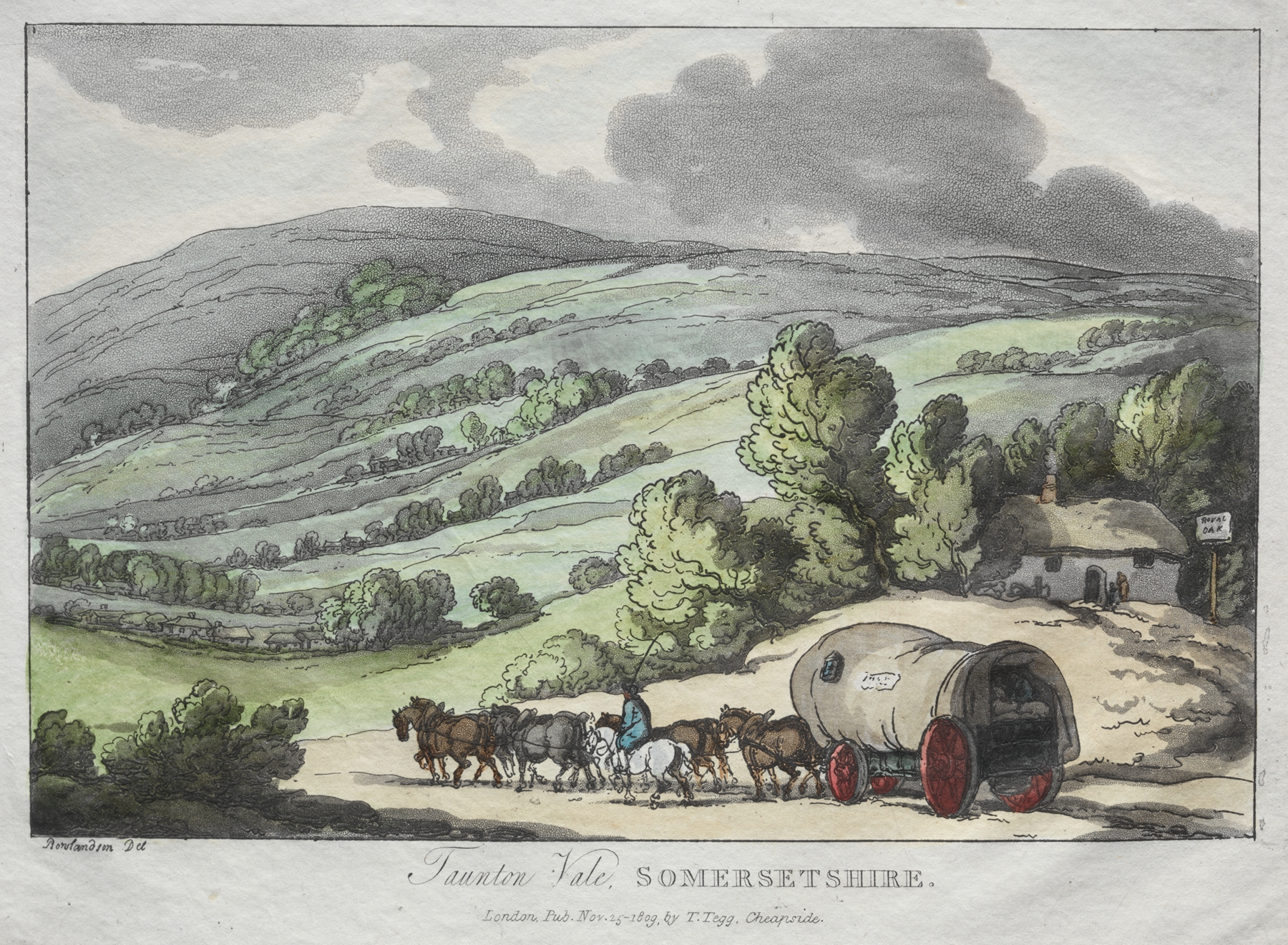
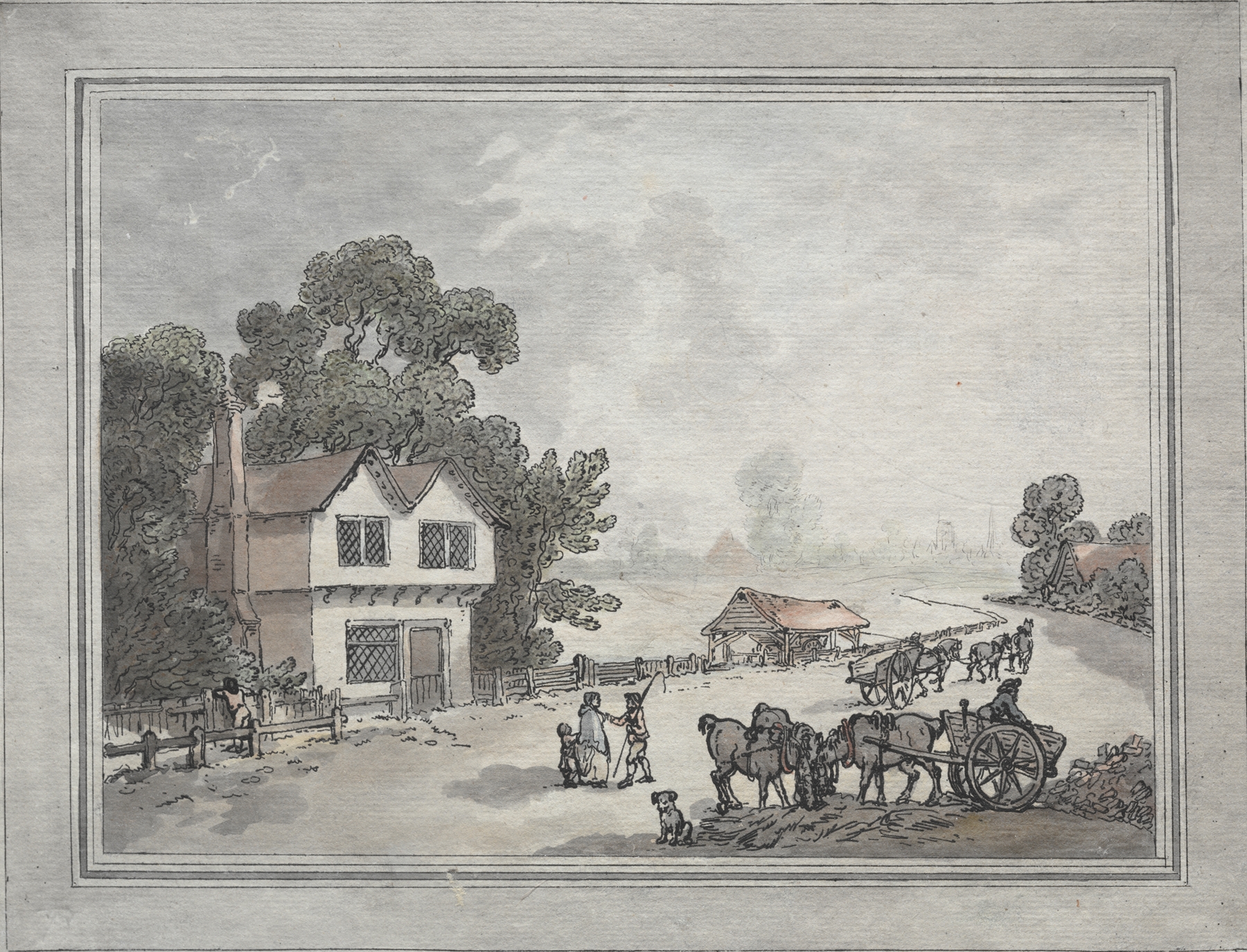
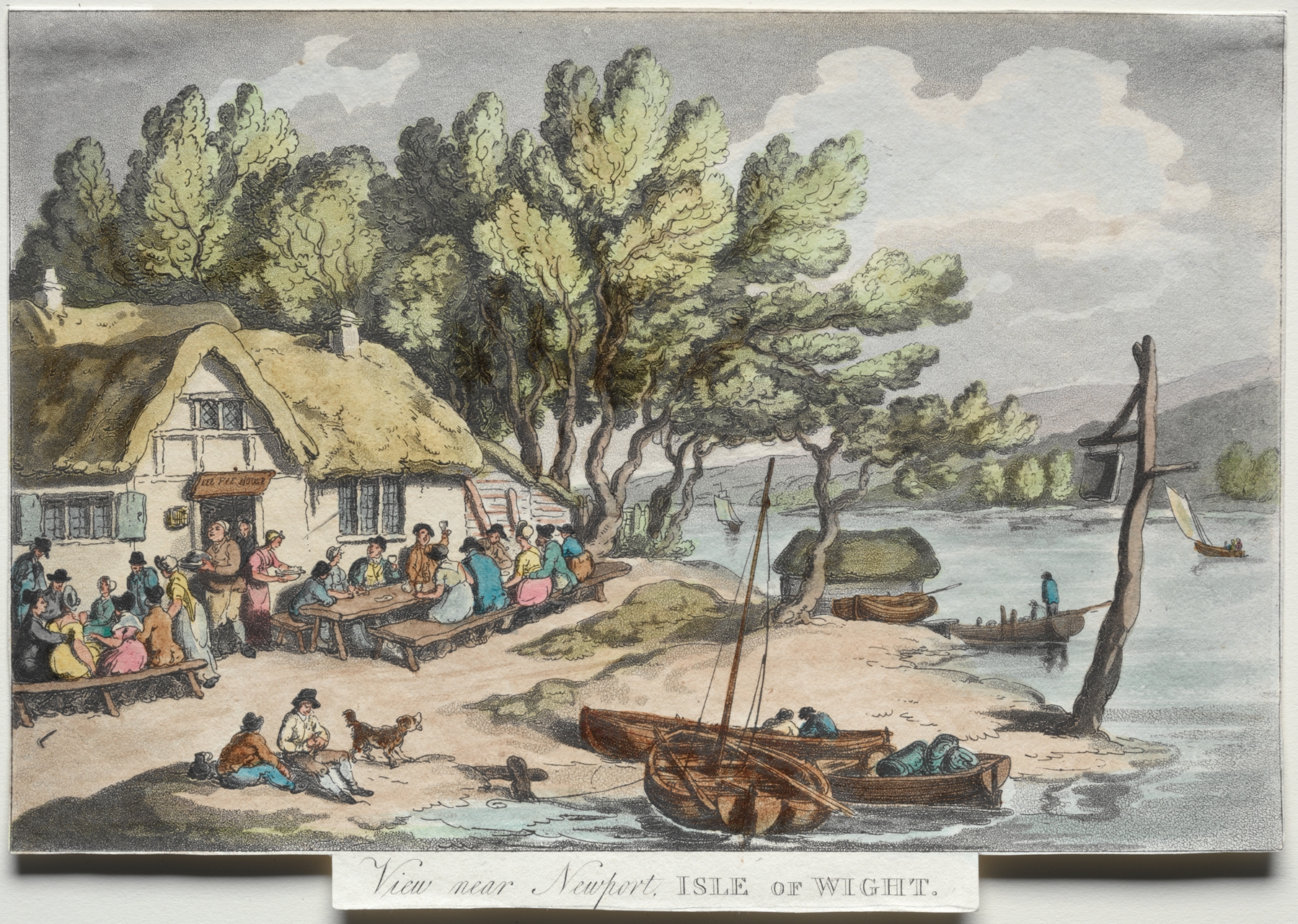
“The canvas doesn’t lie — it simply waits.” In the quietude of 1812, a world on the brink of transformation unfurls, whispering secrets of revolution and change through its landscapes. Look to the foreground, where the gentle curve of the River Camel invites your gaze. The water glimmers under a soft haze, its serenity juxtaposed with the impending shifts of the time. Notice how Rowlandson’s brushwork captures the play of sunlight, illuminating patches of green and hinting at the life and labor that flourish along the riverbanks.
The palette is a harmonious blend of earthy tones and vibrant hues, crafting an idyllic yet charged atmosphere. Dig deeper into the composition, where the figures, seemingly quaint and disconnected, reflect a society caught between tradition and progress. Their posture conveys a subtle tension; some seem absorbed in their tasks, while others linger, perhaps pondering the future. This duality mirrors the era's anxieties, especially as industrial changes loom on the horizon, transforming both the land and the social fabric of Cornwall.
Painted during a time of social upheaval and artistic exploration, this work emerged as Rowlandson navigated the complexities of a rapidly evolving society. In early 19th-century England, the artist found himself amidst burgeoning Romanticism, capturing a blend of whimsy and realism. This piece not only represents a geographical view but also serves as a reflection of a moment in history — one where nature and human experience intersect in a delicate balance, poised for change.