Virgil’s Tomb by Moonlight, with Silius Italicus Declaiming — History & Analysis
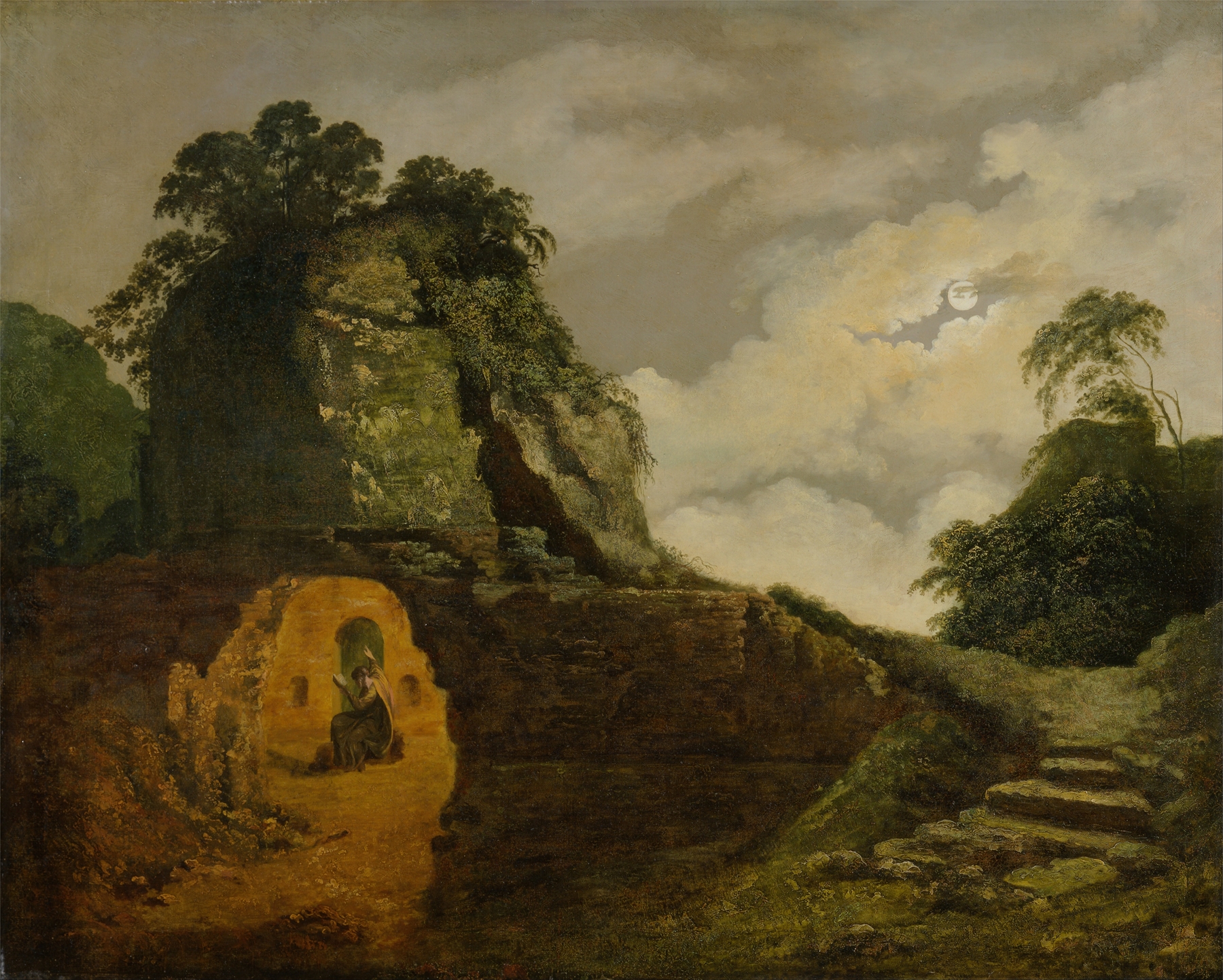
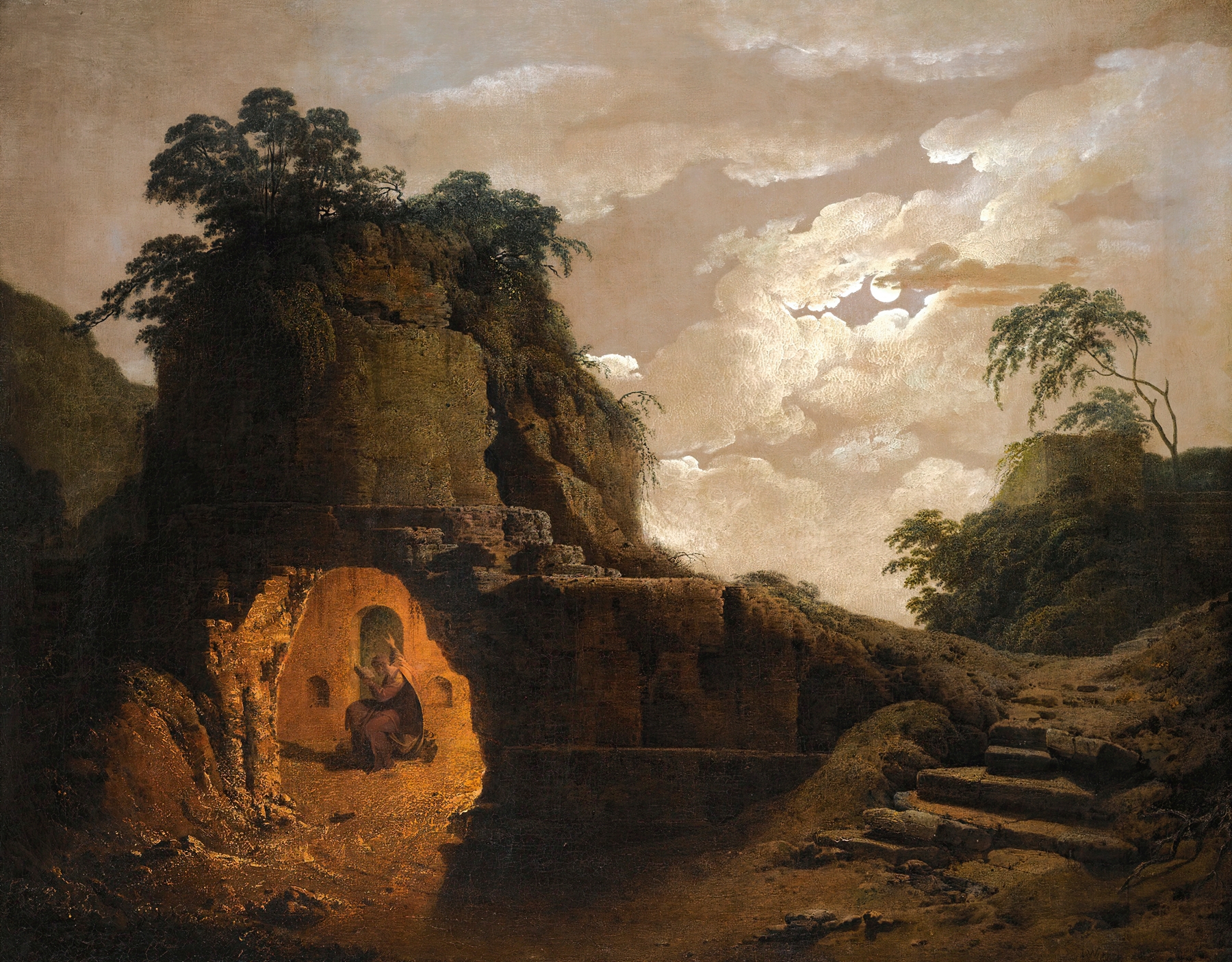
“Between color and silence, truth hides.” In the hushed realms of existence, the dance between life and death unveils profound depths of meaning. In this striking work, gaze first upon the monochromatic interplay of shadows and soft light that envelops the ancient tomb. Notice how the moonlight spills into the scene, illuminating Silius Italicus as he stands in the foreground, his dramatic gesture suggesting fervent declamation. The stark contrast between light and dark not only highlights the figures but also evokes a sense of mystery and reverence that beckons the viewer to ponder the gravity of mortality and the weight of history.
Deeper meanings emerge as the figures are framed against the somber backdrop of the tomb. The tension created by Italicus’ passionate pose contrasts with the stillness of the monument, inviting contemplation on the transience of life. The subtle texture of the stone, with its weathered surface, symbolizes the passage of time, while the rich, deep hues amplify the emotional gravity of the scene.
This is a moment caught between honor and oblivion, urging us to reflect on the legacies we leave behind. Joseph Wright created this evocative piece in 1779, during a period marked by the rise of Romanticism and a newfound interest in the sublime and the human experience. Working in Derby, England, he was influenced by the Enlightenment ideals of knowledge and reason, yet he found a compelling way to express the drama of human emotion and the inevitable confrontation with mortality through his masterful use of light and shadow.