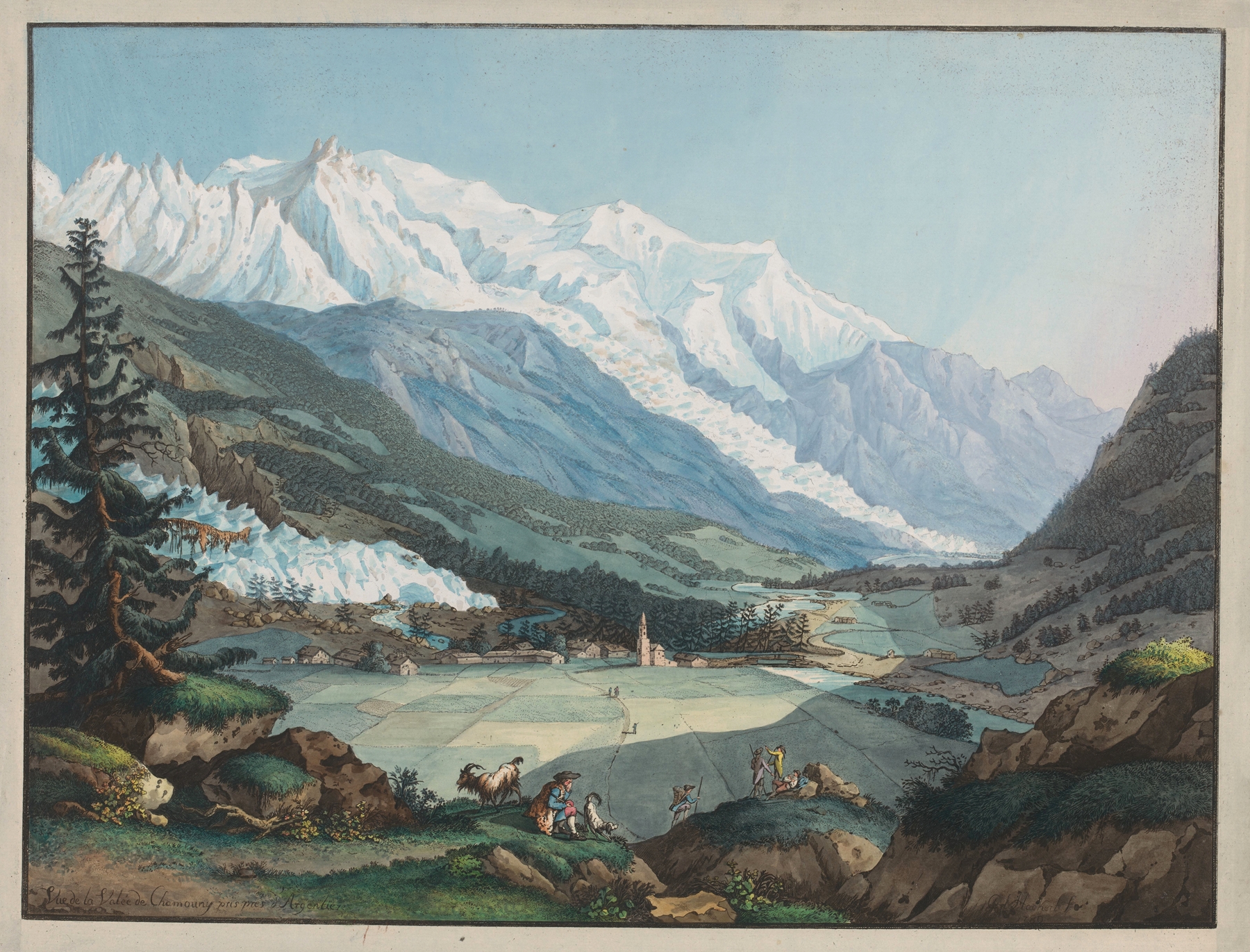
Vue de la Valée de Chamouny pris prés d’Argentiere — History & Analysis
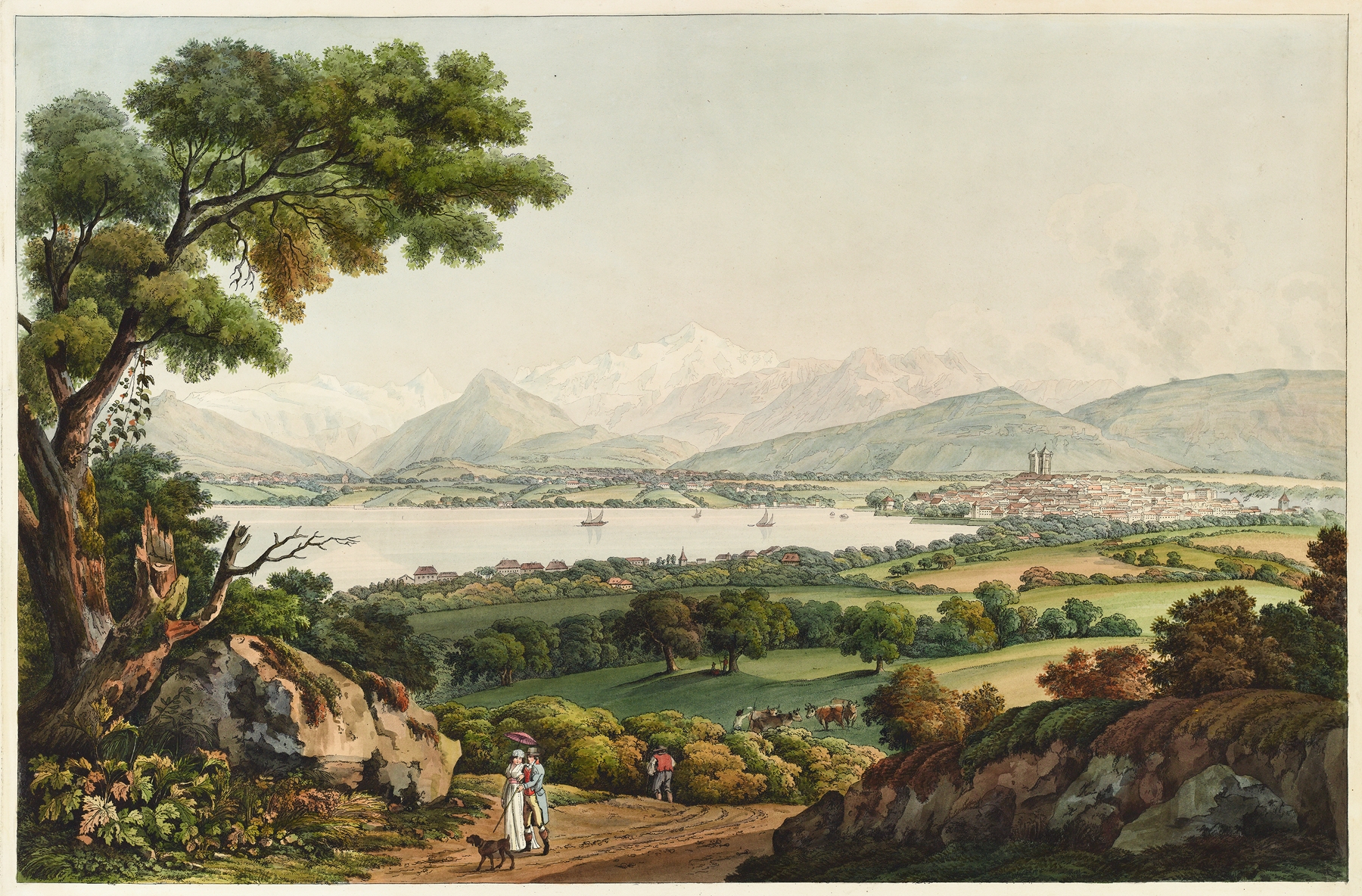
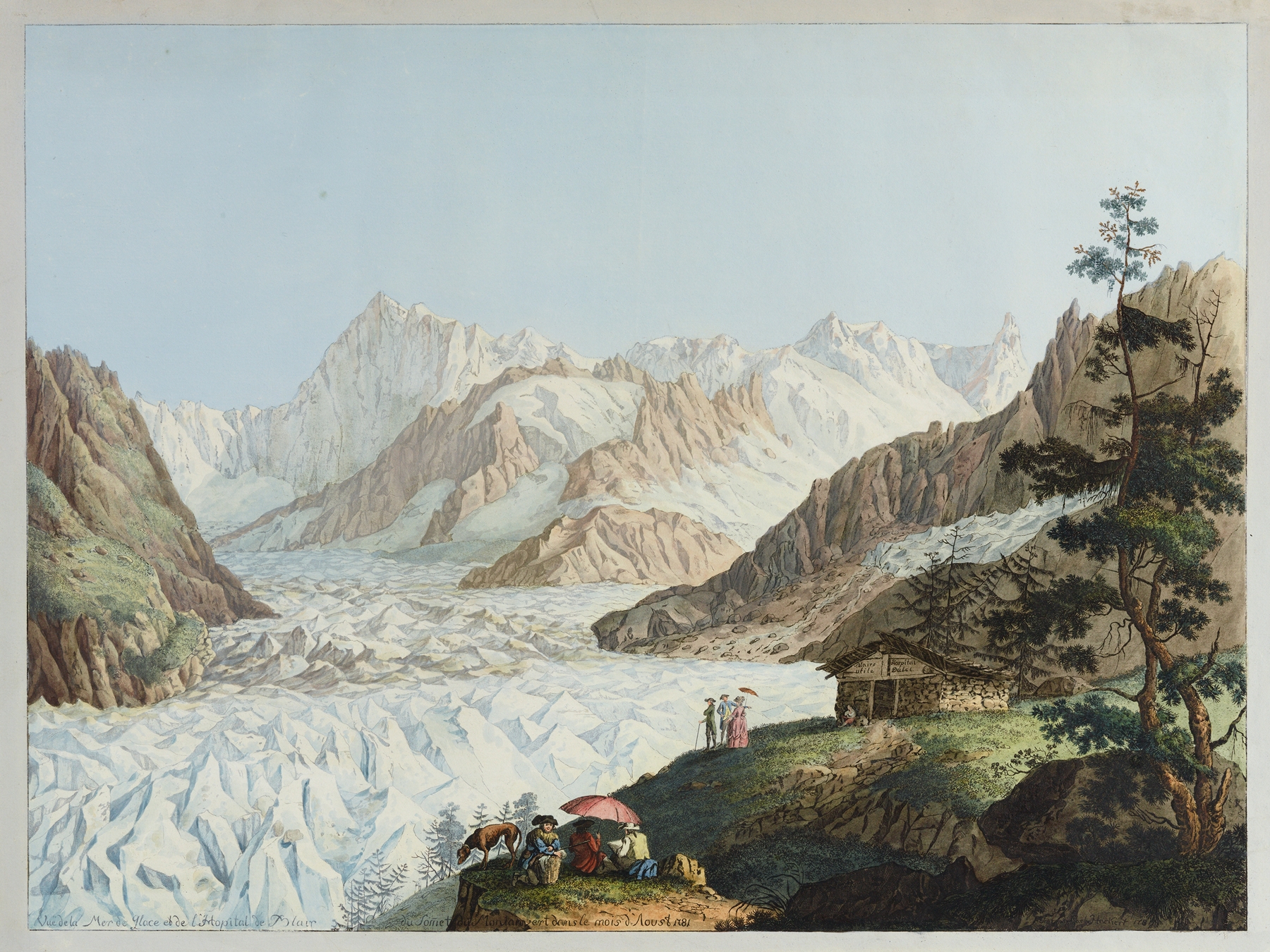
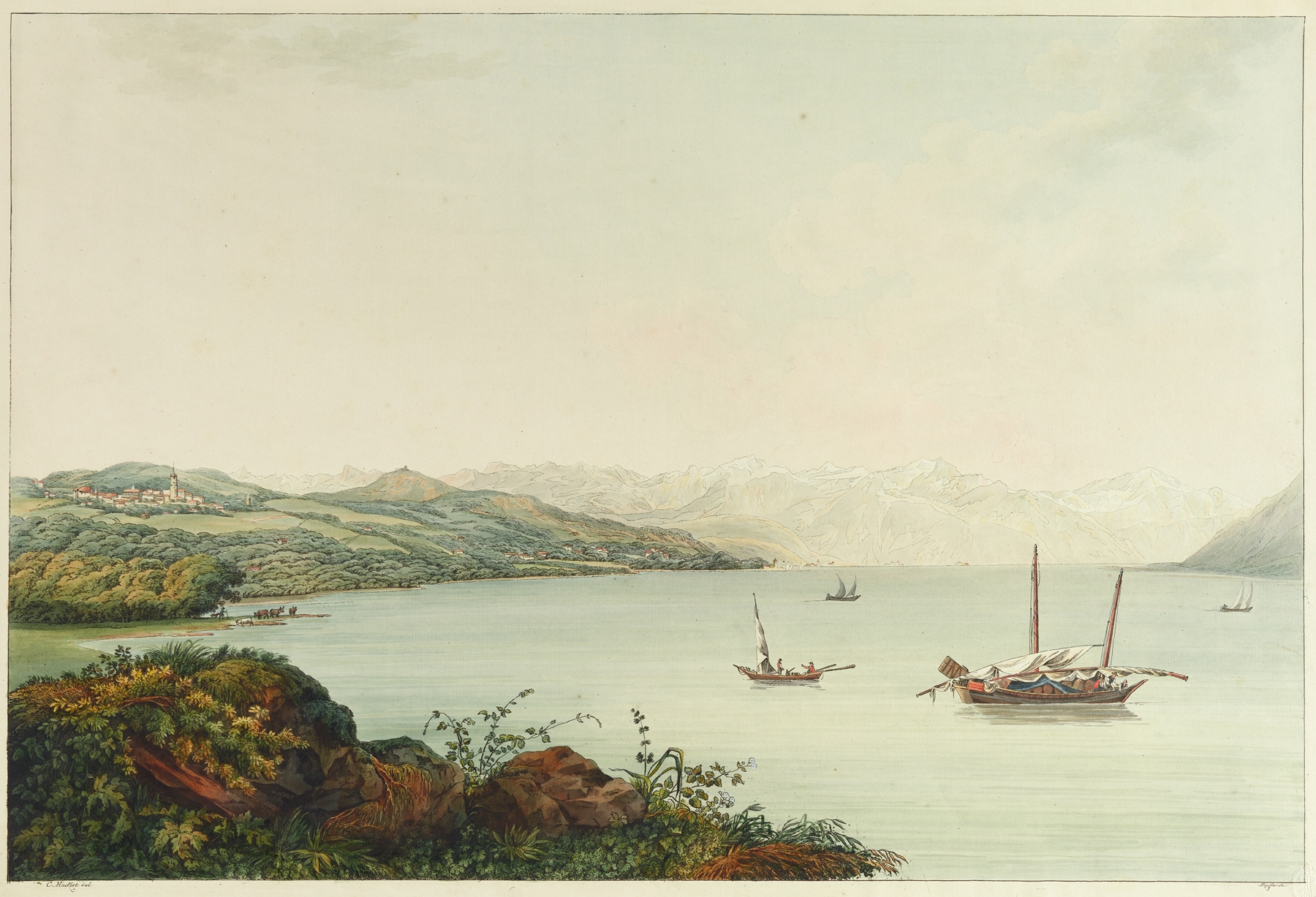
When did color learn to lie? In a world where nature offers its splendor, the quiet emptiness of a landscape can evoke both awe and melancholy. Look to the foreground, where the gentle sweep of the valley captures your gaze; the muted greens and browns blend seamlessly into the distant, shadowy mountains. Focus on the wispy clouds that languidly drift across the sky, rendered in soft whites and grays, hinting at a weathered beauty that is both inviting and forbidding.
Hackert’s meticulous brushwork brings texture to each element, while the interplay of light and shadow creates a sense of depth that pulls you into the scene, inviting contemplation. As you explore further, notice how the stark contrast between the vibrancy of the valley and the somber peaks symbolizes the tension between life and the void. The emptiness surrounding the valley stretches into the horizon, whispering of isolation amid grandeur. This duality presents a poignant reflection on human existence, where beauty can also evoke feelings of desolation, reminding us that even in nature's splendor, a sense of emptiness can linger.
Created in the late 18th century, this work emerged during a time of significant artistic transition in Europe. Hackert, known for his landscapes, painted this piece while rooted in the naturalism that characterized the period. It was an era when artists began to embrace the sublime qualities of nature, often reflecting the emotional undercurrents of a rapidly changing world, where explorers sought the untouched landscapes of the Alps, yet faced the growing sense of alienation from their own experiences.