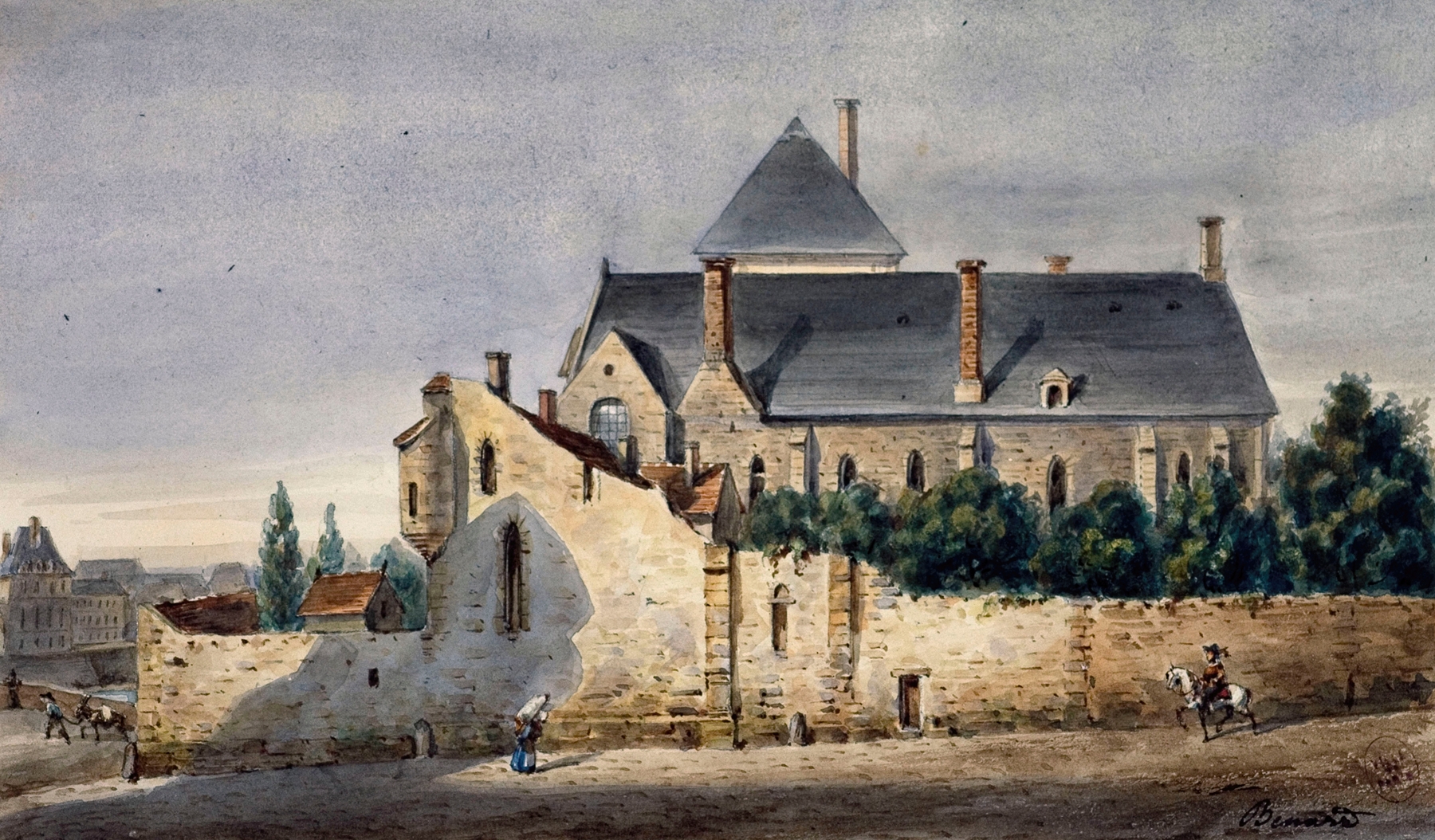
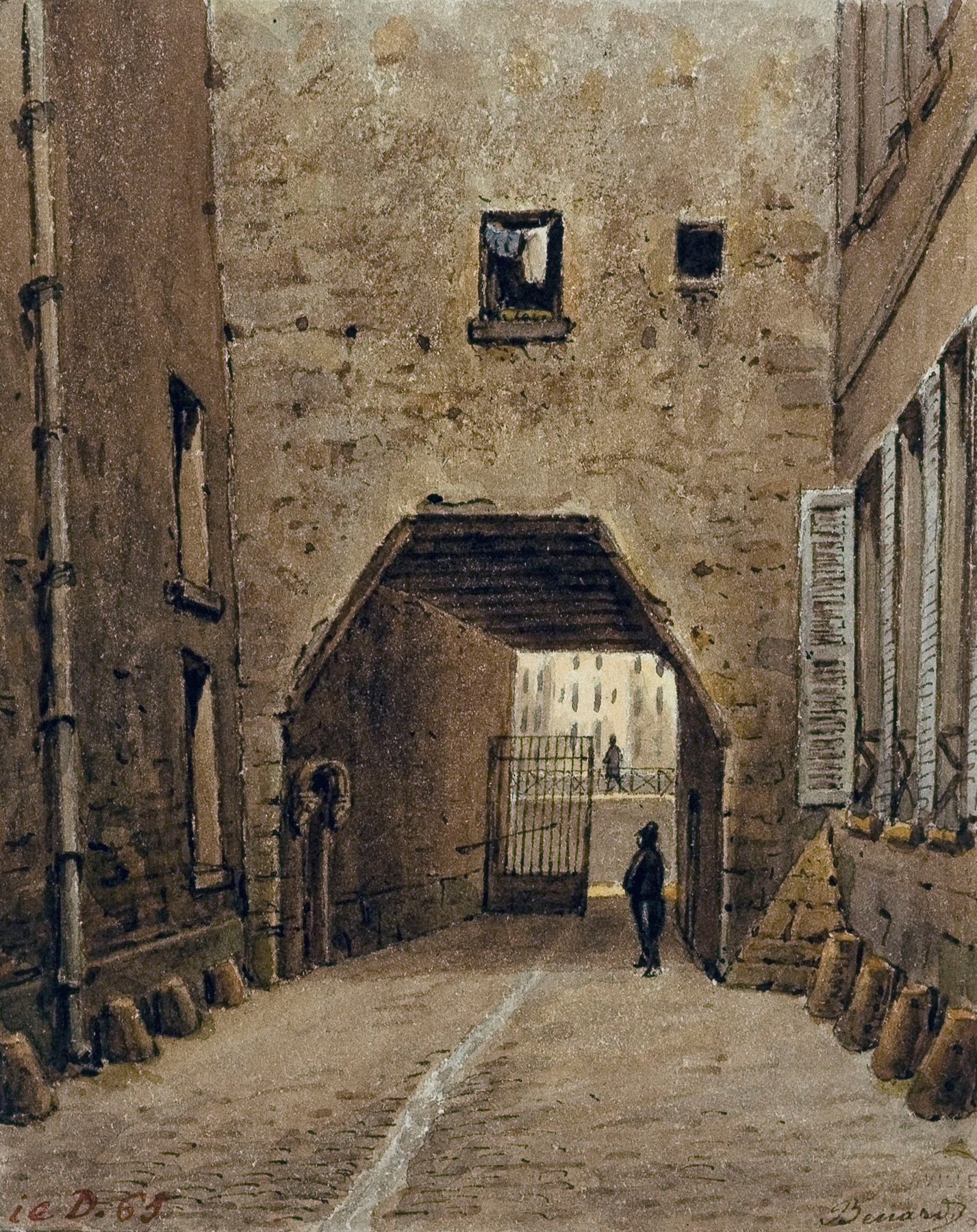
Vue des restes de l’église Saint Martin, place de la collégiale, faubourg Saint Marcel — History & Analysis
Where does light end, and longing begin? This question echoes through the remnants of a world once vibrant, now caught in the stillness of decay and memory. Direct your gaze to the crumbling facade of the church, where shades of ochre and muted gray narrate tales of history. Notice how the soft light streams through the fractured walls, casting gentle shadows that dance along the ground, whispering secrets of a fading past.
The composition centers around these ruins, drawing you in with their haunting beauty, while the sparse vegetation that surrounds them seems to cradle what remains, offering a poignant contrast to the desolation. Here lies a deeper tension—the struggle between permanence and transience. The church, once a cornerstone of community and faith, now stands as a testament to loss and change. The juxtaposition of the vibrant light against the somber decay evokes a sense of nostalgia, while the surrounding silence amplifies the weight of absence.
Each detail, from the lichen-covered stones to the fragile vines, speaks to the passage of time and the resilience of nature, reminding us that beauty can emerge from destruction. During an uncertain period, Auguste-Sébastien Bénard captured this work, likely in the wake of political upheaval in 19th-century France. The remnants of the church reflect both the literal and metaphorical ruins left by the Revolution, as artists sought to document the shifting landscape of their society. Bénard, in his exploration of decay, invites viewers to reflect on what persists amidst the ruins, revealing a complex interplay between history and memory.