Vue d’une rue des faubourgs de Besançon — History & Analysis
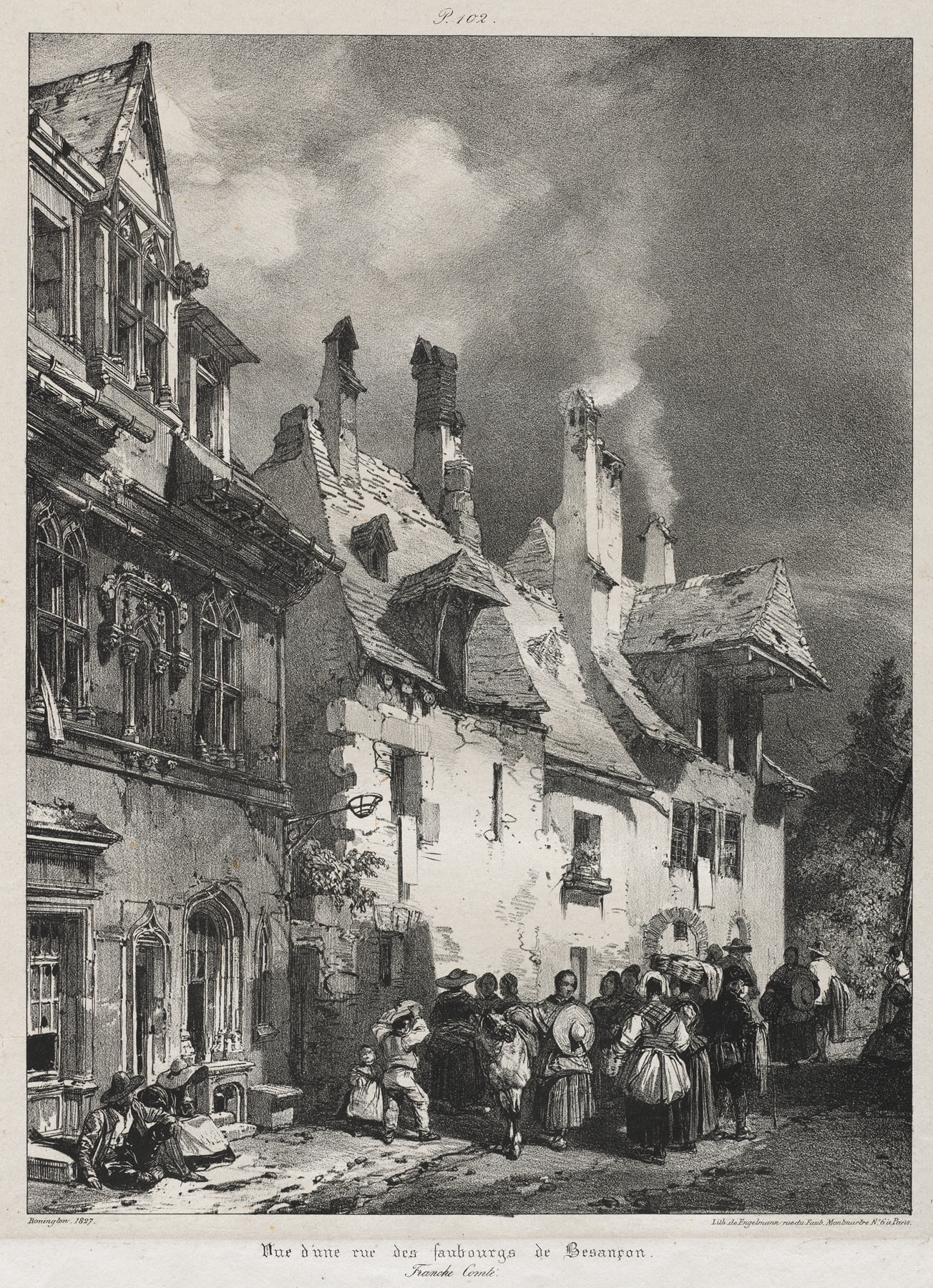
Did the painter know this moment would outlive them? In the quietude of a bustling street in Besançon, a fleeting glimpse captures the essence of daily life, where the ordinary transforms into the eternal. Look to the left at the delicate interplay of light and shadow as it dances across the cobblestones, guiding your eye down the winding street. The warm hues of ochre and soft blues meld, creating a harmonious palette that breathes life into the scene.
Notice how the figures—some lost in conversation, others moving purposefully—are bathed in a gentle glow, each one a testament to the artist's keen observation of human connection within a vibrant urban landscape. Yet, amid this seemingly tranquil moment lies a layer of unspoken longing. The archway in the distance hints at a passage to the unknown, beckoning the viewer to imagine what lies beyond the frame. The juxtaposition of the busy street and the solitary gazes of the pedestrians speaks to a universal experience of yearning—each individual is part of a collective yet distinct in their own narrative.
This subtle tension invites contemplation on the nature of belonging and the passage of time. Richard Parkes Bonington painted Vue d’une rue des faubourgs de Besançon in 1825 during a period of vibrant artistic exploration in France. At just 24 years old, he was establishing his place within the Romantic movement, drawing inspiration from the world around him. This era marked a shift towards personal expression and a deepened interest in capturing the ephemeral moments of life, a pursuit that would resonate through the ages as he immortalized the streets of Besançon.