Willow trunk with undergrowth — History & Analysis
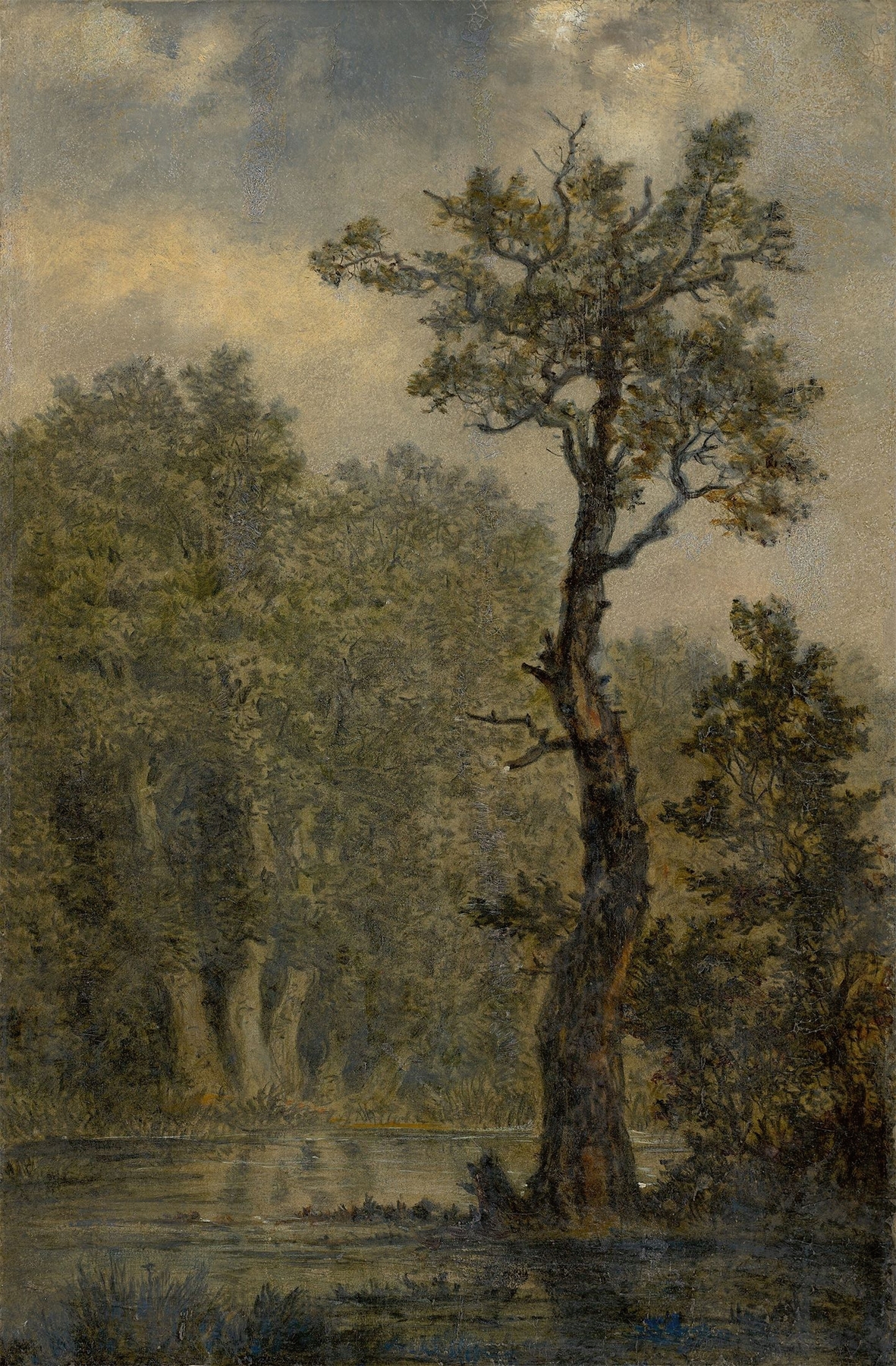
Could beauty survive in a century of chaos? The interplay of light and shadow in a serene landscape suggests that nature holds a refuge, inviting contemplation amidst turmoil. Look to the left at the strong, gnarled trunk of the willow, its bark textured with nature’s own fingerprints. This central element commands attention, beautifully contrasted by the delicate undergrowth that sprawls at its feet. Notice how the soft greens and browns mingle in a gentle embrace, as dappled sunlight filters through the foliage above, casting an ethereal glow on the scene.
The artist employs a delicate palette, with subtle brushwork that brings the vibrant yet tranquil world to life. Beneath the peaceful facade lies a tension between strength and fragility. The willow, a symbol of resilience, stands firm against the unease of an encroaching wildness, embodying life’s tenacity. Meanwhile, the gentle sways of the undergrowth hint at an ever-changing world, suggesting that beauty exists in both stability and flux.
This balance serves as a reminder of nature's dual role as nurturer and observer, providing a space for reflection amidst external chaos. In 1820, in his studio in Dresden, the artist created this work during a time of significant social and political upheaval in Europe. Romanticism was flourishing, encouraging a deep connection to nature and emotions. Carus, influenced by both personal and artistic struggles, sought to capture this intimate bond, creating landscapes that echoed the era’s quest for solace and understanding amidst the chaos of contemporary life.