Winterlandschaft bei untergehender Sonne — History & Analysis
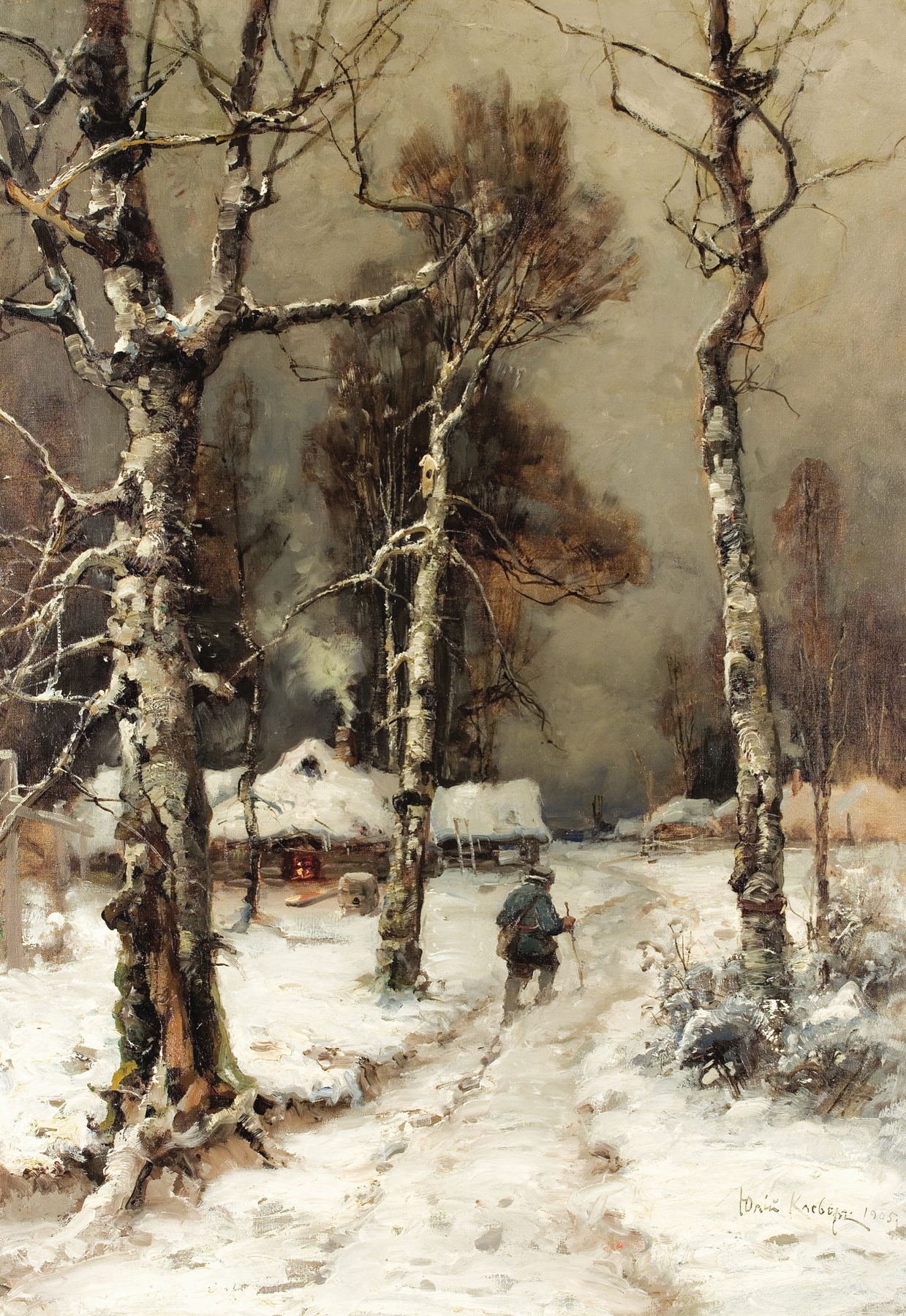
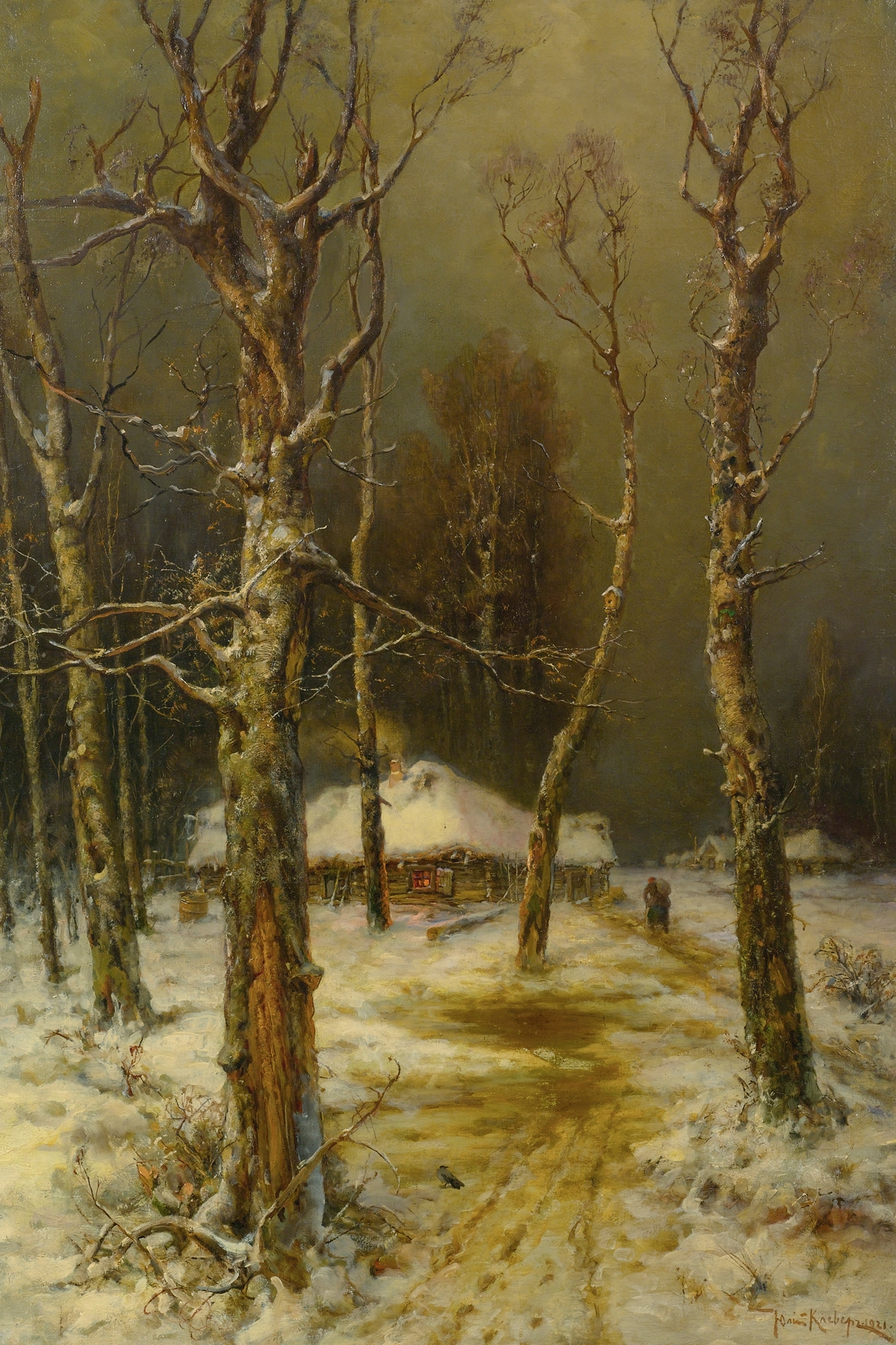
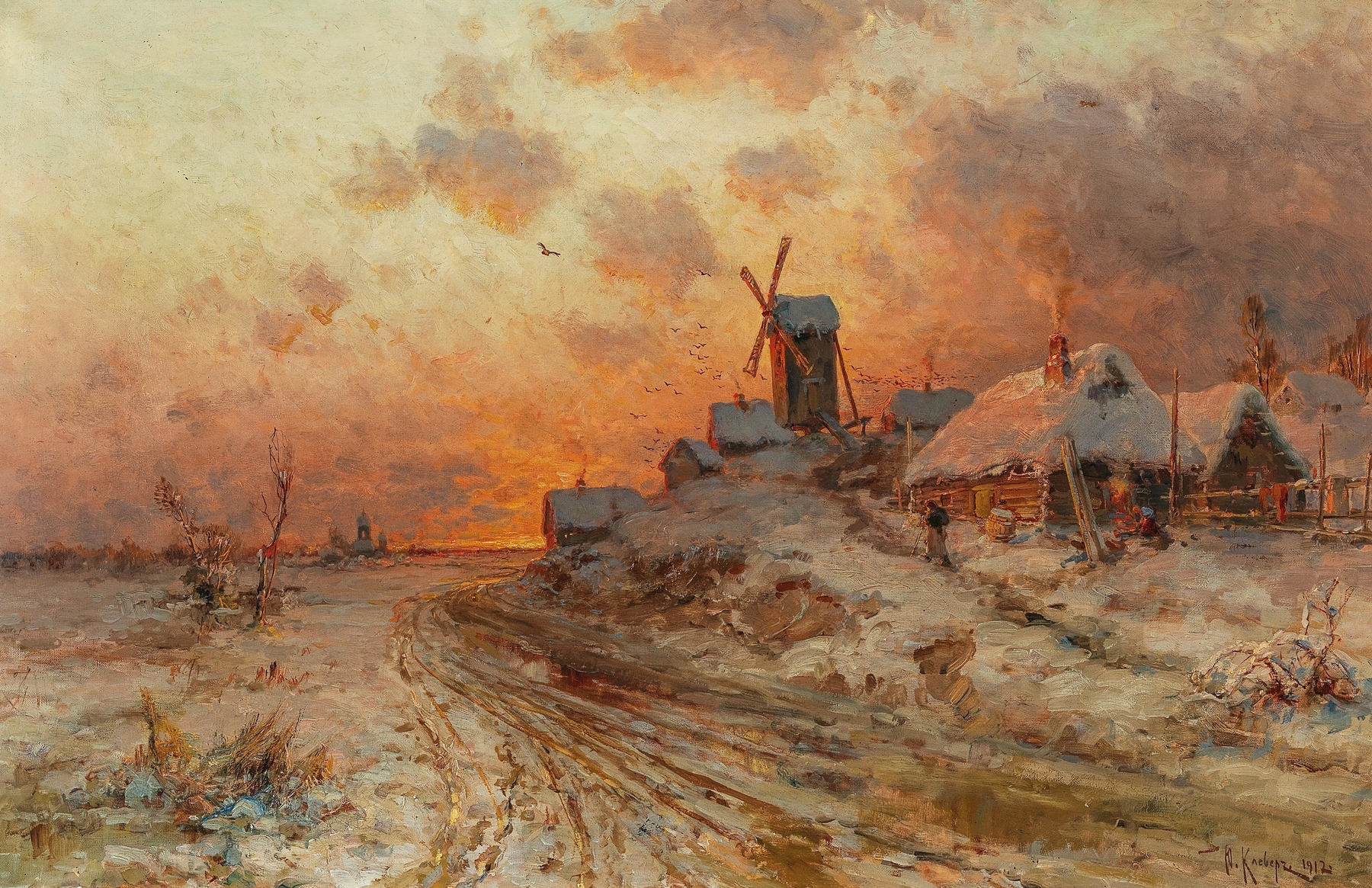
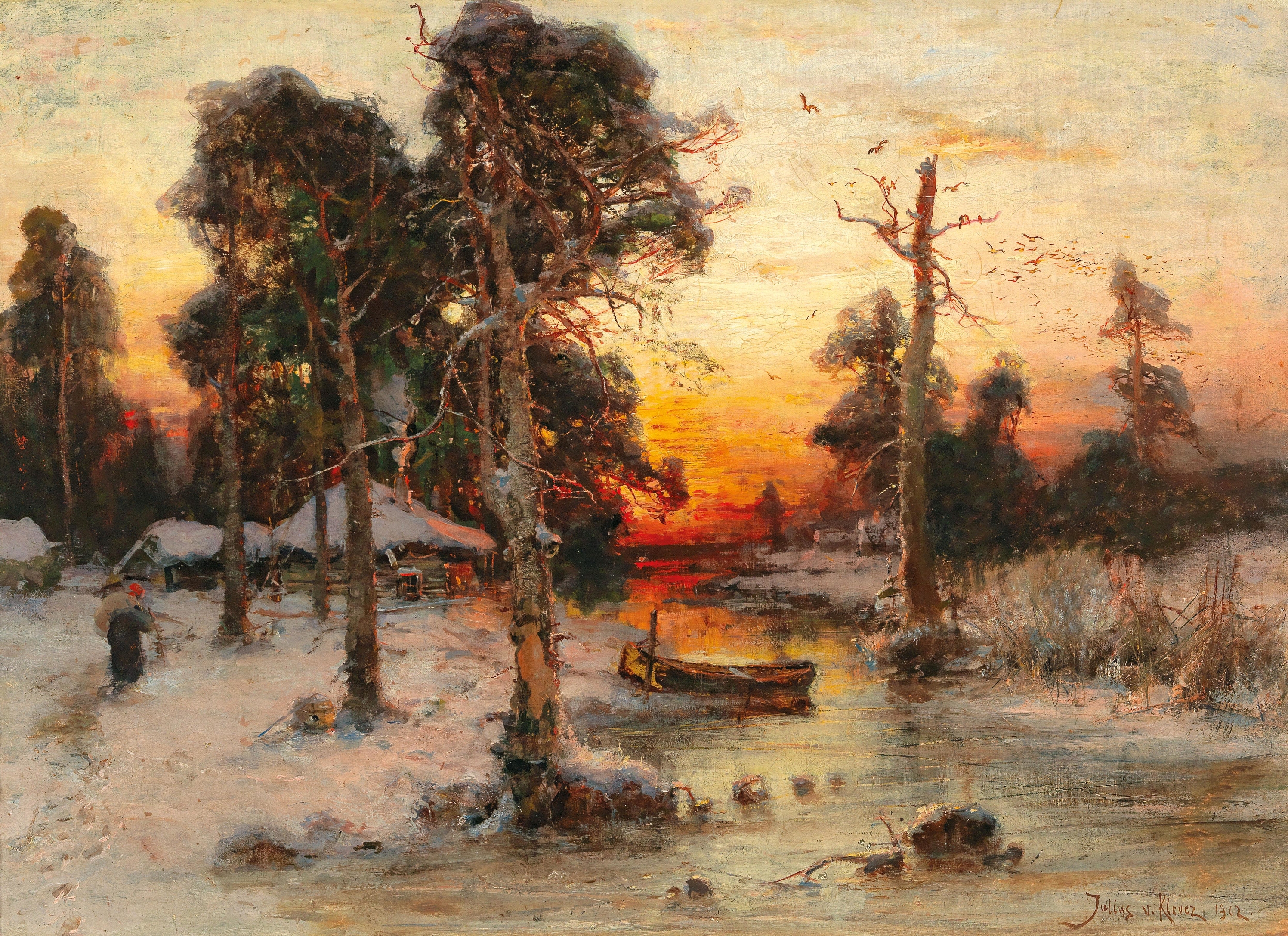
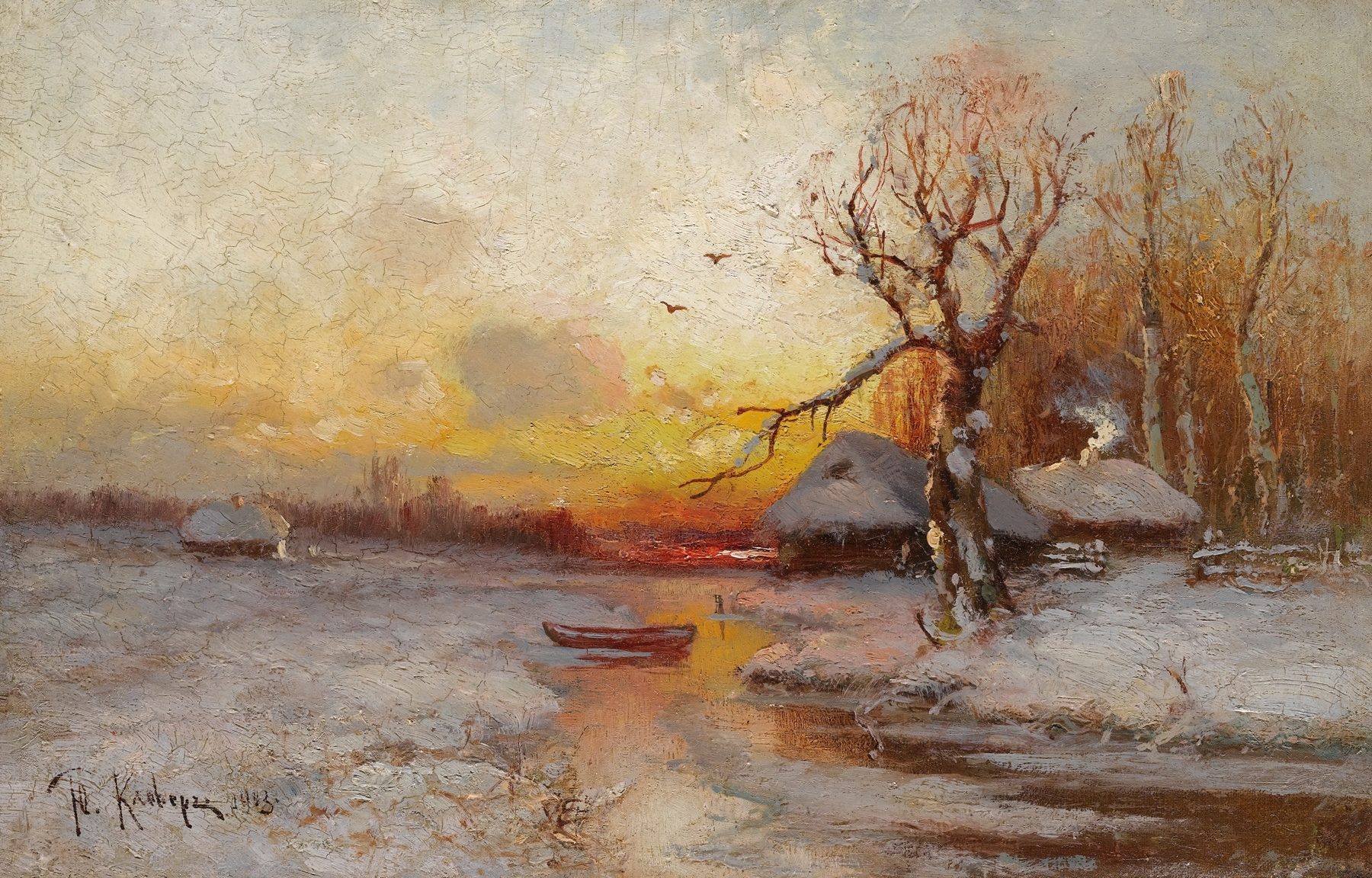
When did color learn to lie? The vivid hues of a sunset can deceive the heart, painting warmth on a cold reality. Look to the center of the canvas, where a fiery sun descends, casting an amber glow across the snow-covered landscape. The contrast between the vibrant sky and the silent white earth is striking, drawing your eye to the interplay of light and shadow. Notice how the artist employs soft brushstrokes to create an almost ethereal quality in the clouds, while the sharp outlines of distant trees stand resolute against the fading light.
This tension between the warmth of the setting sun and the chill of winter creates an emotional depth that resonates with the viewer. Delve deeper into the composition, and you'll find echoes of obsession reflected in the intricate details. The darkened silhouettes of the trees seem to cling to the light, as if resisting the inevitable approach of night, mirroring an internal struggle for warmth and hope. The path winding through the snow leads us onward, beckoning to a destination that remains unseen, symbolizing the pursuit of dreams in the face of solitude.
Each brushstroke reveals a narrative of longing and contrast, encapsulating a moment where beauty and despair coexist. Julius Sergius Klever painted this piece during a pivotal time in his career, as he grappled with his identity as an artist in the late 19th century. Working primarily in Russia, he was influenced by the Symbolist movement and the search for emotional depth within landscapes. The world was in flux, as technology advanced and traditional forms of expression were challenged, shaping his artistic voice and leading to a fascination with nature's ethereal qualities.