Yard in St. Valery-en-Caux, with hens — History & Analysis
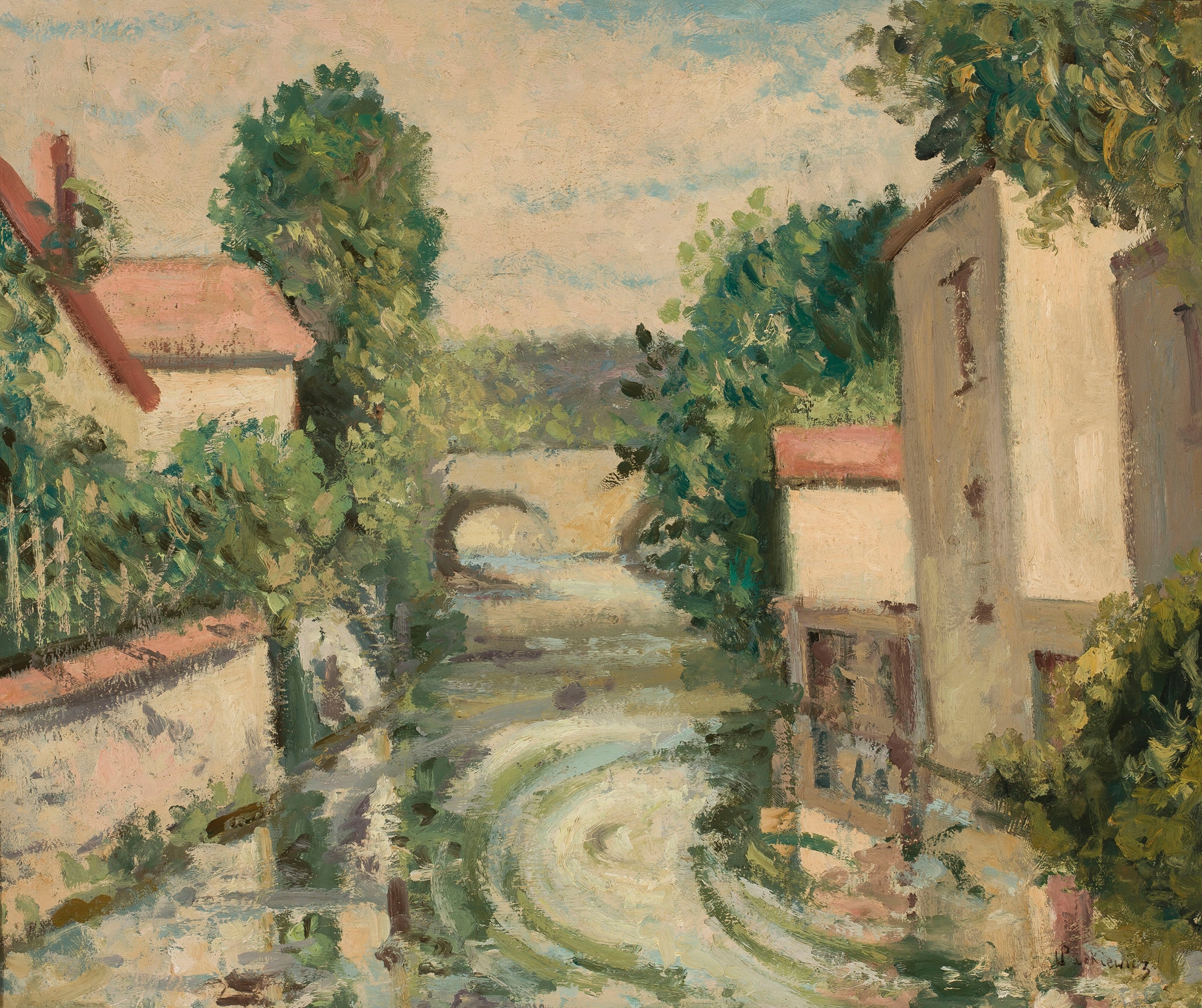
“Every brushstroke is a heartbeat remembered.” In the quiet of an artist’s world, creation unfolds, capturing the delicate nuances of everyday life. Focus on the foreground, where a cluster of hens roams freely, their feathers rendered in soft, earthy tones that contrast vividly with the lush, verdant yard. The play of dappled light filters through leaves, creating a kaleidoscope of light and shadow that dances across the scene. Notice how the brushwork pulsates with energy, each stroke breathing life into the composition, while the background blurs softly, directing your gaze towards the animated life in the forefront.
Hidden within this simplicity, the painting reflects a deeper dialogue between nature and domesticity. The hens, symbols of sustenance and comfort, evoke a sense of tranquility and routine, yet their lively movement hints at an undercurrent of vitality amidst stillness. Moreover, the gentle hues of green and brown serve as a reminder of nature's embrace and the cycles of life—an homage to the ordinary that often goes unnoticed. Painted in 1907, during a period when the artist was exploring the impressionist movement in France, this work epitomizes the transition from the chaotic brushstrokes of earlier forms to a more deliberate style.
Pankiewicz was immersed in a time of artistic experimentation, where the ethos of capturing fleeting moments became paramount, and his residence in St. Valery-en-Caux offered an idyllic setting for such contemplative works. This painting stands not only as a representation of domestic life but also as a reflection of the artist’s evolving vision within the greater narrative of modern art.