Zelfportret van Wenzel Hollar — History & Analysis
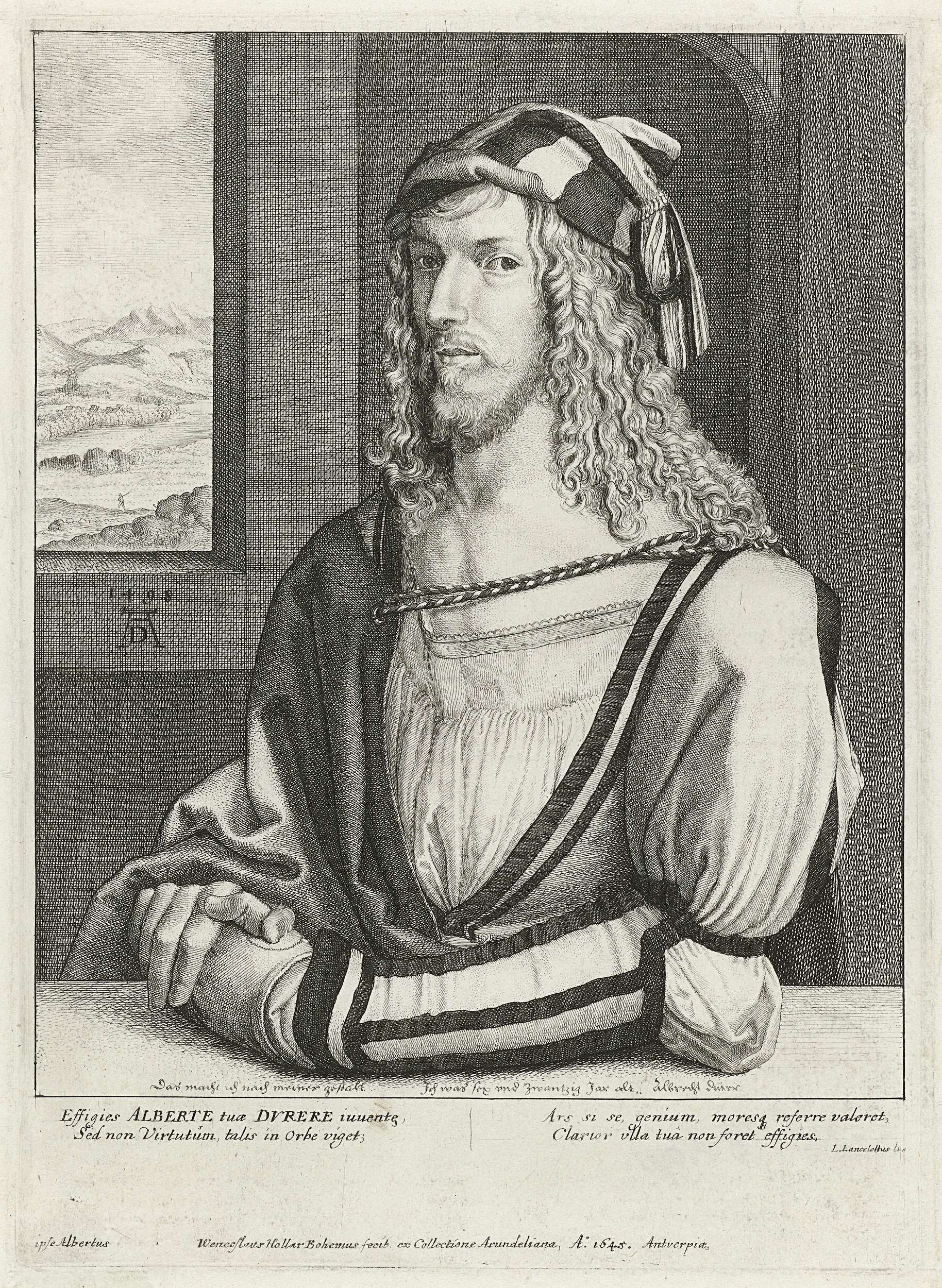
Could beauty survive in a century of chaos? In Wenceslaus Hollar's Zelfportret van Wenzel Hollar, this question reverberates through the delicate interplay of light and shadow, a testament to resilience amid tumult. Look closely at the thoughtful gaze of the artist as he positions himself in the foreground, his prominent features brought to life by soft chiaroscuro. Notice how the light gracefully skims across his face, accentuating the depth of his expression, while shadows cradle the contours of his silhouette.
The deep, rich tones of the background, contrasting with his pale skin, create an intimate yet stark atmosphere, inviting the viewer into a private moment of introspection. This self-portrait captures the duality of identity and vulnerability. The subtle tension in his expression, a mix of confidence and uncertainty, speaks to the artist's internal struggles and the external chaos of the 17th century — a time marked by conflict and change. The meticulous detailing of his clothing, rich and ornate, contrasts with the somber shadows, suggesting that outward appearances may mask deeper truths.
The powerful use of light serves not only to illuminate but also to highlight the fragility of beauty in a world rife with turmoil. In 1647, Hollar was living in London, having fled the upheaval of the Thirty Years' War in his native Bohemia. This period of displacement profoundly influenced his work, leading him to explore themes of identity and personal reflection. As the art world began to shift, moving toward the Baroque, Hollar's unique approach to etching and drawing would leave an indelible mark, bridging the nuances of his past with the complexities of his present.