A bord de la flotte — History & Analysis
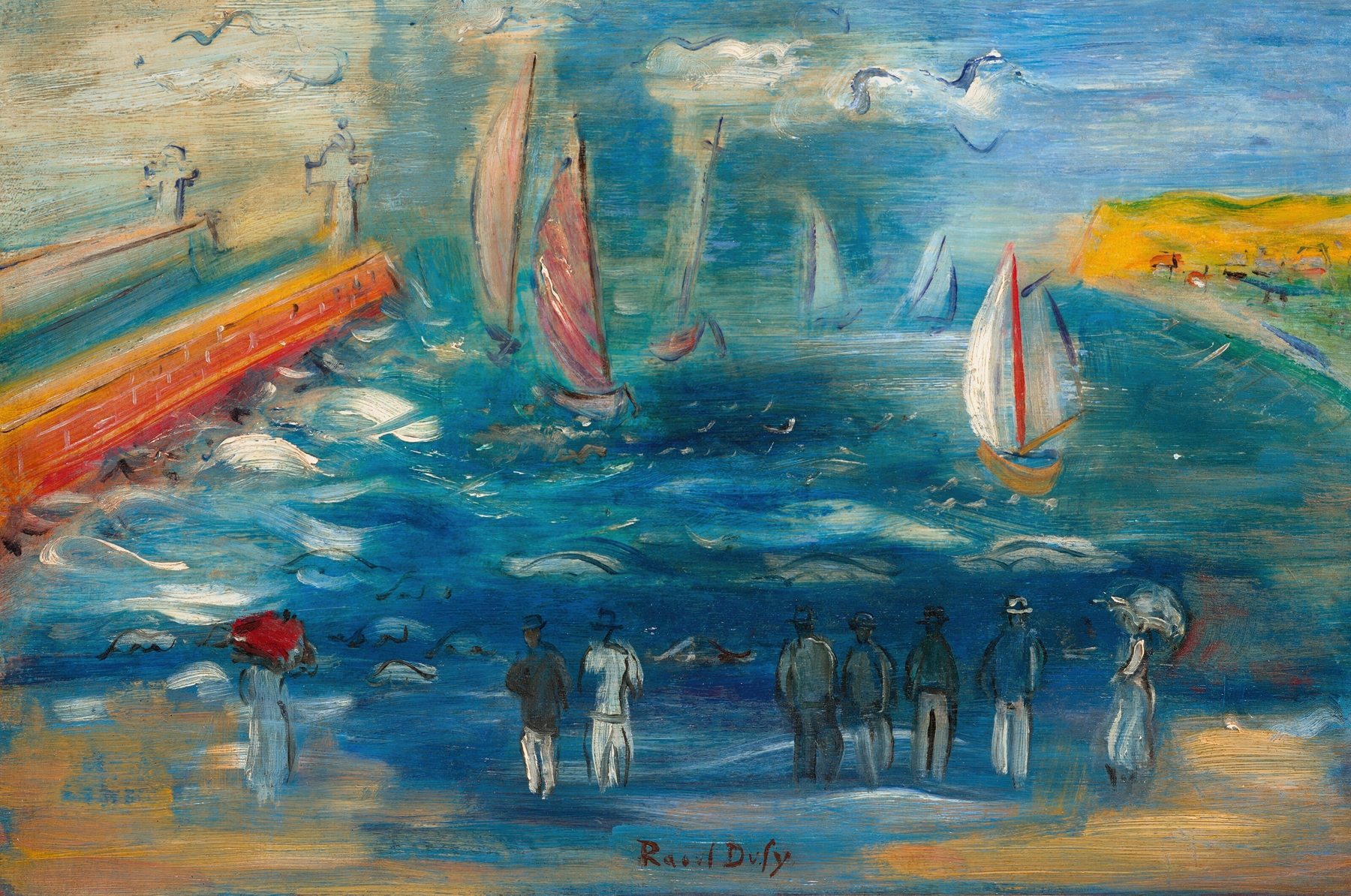
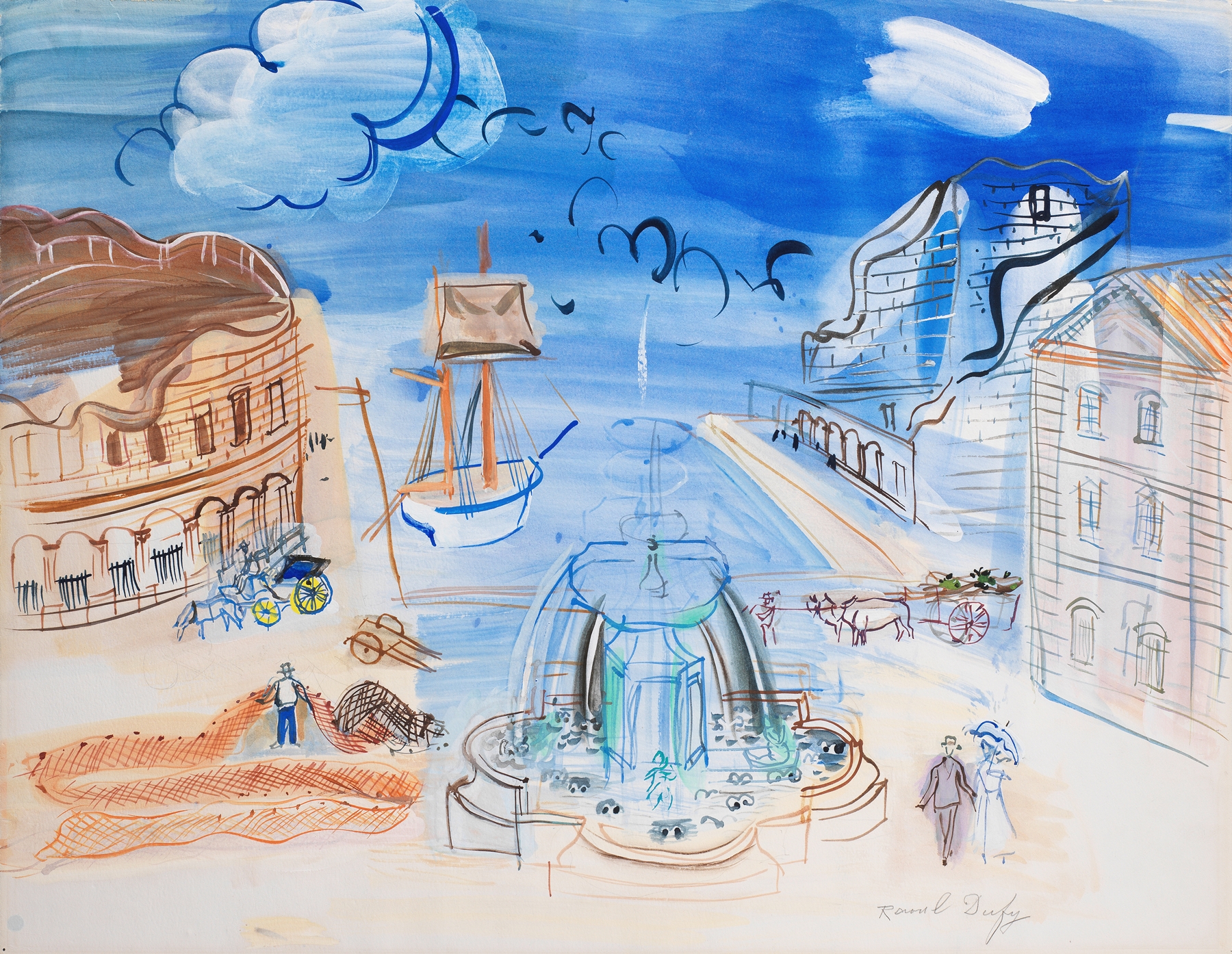
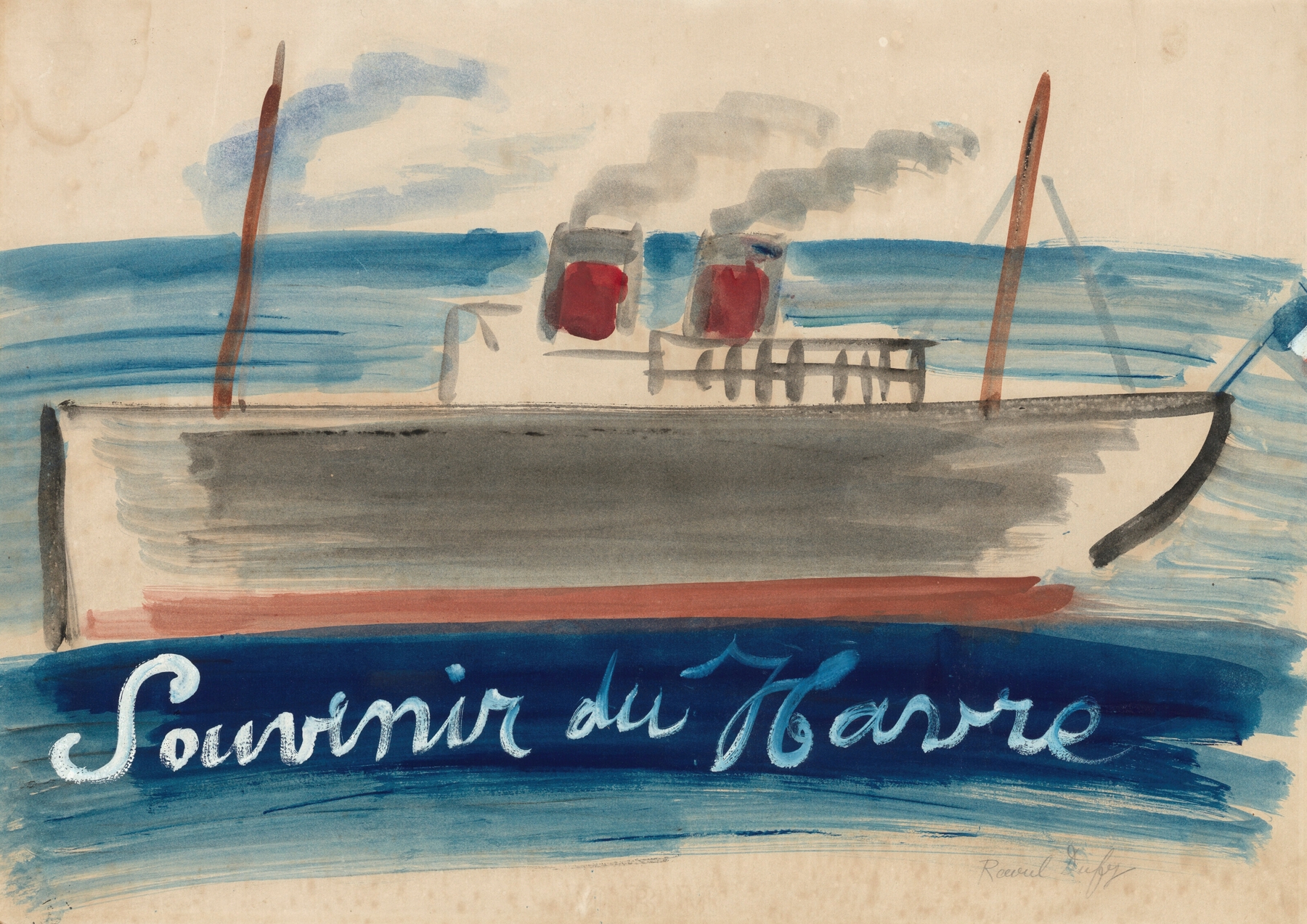
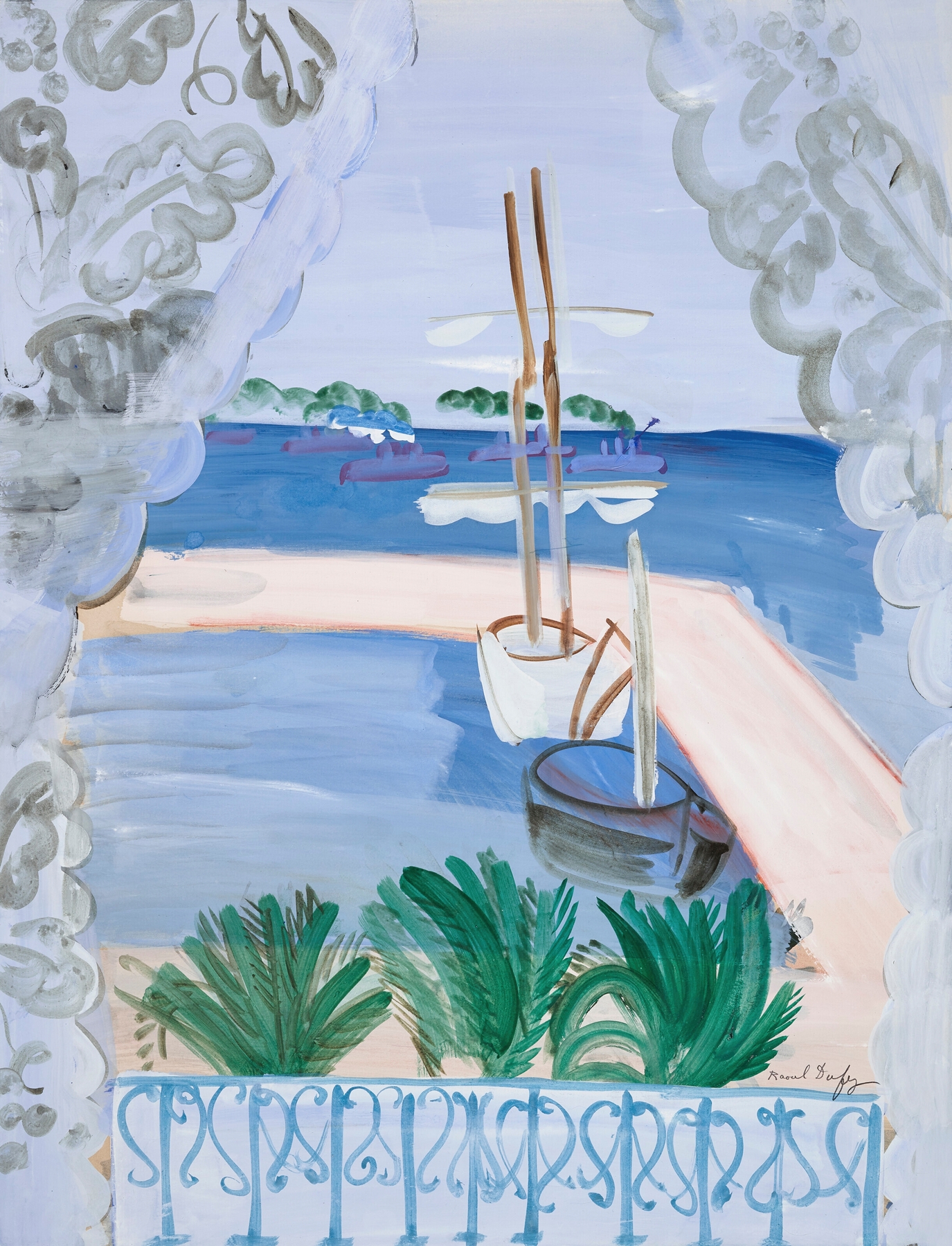
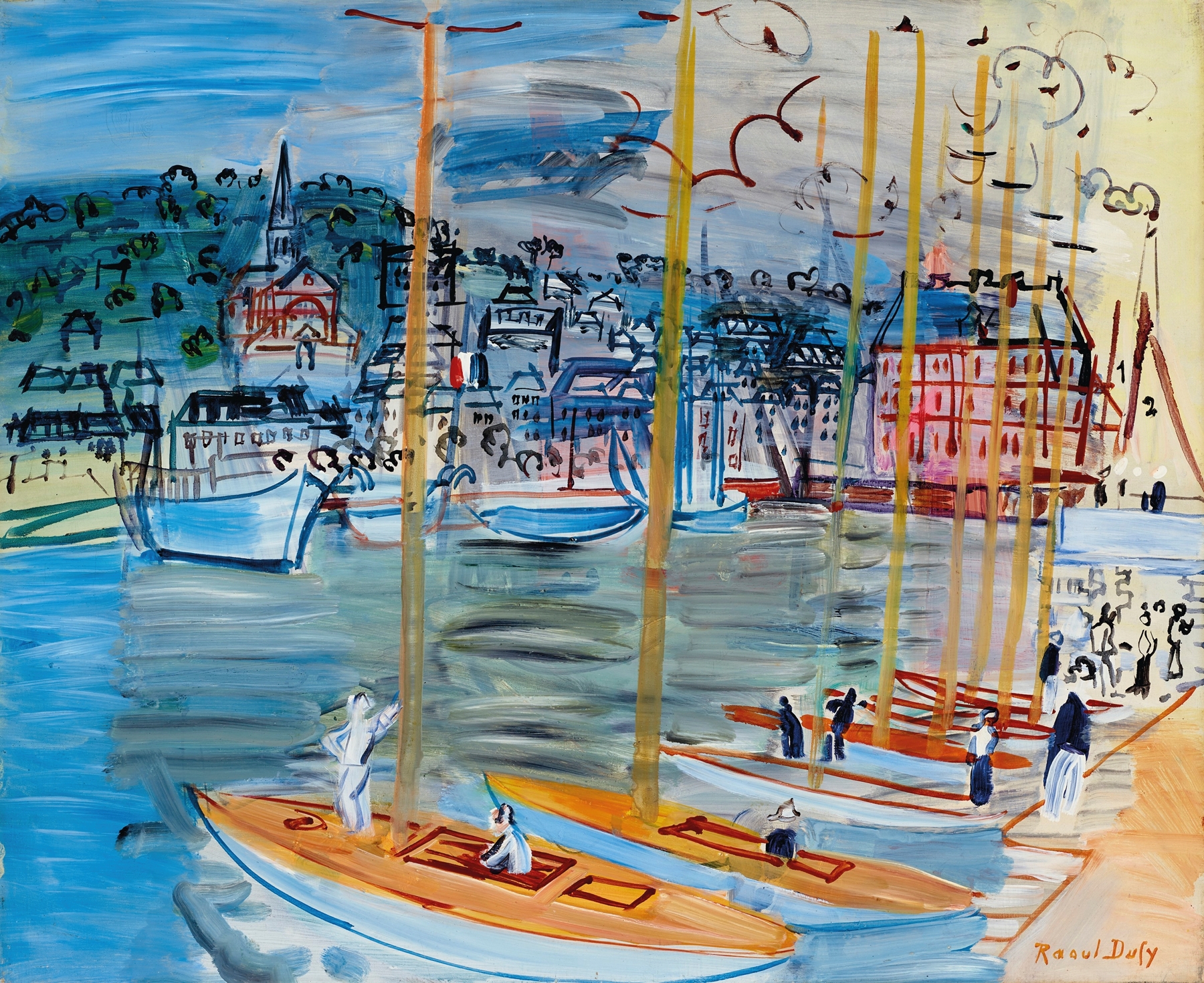
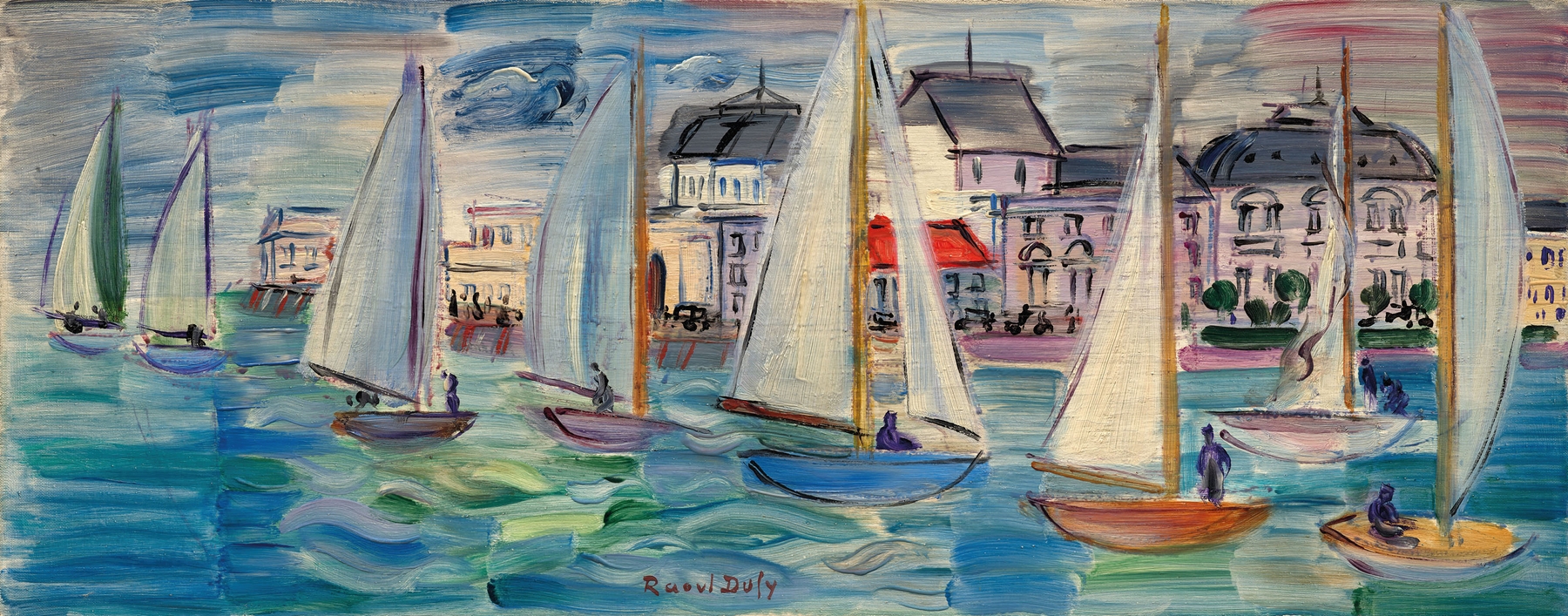
Where does light end, and longing begin? In A bord de la flotte, Raoul Dufy's brush captures the hazy intersection of both, inviting viewers into a world where the vibrant colors speak of both joy and yearning. Look to the left at the vibrant blues swirling with hints of ochre and coral. These colors blend seamlessly, drawing the eye toward the lively scene upon the water’s surface, where sailboats glide gracefully, their sails catching the wind. Notice how Dufy's loose, energetic strokes create movement, mimicking the gentle lapping of waves and the fluttering of fabric.
The luminous quality of the paint suggests a golden hour, bathing everything in a warm embrace, enhancing the emotional landscape of the piece. Yet beneath the surface, an undercurrent of longing resides. The boats, while animated, are isolated, emphasizing a sense of separation and distance. The juxtaposition of bright hues against the muted tones of the distant shoreline elicits a bittersweet feeling—the joy of exploration entangled with a subtle ache for connection.
Each boat becomes a vessel not just on the water, but for dreams and aspirations, hinting at the personal journeys of those aboard. In 1939, as Dufy painted this work in France, Europe was on the brink of tumultuous change. The atmosphere was charged with uncertainty as shadows of war loomed. This piece reflects the artist’s own longing for freedom and escape, encapsulating a fleeting moment of beauty amidst the encroaching darkness, a testament to both the resilience of the human spirit and the ephemeral nature of joy.