A Forest at Dawn with a Deer Hunt — History & Analysis
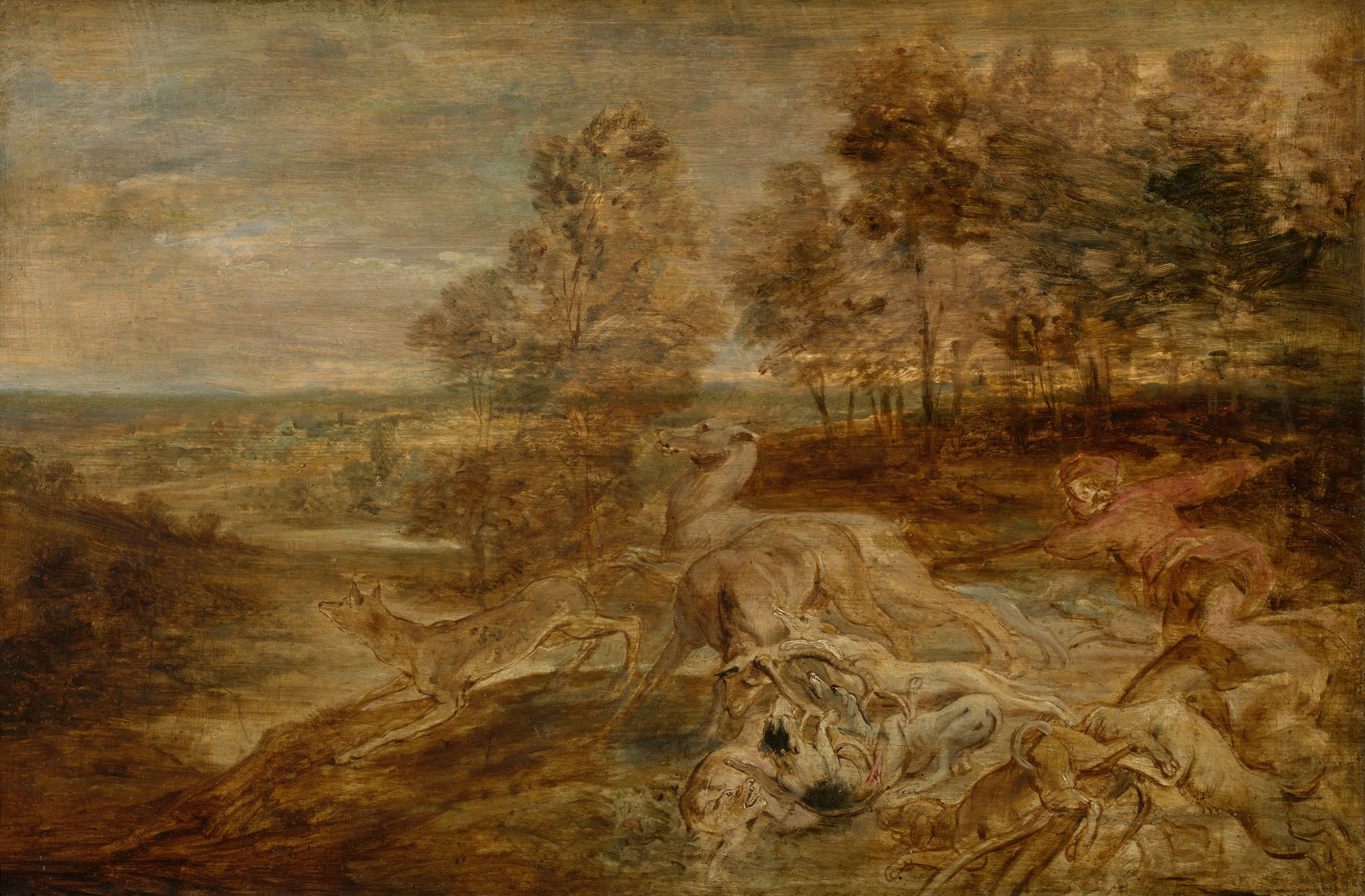
Who listens when art speaks of silence? In A Forest at Dawn with a Deer Hunt, the stillness of the early morning invites contemplation, as if the canvas holds its breath, waiting for the sun to burst forth. Look to the left, where the soft hues of dawn—pinks, golds, and gentle greens—bathe the forest in a tender light. The deer, caught mid-motion, becomes a central point of focus; its graceful form contrasts against the dynamic chaos of the hunters in the background.
Notice the way Rubens masterfully uses light to create depth, illuminating the deer while shadow envelops the hunters, suggesting the duality of life and death that pervades this early hour. Within this tranquil scene, contrasts emerge. The calm beauty of nature faces the violent intrusion of the hunt, a poignant reminder of life's fragility amidst the cycle of rebirth. Each stroke speaks of the tension between man and the wild, as the hunters, poised with bows and arrows, awaken the forest's serenity.
The undercurrent of anticipation is palpable, as the moment teeters between peace and the hunt’s brutal reality. In 1635, Rubens was at the zenith of his career, blending Baroque grandeur with intimate portrayals of nature. He resided in Antwerp, where the art community thrived despite the turmoil of the Thirty Years' War engulfing Europe. This period reflected a fascination with both mythological and pastoral themes—a fitting backdrop for this evocative piece that explores the intricate relationships between humanity, nature, and the inexorable passage of time.