A Fresh Breeze — History & Analysis
Who listens when art speaks of silence? In George Wesley Bellows' A Fresh Breeze, the weight of mortality lingers within the gentle movements of his figures, inviting reflection on the transient nature of life. Look to the left at the young woman, her hair swirling in the breeze, a moment captured in the vibrancy of color and motion. Notice how the brushstrokes create a rhythmic flow that draws your eye across the canvas, uniting the figures in a shared experience of freedom and vitality.
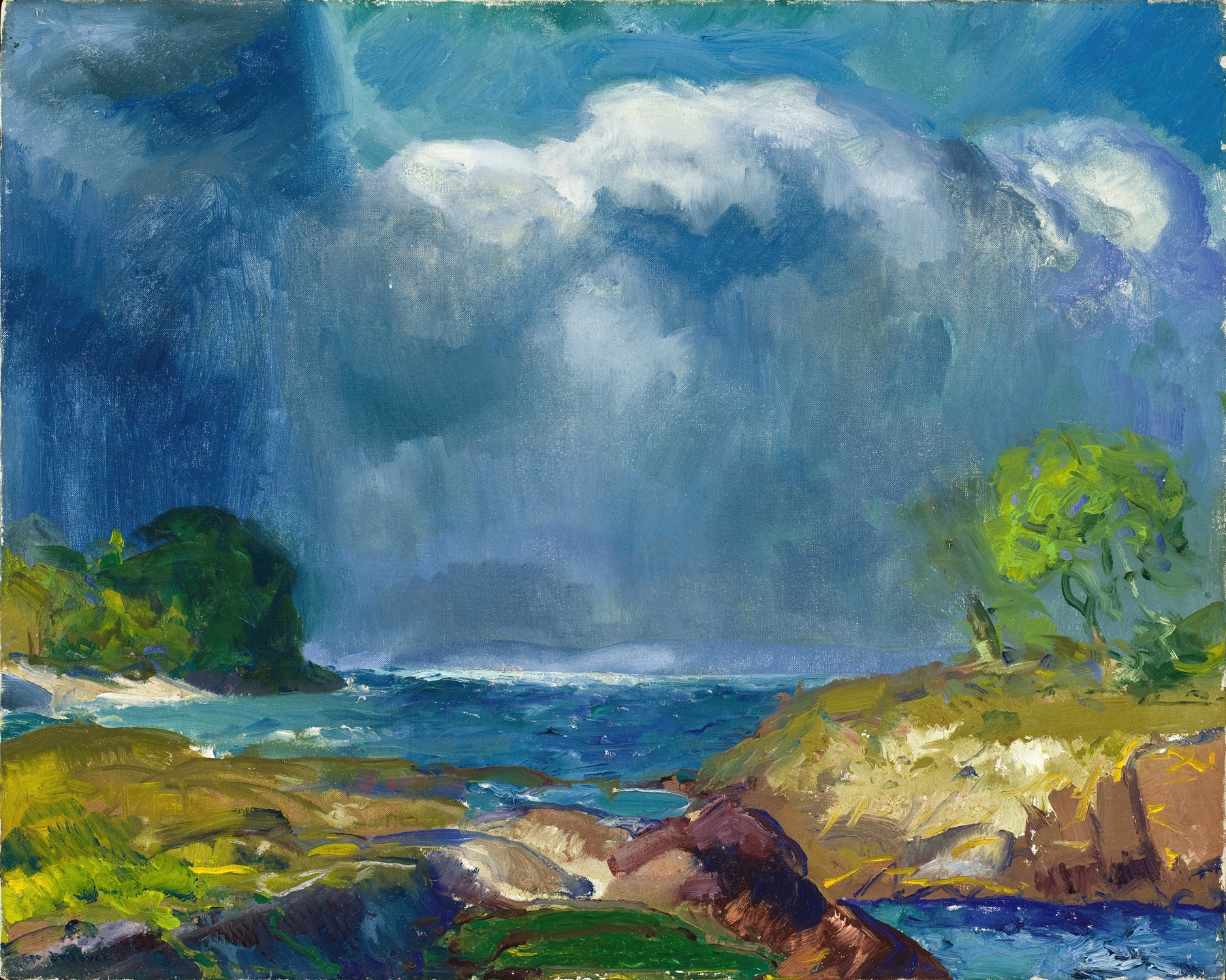
The contrast between the soft pastel sky and the deeper hues of the ocean enhances the spirit of hope and renewal, while the dynamic composition suggests a moment on the brink—a balance between serenity and the unpredictable forces of nature. Delve deeper into the emotional undercurrents of the piece, where the lightness of the scene juxtaposes the heaviness of impermanence. The playful breeze carries whispers of longing, as the figures seem to momentarily escape the weight of their existence while acknowledging their inevitable return to stillness. This interplay invites the viewer to contemplate how fleeting moments of joy can coexist with the awareness of life’s fragility.
In 1913, during a period of profound transformation in both Bellows’ career and the art world, he created this piece while living in New York City, surrounded by the vigor of modernism. The artist was shifting toward more dynamic compositions that showcased everyday life, influenced by the vigorous energy of his city and the changes in society at large. This work reflects not only his artistic evolution but also a broader cultural awakening to the nuances of human experience.