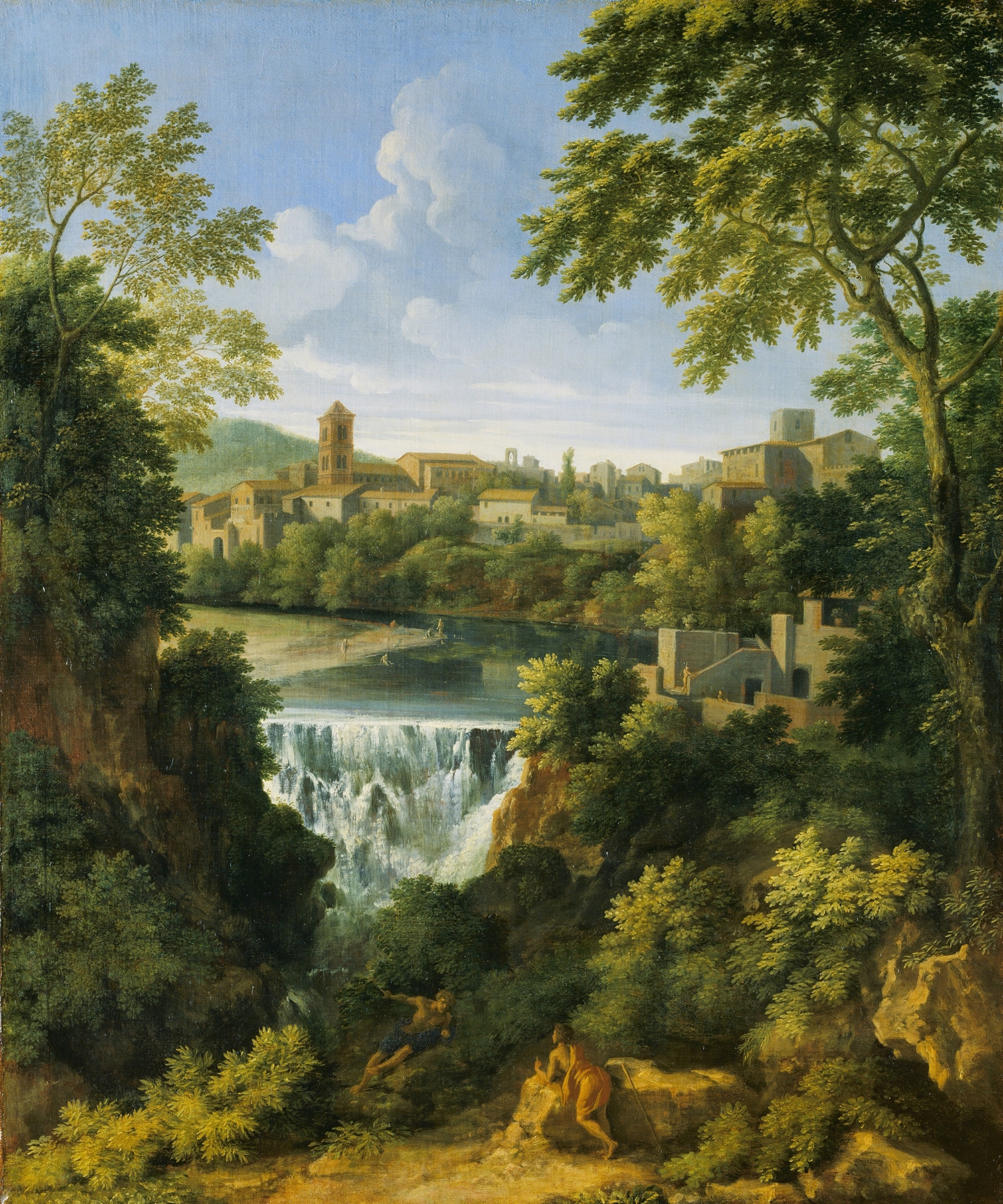
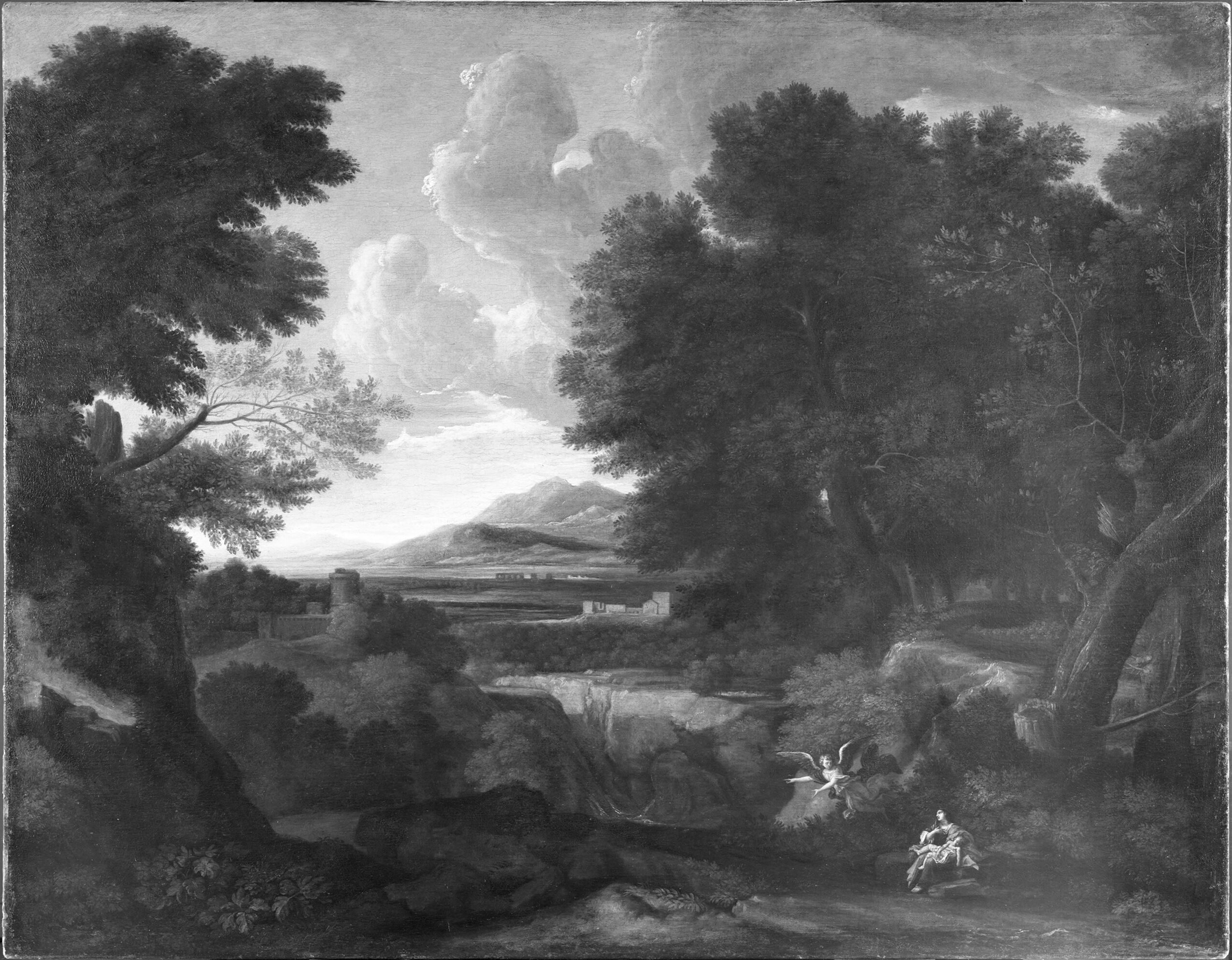
A view of Tivoli, with the Temple of the Sibyl — History & Analysis
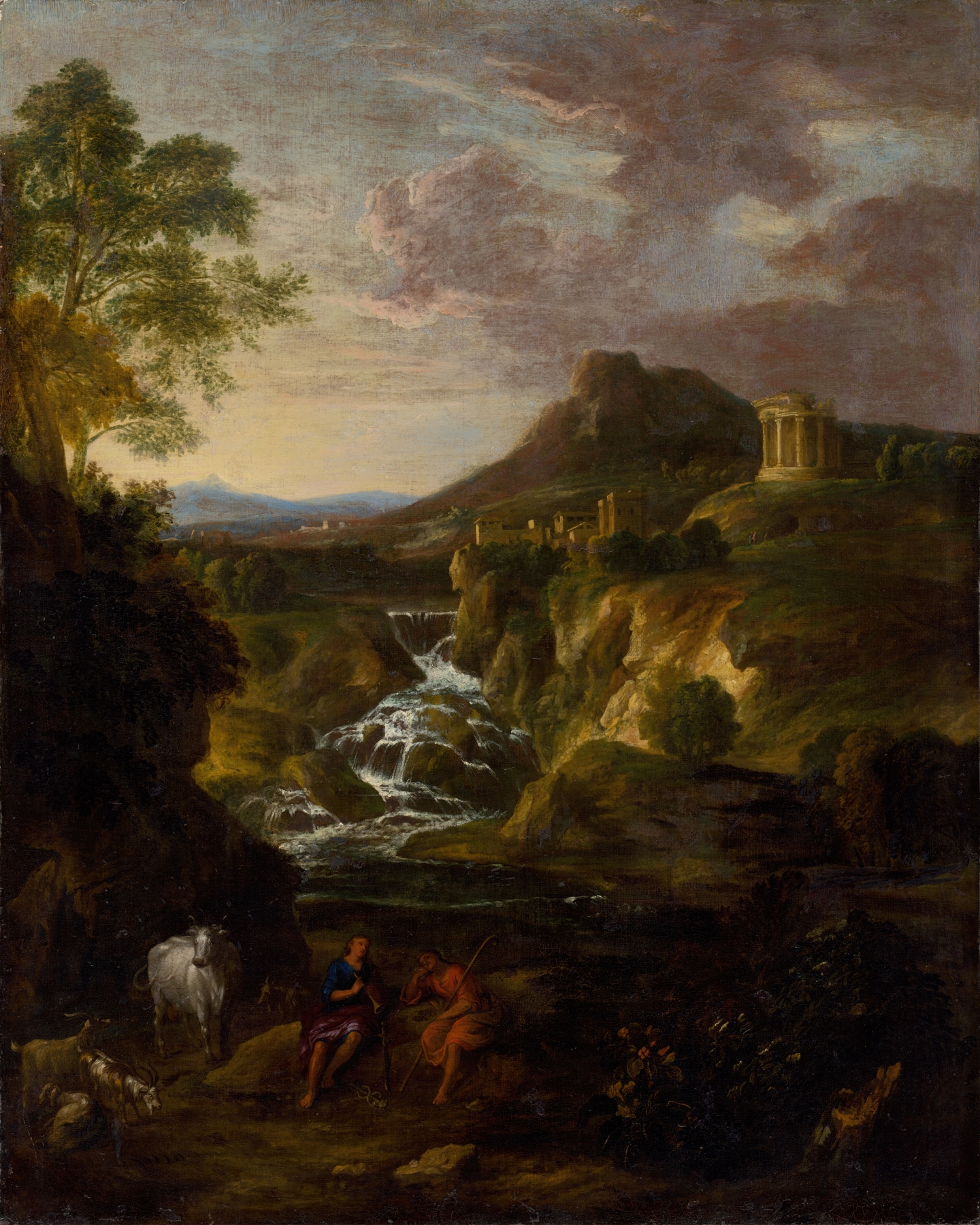
What secret hides in the quiet of the canvas? Beneath the tranquil beauty of a distant landscape lies a profound truth waiting to be unveiled. Look to the left at the gentle slope leading to the temple, where vibrant greens and soft earth tones invite you to wander. Notice how the clouds hang delicately above the horizon, their wispy forms contrasting with the steadfast structure of the Temple of the Sibyl. The light filters through the trees, casting dappled shadows that dance across the ground, enriching the depth and texture of the scene.
Each brushstroke whispers of nature’s grandeur and evokes a sense of serenity. The interplay of light and shadow reveals more than just a pastoral view; it encapsulates the tension between the eternal and the ephemeral. The temple stands as a symbol of ancient wisdom, while the vibrant flora around it suggests the passage of time and the inevitable decay of all things. This juxtaposition evokes a yearning for truth—truth found within the stillness, where nature and history converge.
The viewer is left contemplating not only the beauty of the scenery but the profound narratives of humanity's legacy. Gaspard Dughet painted this piece during the 17th century, a time when the appreciation for landscape art was burgeoning in Italy. His works were influenced by the classical ideals of beauty and harmony, as well as the emerging Baroque style. Living in a period steeped in the exploration of nature, he captured not just physical landscapes but also the emotional landscapes of the human experience.