A Waterfall, Moonlight — History & Analysis
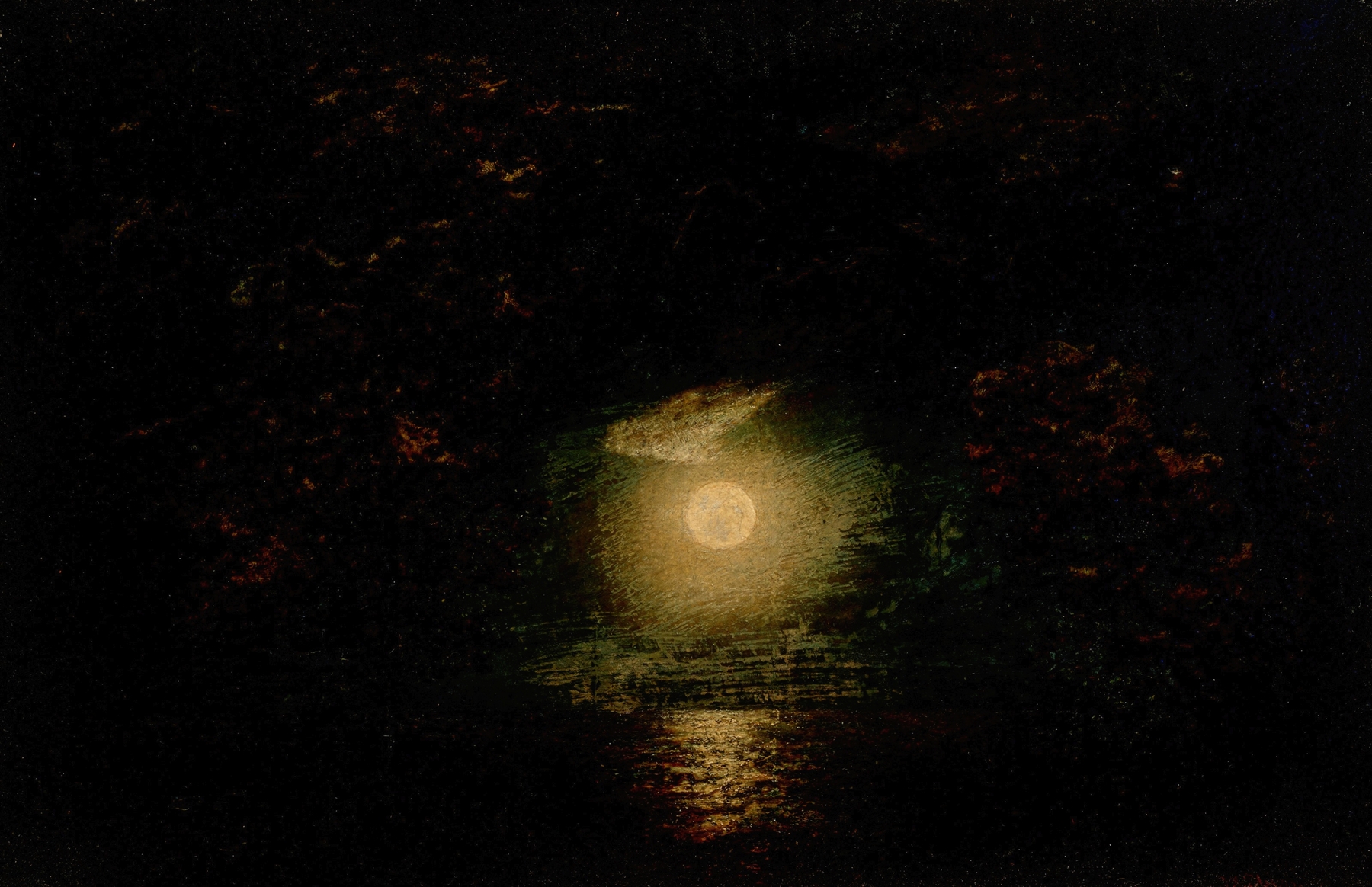
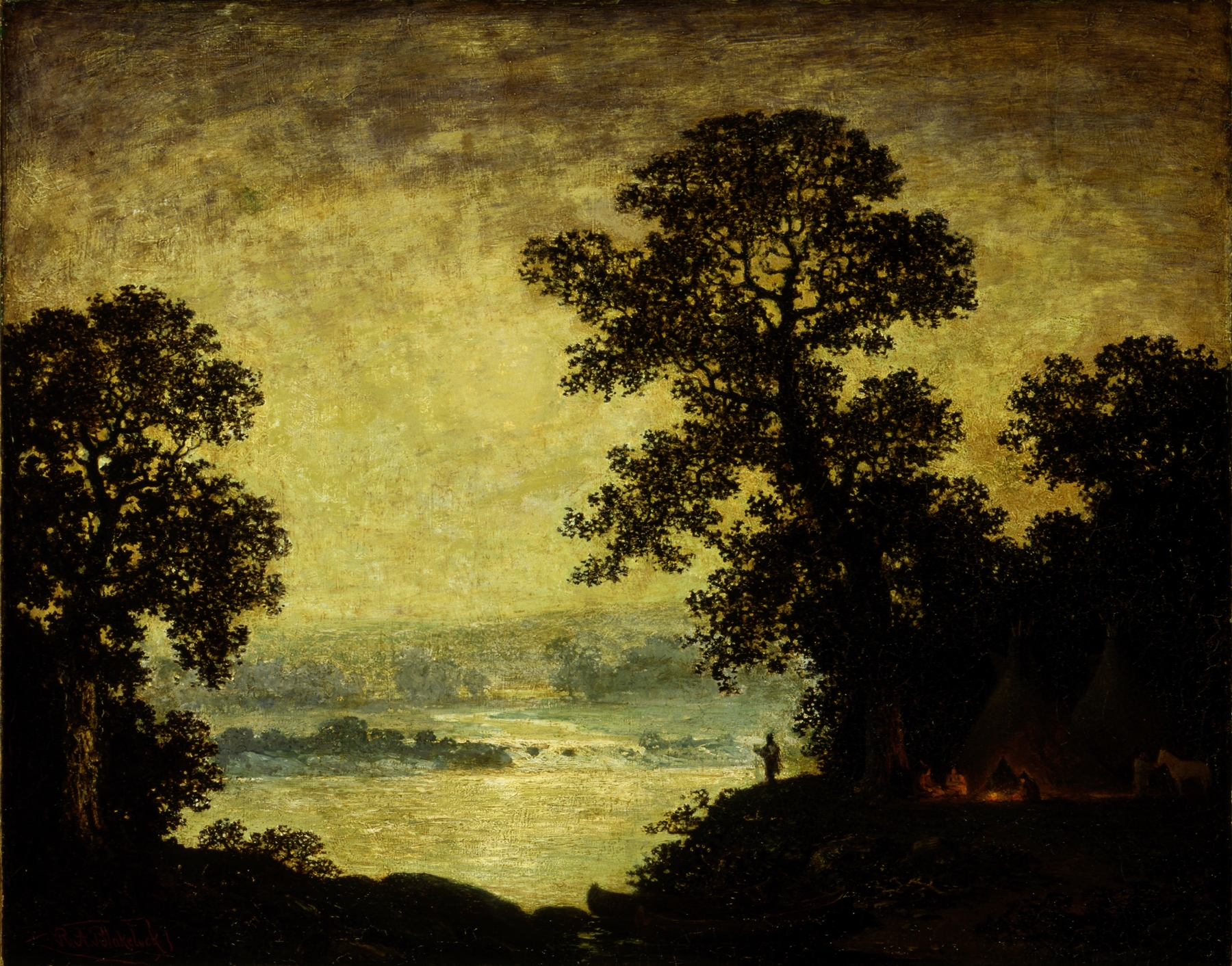
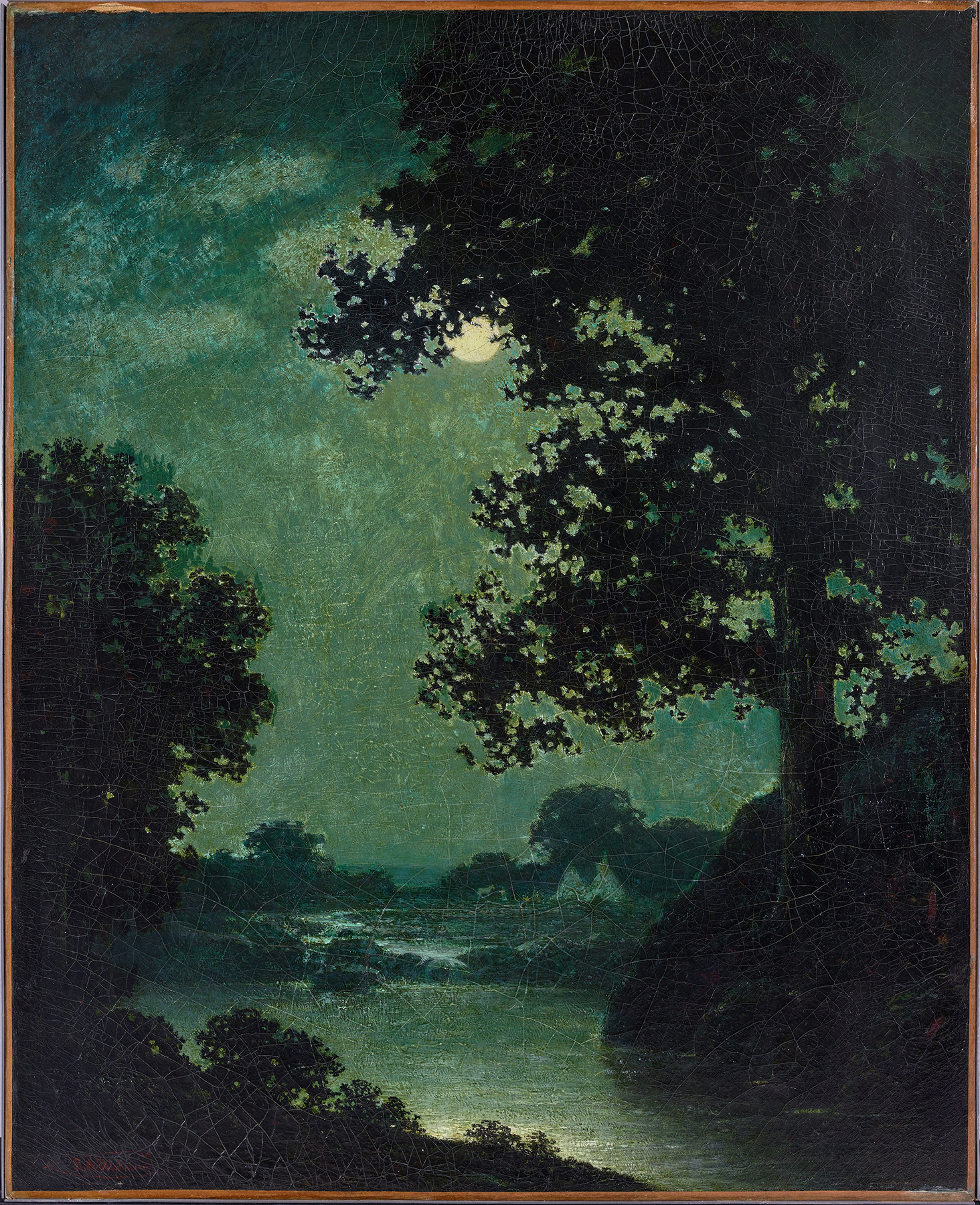
Who listens when art speaks of silence? In A Waterfall, Moonlight, the stillness of night is amplified by the shimmering reflection of the moon on water, inviting contemplation and reverie. Look to the center, where the cascading water flows down dark rocks, illuminated by a silvery glow. The artist employs a soft palette of blues and greens, skillfully blending the colors to create an ethereal atmosphere.
Notice how the moonlight gently grazes the surface of the water, giving it an almost otherworldly sheen. The texture of the brushstrokes adds to the sense of movement, while the surrounding foliage stands in shadow, allowing the waterfall to dominate the composition. In this tranquil scene, there is a profound tension between light and darkness, reflecting the duality of nature and human experience. The serene flow of the waterfall contrasts with the oppressive shadows, suggesting a hidden depth of emotion beneath the surface.
This dichotomy invites viewers to ponder the passage of time and the ephemerality of beauty, as the moon’s light reveals both the enchanting and the elusive aspects of the natural world. Created around 1886, this piece emerged during a period of introspection for its artist, who grappled with personal challenges and a search for artistic identity. Blakelock was influenced by the Hudson River School, yet he moved towards a more intimate and mystical approach to landscape painting. His work reflects not only his struggle but also the broader artistic shifts of the time, as artists began to explore the emotional resonance of nature, moving beyond mere representation.