Pool in the Adirondacks — History & Analysis
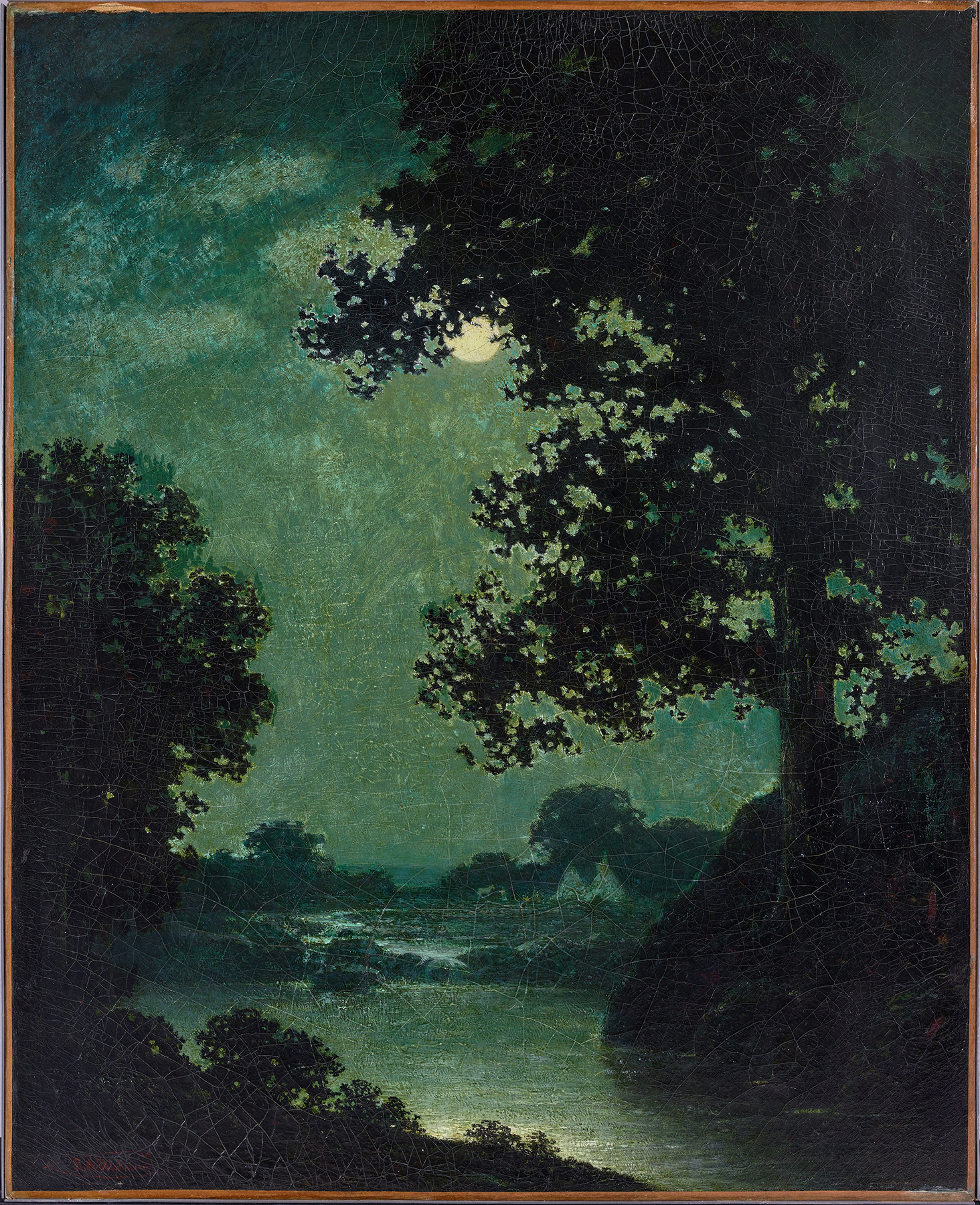
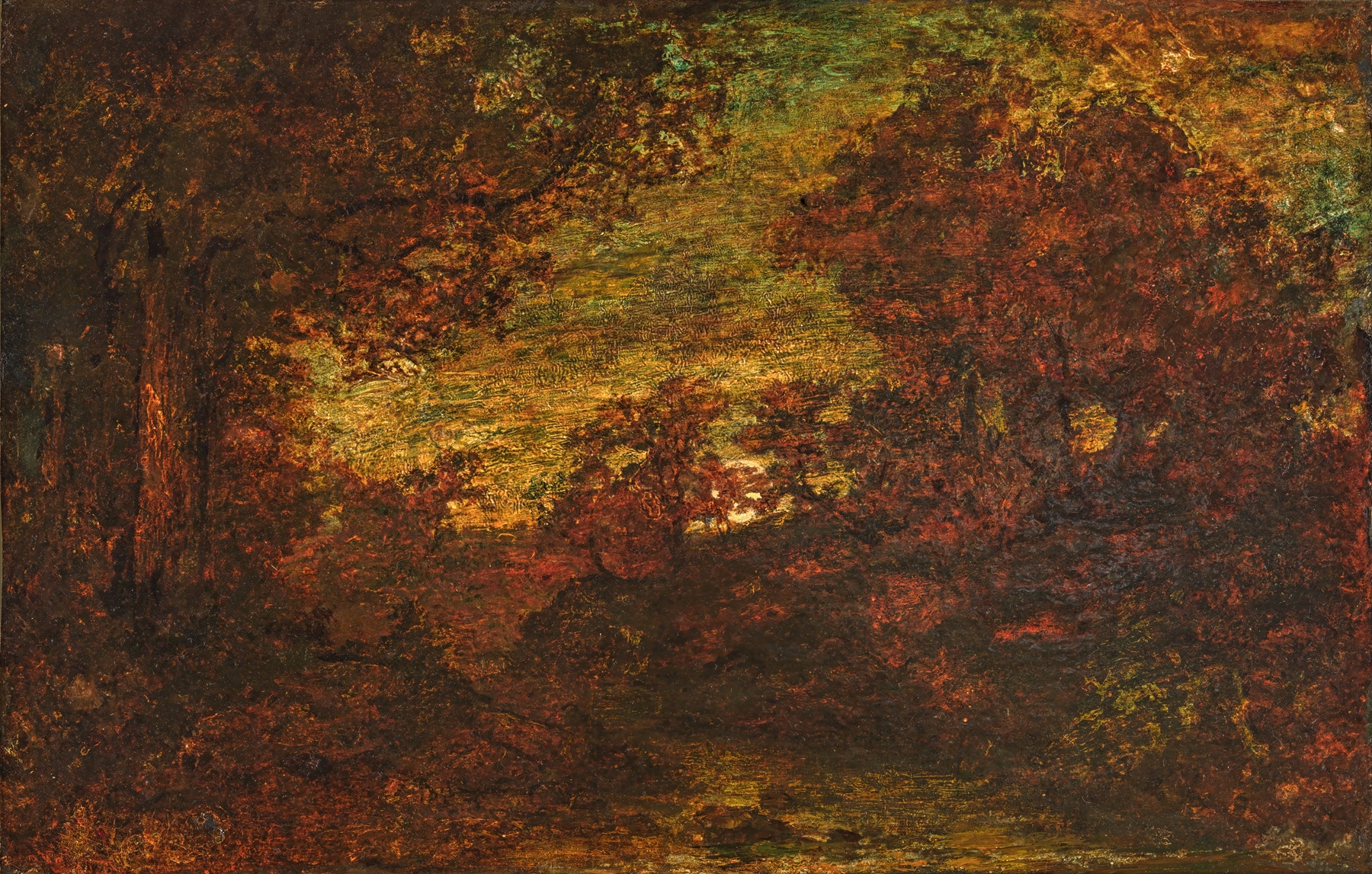
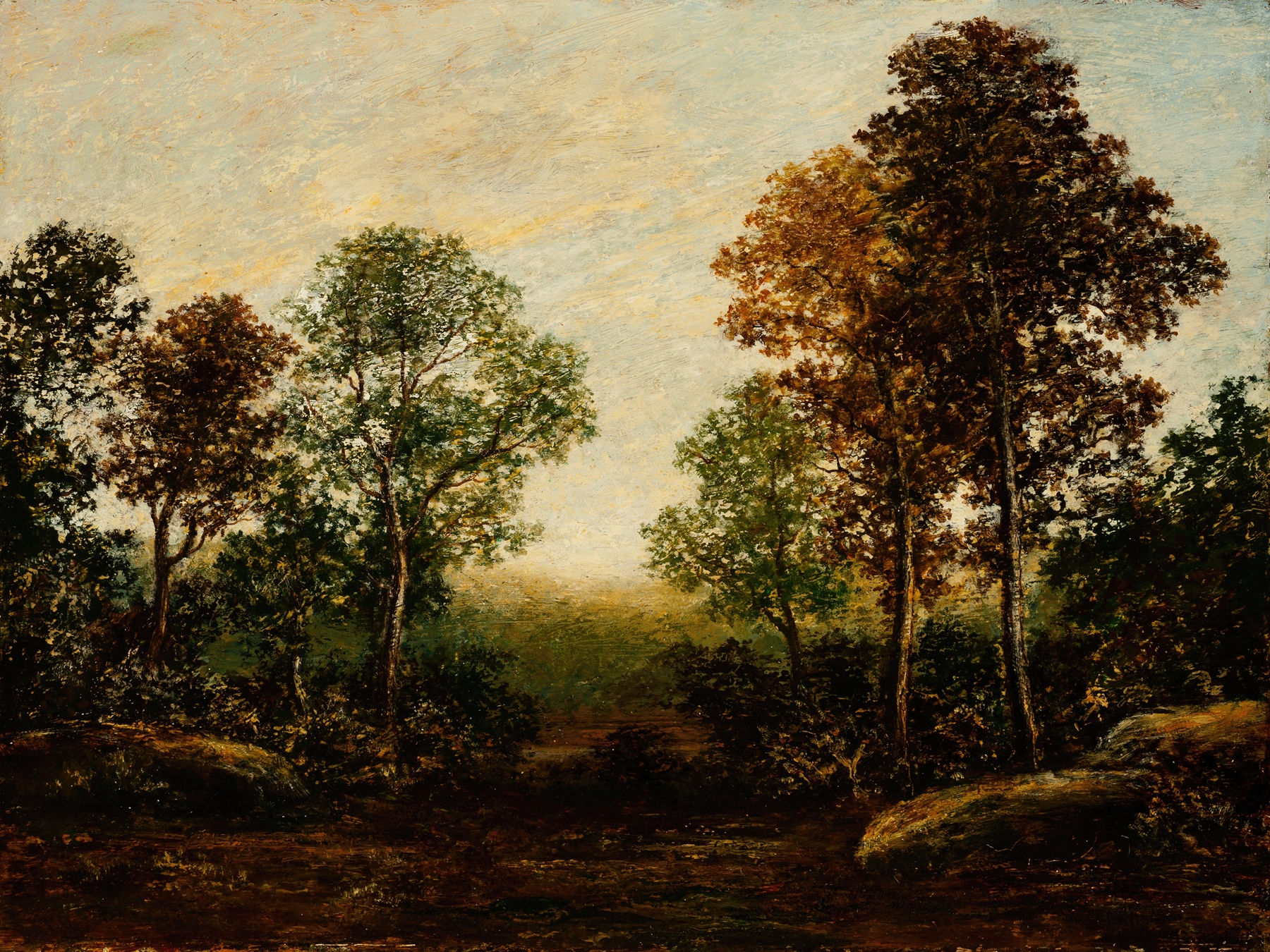
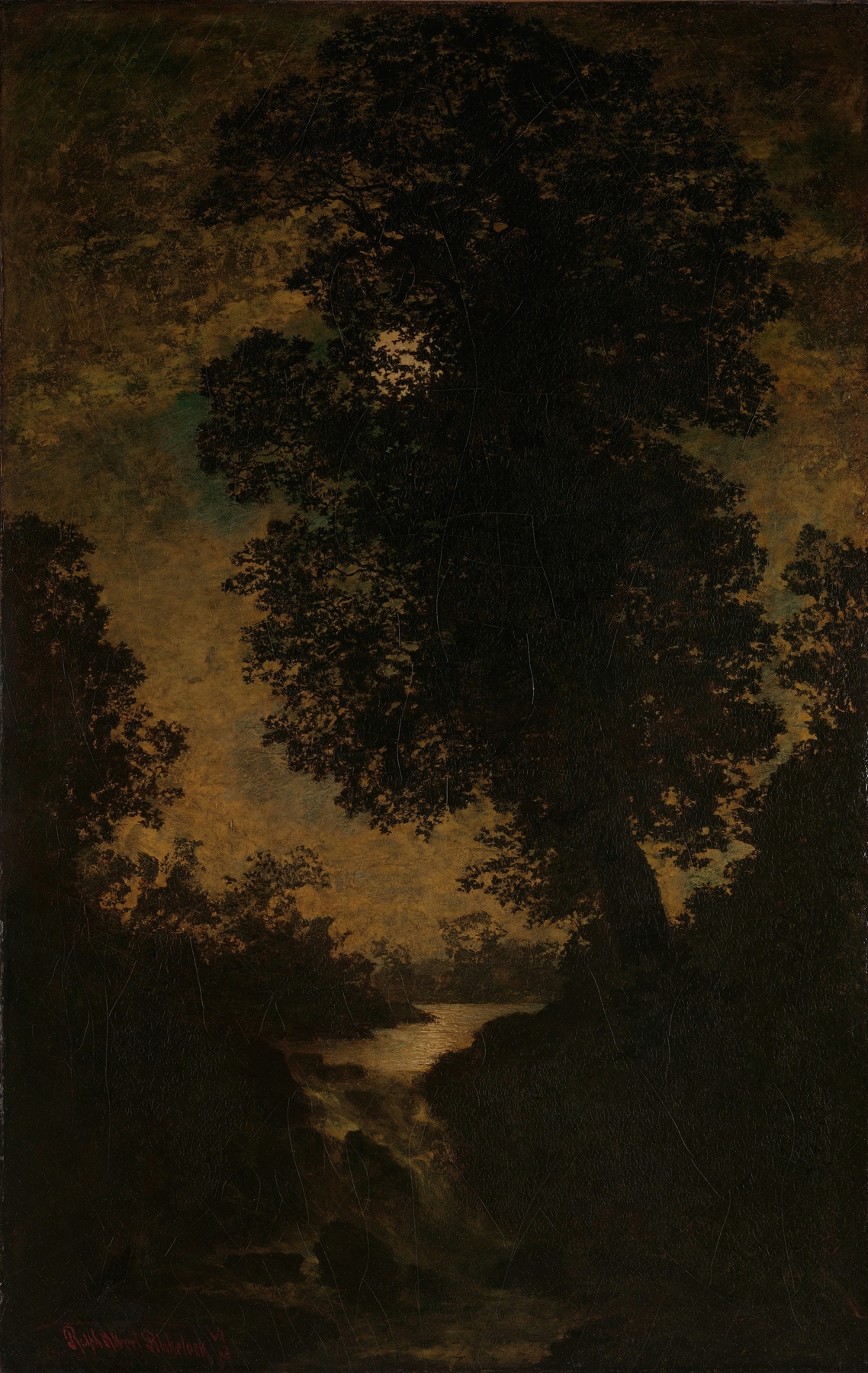
Can beauty exist without sorrow? In Ralph Albert Blakelock's Pool in the Adirondacks, the answer lingers in the quiet embrace of nature, where dreams intertwine with reality. Look to the center, where a serene pool mirrors the encroaching trees, each brushstroke a testament to the artist's devotion to the delicate interplay of light and shadow. Notice how the water glistens under the fading sunlight, reflecting not just the landscape but the ethereal quality of the moment.
The soft greens and muted browns create a tranquil palette, inviting the viewer into a world where time feels suspended, yet every detail speaks to a fleeting beauty. Beneath this outward calm lies an emotional tension. The contrast of light against dark represents the duality of existence, suggesting that joy and sorrow coexist within the frame of nature. The trees, both shadowy and luminous, appear to guard the pool, hinting at hidden stories and memories entwined in their branches.
This quiet dreamscape evokes a sense of nostalgia, inviting contemplation on the transient nature of beauty itself. Created between 1875 and 1878, Blakelock painted Pool in the Adirondacks during a period marked by his fluctuating mental health and struggles within the art world. Living in New York, he was influenced by the Hudson River School while also seeking to push beyond its confines. This work reflects both his personal journey and the broader context of American Romanticism, capturing a moment that resonates with deep emotional undercurrents, forever rooted in the beauty of the natural world.