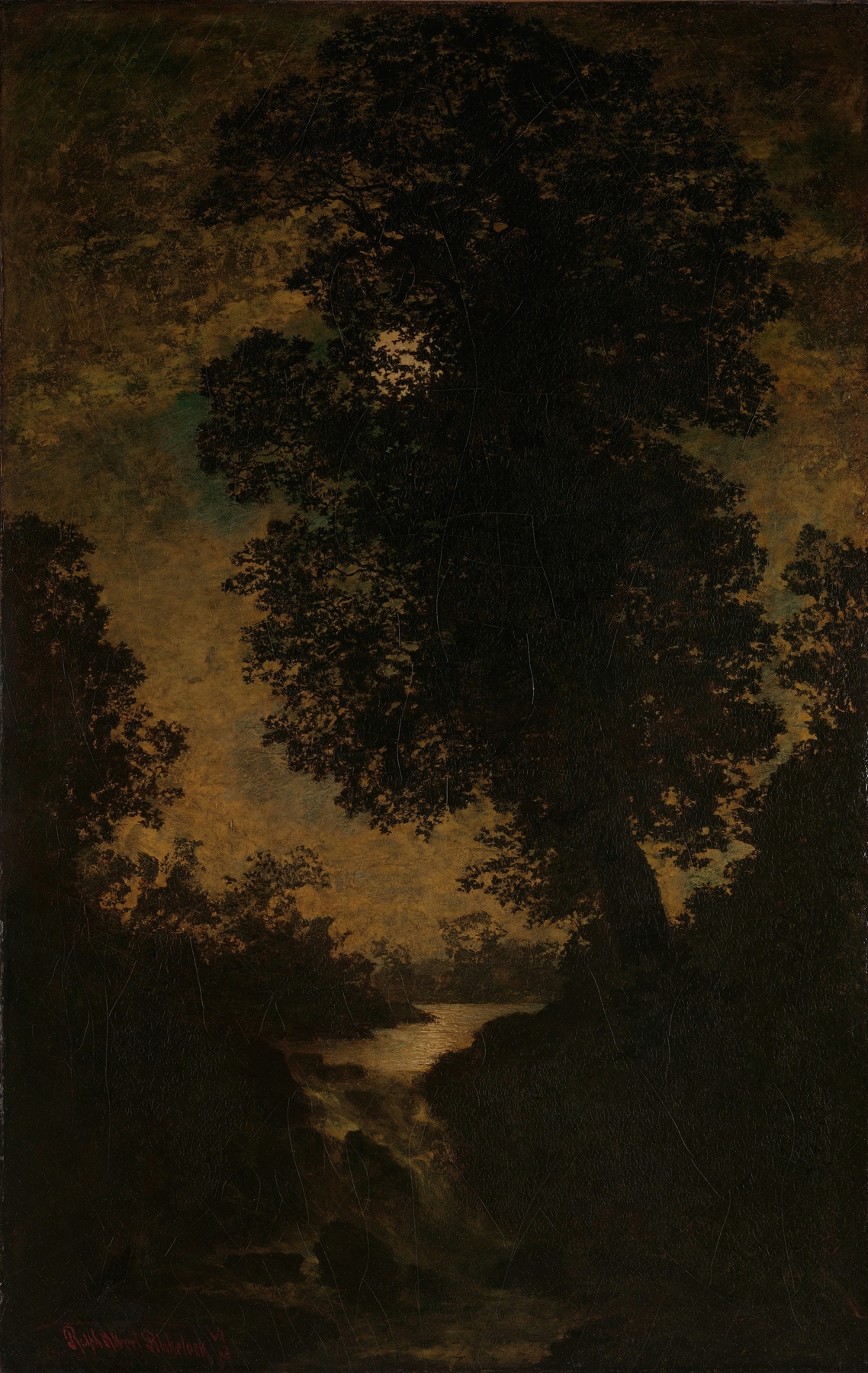
Indian Encampment — History & Analysis
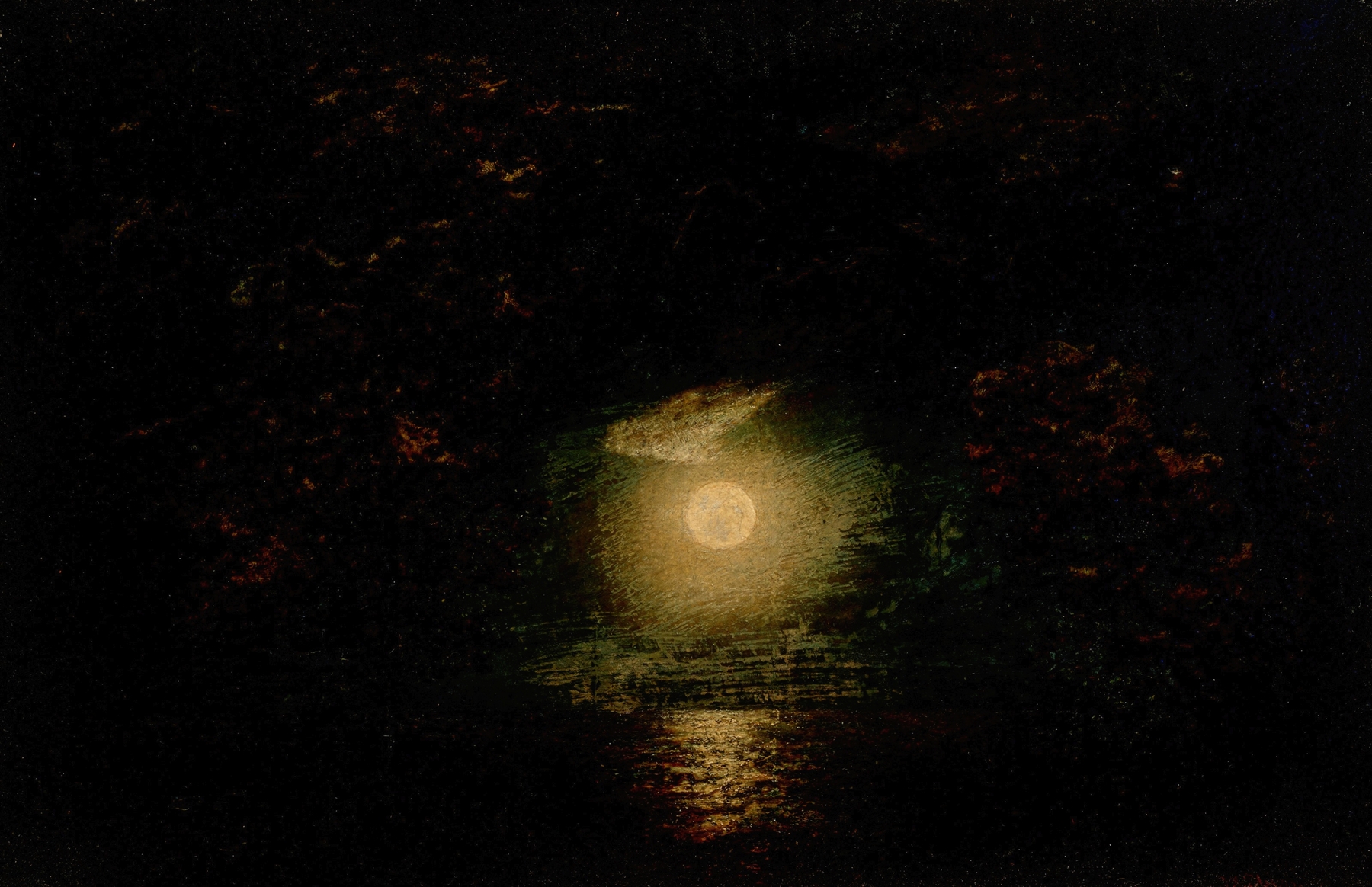
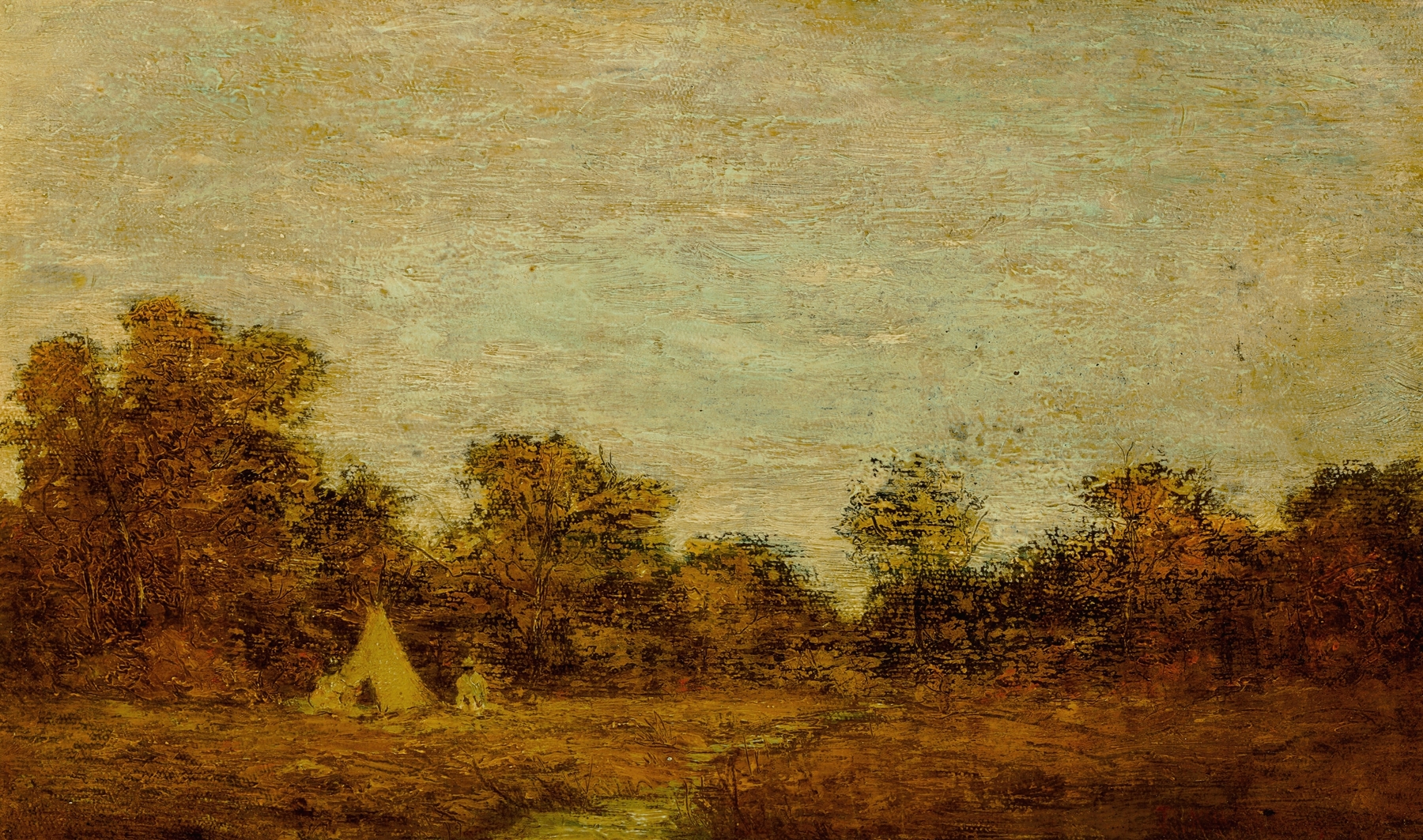
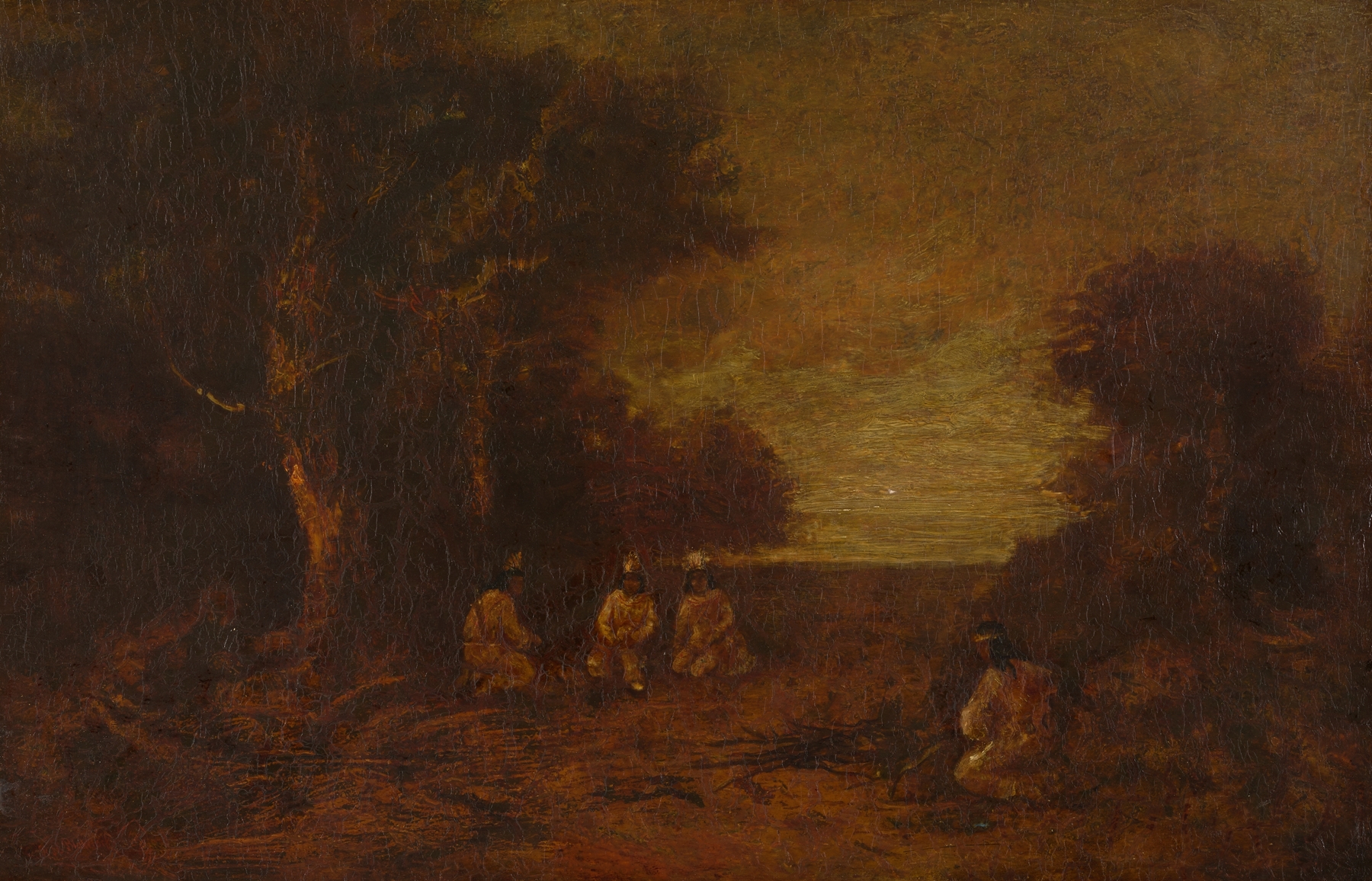
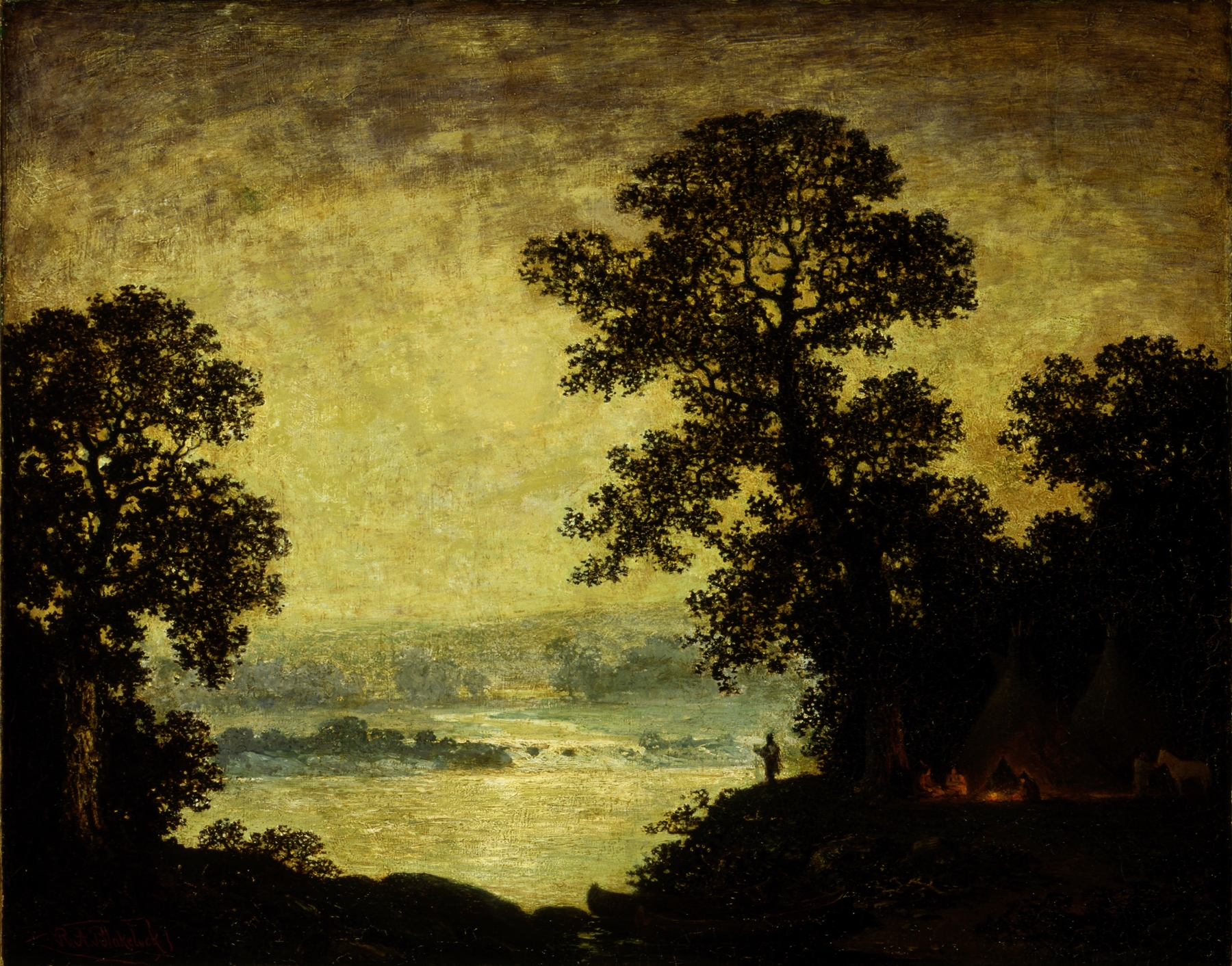
“To paint is to remember what time wants us to forget.” In the quiet shadows of memory, hope lingers, waiting to be rediscovered. Look to the center of the canvas, where a group of tents emerges like whispers of stories long past. The muted earth tones cradle the scene, while the soft glow of twilight bathes the encampment in a gentle embrace, suggesting a world suspended between day and night. Notice how the brushstrokes convey a sense of movement, as if the very fabric of the tents breathes with the rhythm of life, inviting the viewer to step closer into this tranquil world.
The distance between the encampment and the surrounding wilderness speaks volumes; it is a boundary not just of space but of culture, experience, and shared existence. There’s a tension between the warmth of the encampment and the cool, shadowy forest beyond, hinting at the struggles that lie outside this seemingly serene moment. The flicker of light from within the tents beckons, suggesting that even in isolation, there is a glimmer of hope, a promise of connection and continuity despite the inevitable passage of time.
Ralph Albert Blakelock created this work between 1877 and 1885, a period marked by his own struggle with mental health and a society grappling with the complexities of a rapidly changing America. During these years, he became increasingly drawn to themes of solitude and introspection, reflective of his personal experiences. His work often sought to capture not just the physical landscape, but the emotional landscape of human existence, making Indian Encampment a poignant encapsulation of hope amid uncertainty.