Landscape with Trees — History & Analysis
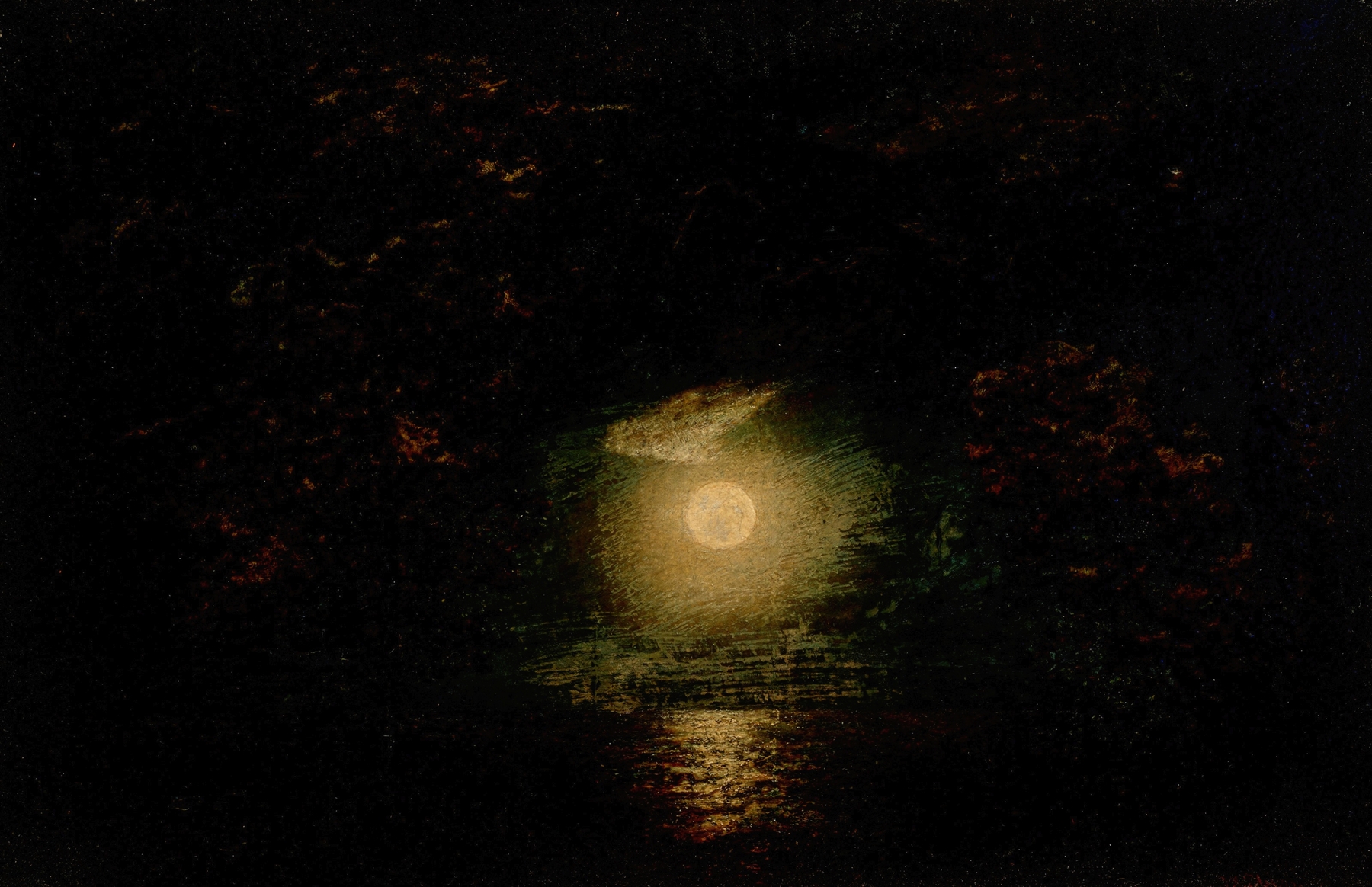
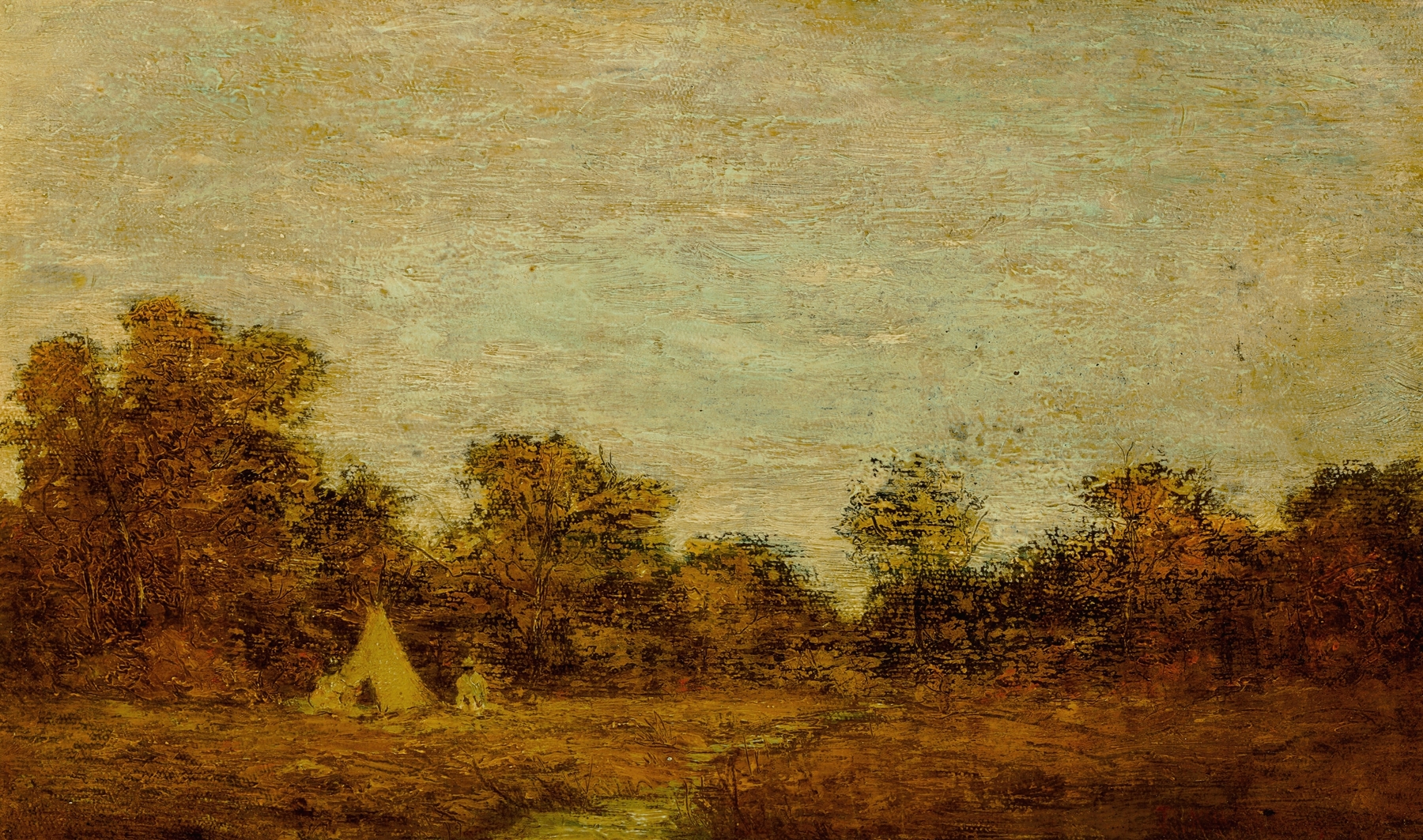
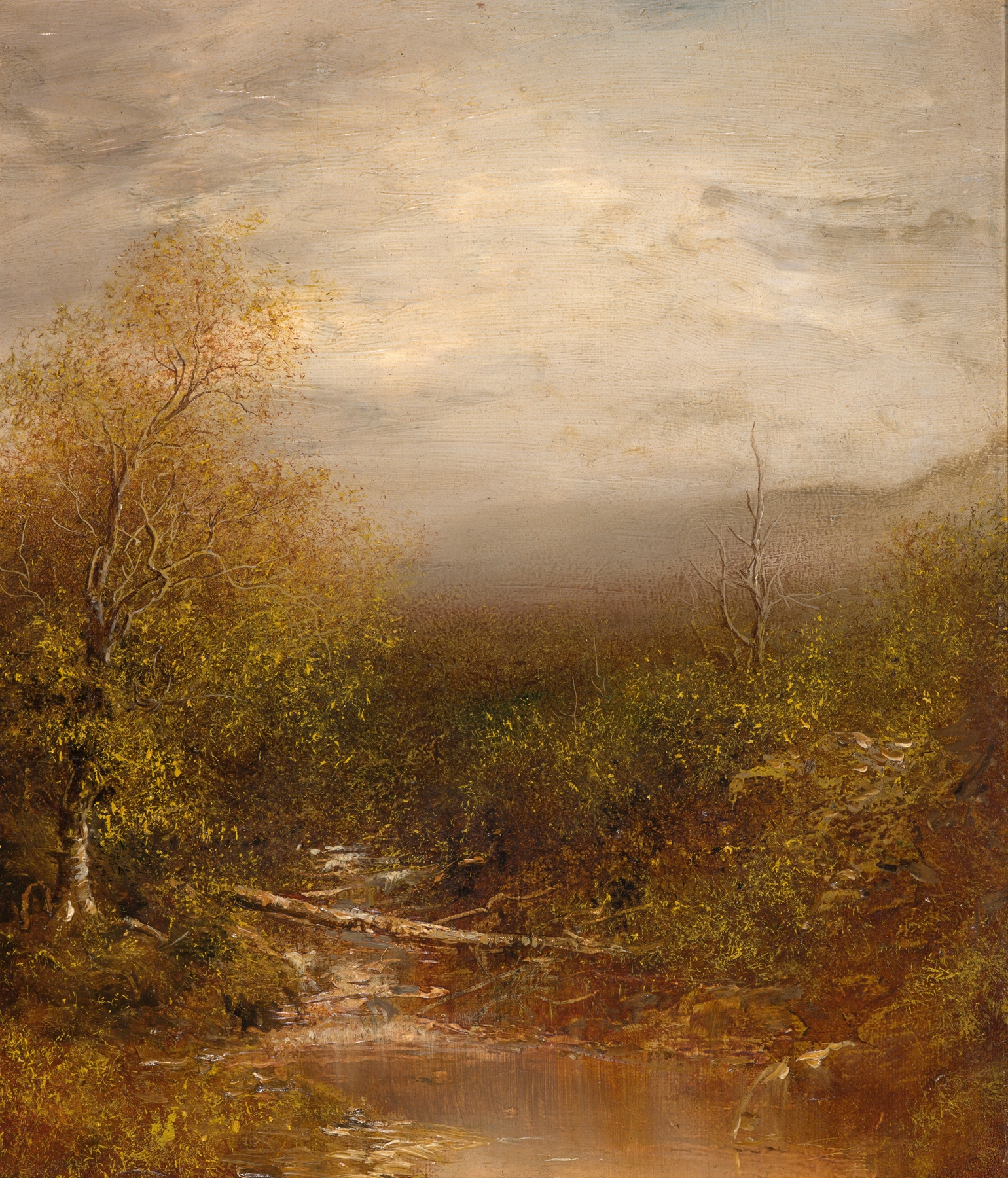
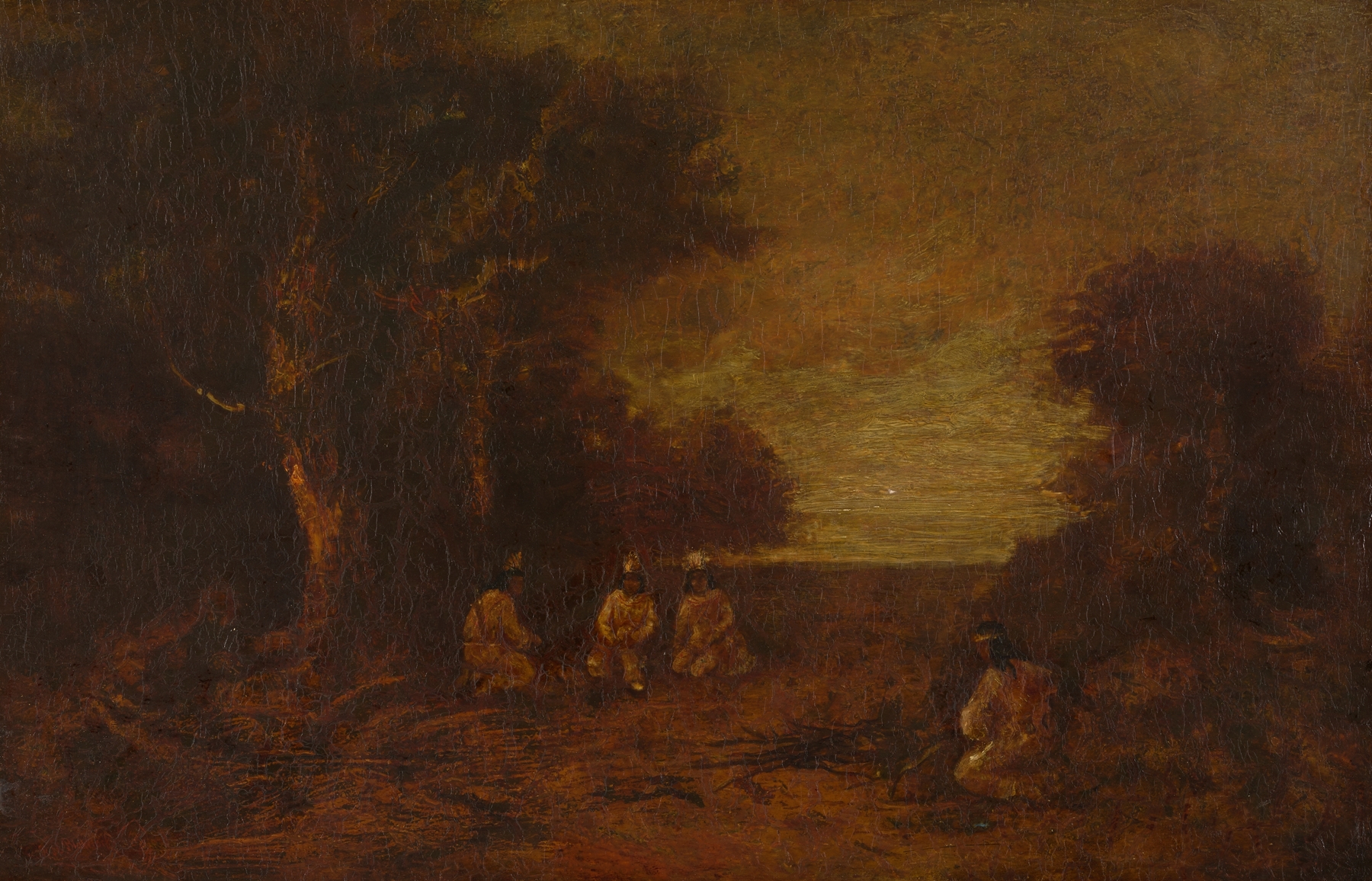
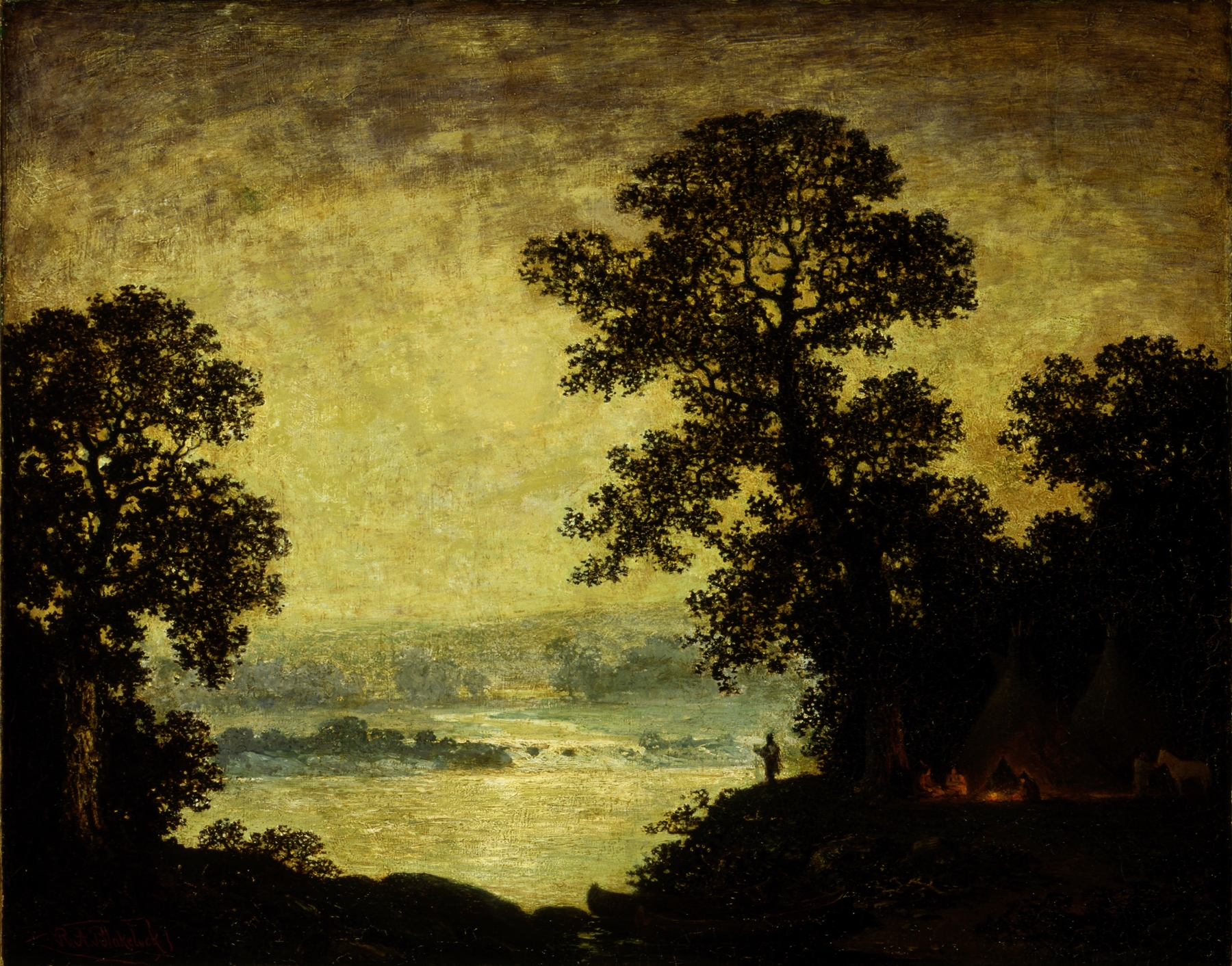
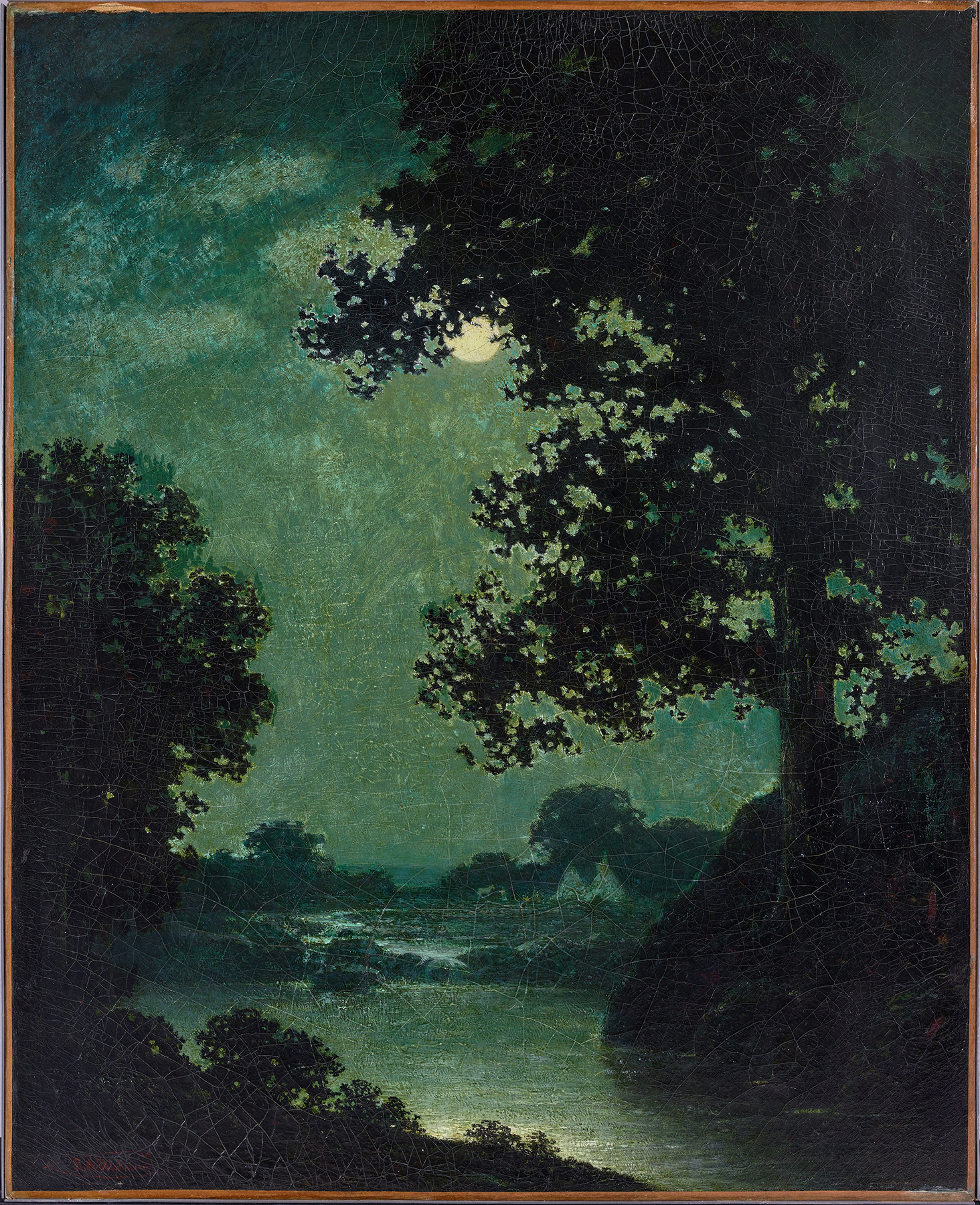
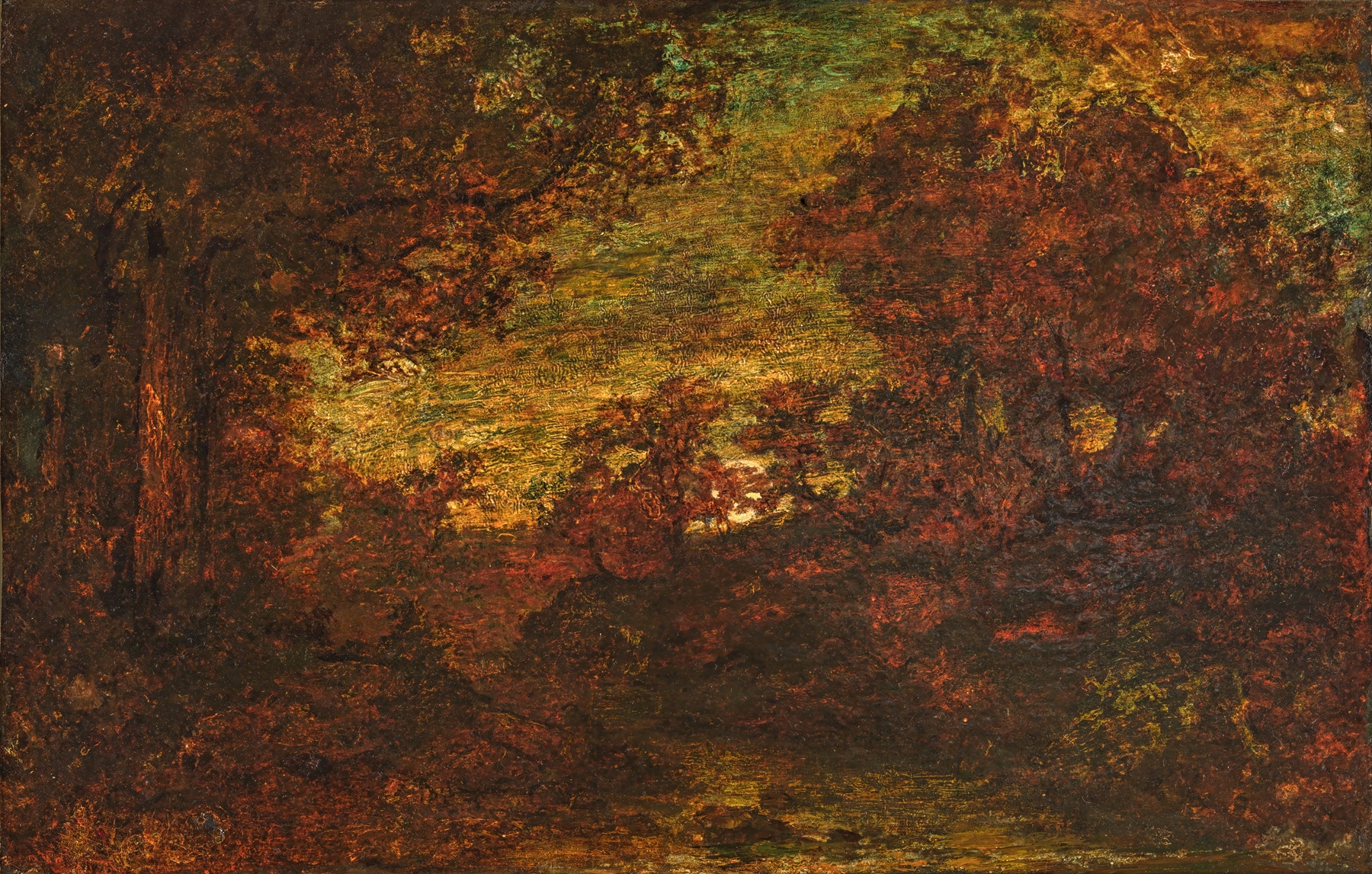
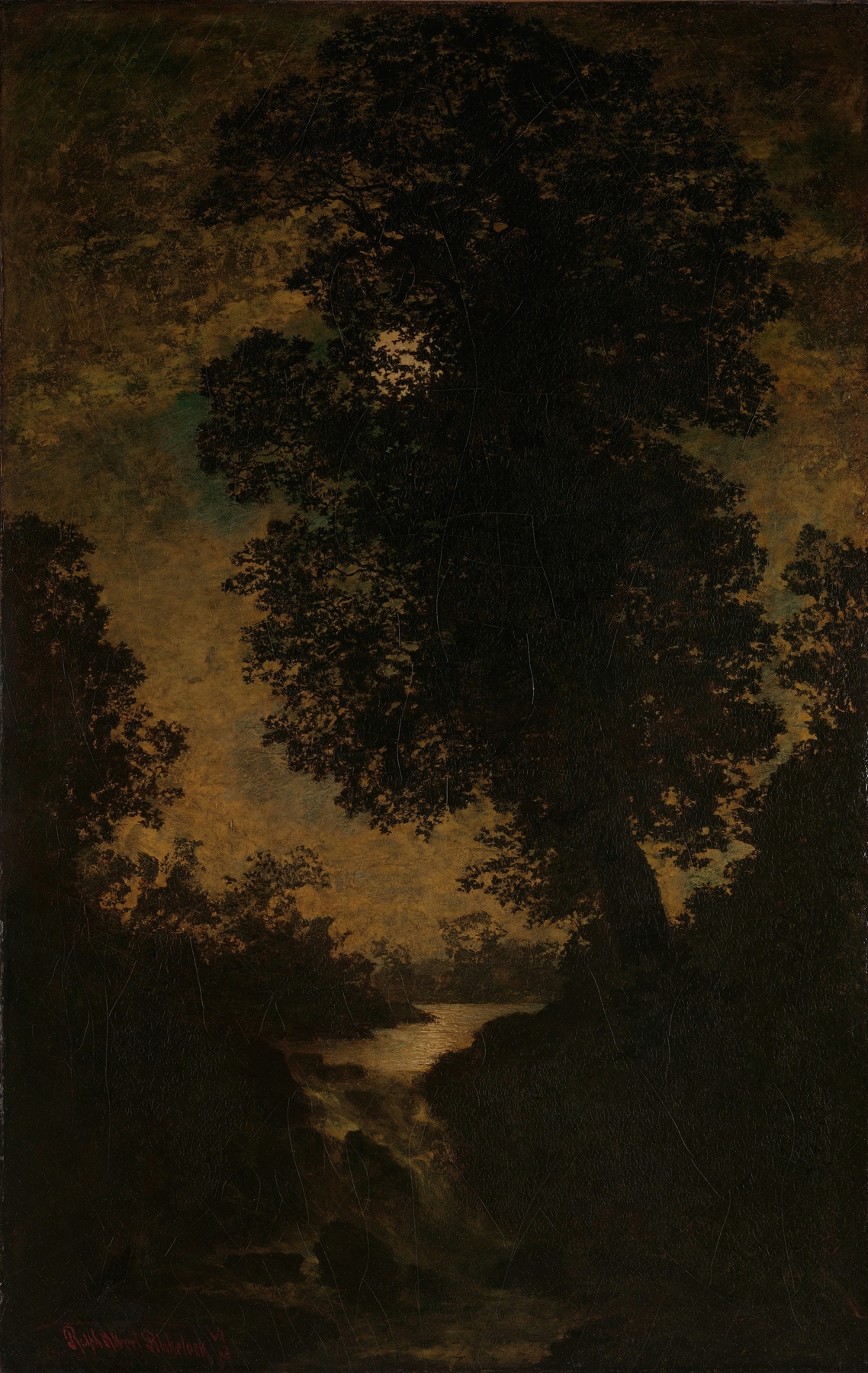
When did color learn to lie? In the embrace of nature’s whispers, the mind awakens to the secrets within the landscape. Look to the left at the towering trees, their dark trunks twisting like ancient sentinels against a backdrop of soft greens and muted browns. Notice how the dappled sunlight filters through the leaves, creating an interplay of shadows that dances across the ground.
The brushwork is both deliberate and loose, evoking a sense of movement, as if the trees themselves are breathing in sync with the wind. The subtle gradations of color draw the eye into the depths of the scene, inviting viewers to explore the serene yet mysterious aura that Blakelock masterfully conjures. At first glance, the quiet beauty may seem straightforward, yet hidden within the foliage is a profound sense of solitude and introspection. The stark contrast between the light that bathes the foreground and the darker, more enigmatic recesses of the forest speaks to the tension between visibility and obscurity, the known and the unknown.
Blakelock deftly captures the feeling of awakening as viewers find themselves contemplating the spaces between reality and imagination, the stillness echoing with potentiality. Created between 1883 and 1898, this piece reflects a transitional period for the artist, who was grappling with personal turmoil and fluctuating mental health. Amidst a burgeoning interest in American landscapes, Blakelock’s unique vision distanced him from the conventions of his time, emphasizing the emotional resonance of nature over mere representation. This period marked a shift towards a deeper exploration of the human experience as it intertwines with the natural world, a theme that resonates powerfully throughout his body of work.