Adirondack Landscape — History & Analysis
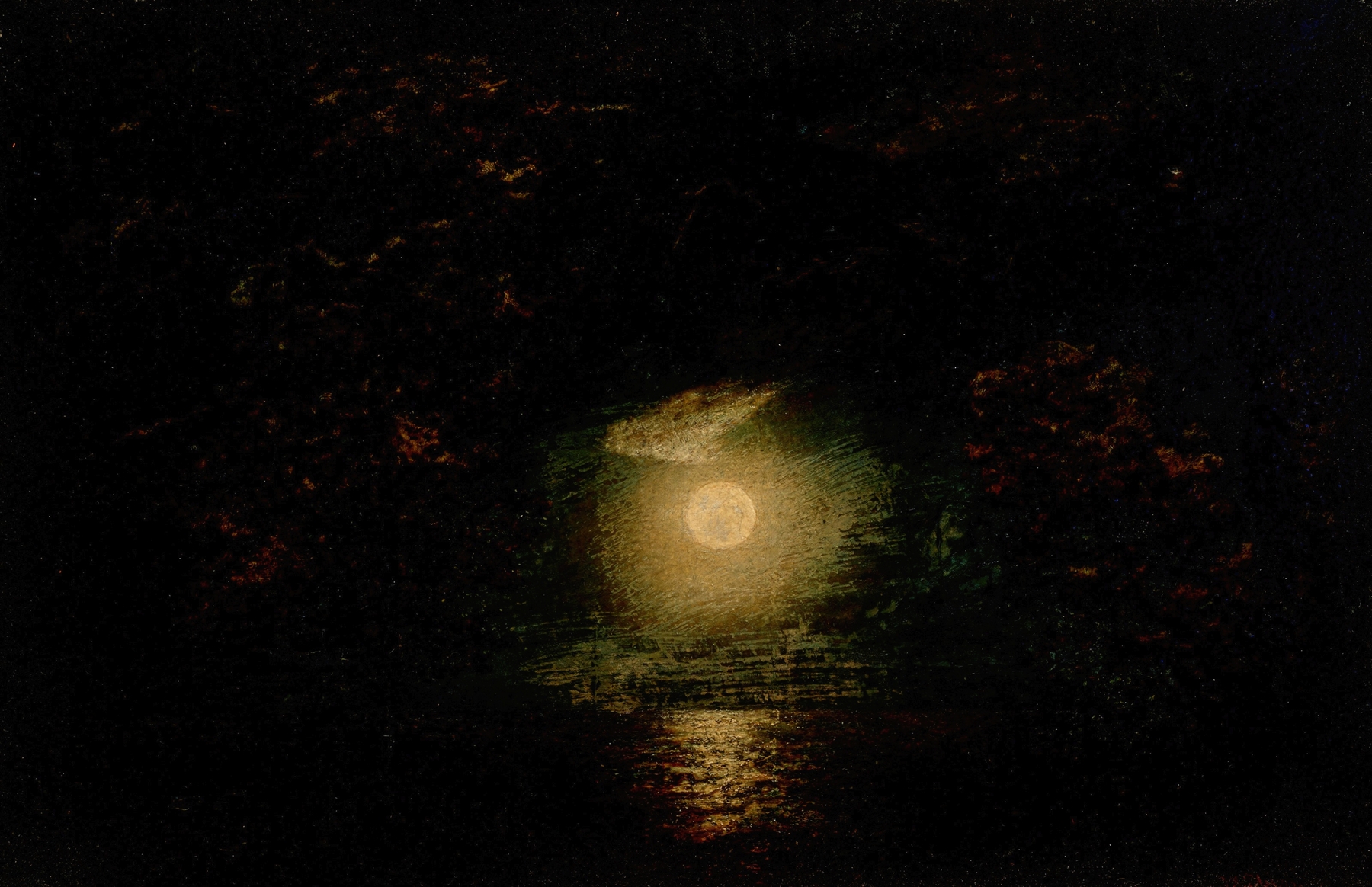
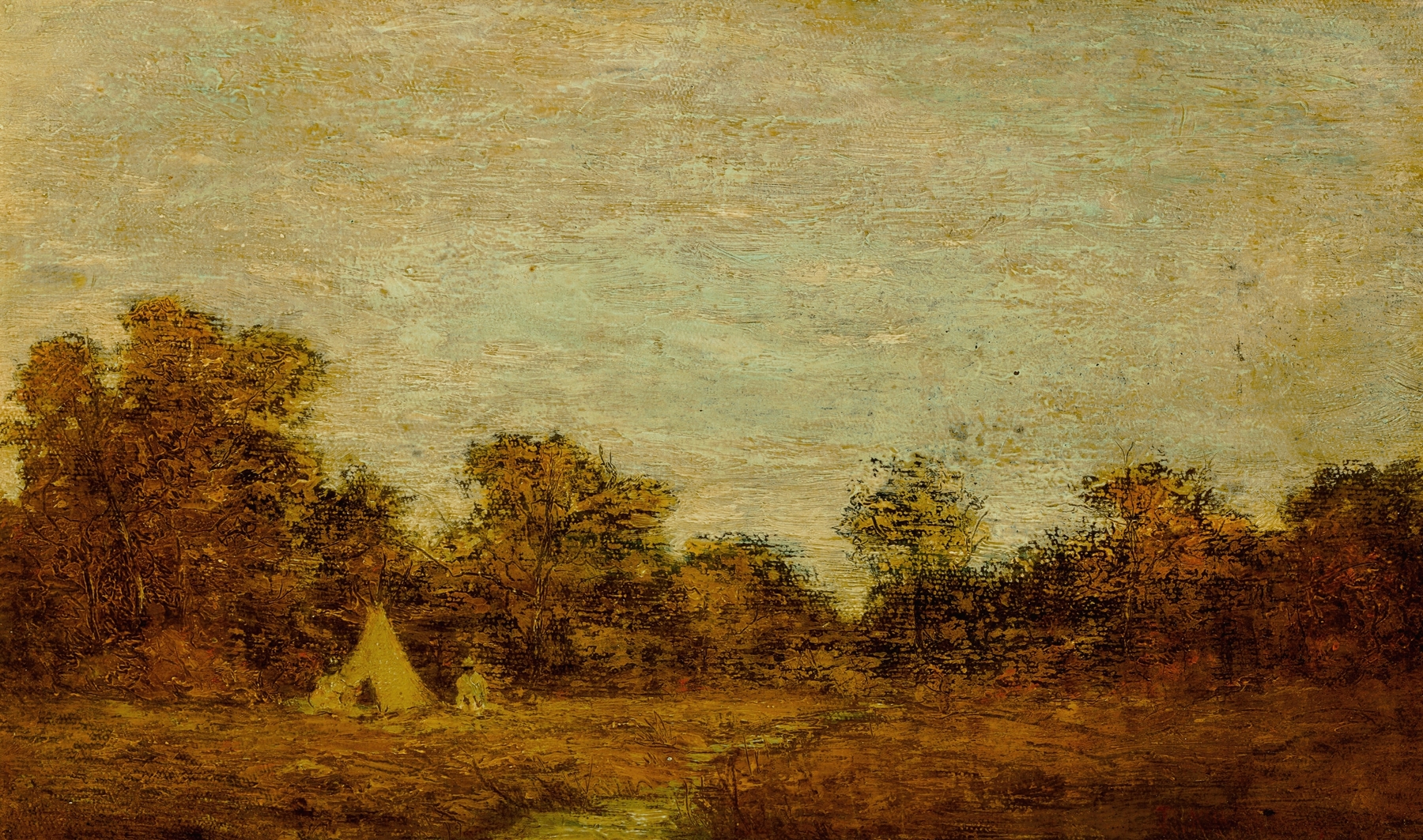
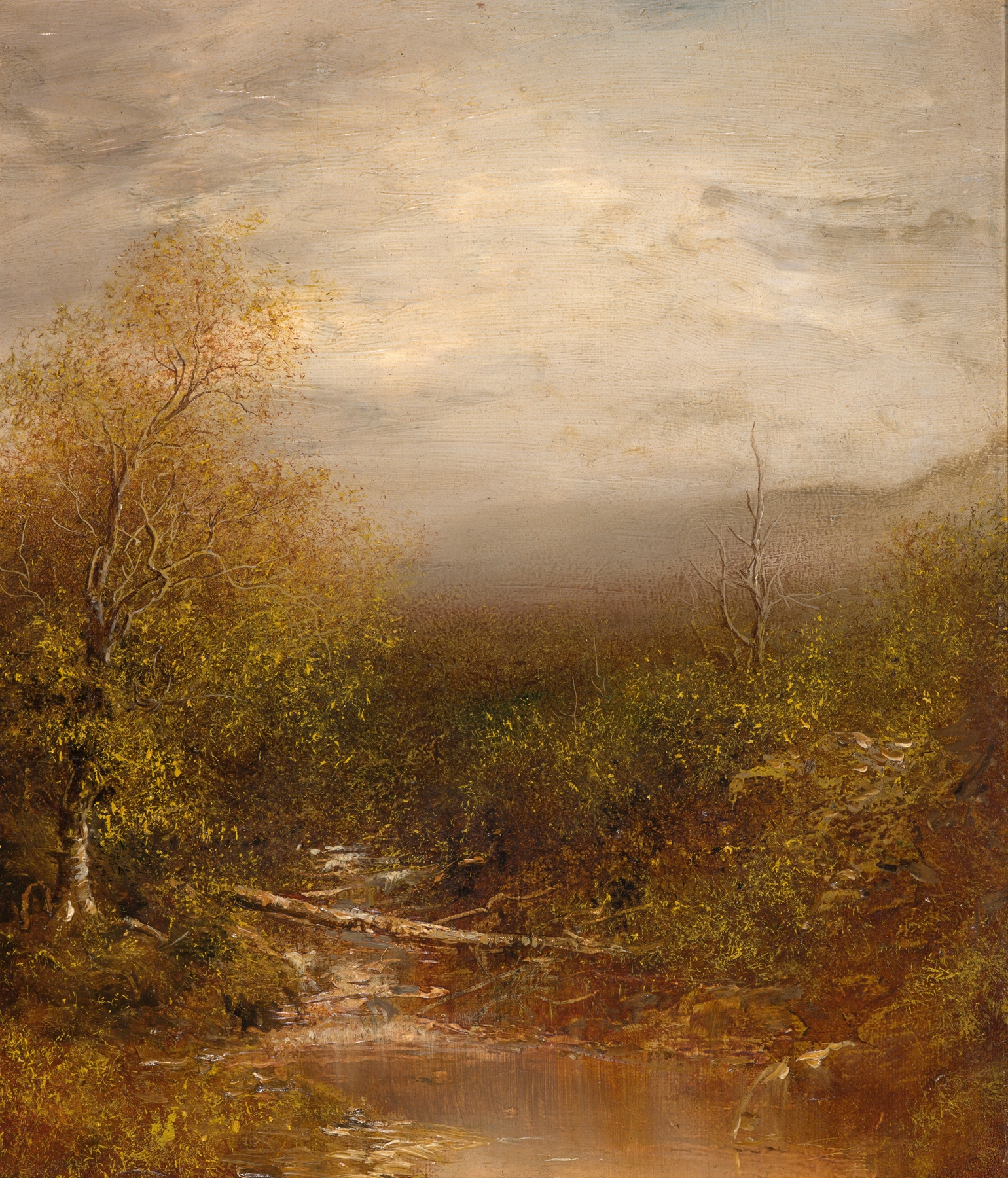
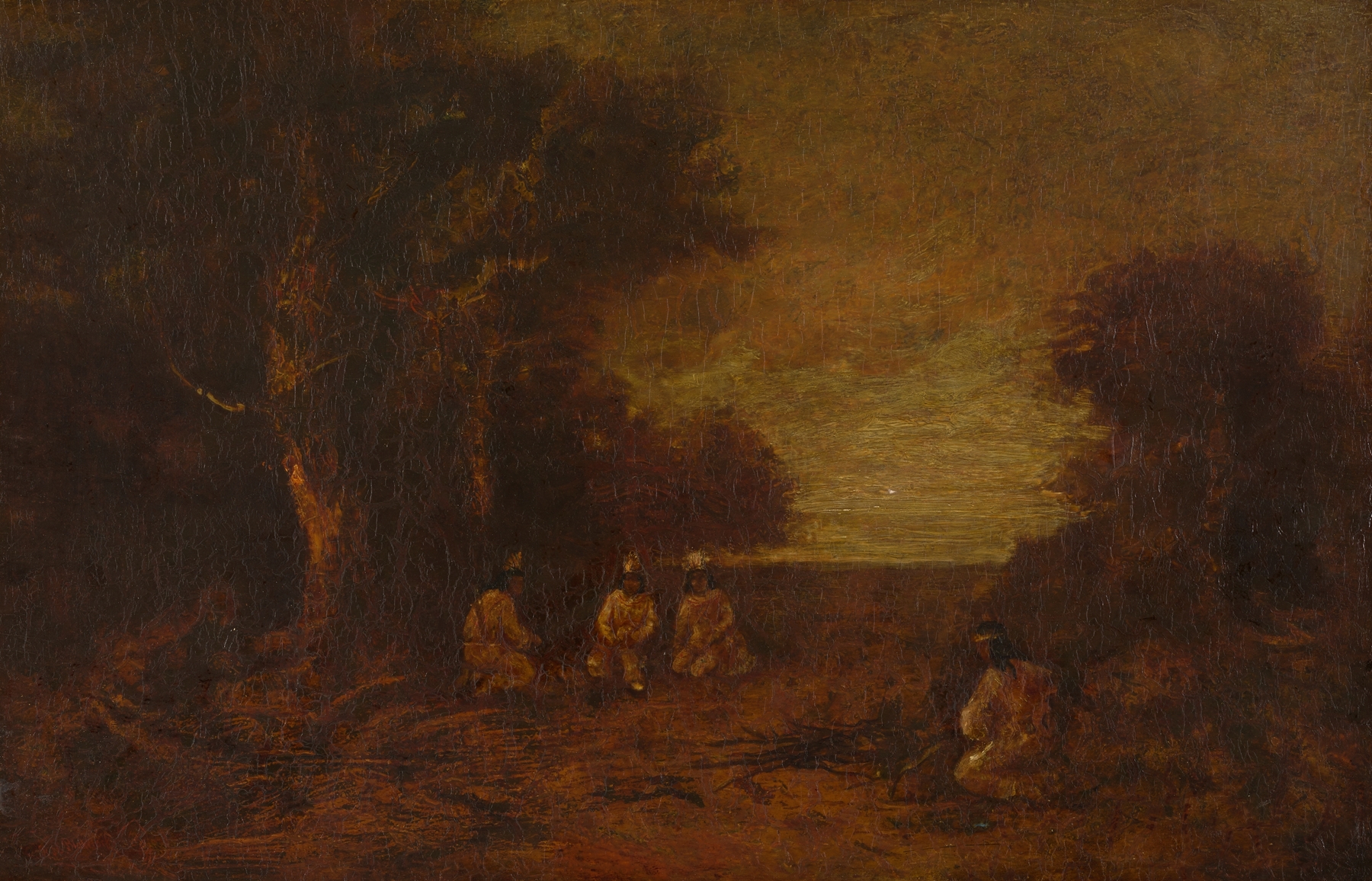
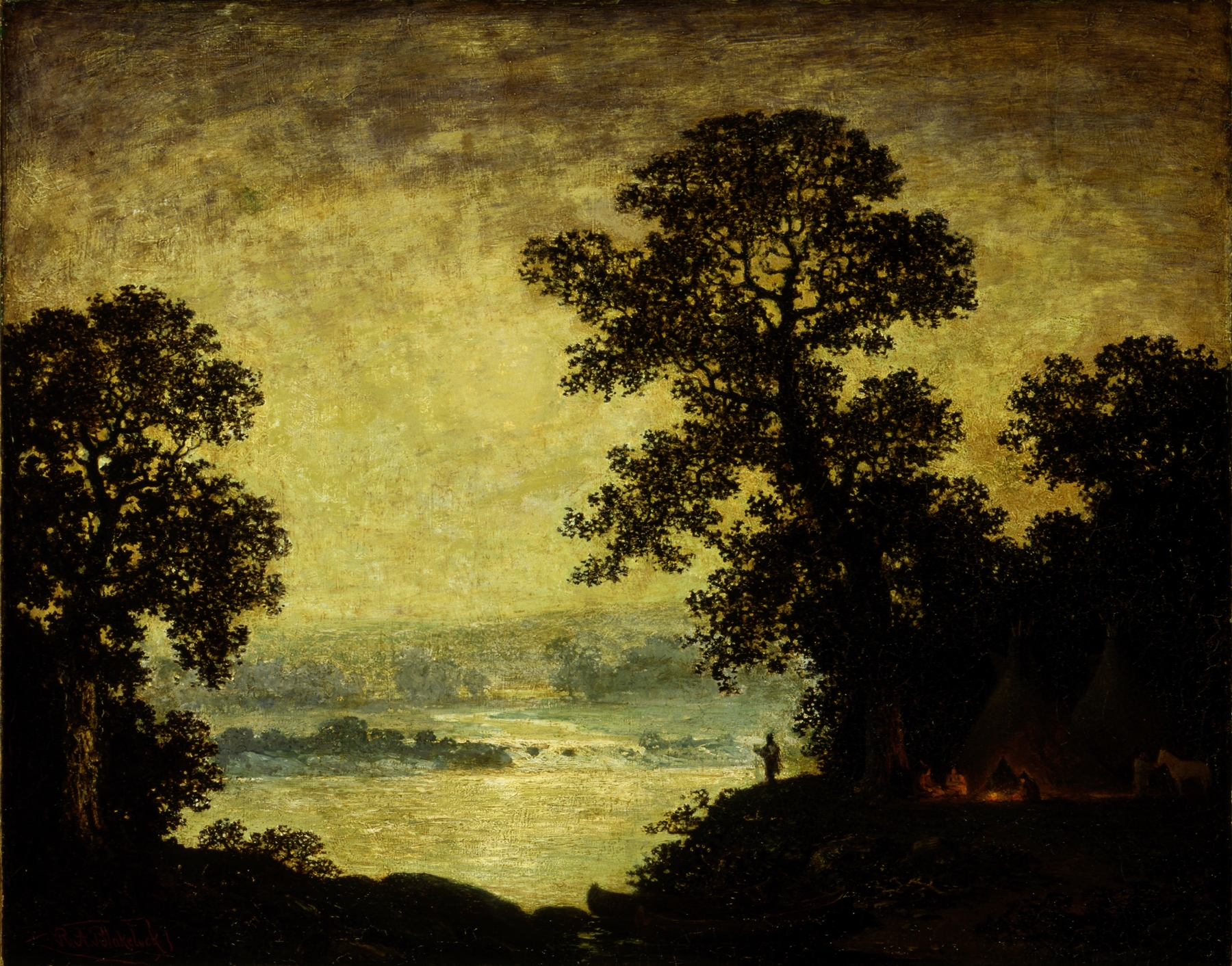
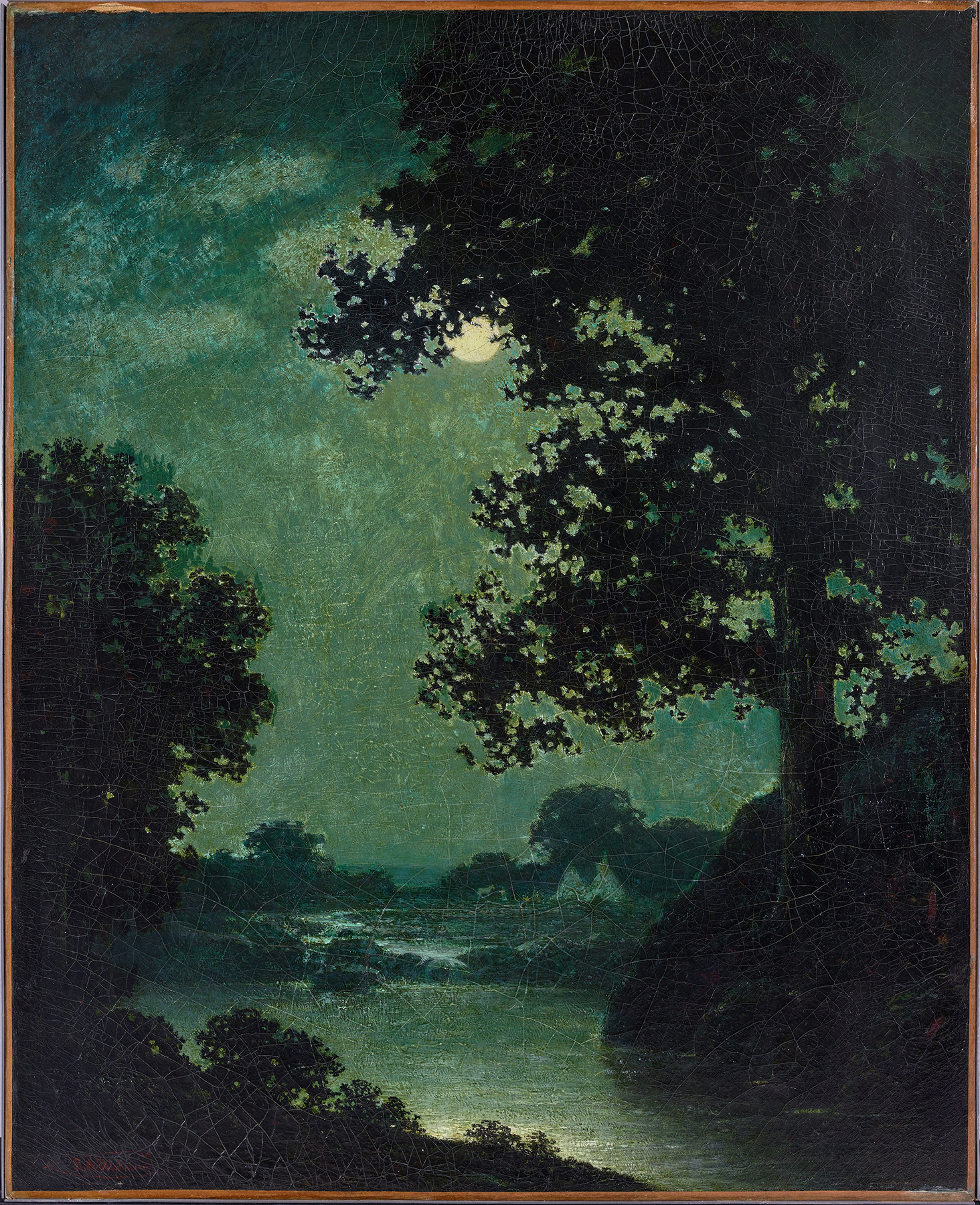
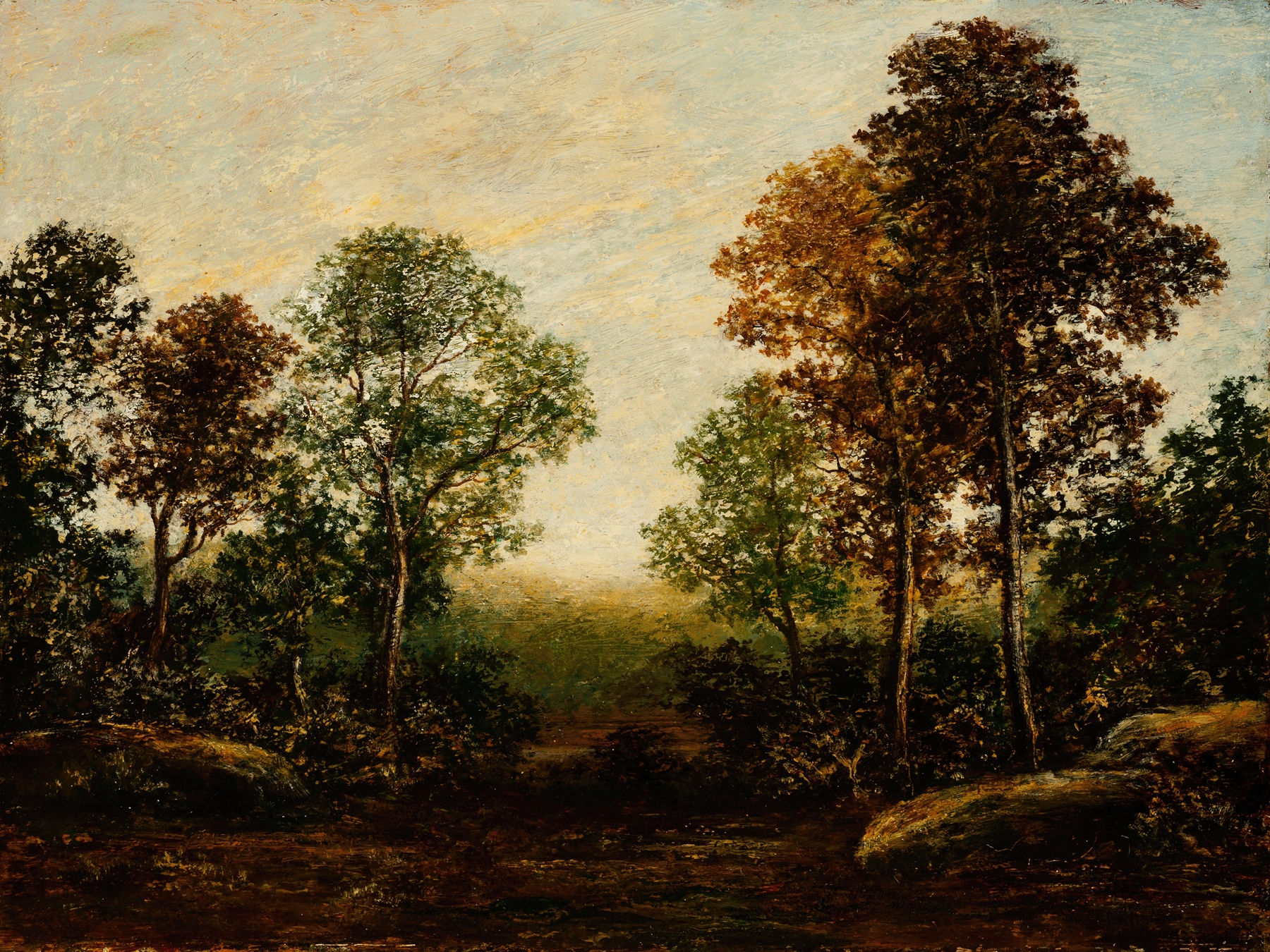
What secret hides in the quiet of the canvas? In Ralph Albert Blakelock's Adirondack Landscape, a world lies waiting, poised between the embrace of dawn and the whisper of dusk, inviting the viewer to awaken to its serene beauty. Look to the foreground, where a tranquil lake mirrors the delicate hues of the sky—a soft palette of blues and ochres. The gentle strokes of the brush create a sense of movement in the water, while the overhanging trees frame the scene, their dark silhouettes contrasting beautifully with the luminous backdrop.
Notice how the light filters through the leaves, casting dappled shadows that dance across the still surface, reflecting both nature's calm and its vibrant life. The emotional tension of the piece arises from its dualism—the stillness of the moment juxtaposed with the throbbing pulse of nature. Each brushstroke reveals a hidden world of feelings, from the haunting solitude of a solitary canoe drifting in the distance to the subtle hints of wildlife rustling in the underbrush. This landscape is not merely a glimpse of the Adirondacks; it is a meditation on the awakening of consciousness, urging us to pause and engage with the fleeting beauty around us.
Blakelock created this work in 1868 during a period of exploration and self-discovery. Struggling with personal hardships, he turned to the natural world for solace and inspiration, finding a rich source of artistic expression. Emerging from the Hudson River School tradition, he began to infuse his landscapes with a sense of intimacy and emotional depth, reflecting the broader shifts in American art as it transitioned from romanticism to a more personal, introspective approach.