Am Karlstor, München — History & Analysis
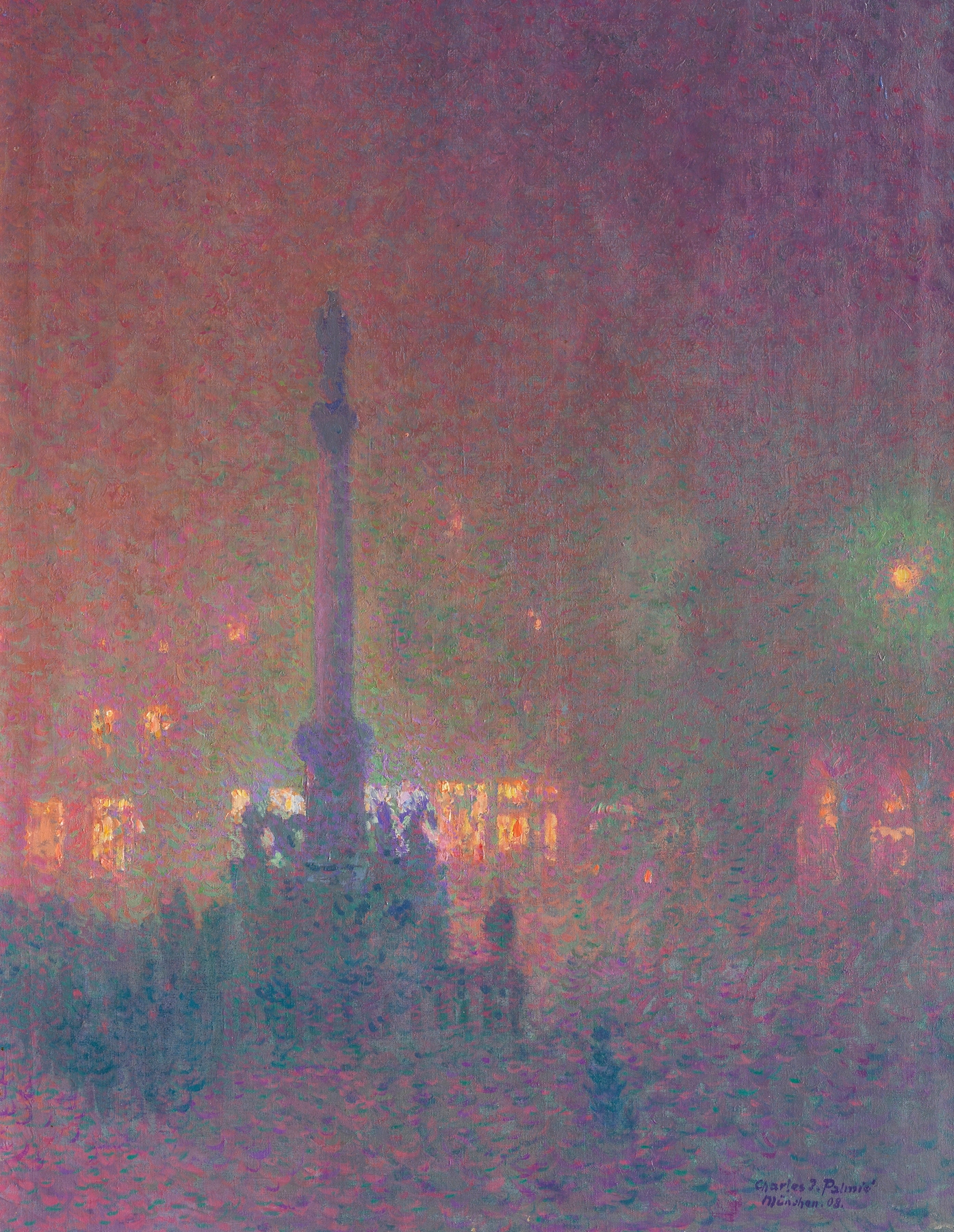
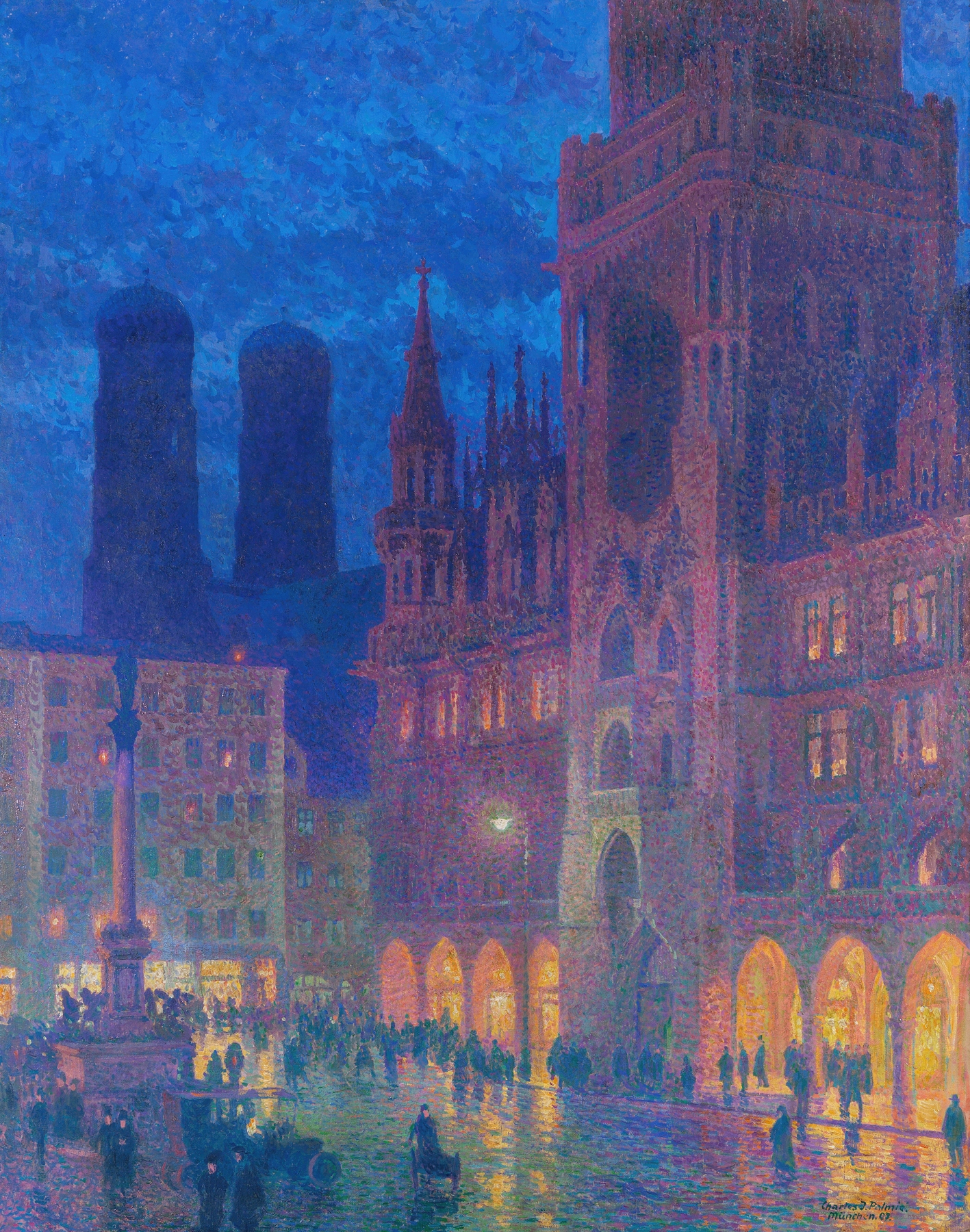
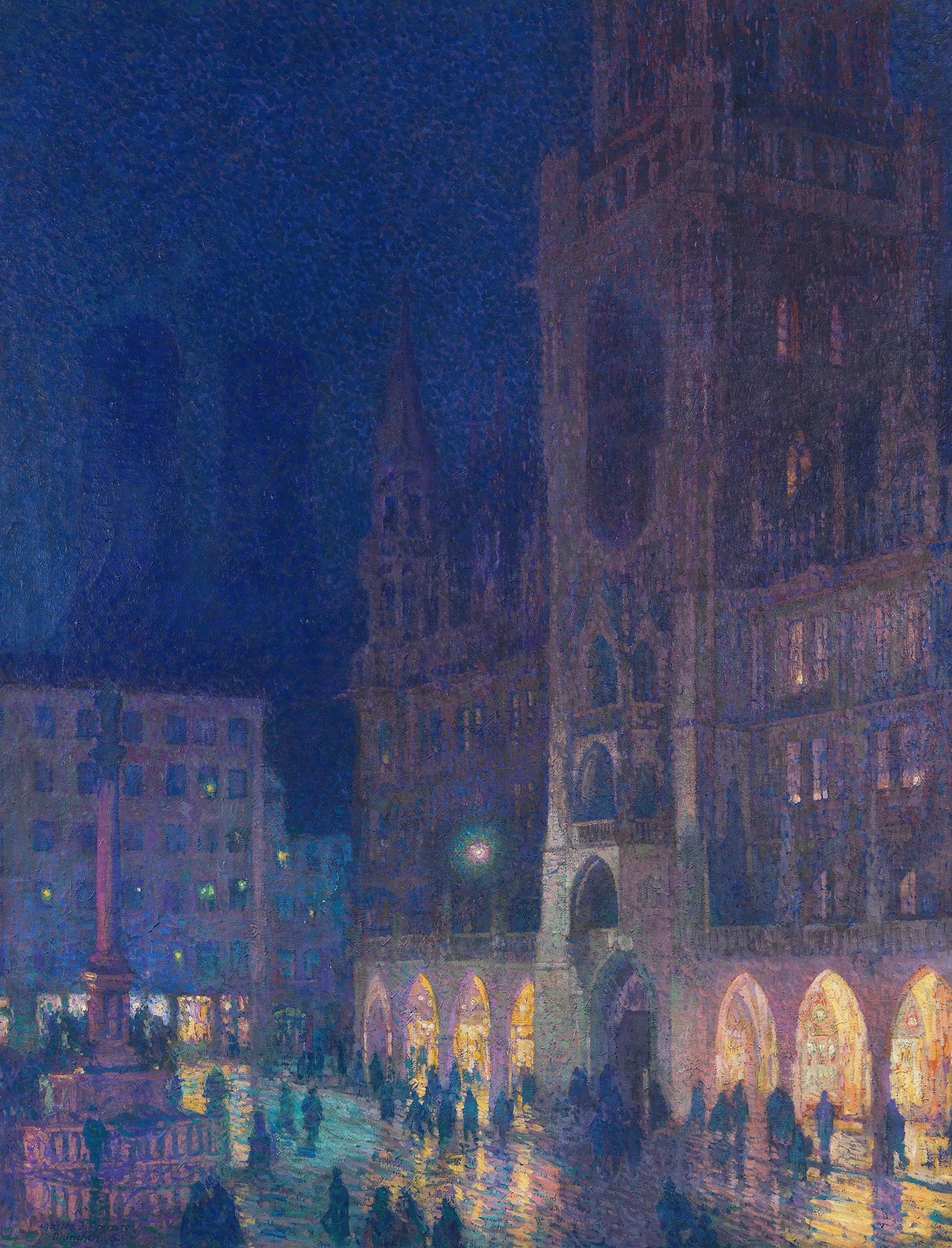
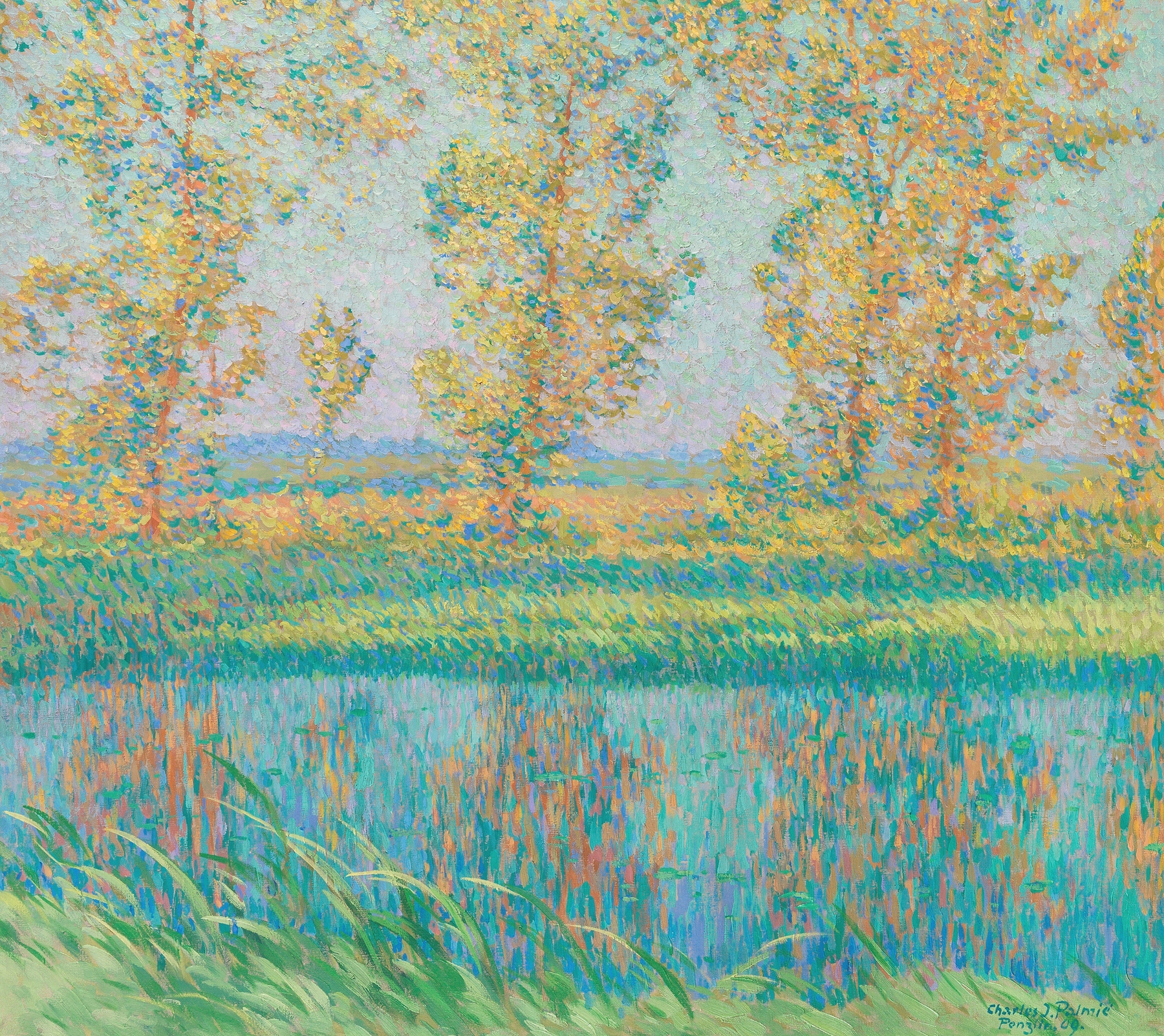
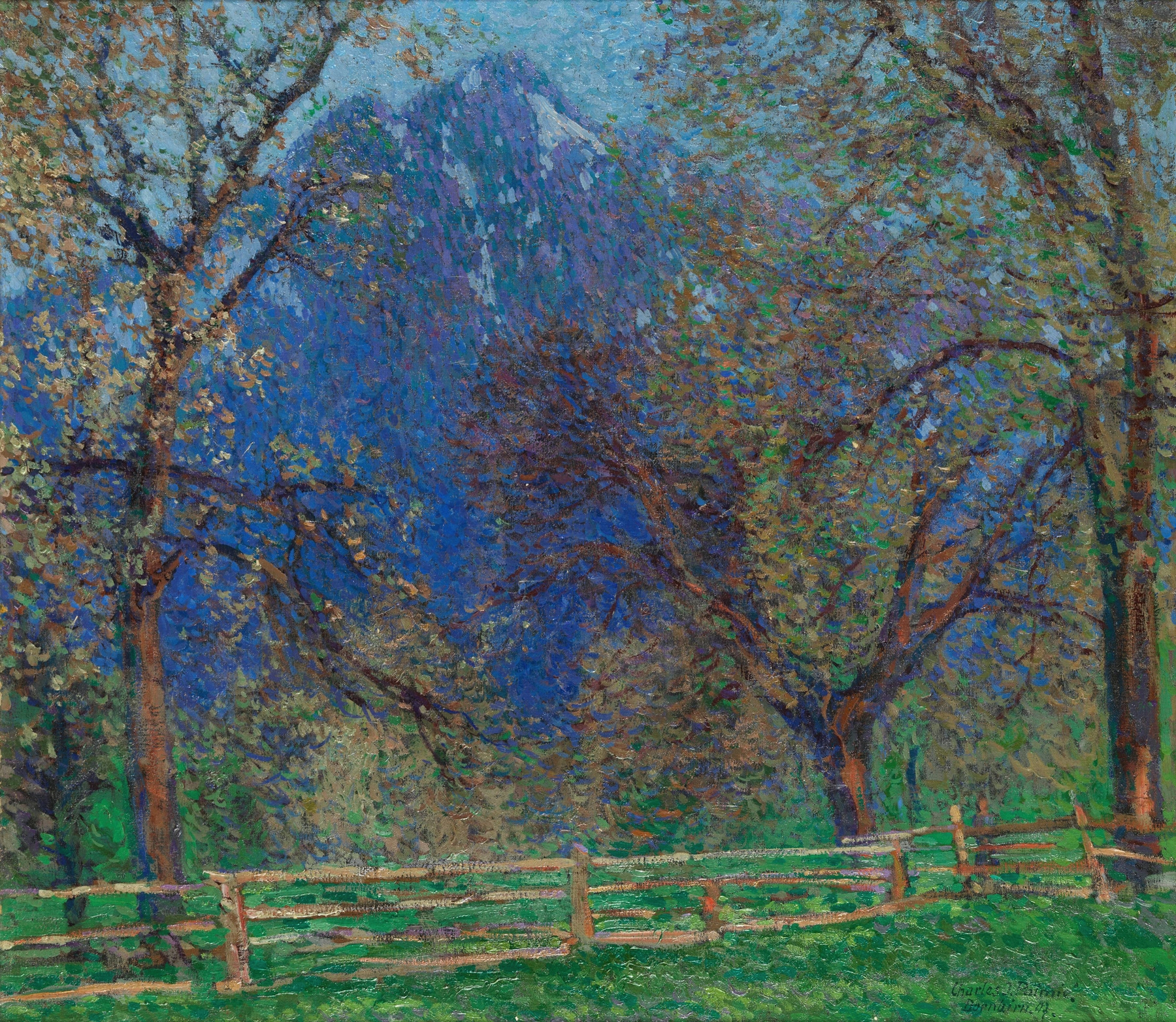
When did color learn to lie? In a world where hues dance with life yet mask the inevitability of decay, Am Karlstor, München beckons to us with its vibrant palette and contemplative silence. Focus on the left side of the canvas, where a striking array of greens and ochres blend seamlessly, evoking the lushness of the surrounding landscape. The architectural shapes on the right contrast sharply with the organic forms, capturing the tension between nature and urban life.
Notice how the warm sunlight caresses the building’s façade, casting elongated shadows that hint at the passage of time, suggesting both beauty and the ephemeral nature of existence. As you delve deeper into the painting, consider the juxtaposition of life and mortality. The bustling figures, though animated, appear almost ghostly—shadows of lives lived fleetingly in the face of the enduring stone. The colors, so vivid, evoke joy yet also an unsettling reminder of the impermanence that shadows every moment.
Palmié weaves a narrative that speaks to the transience of beauty, urging us to contemplate what lingers just beneath the surface. Painted in 1907, this piece emerged during a time of significant transition in both the artist's life and the wider art world. Living in Munich, Palmié was influenced by the burgeoning movements of modernism, which sought to capture the essence of a rapidly changing society. This period of innovation contrasts with the traditional values of the past, reflecting the artist's desire to navigate through both the vibrancy of life and the acceptance of mortality within his work.