Blick auf München vom Alten Peter — History & Analysis
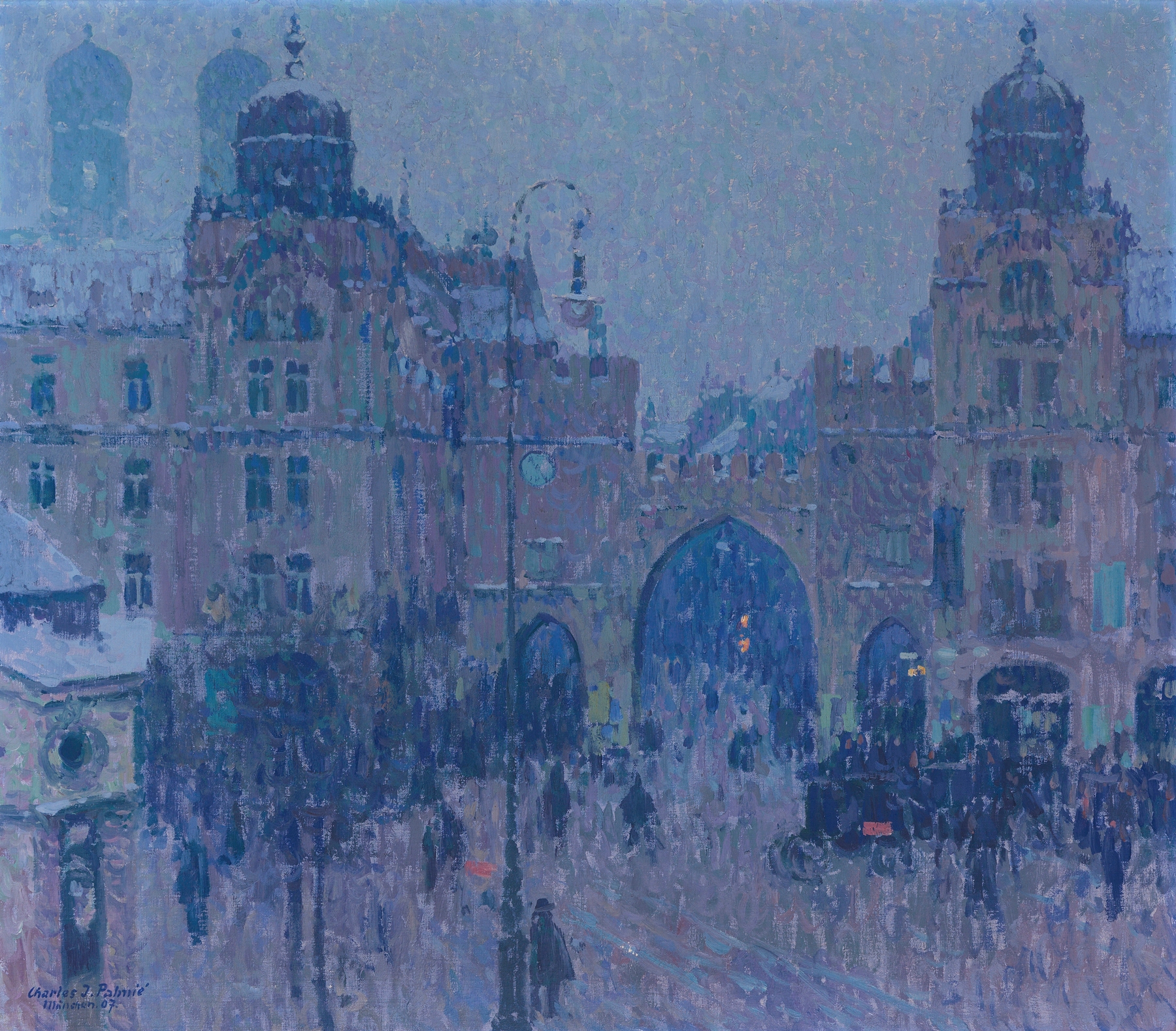
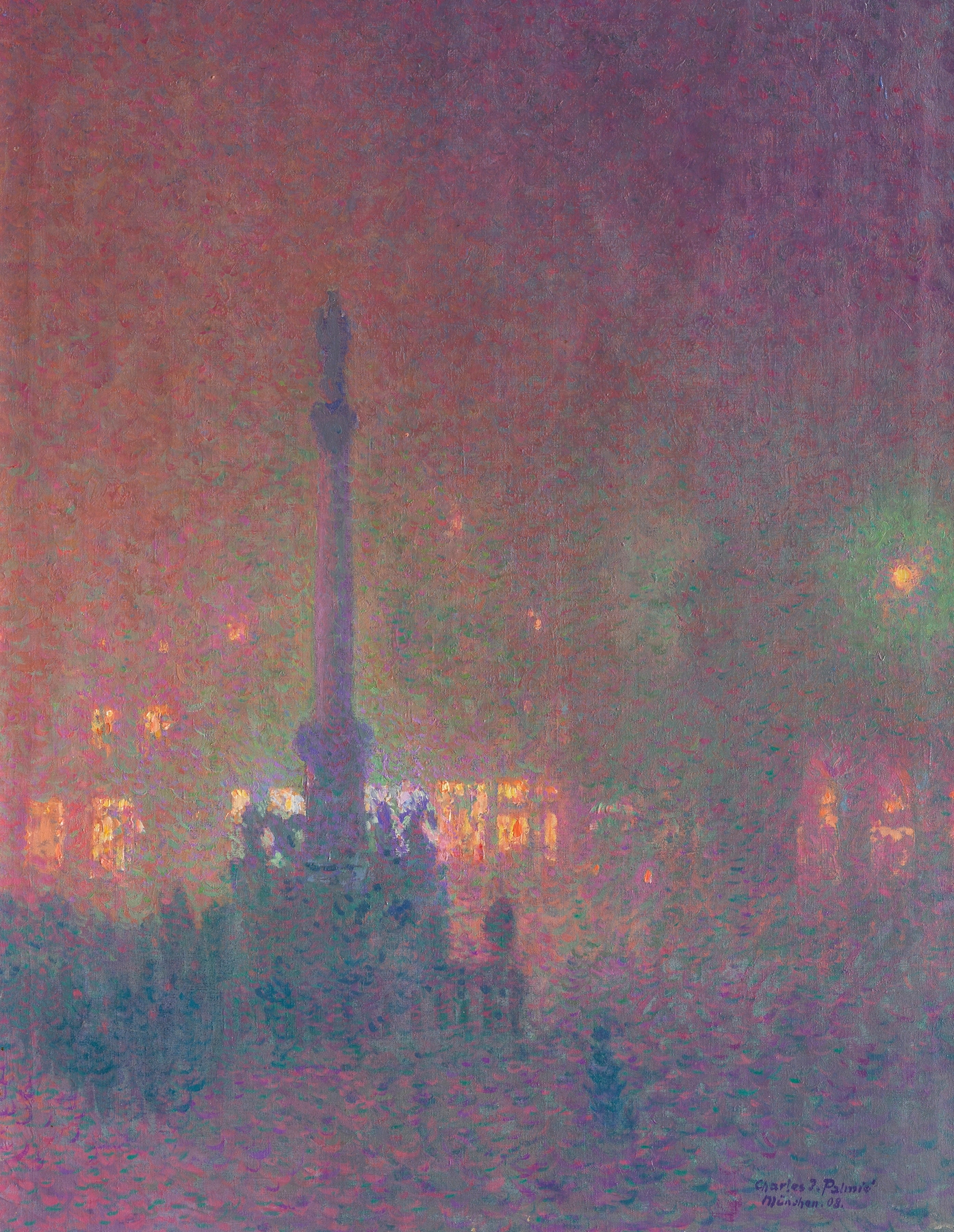
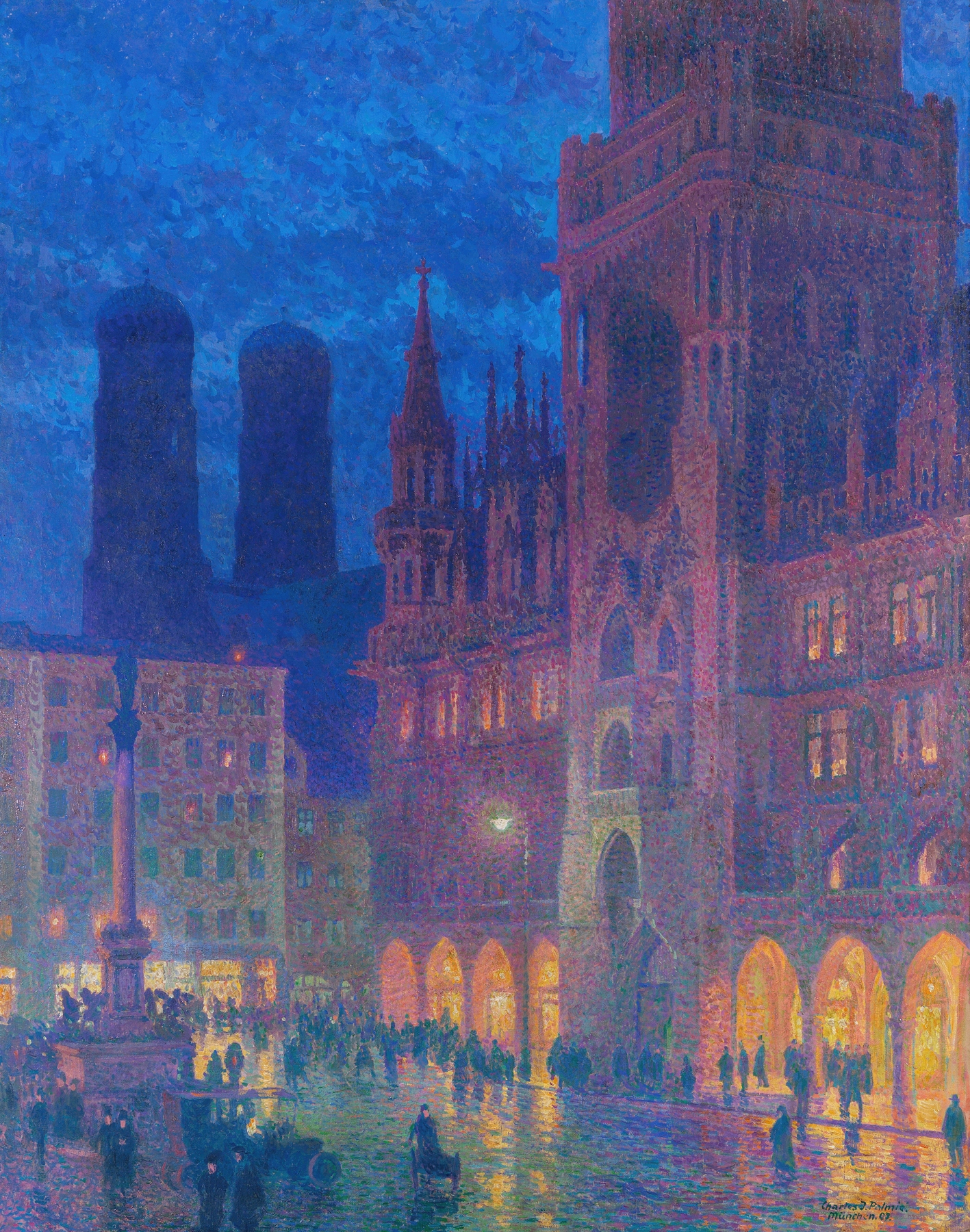
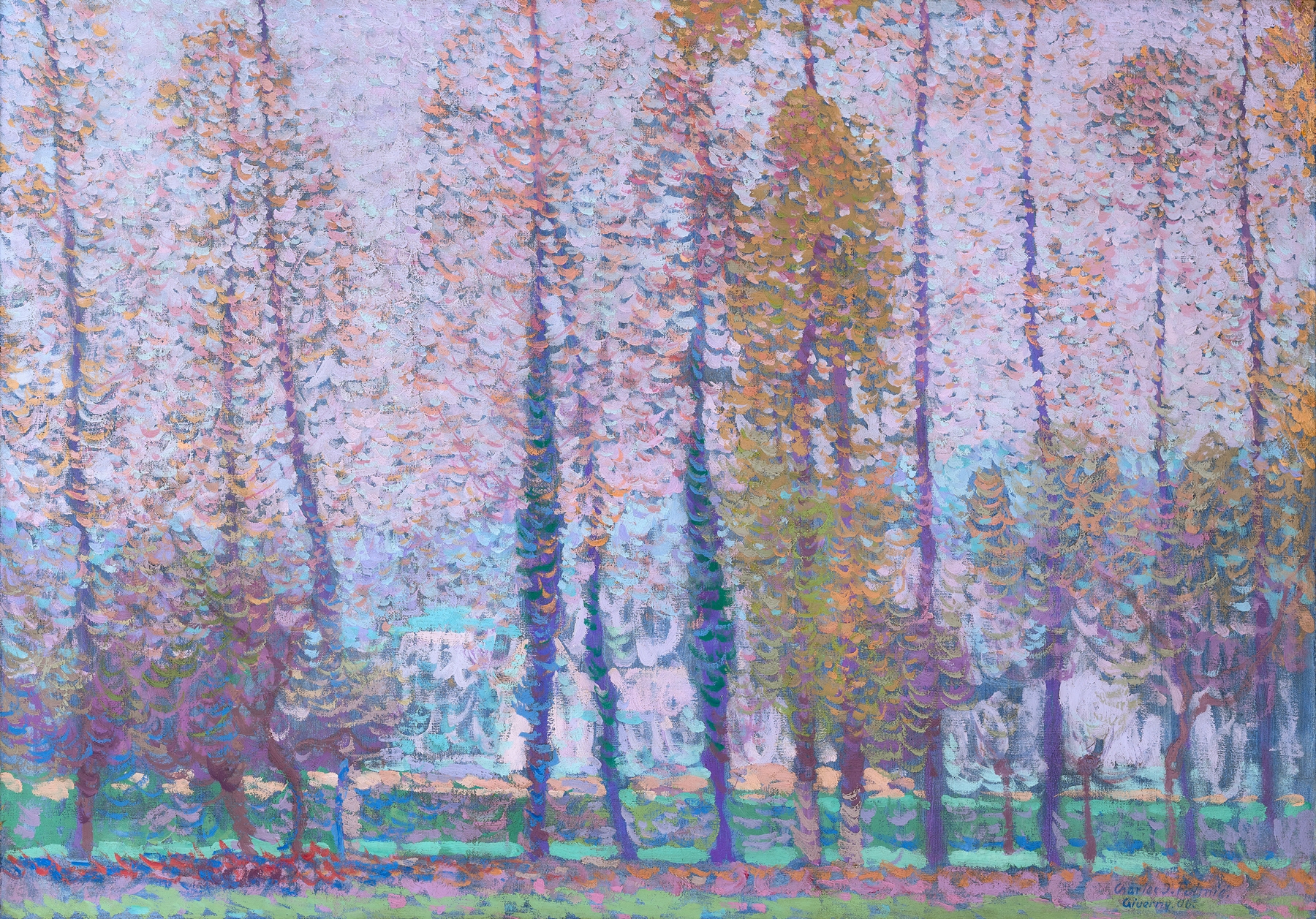
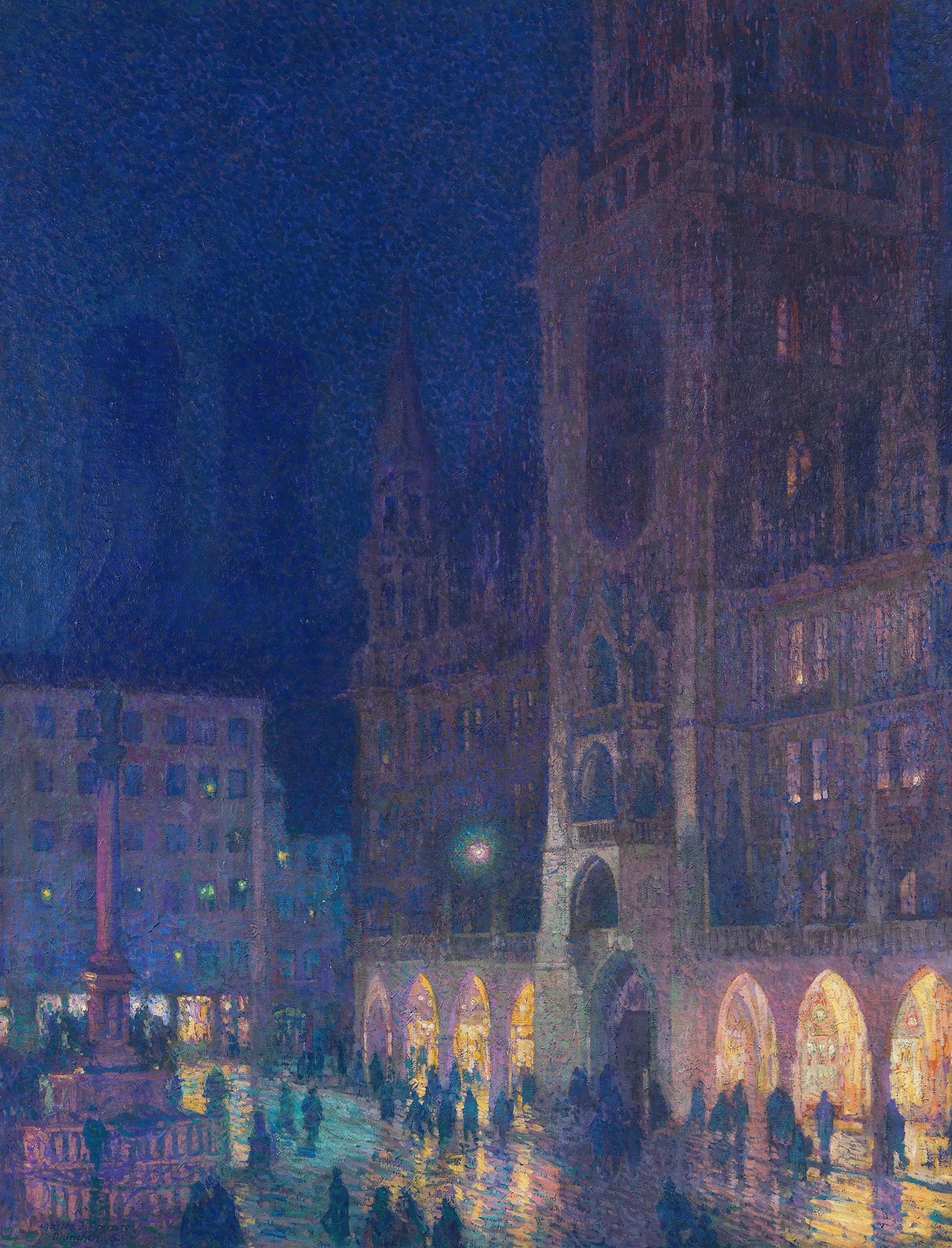
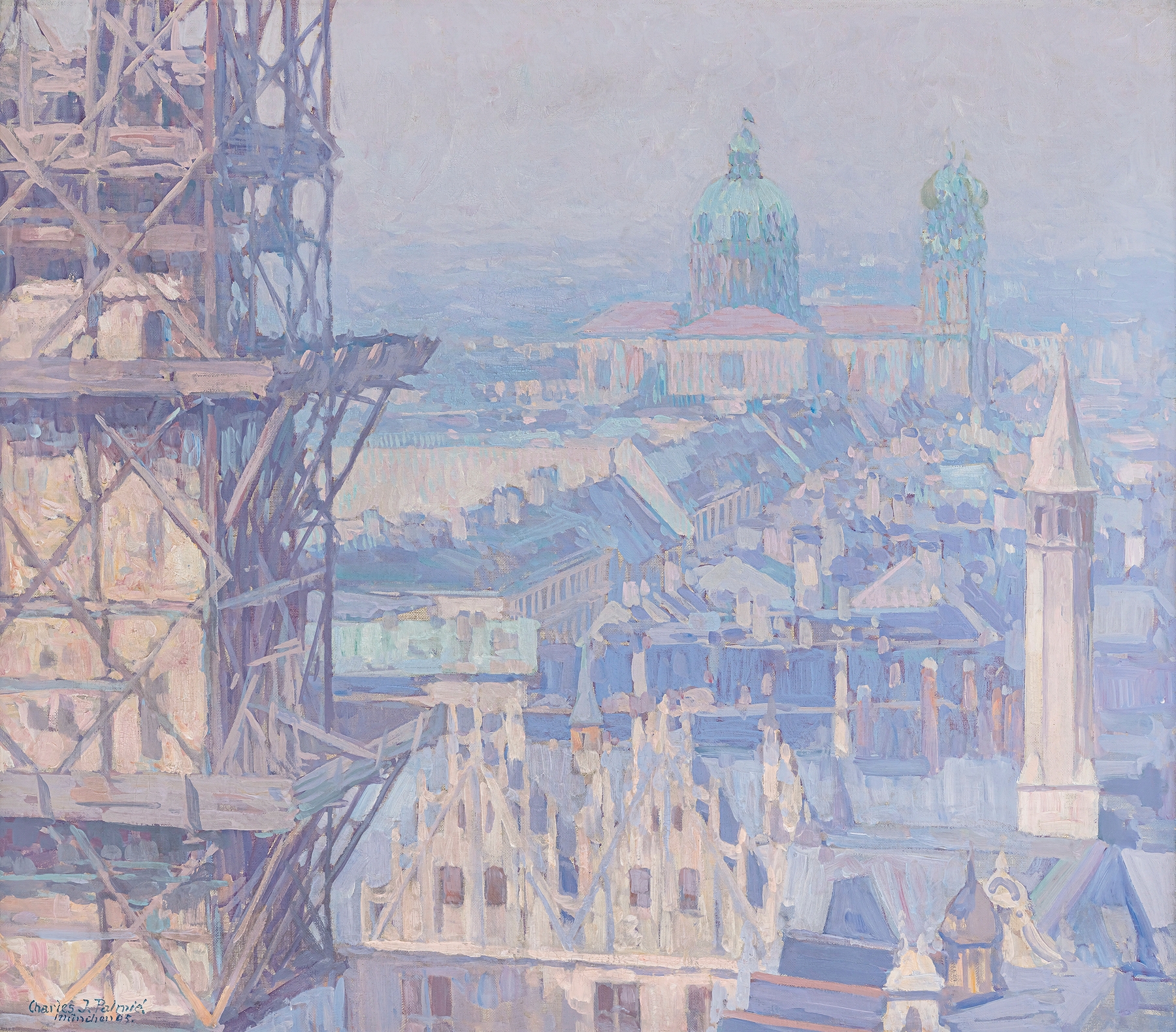
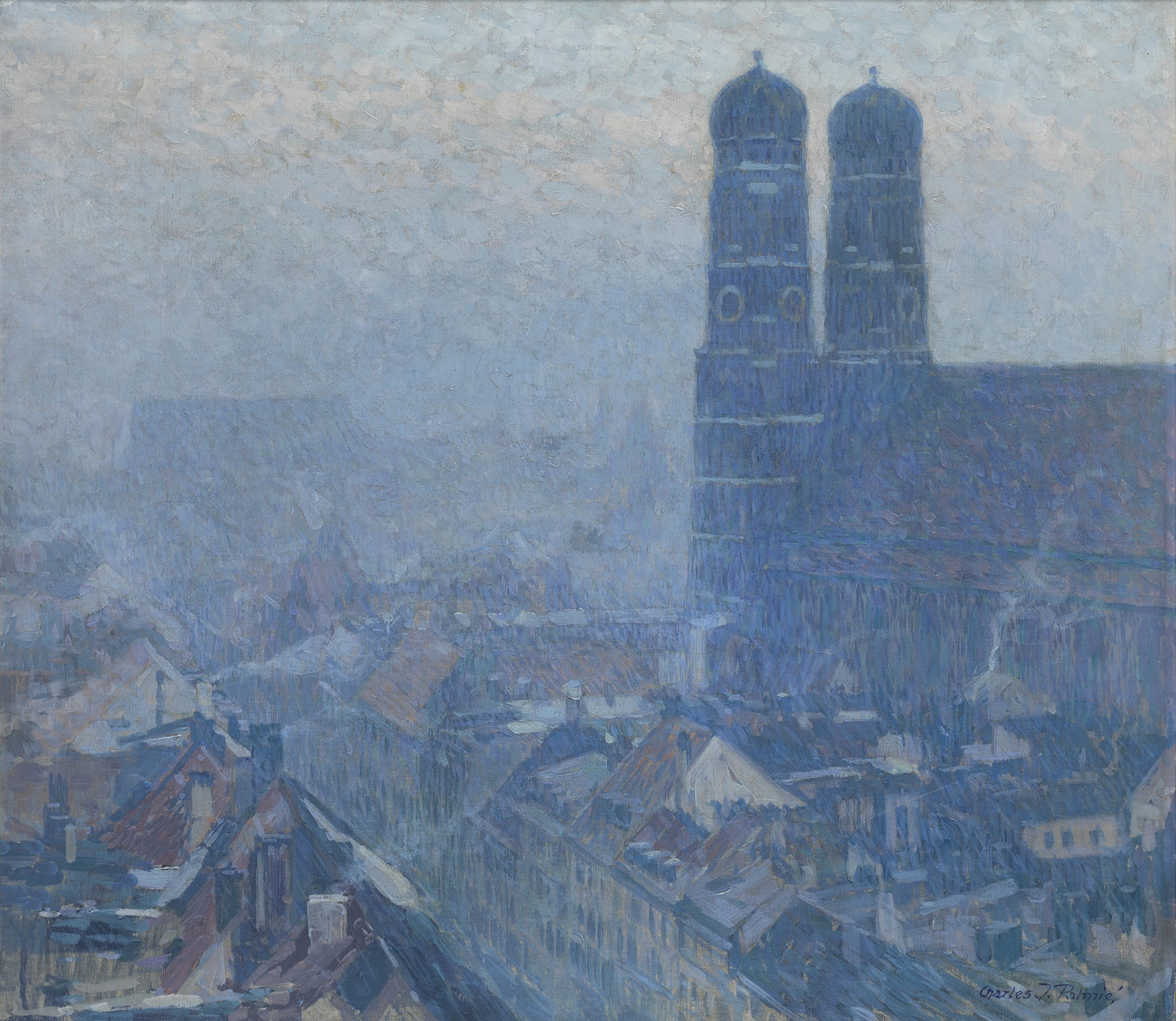
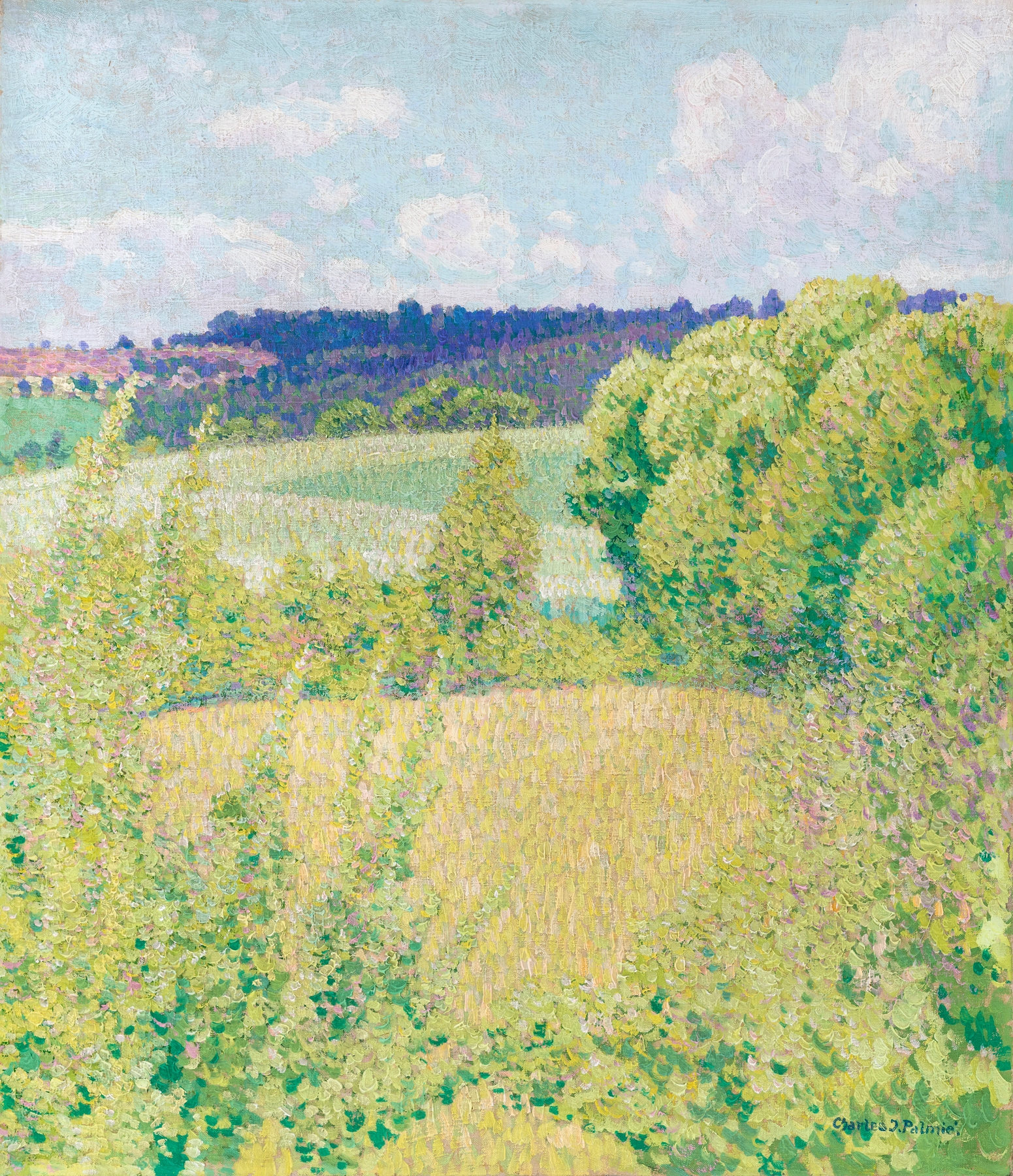
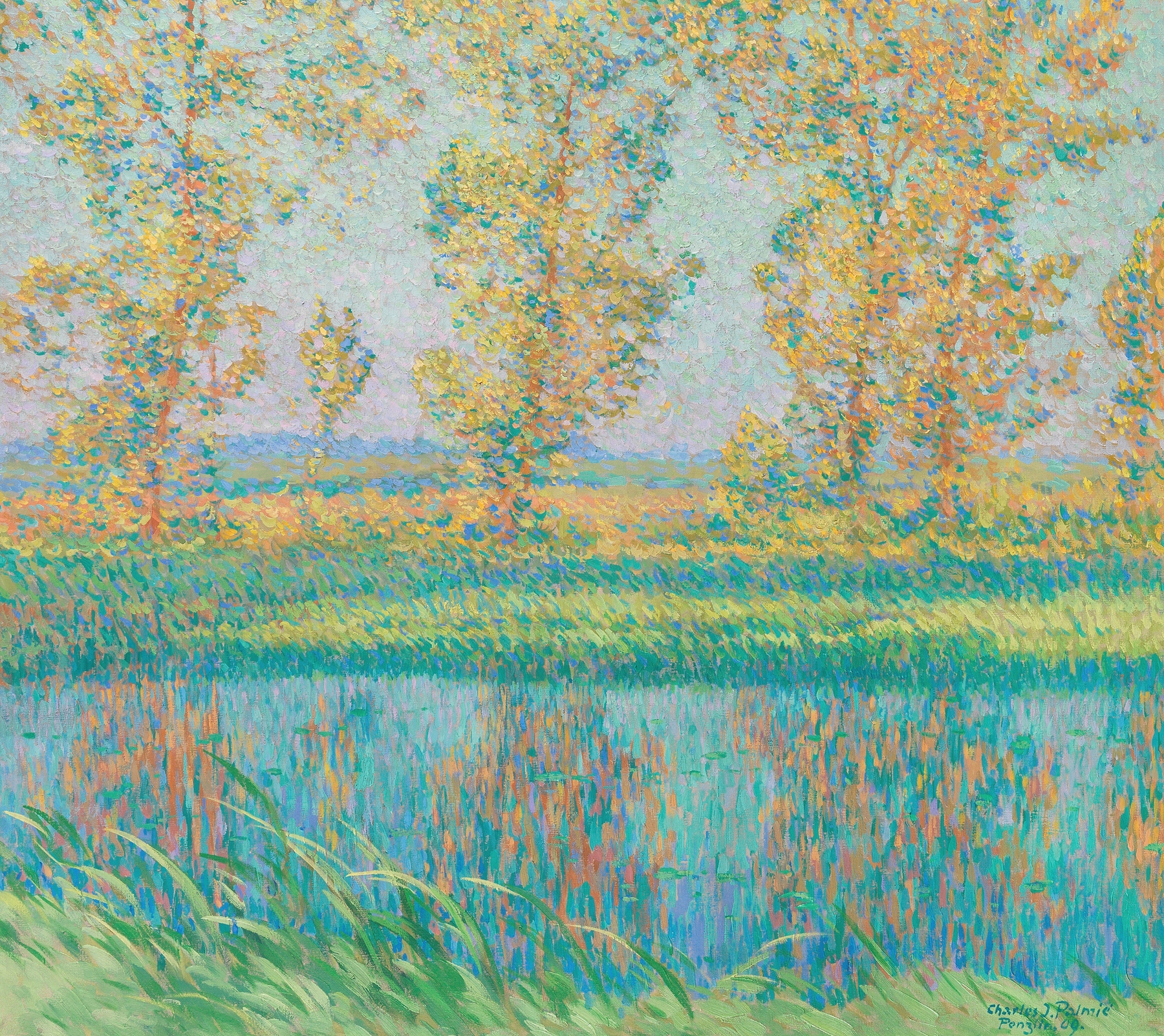
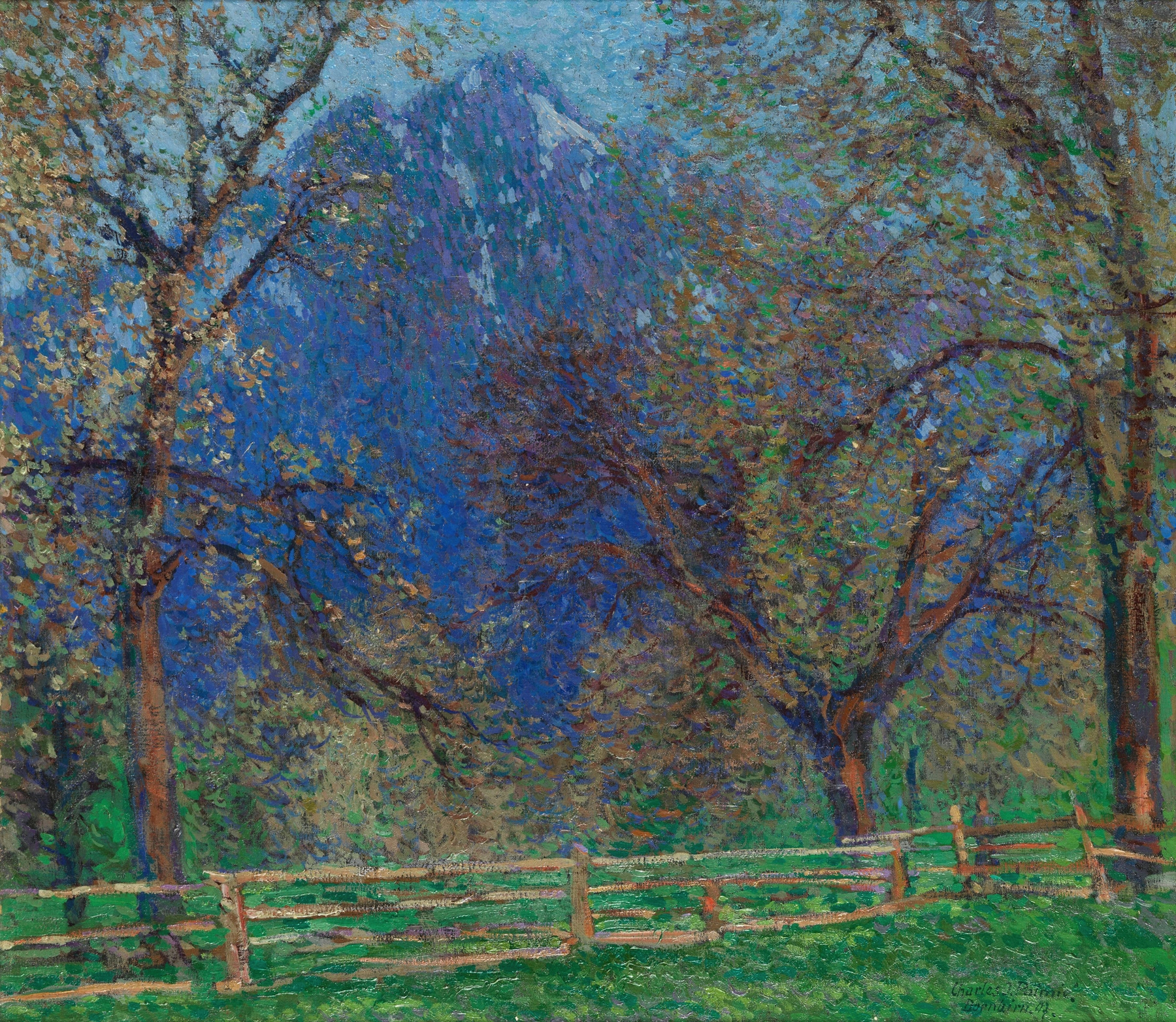
When did color learn to lie? In a landscape painted with such serene precision, the vibrant hues invite contemplation, yet they speak of truths untold and emotions concealed. Look to the foreground where the lush greens of the trees arch gracefully, leading the eye toward the delicate rooftops of Munich in the distance. The soft blues of the sky meld into gentle whites, suggesting a liminal moment between day and night. Notice how the light falls upon the spires, creating a luminous contrast that softens the edges of the buildings, evoking a sense of tranquility amidst urban life.
Each stroke of paint contributes to an atmosphere of calm, a respite from the clamor of existence. Delve deeper, and you might catch the painter's longing for harmony, a yearning that transcends the physical scene. The juxtaposition of the vibrant natural world against the rigid urban structure hints at the tension between chaos and peace. For every bright hue, there’s a shadow that whispers of underlying struggles and dreams.
Here, color becomes both a conduit of serenity and an anchor to the complexity of human emotion, allowing the viewer to ponder what lies beyond this tranquil façade. Created in an uncertain period, the artist captured this piece at a time when the world was shifting, perhaps reflecting his own journey of self-discovery amid societal changes. Without a specific date but likely in the late 19th century, the work embodies a moment in which the richness of life was keenly felt and sought after. The burgeoning art movements of the era began to embrace new perspectives, and this creation stands as a testament to that evolving vision.