München bei Nacht – Marienplatz — History & Analysis
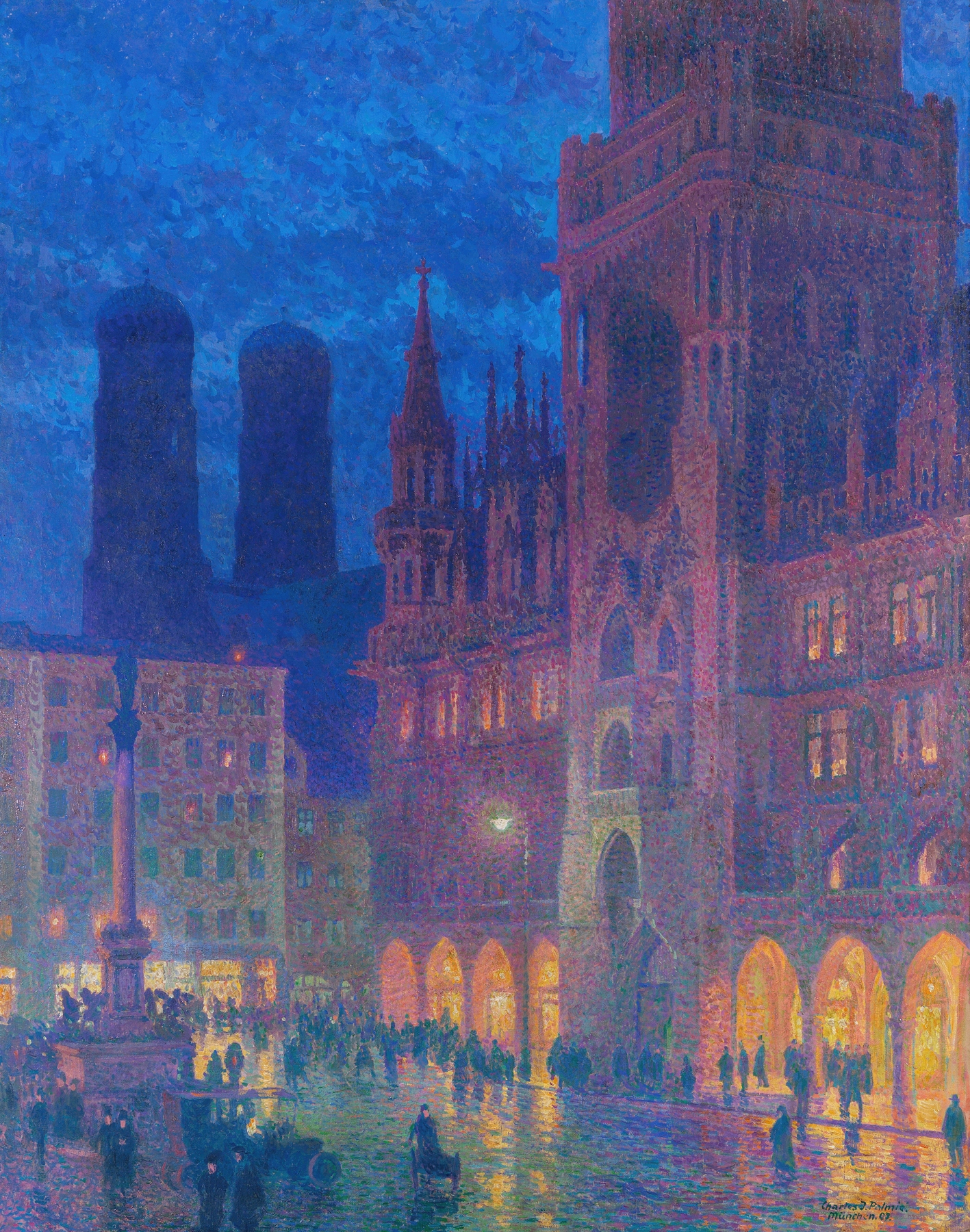
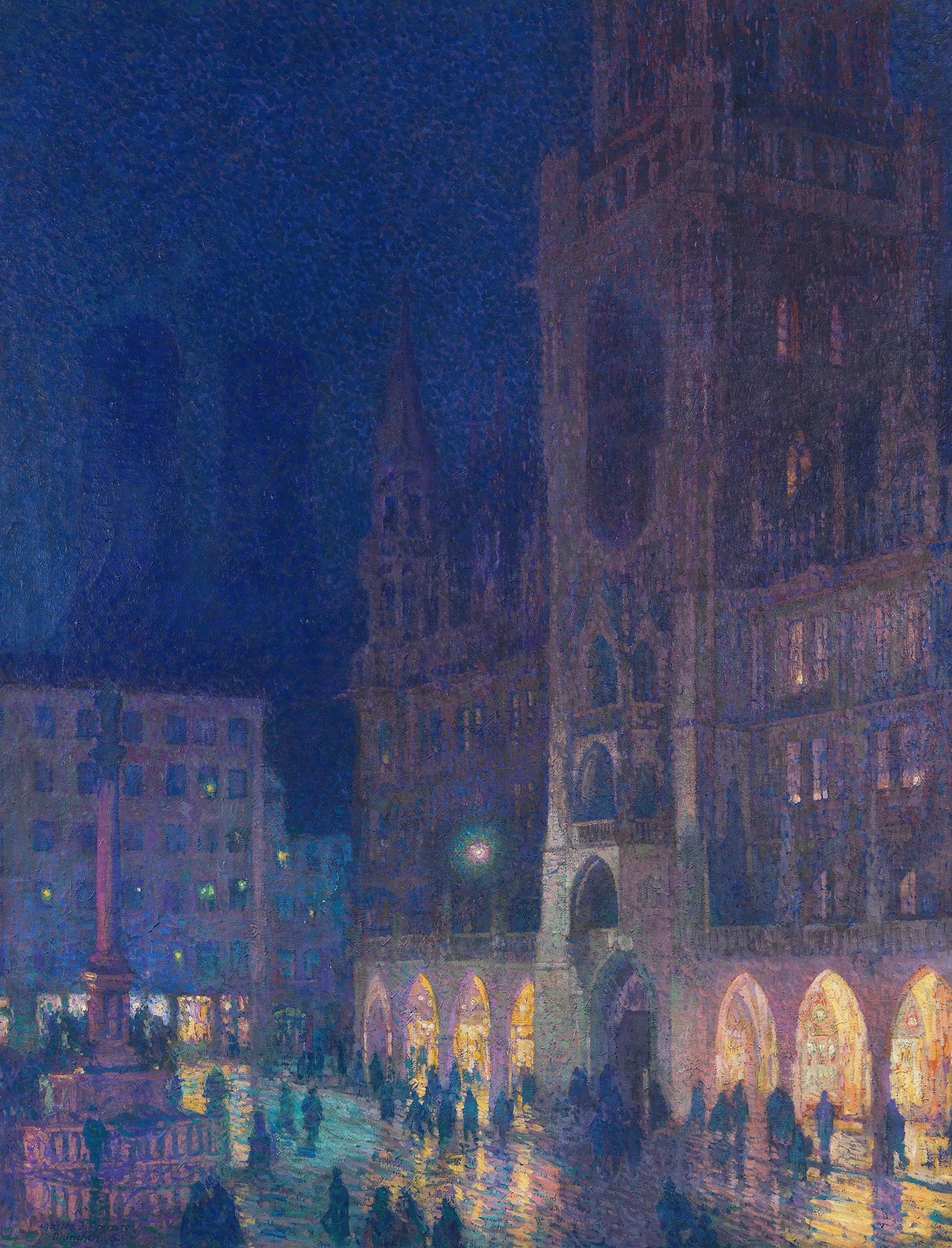
Where does light end, and longing begin? The interplay of reflection in München bei Nacht – Marienplatz invites viewers to explore the threshold between the two, illuminating not just the scene before us but the emotions hidden within. Look to the right at the cathedral, its spires reaching towards the deep indigo sky while warm lights bounce off its intricate stone façade. The artist employs a rich palette of blues and golds that not only delineates the architecture but also captures the essence of a Munich night.
Notice how the glow of street lamps casts playful shadows on cobblestone, inviting you to step closer into the scene. The careful brushwork creates a sense of movement in the air, as if the town itself breathes beneath the weight of the night. Beneath this serene depiction lies a tension between the bustling activity of the city and the stillness of the moment captured. The reflections in the puddles hint at the day's rain, suggesting a cleansing of the past, while the illuminated windows signify life and stories unfolding behind closed doors.
Each flicker of light reveals the duality of solitude amidst community, urging one to ponder the countless lives intertwined in the night’s embrace. In 1908, Charles Johann Palmié was steeped in the vibrant artistic milieu of early 20th-century Munich, a city alive with cultural fervor. At this time, he was navigating the shifting currents of modernism, which would alter the landscape of art forever. Against this backdrop, Palmié crafted scenes that married realism with impressionistic qualities, reflecting his desire to capture not just a place, but the emotions evoked by the ephemeral dance of light and shadow.