
Amalienborg Square, Copenhagen — History & Facts
Copenhagen's Amalienborg Square stands completely empty around the equestrian statue of King Frederik V on its tall pedestal, ringed by a low railing and chains on posts. Behind rises the long, symmetrical front of one of the Amalienborg palaces, with columns, rows of windows and sculptures along the roofline. Everything is held in muted grays and browns under a pale sky, with no people at all. Vilhelm Hammershøi studied the site carefully and obtained permission to paint the square from the second floor of Levetzau's Palace, one of the four Amalienborg palaces.
Quoting the art historian Patricia G. Berman, the SMK record calls its tight, neutral palette and complete lack of incident an eccentric view of the city that deliberately suppresses any reference to modern life. At 136.5 centimeters square, it is one of his largest paintings. The national gallery acquired it in 1896, the year Hammershøi painted it.
Berman counts it among his many isolated, enigmatic paintings of Denmark's official architecture; the statue at its center is the one Moltke commissioned from the sculptor Saly. It is in the SMK in Copenhagen.
Sources: Statens Museum for Kunst, record KMS1542 · Wikidata Q20354158 · Wikipedia: Amalienborg Square, Copenhagen
More Artworks by Vilhelm Hammershøi

Moonlight, Strandgade 30
Vilhelm Hammershøi

Interior. The Music Room, Strandgade 30
Vilhelm Hammershøi
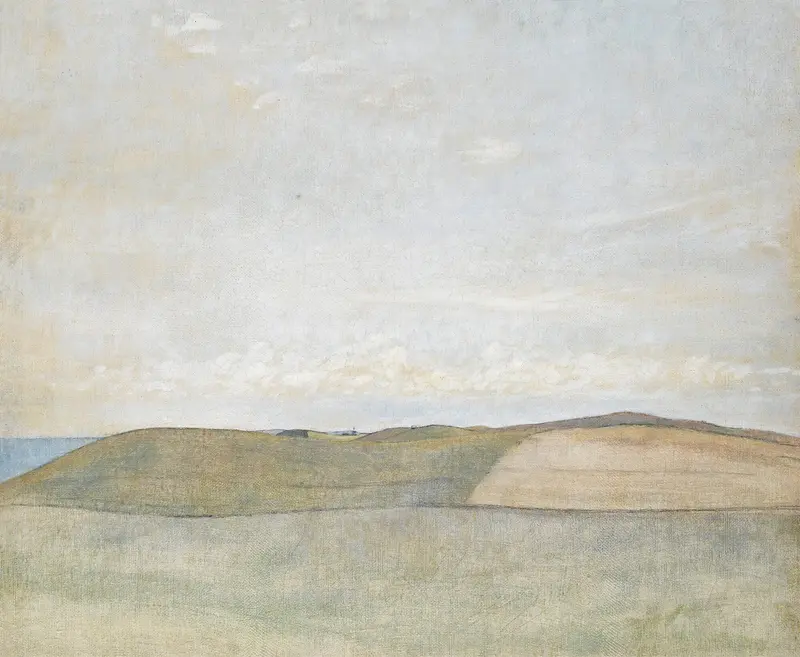
From Refsnæs
Vilhelm Hammershøi
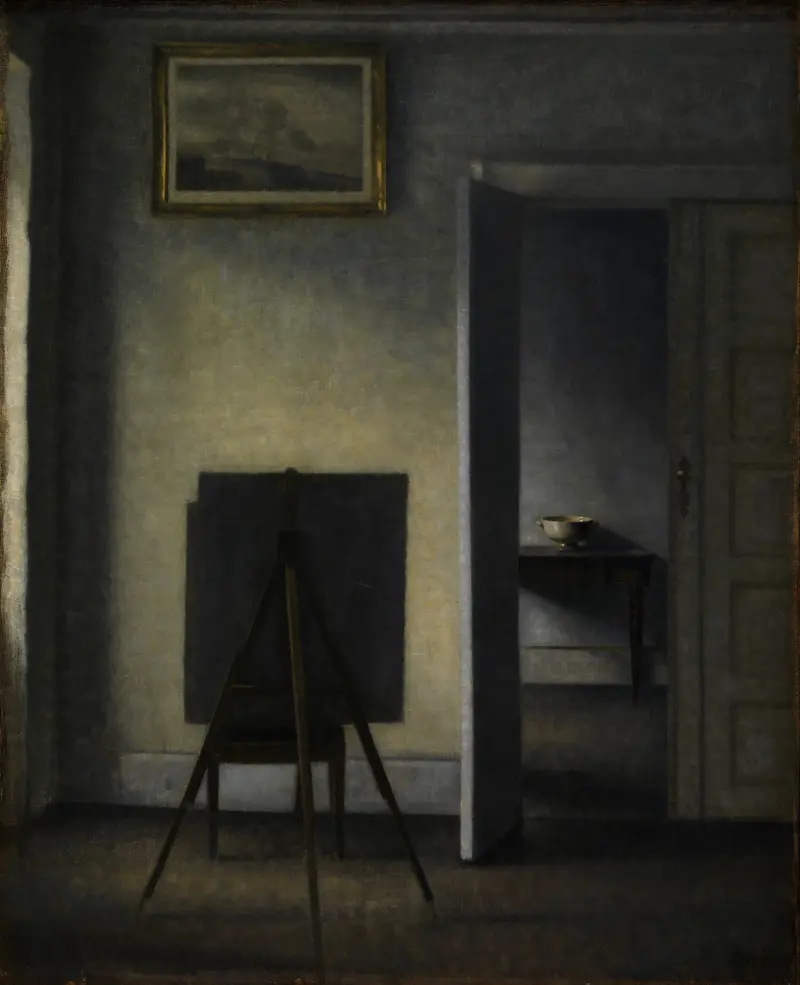
Interior with the Artist’s Easel
Vilhelm Hammershøi

Interior of Courtyard, Strandgade 30
Vilhelm Hammershøi
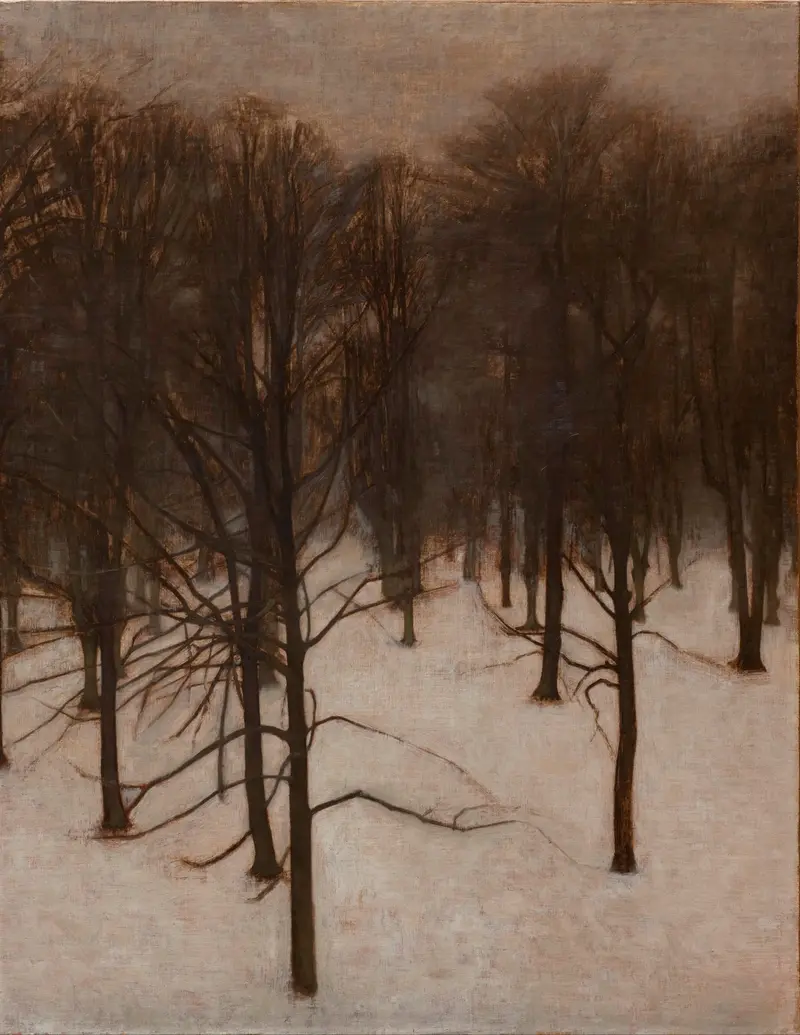
Søndermarken Park in winter
Vilhelm Hammershøi

From Christianshavn’s Canal, Copenhagen
Vilhelm Hammershøi
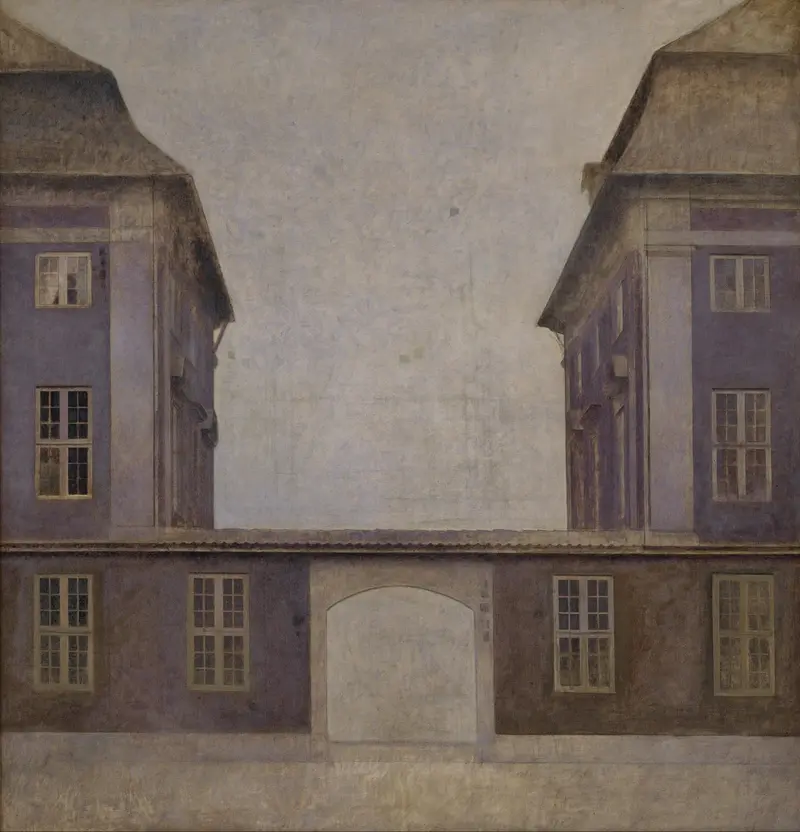
The Buildings of the Asiatic Company, seen from St. Annæ Street
Vilhelm Hammershøi
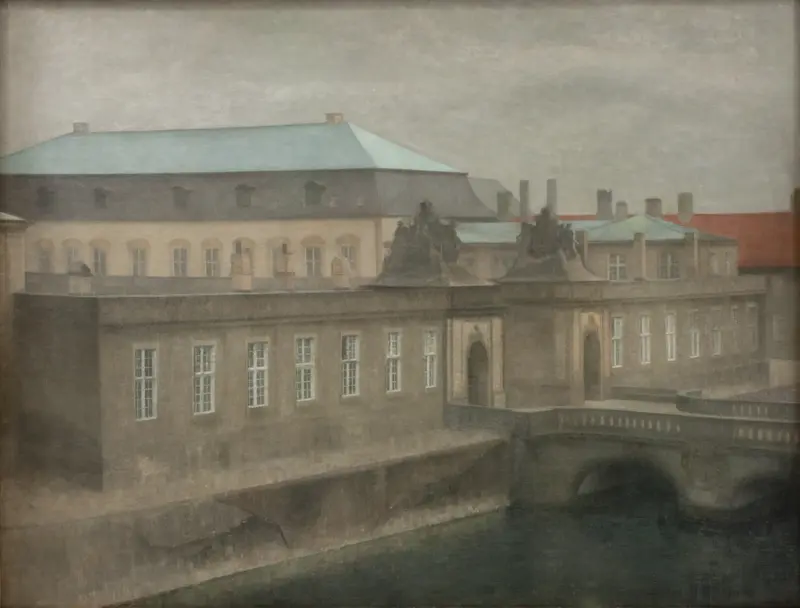
View of Christiansborg Palace. Late Autumn
Vilhelm Hammershøi
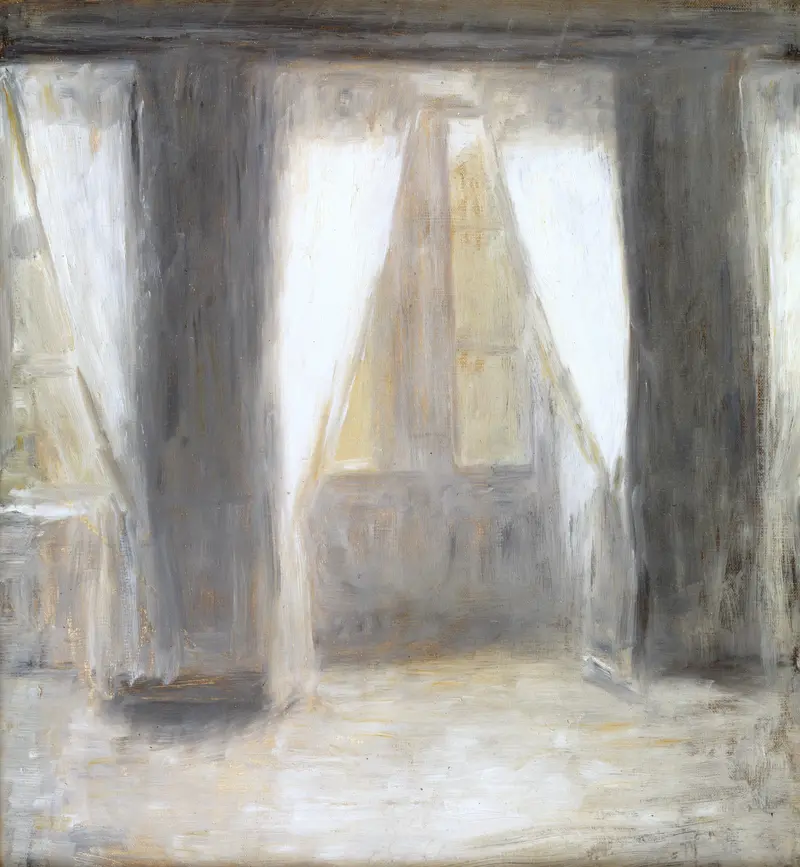
Dagligstuen på Frederiksberg Allé
Vilhelm Hammershøi





