At Eternity’s Gate — History & Analysis

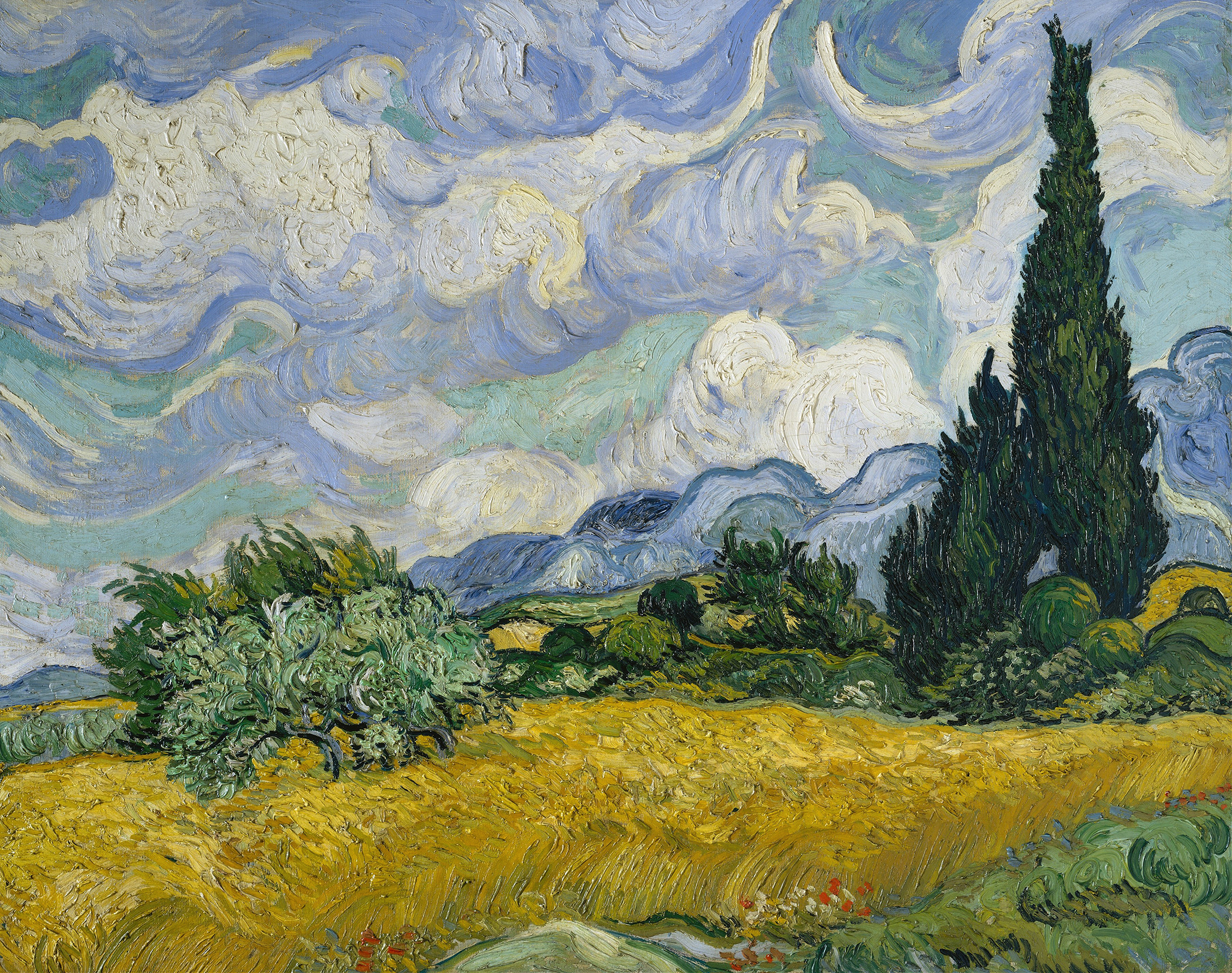
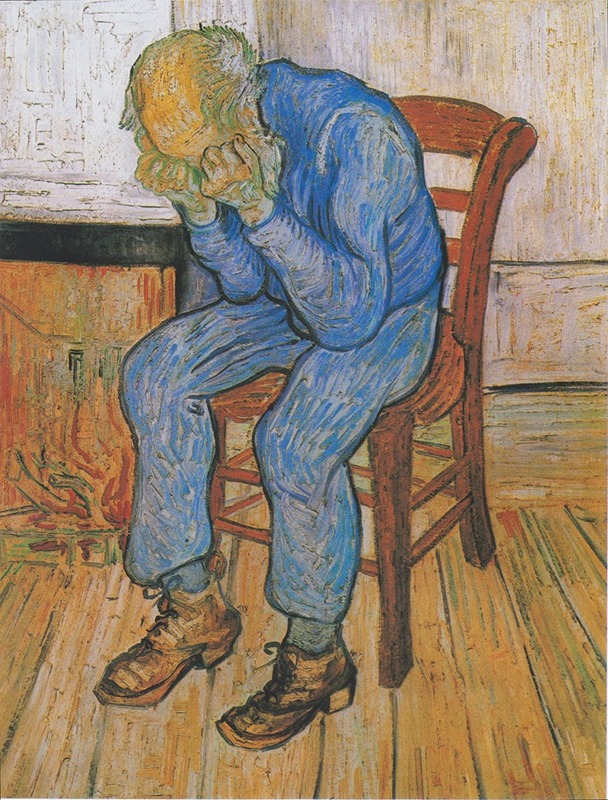
“Sometimes beauty is just pain, disguised in gold.” Beneath the vibrant strokes of color lies a profound yearning, a silent scream for solace amidst despair. Van Gogh’s work invites us to explore the fragile boundary between beauty and anguish, revealing the artist's own emotional landscape. Look to the foreground where the figure of a man, hunched and weary, dominates the canvas. The swirling blues and greens envelop him, echoing the tranquility and tumult of his mind.
Notice how the brushwork conveys both chaos and comfort; each stroke seems to pulse with life, while the bright yellows introduce a hint of hope, suggesting a fleeting moment of clarity amidst overwhelming darkness. As you delve deeper, consider the stark contrast between the figure's desolation and the radiant gold that encircles him. This duality speaks to the complexities of existence—where moments of despair can coexist with flashes of beauty. The heavy shadows deepen the sense of isolation, yet the golden hues hint at a yearning for something greater, a desire for connection and understanding that transcends suffering.
In 1890, Van Gogh painted At Eternity’s Gate during a turbulent period in his life, shortly before his tragic death. Residing in the Saint-Paul-de-Mausole asylum in Saint-Rémy-de-Provence, he grappled with mental illness while also producing some of his most powerful works. This painting reflects his internal struggles and aspirations, capturing the raw essence of a life steeped in emotional complexity and artistic brilliance.