At the Railway Station — History & Analysis
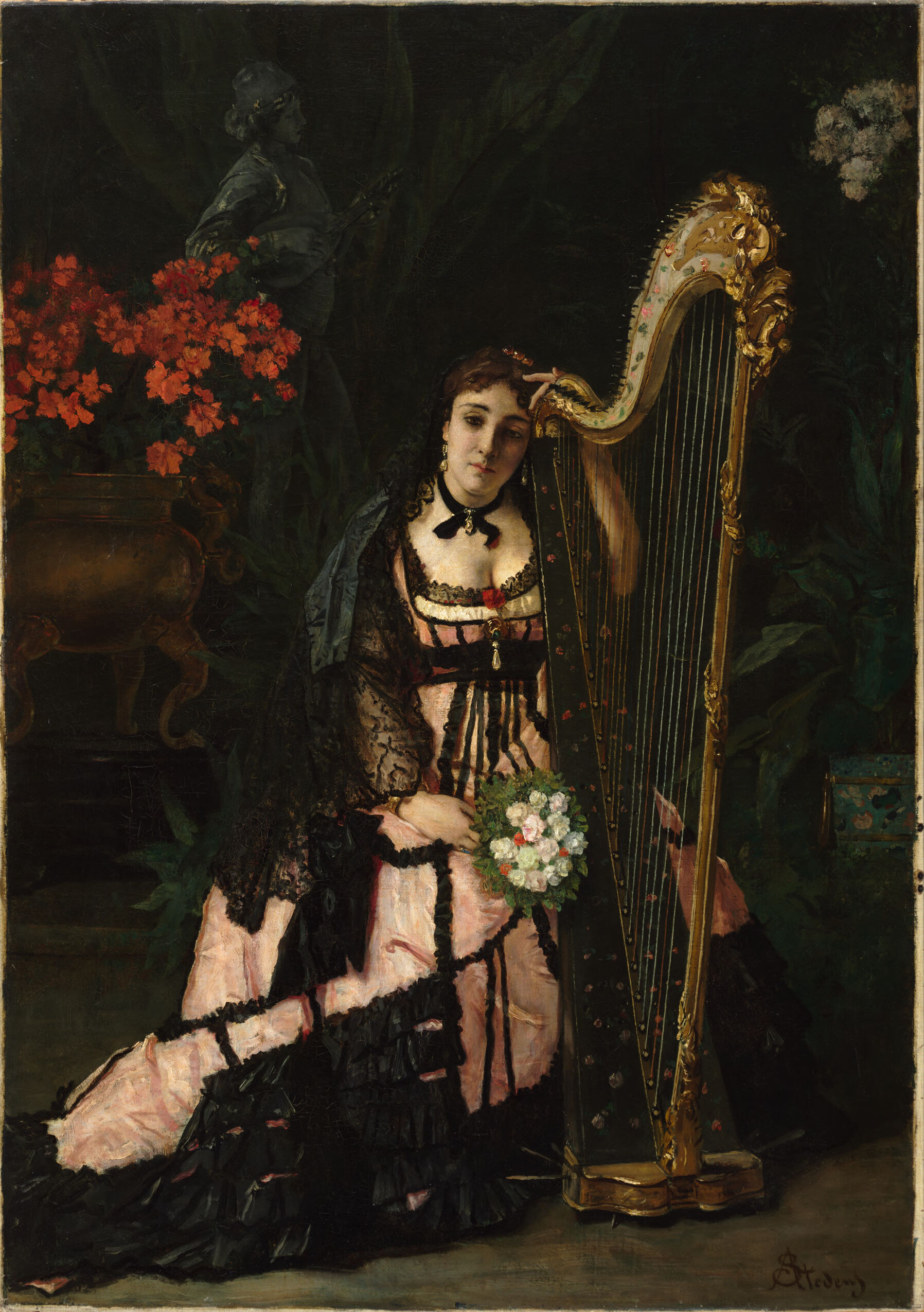
Who listens when art speaks of silence? In a world bustling with noise, the weight of unspoken words can echo louder than the trains that roll past. Look to the left at the elegantly draped fabric of a woman's dress, its folds captured with meticulous brushwork, conveying both movement and stillness. Notice how the light filters through the station’s glass roof, casting delicate patterns that dance across the floor, illuminating moments of quiet contemplation.
The stark contrasts between the shadows and highlights create a sense of depth, drawing the eye toward the central figure, who seems lost in thought amid the thrumming life around her. The emotional tension is palpable; the woman's pensive gaze hints at stories untold, while the lively surrounding figures serve as a poignant reminder of the world rushing by. A faint hint of melancholy permeates the scene, suggesting a longing for connection in the midst of transit. The juxtaposition of vibrant colors against softer, muted tones enhances the sense of isolation that the subject experiences, inviting viewers to ponder their own moments of solitude.
In the early 1870s, Alfred Stevens painted this piece during a time when urbanization was rapidly transforming society. Working in Paris, he was deeply influenced by Impressionism, which sought to explore the nuances of light and everyday life. This period was also marked by a growing fascination with capturing ephemeral moments — a theme that resonates profoundly in At the Railway Station, a work that quietly reveals the complexities of human emotion amidst the chaos of modernity.