Marine de nuit — History & Analysis
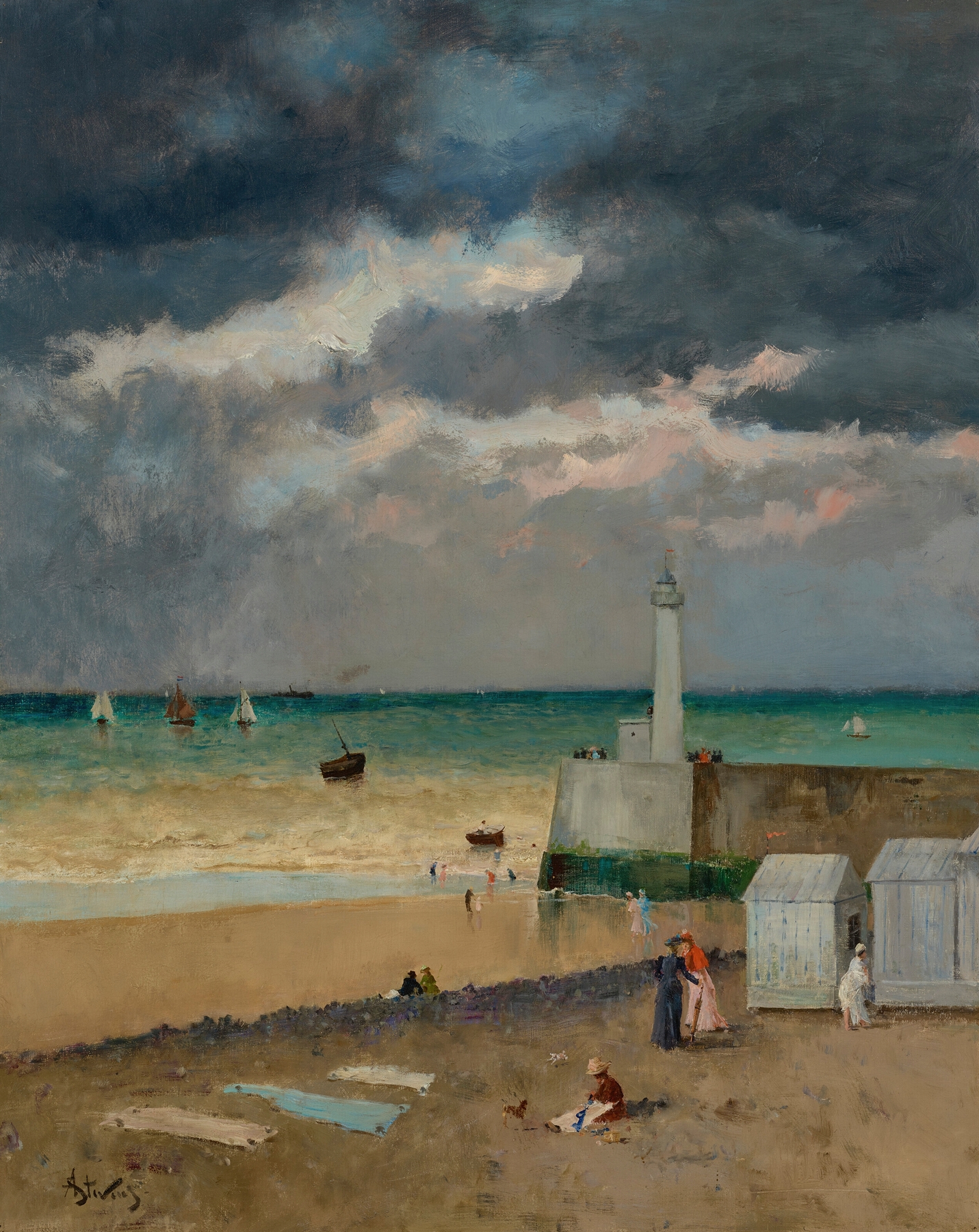
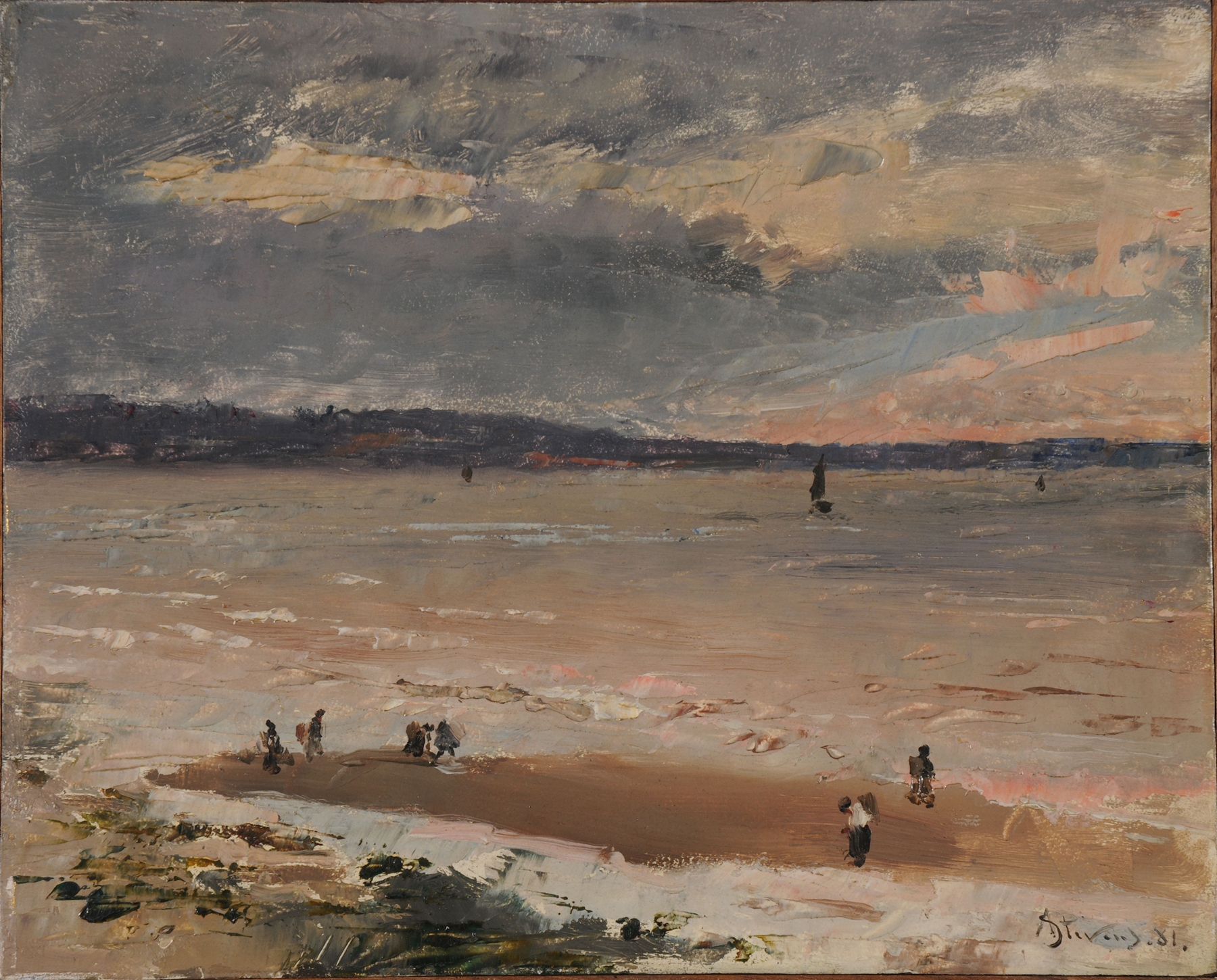
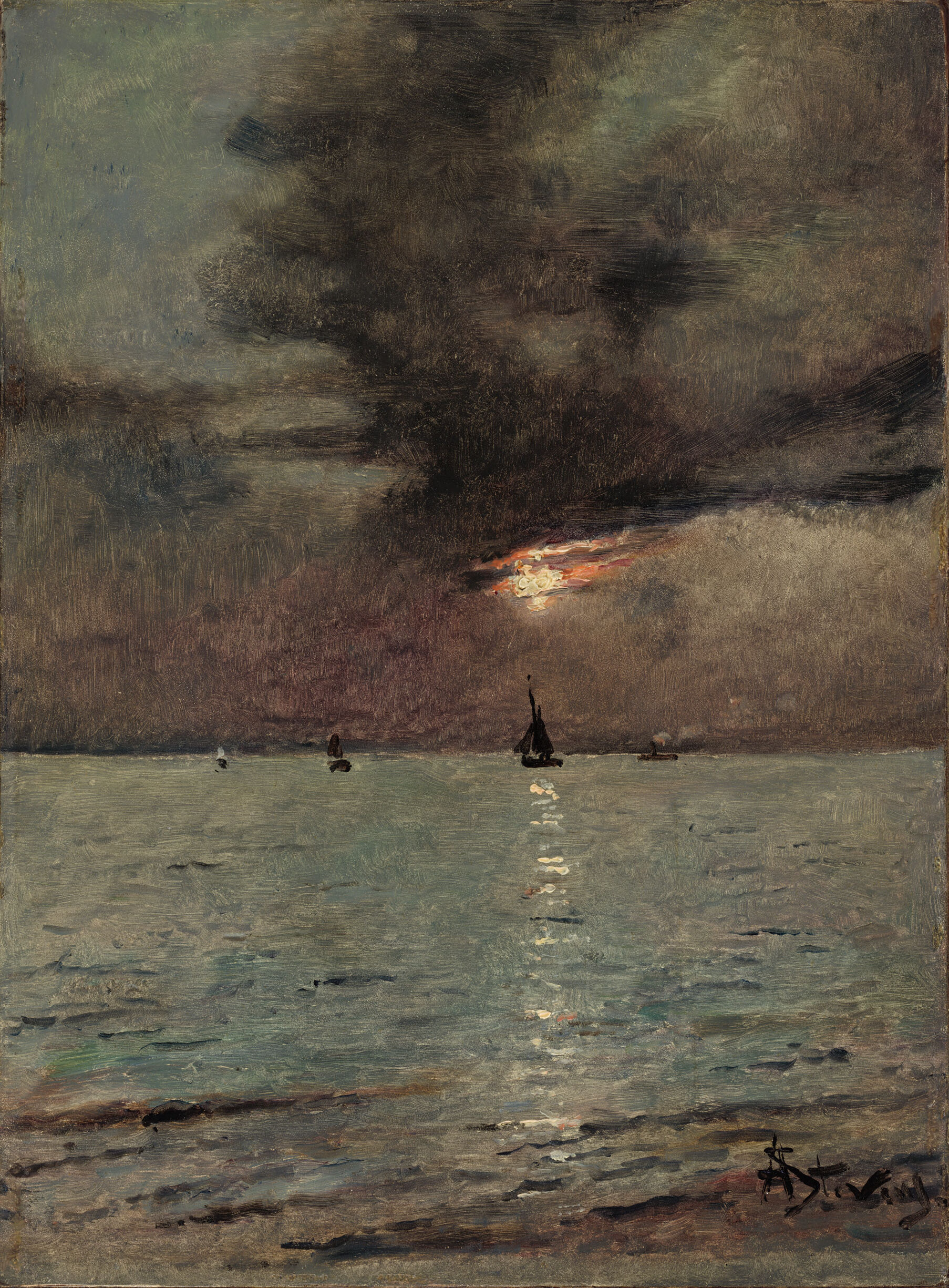
Could beauty survive in a century of chaos? In the delicate interplay of light and shadow, Marine de nuit invites us to ponder the resilience of hope amidst turmoil. First, look to the center, where the ethereal figure of a woman stands poised at the water's edge, her gaze lost in the vast expanse of the night sky. The gentle hues of blue and silver wash over her, capturing the essence of twilight, while subtle brushstrokes create a shimmering reflection on the water's surface.
The contrast between the tranquil scene and her contemplative posture draws the viewer into an intimate moment suspended in time. Delve deeper into the painting, and you will discover layers of emotion interwoven within each brushstroke. The woman's solitude hints at a longing for connection, echoing a universal search for solace in a changing world. Meanwhile, the darkened horizon embodies uncertainty, yet the luminous stars above remind us of the enduring beauty that persists, suggesting that hope flickers even in the darkest of nights.
The juxtaposition of light and darkness encapsulates the tension between despair and the possibility of renewal. Alfred Stevens painted Marine de nuit during a period of significant artistic evolution in the late 19th century, likely while he was based in Paris. This era marked a transition towards modernity, with artists exploring new themes and techniques that reflected societal changes. Stevens, known for his focus on beautiful women and serene compositions, created this work amidst the tensions of a world shifting away from traditional ideals, capturing a moment that resonates with profound emotional depth.