Figures sur la plage au couchant — History & Analysis
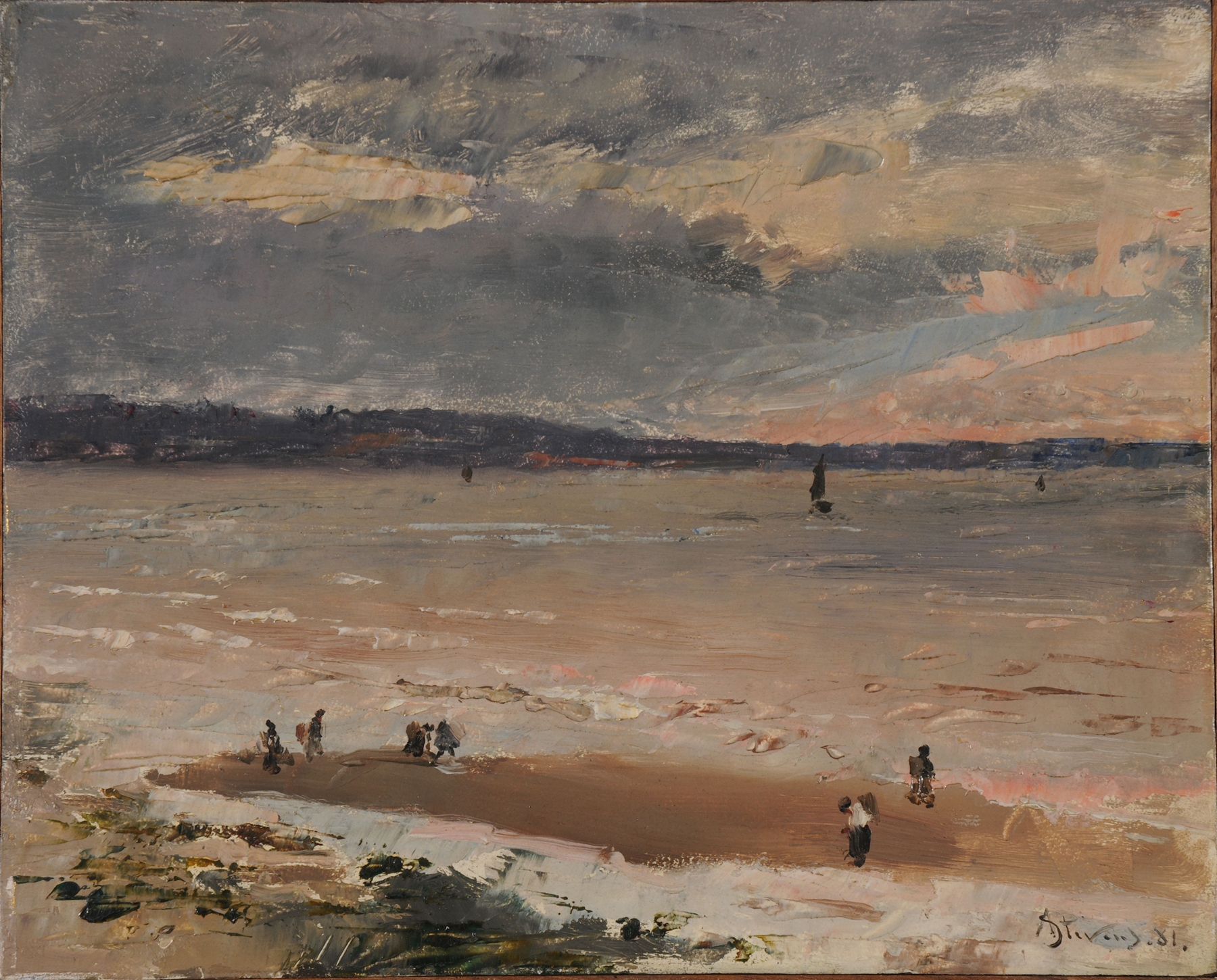
“Every brushstroke is a heartbeat remembered.” In the gentle embrace of twilight, the soft hues of dusk whisper tales of fleeting moments, where every figure carries a story wrapped in silence. Here, melancholy hangs like the fading light, evoking a sense of longing for what once was. Look to the left at the two figures standing intimately near the shoreline, their silhouettes softened by the brushwork that mimics the delicate ebb of the tide. Notice how the sky, painted in warm oranges and cool purples, descends into a dreamlike haze, inviting the viewer to linger in this transitory realm.
The meticulous details of the women’s flowing dresses catch the dimming light, their colors closely mirroring the soft waves lapping at their feet, creating a harmonious balance between earth and sky. In this scene, the juxtaposition of light and shadow speaks to deeper emotions — the interplay between joy and sorrow, presence and absence. The women’s postures hint at a conversation both intimate and contemplative, suggesting unspoken words and shared memories. The distant horizon, where the sun meets the sea, serves as a poignant reminder of time's relentless passage, creating an atmosphere laden with nostalgia.
Alfred Stevens painted this evocative work during the late 19th century, a time when he was deeply immersed in the Parisian art scene. This period marked a shift towards modernity, and while he sought to capture the beauty of everyday life, he also navigated personal challenges and the evolving artistic landscape that surrounded him. Figures sur la plage au couchant reflects not just his artistic vision, but a moment in time fraught with both personal and cultural significance.