Hesitation (Madame Monteaux?) — History & Analysis
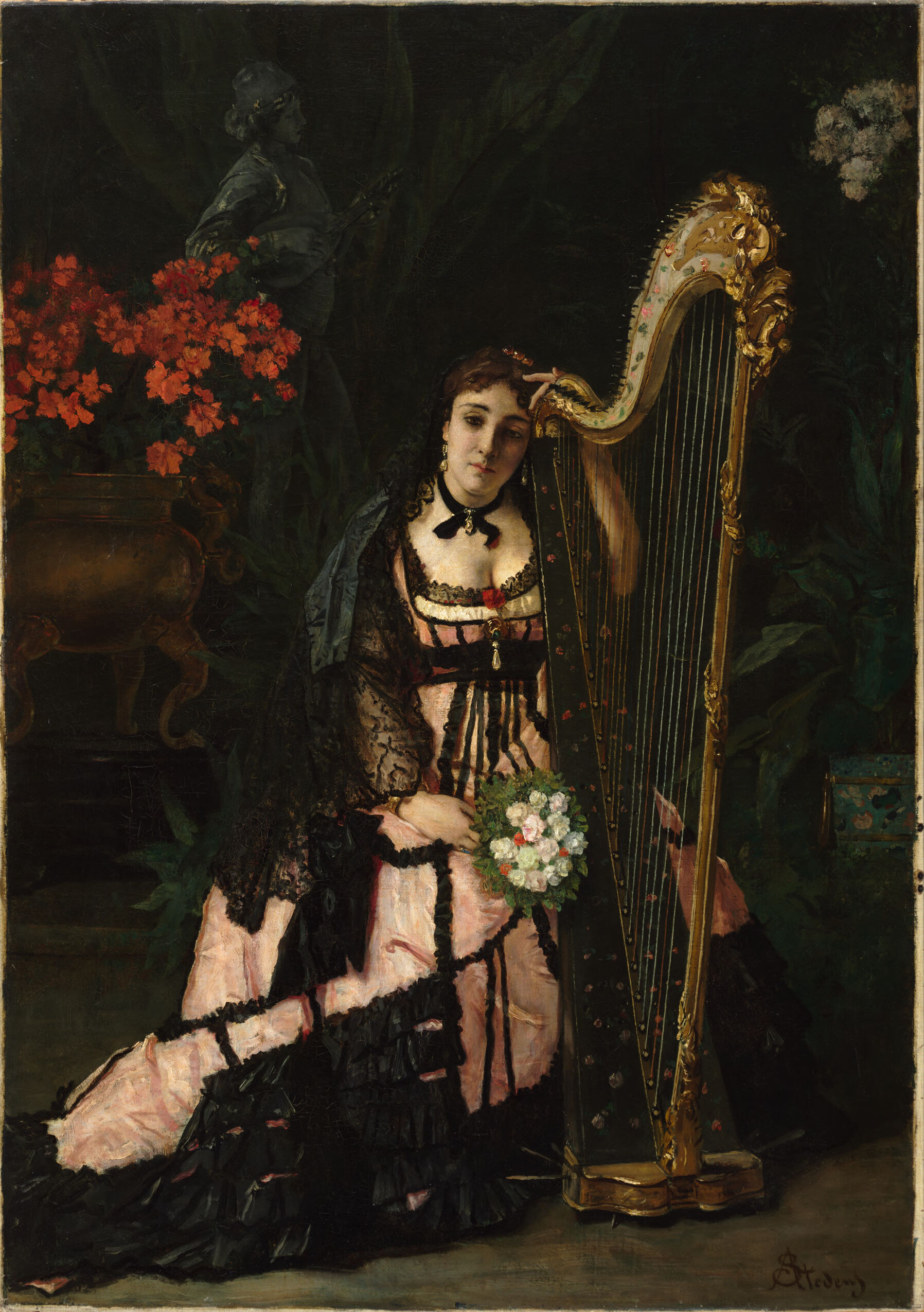
Did the painter know this moment would outlive them? In Hesitation, a palpable sense of loss hangs in the air, like a fragile whisper yearning for resolution. Focus first on the figure of the woman, poised yet caught in a delicate balance between action and contemplation. Her gown, a cascade of soft, muted tones, mirrors the faint pastel hues that envelop the background, creating an intimate atmosphere. Notice how her gaze drifts toward the distance, the subtle tension in her posture suggesting unresolved feelings.
The light, filtering through an unseen window, bathes her in a gentle glow, emphasizing the melancholy beauty of her expression. Hidden within her serene façade are layers of emotional complexity. The tension between her poised demeanor and the sense of uncertainty evokes a powerful contrast, hinting at the internal struggles that lie beneath. The soft brushwork and delicate details, such as the intricate embroidery on her dress, reflect both sophistication and fragility, as if they too are caught in her moment of hesitation.
This emotional depth invites viewers to delve into their interpretations of what this moment represents — perhaps a reflection of lost opportunities or a decision left unmade. Created around 1867, this piece emerged during a time of significant transition for Alfred Stevens, who was deeply influenced by the changing tides of the art world. Living in Paris, he was part of a vibrant community of artists exploring new themes and techniques, yet he continued to express a fascination with the nuances of human emotion and the complexities of womanhood. In this context, Hesitation serves as a poignant encapsulation of his artistic vision and personal reflections during a pivotal period.