Marine – Le Havre — History & Analysis
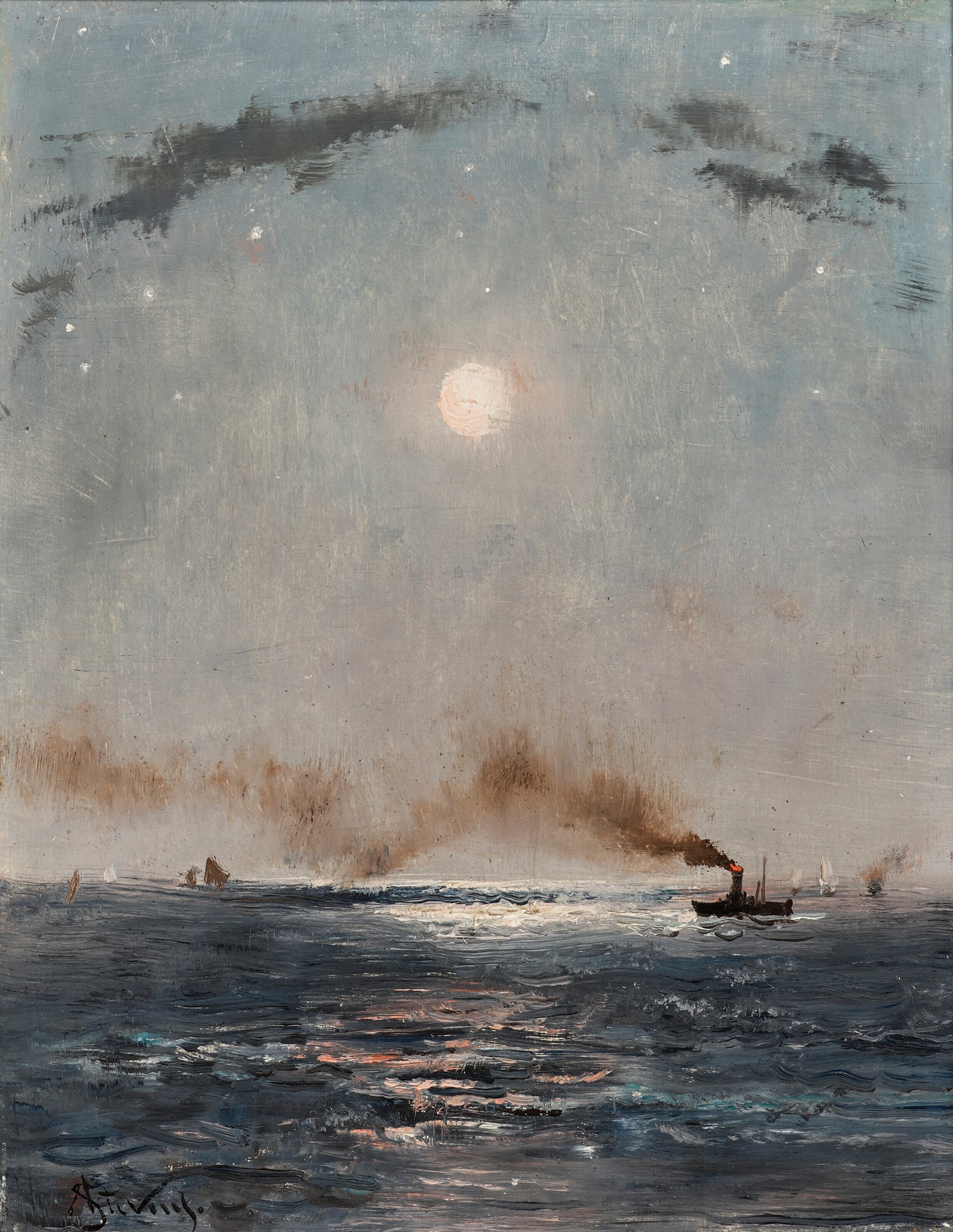
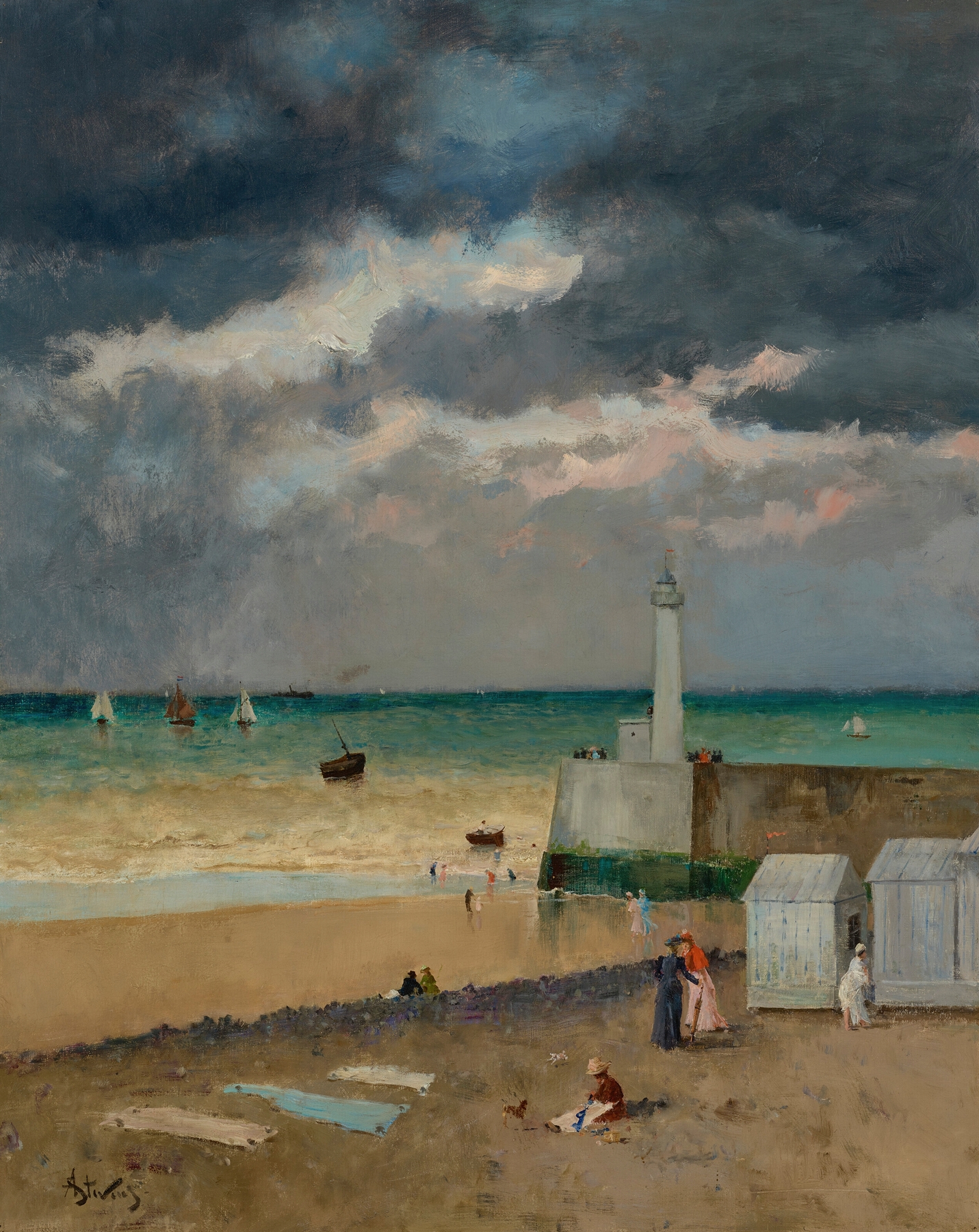
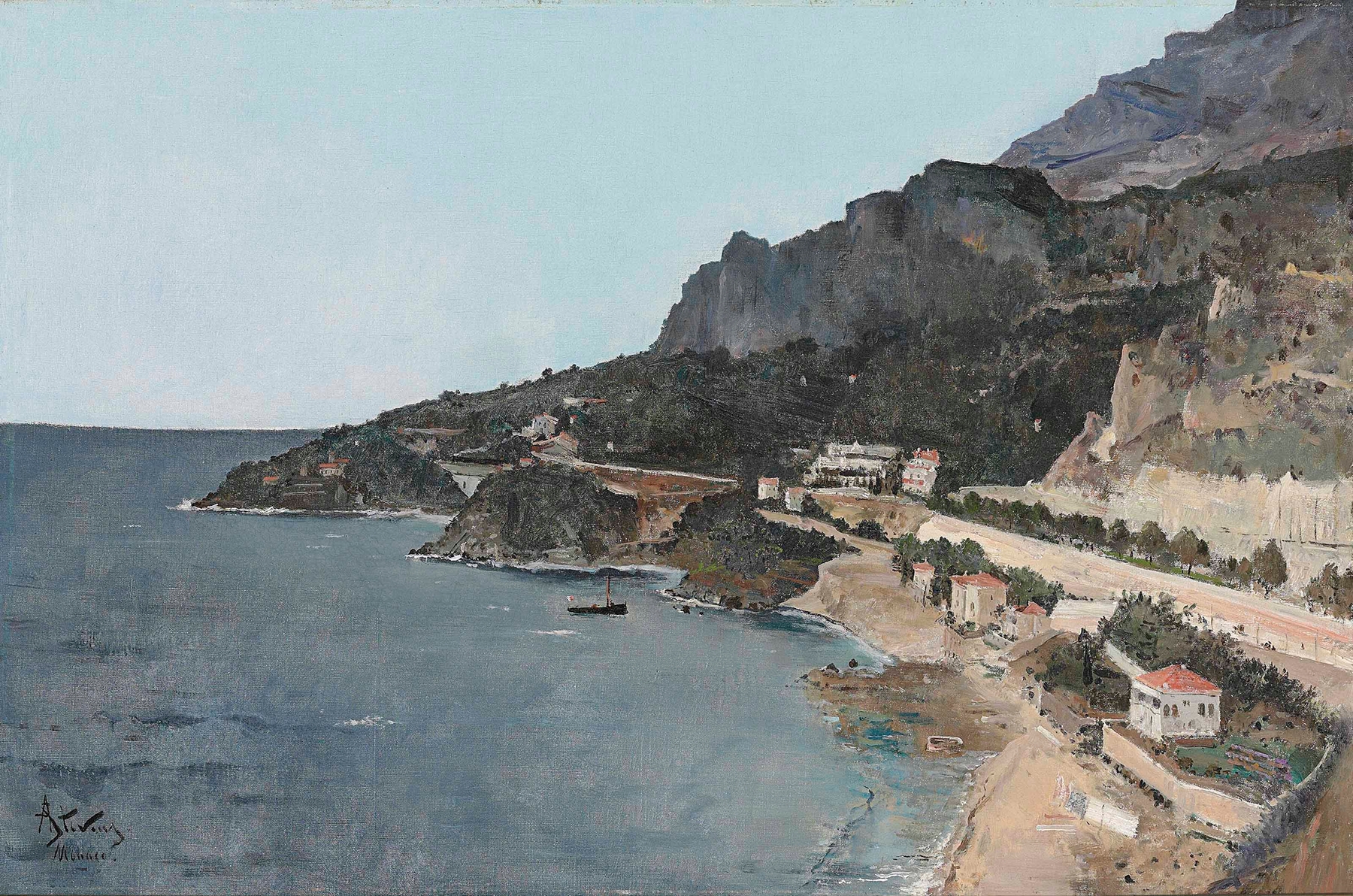
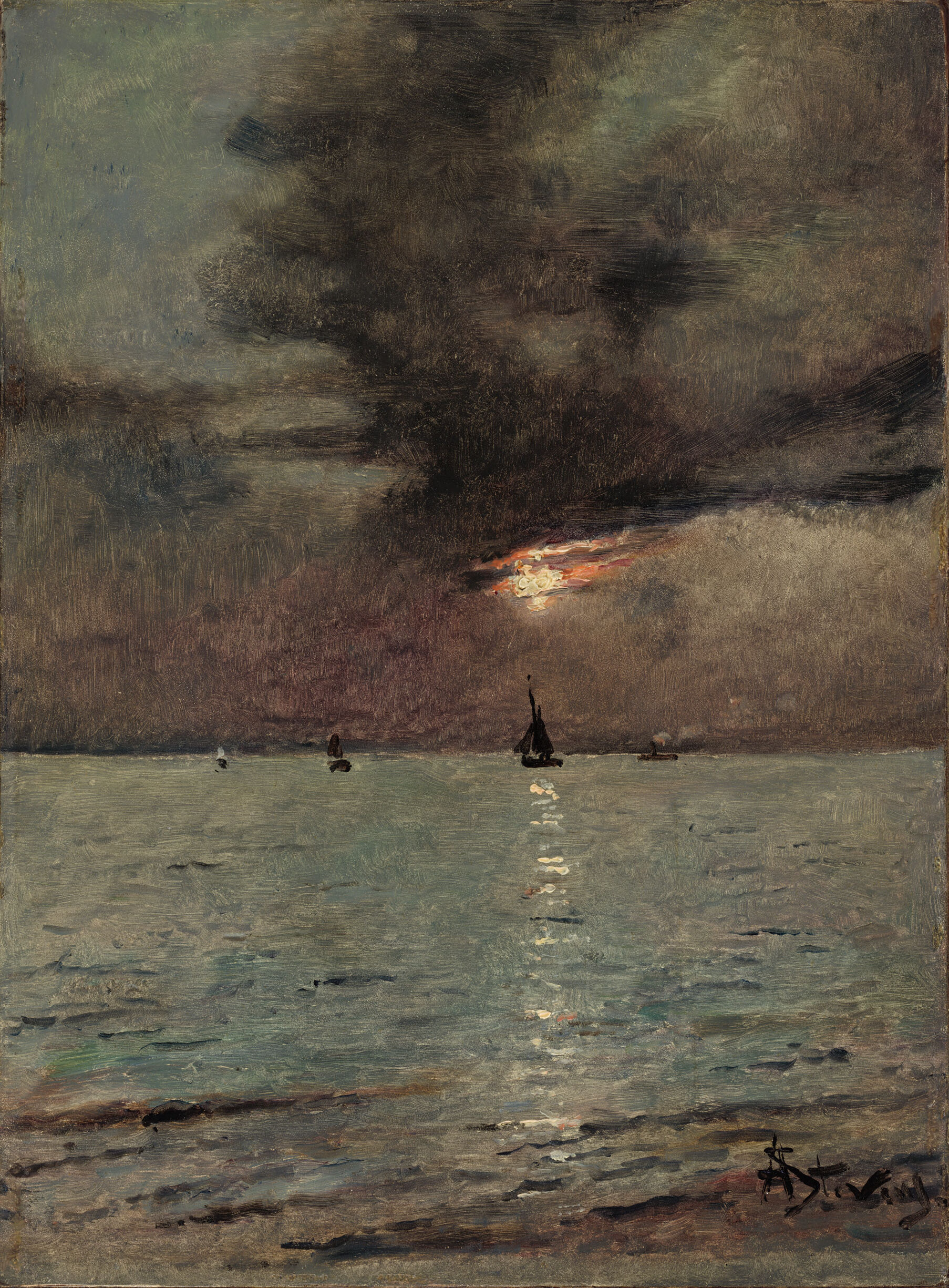
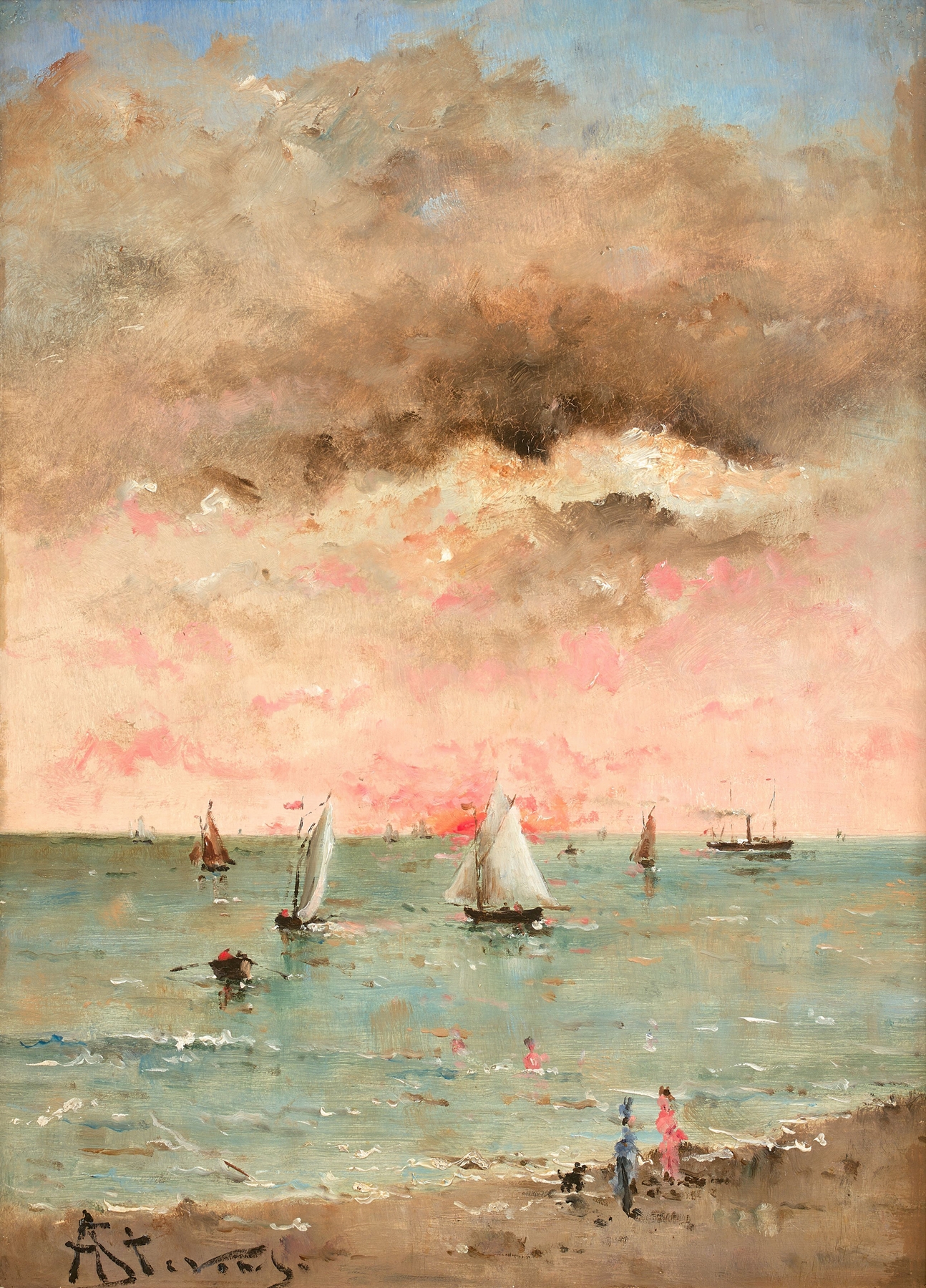
“The canvas doesn’t lie — it simply waits.” In the stillness of Alfred Stevens' Marine – Le Havre, we are drawn into a world teetering on the edge of obsession. The harmony of sea and sky captivates the viewer, a testament to the artist’s relentless quest for beauty and truth. Look to the left, where the gentle lapping of waves meets the sandy shore, inviting the viewer’s gaze into a soft interplay of blues and whites. Notice how the clouds bleed into the water, creating a seamless blend of elements that evoke both tranquility and yearning.
The brushwork is delicate yet assured, drawing attention to the luminous reflections that dance upon the surface, capturing fleeting moments like whispers of a lover’s promise. Beneath this serene exterior lies an intricate tension between nature and humanity. The distant silhouettes of ships hint at a bustling port, suggesting stories of journeys unknown, while the almost ethereal quality of the horizon stirs a longing for exploration. The composition balances a sense of impending movement with a stillness that invites contemplation, reflecting the artist’s obsession with the transient nature of existence.
Stevens painted this piece in 1881, during a period when he was deeply engaged with the Impressionist movement, blending traditional techniques with modern sensibilities. Living in Paris, he navigated a world of artistic revolution, where the obsession with light and atmosphere was redefining art. This painting embodies that spirit, encapsulating Stevens' desire to render the ephemeral beauty found in the everyday moments of life.