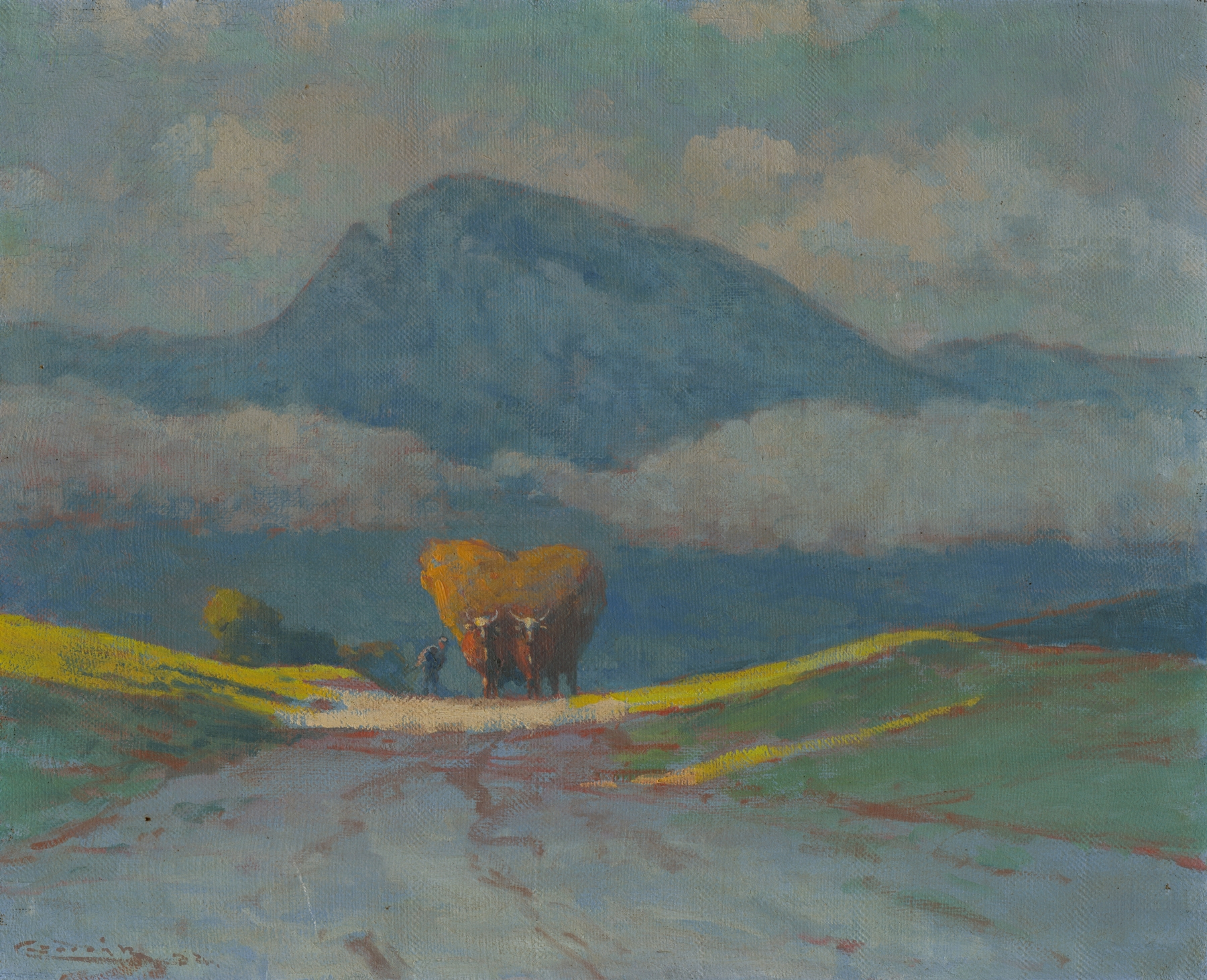
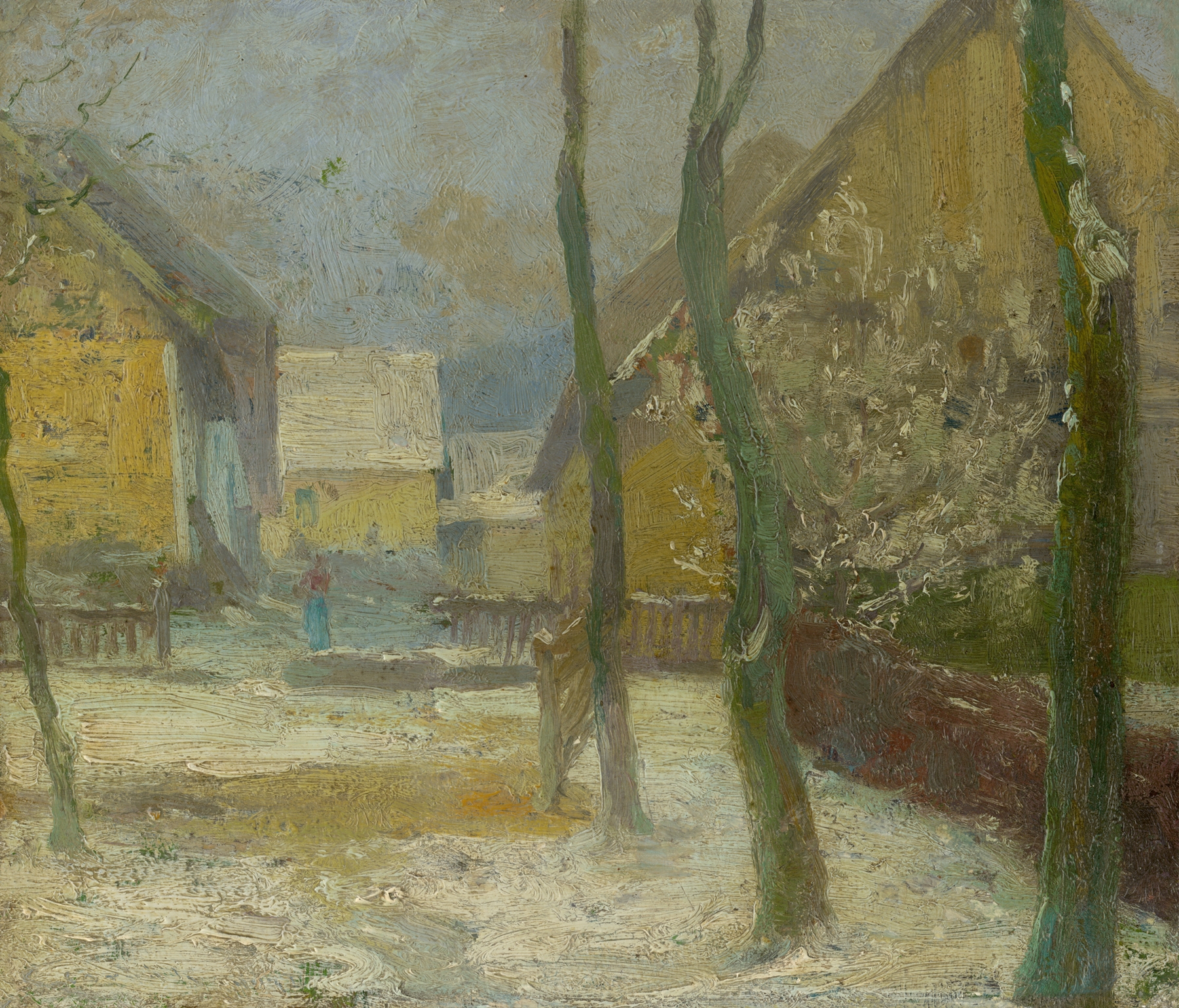
Autumn in the Slanca valley — History & Analysis
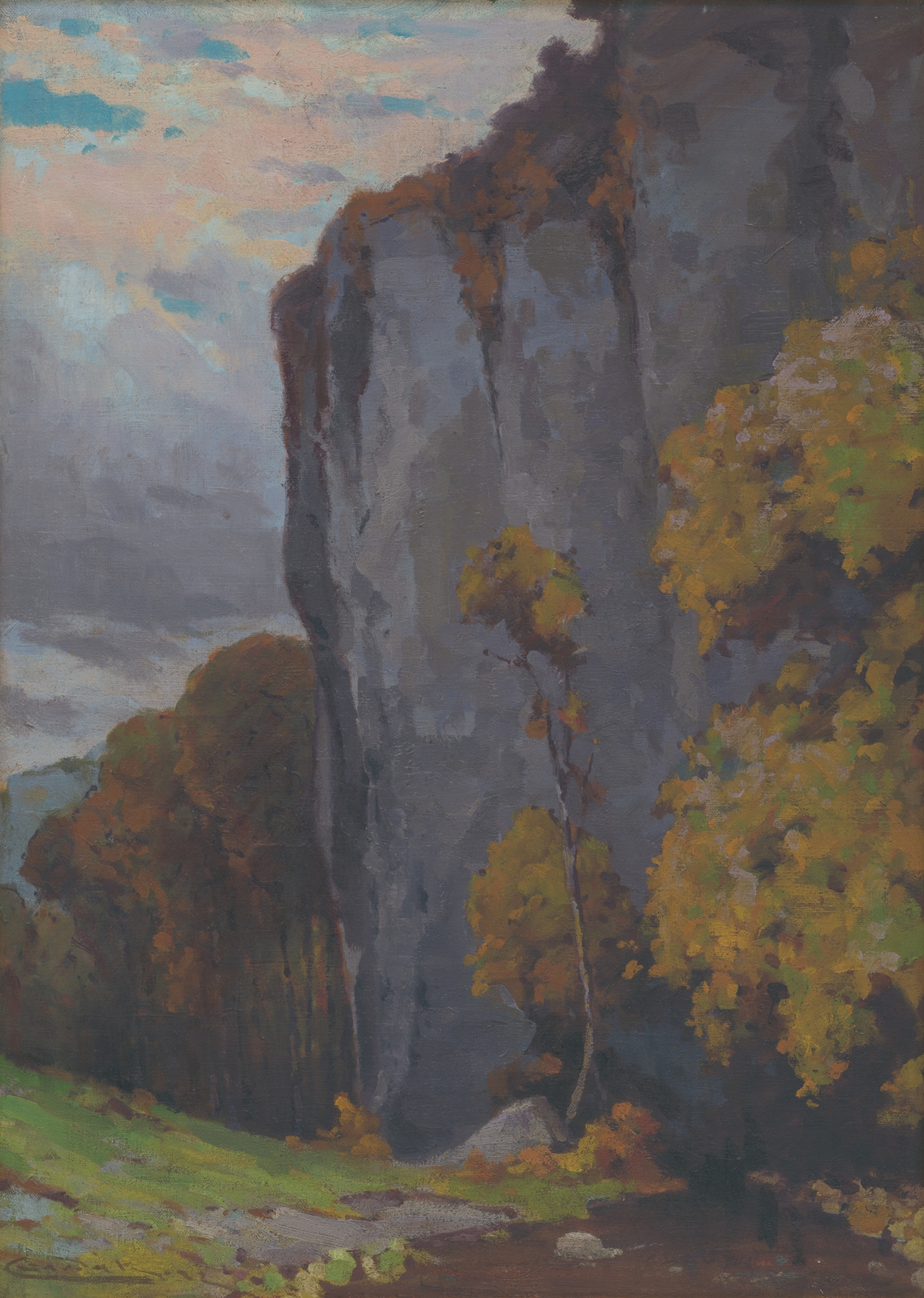
“The canvas doesn’t lie — it simply waits.” In the realm of autumn, where hues of gold and crimson dance, betrayal lingers like a whisper between rustling leaves, waiting to be unveiled. Look closely at the sweeping expanse of the Slanca valley, where the trees stand like silent sentinels against a backdrop of vibrant foliage. Notice how the interplay of light and shadow creates a tapestry of warmth, inviting yet tinged with an undercurrent of sorrow. The brushstrokes are expressive, capturing the fleeting essence of the season as swathes of orange and yellow bleed into deeper earth tones, allowing the viewer to feel the chill that often accompanies beauty.
Delve deeper into the juxtaposition of the vibrant scenery and the looming shadows that extend through the valley. There is an unsettling tranquility to the scene, as if the foliage holds secrets of what lies beneath. The distant mountains, cloaked in mist, evoke a sense of isolation. Each brushstroke reflects the complexity of nature’s cycle — life is vibrant, yet it inevitably succumbs to decay, paralleling the masks we wear and the truths we hide.
During the years from 1905 to 1909, the artist found inspiration in the rural landscapes of Slovakia. As he painted Autumn in the Slanca valley, Čordák was immersed in a period of personal exploration and artistic development, seeking to capture the essence of his homeland. The world around him was shifting with the stirrings of modernism, yet he chose to embrace the emotive and classical representation of nature, reflective of his own inner complexities and the evolving identity of Slovakia.