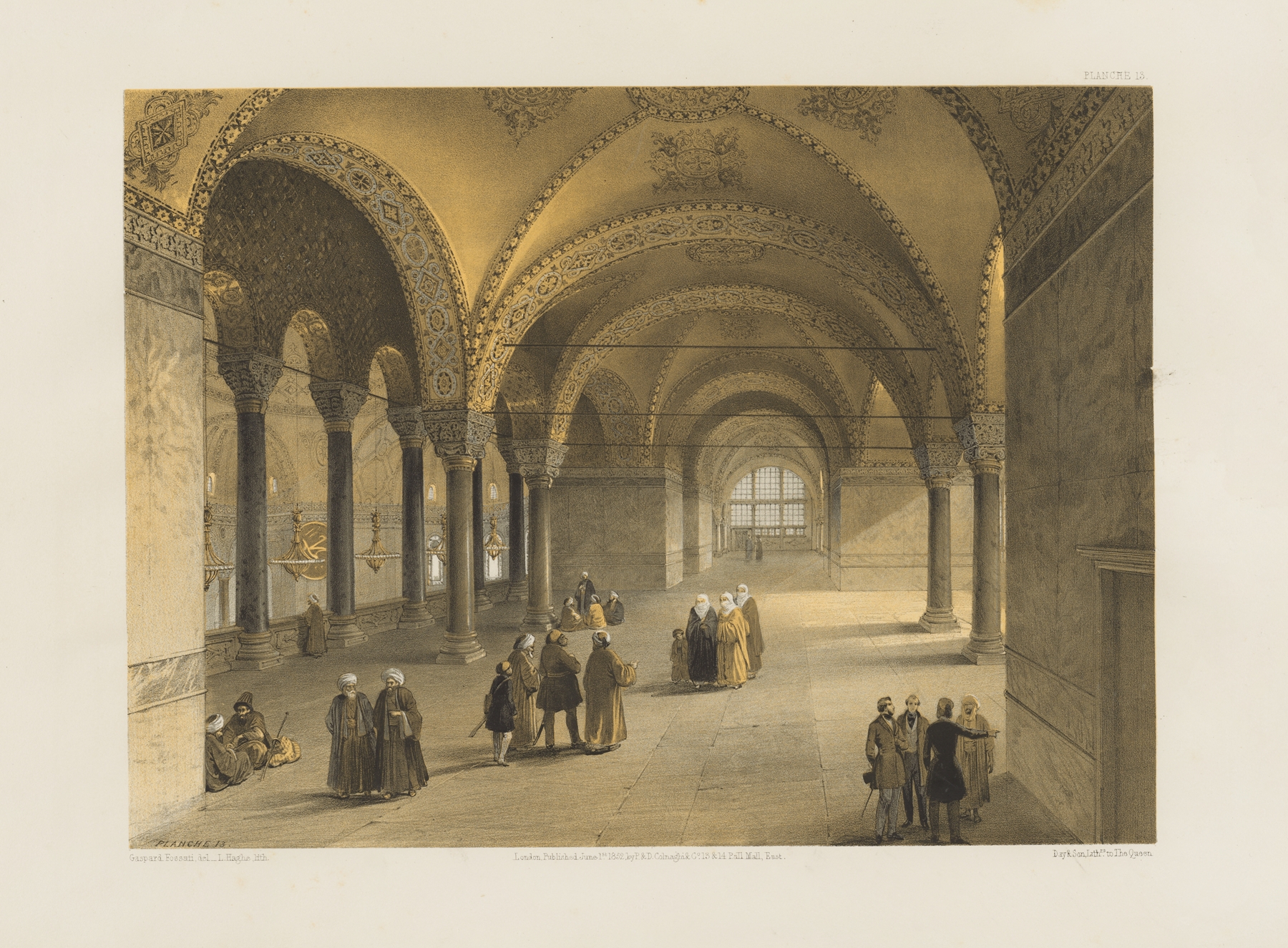
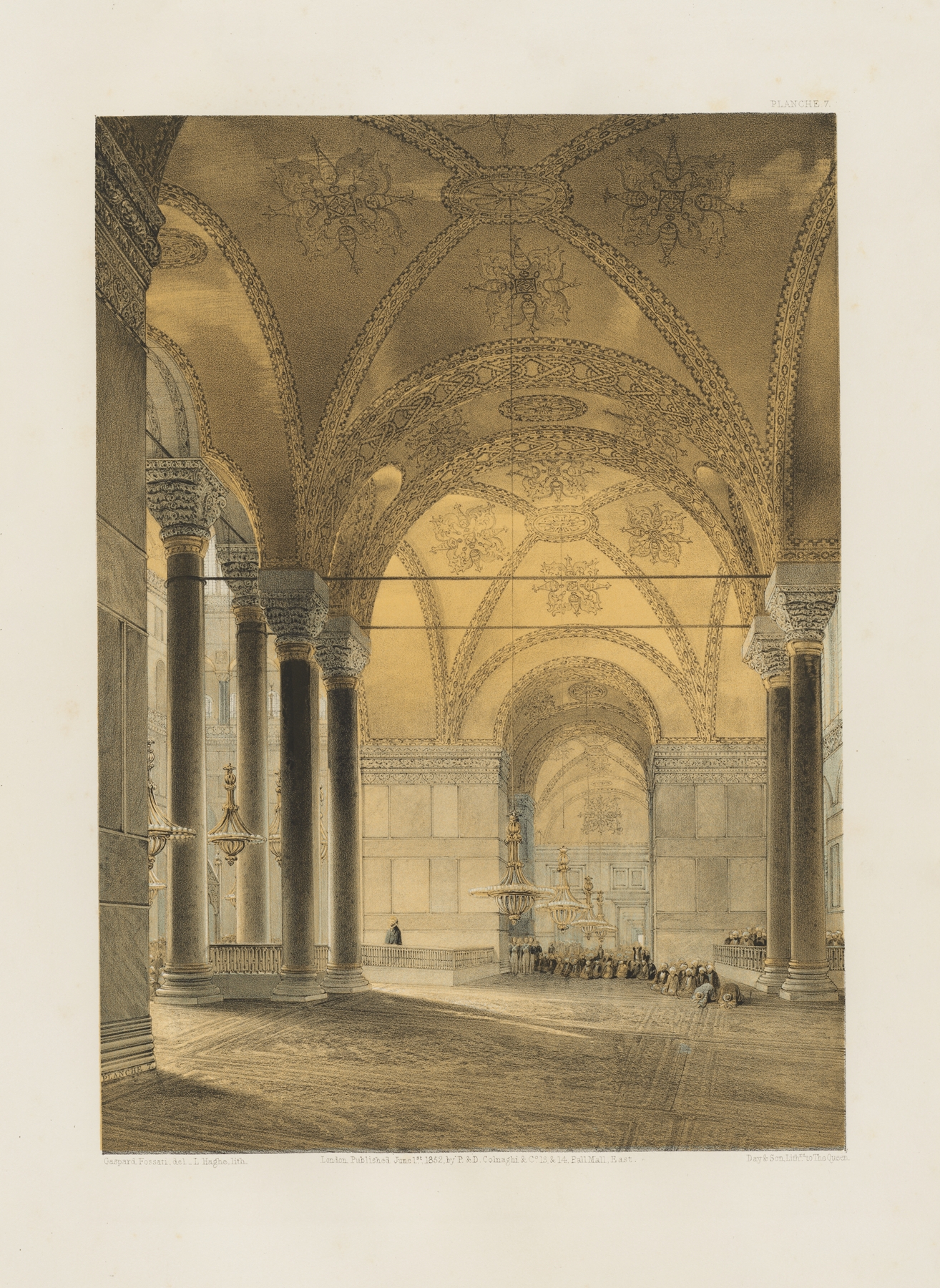
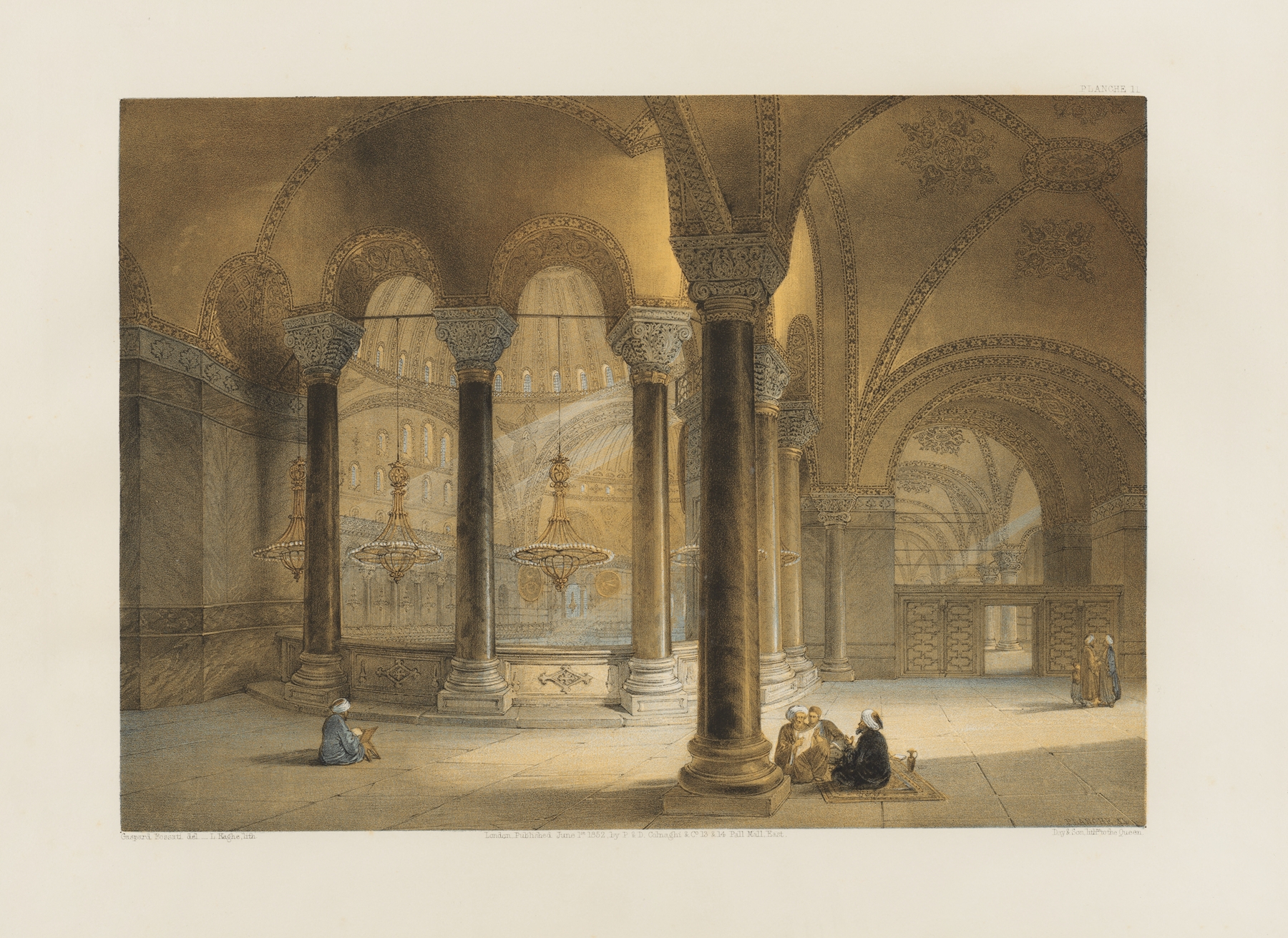
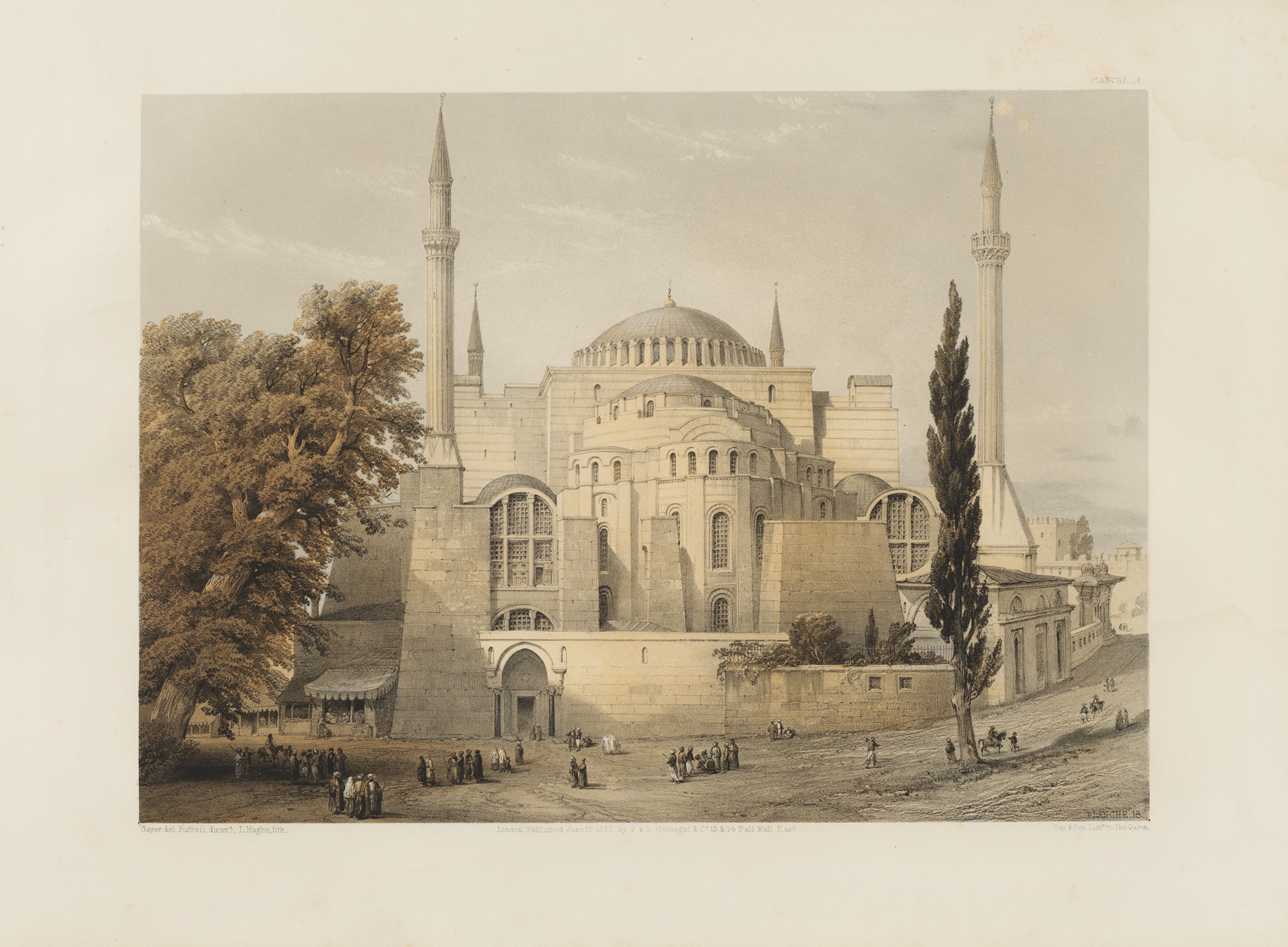
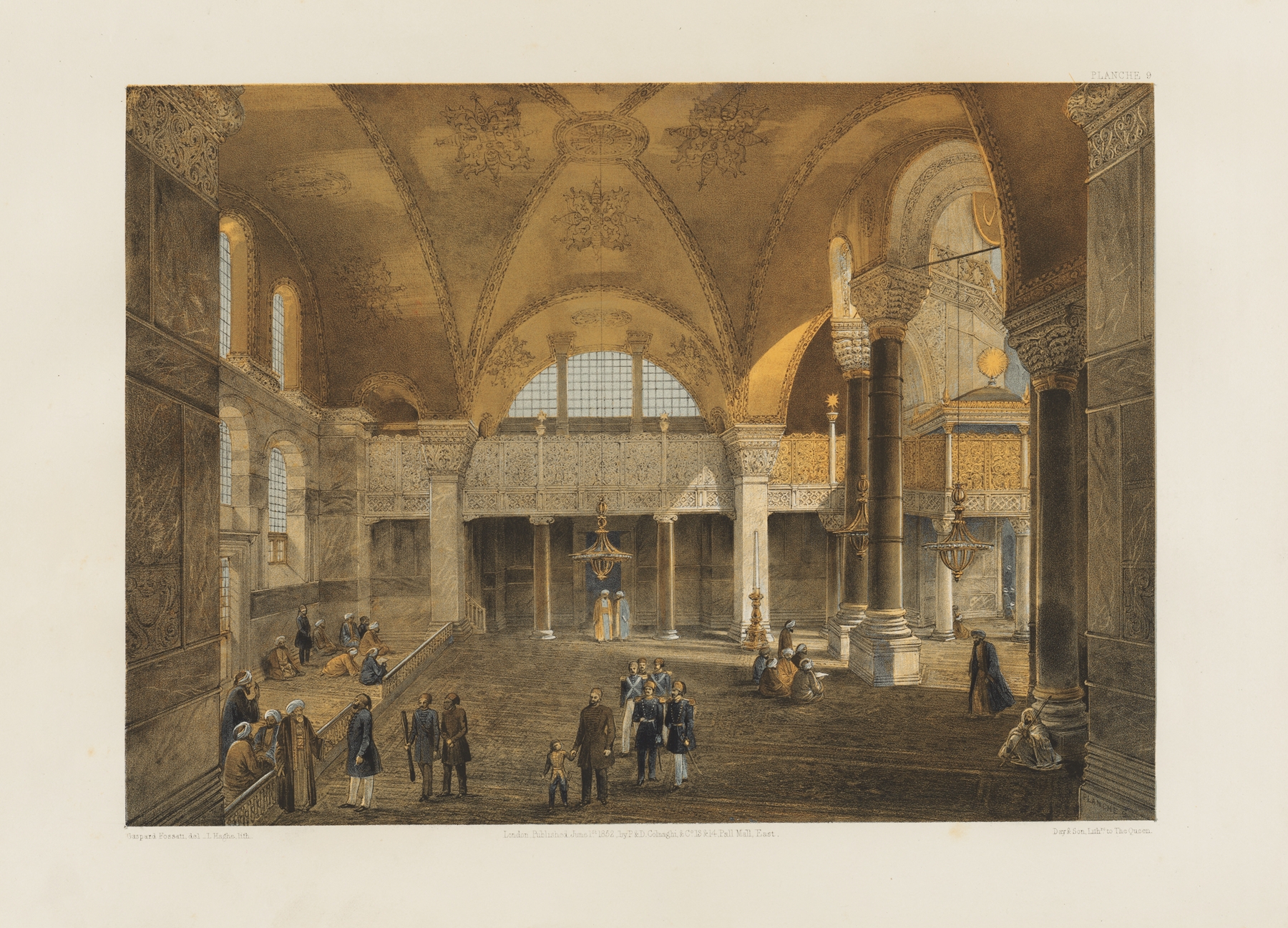
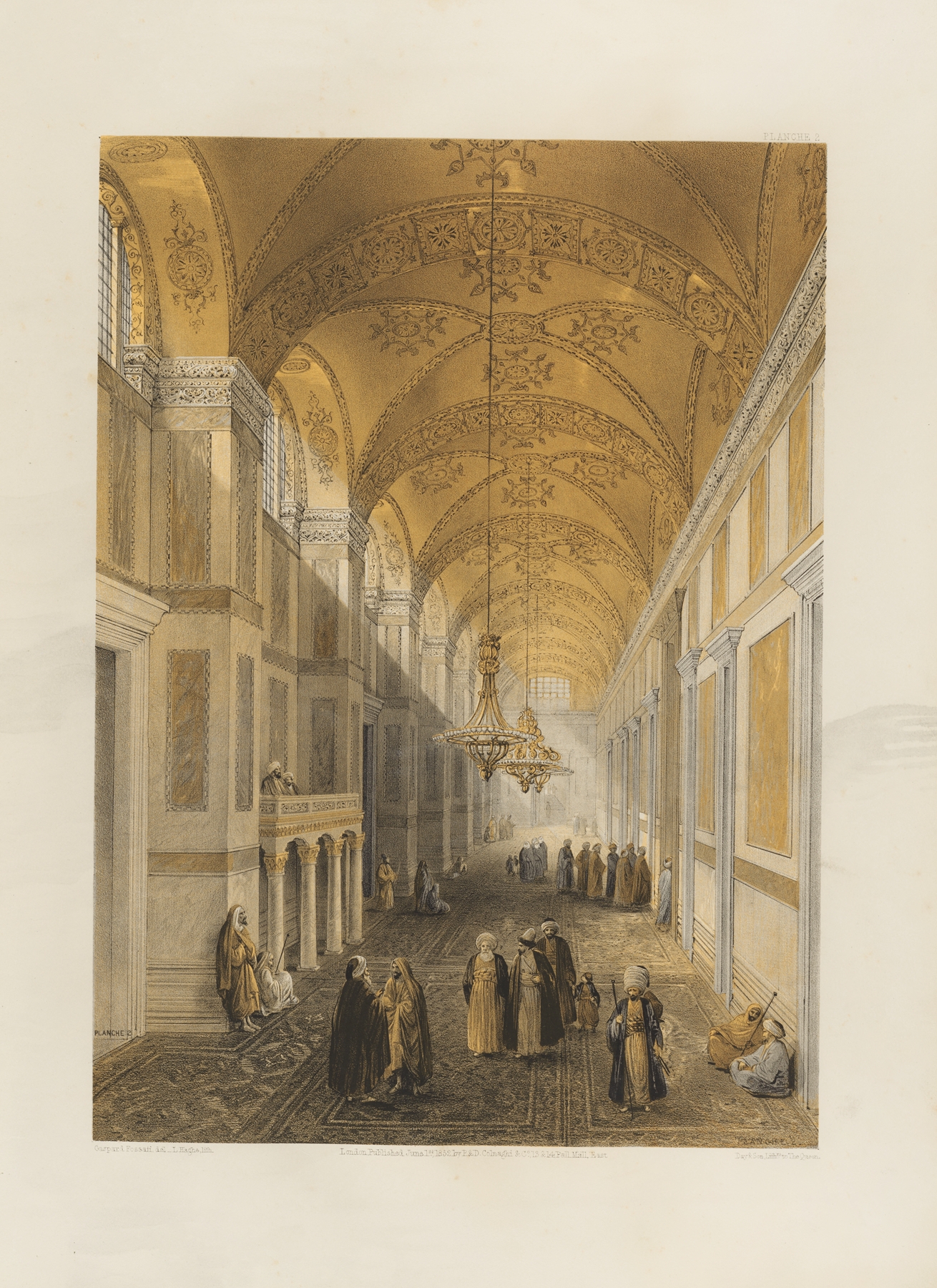
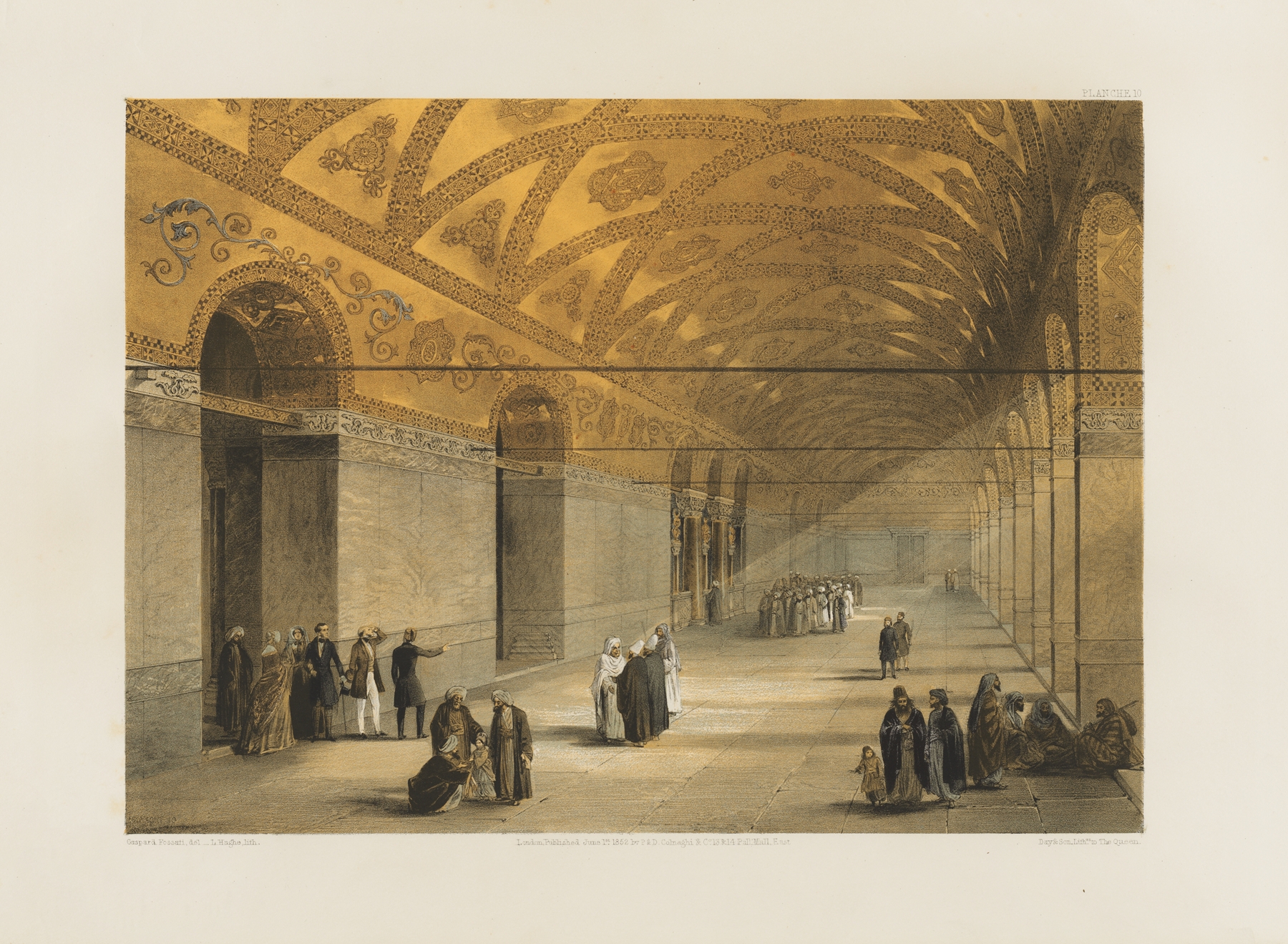
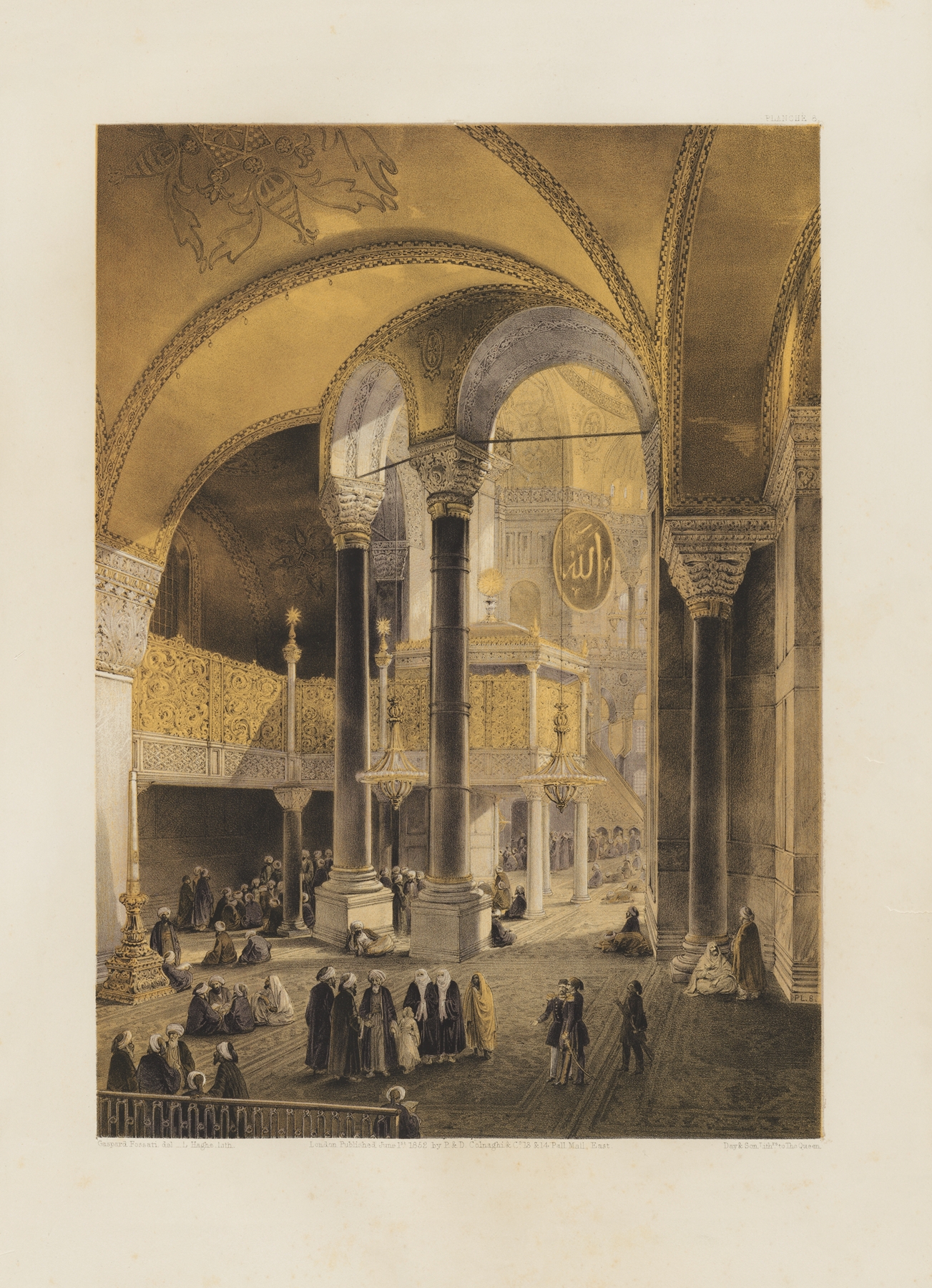
Aya Sofia, Constantinople; as recently restored by order of H. M. the sultan Abdul-Medjid Pl.01 — History & Analysis
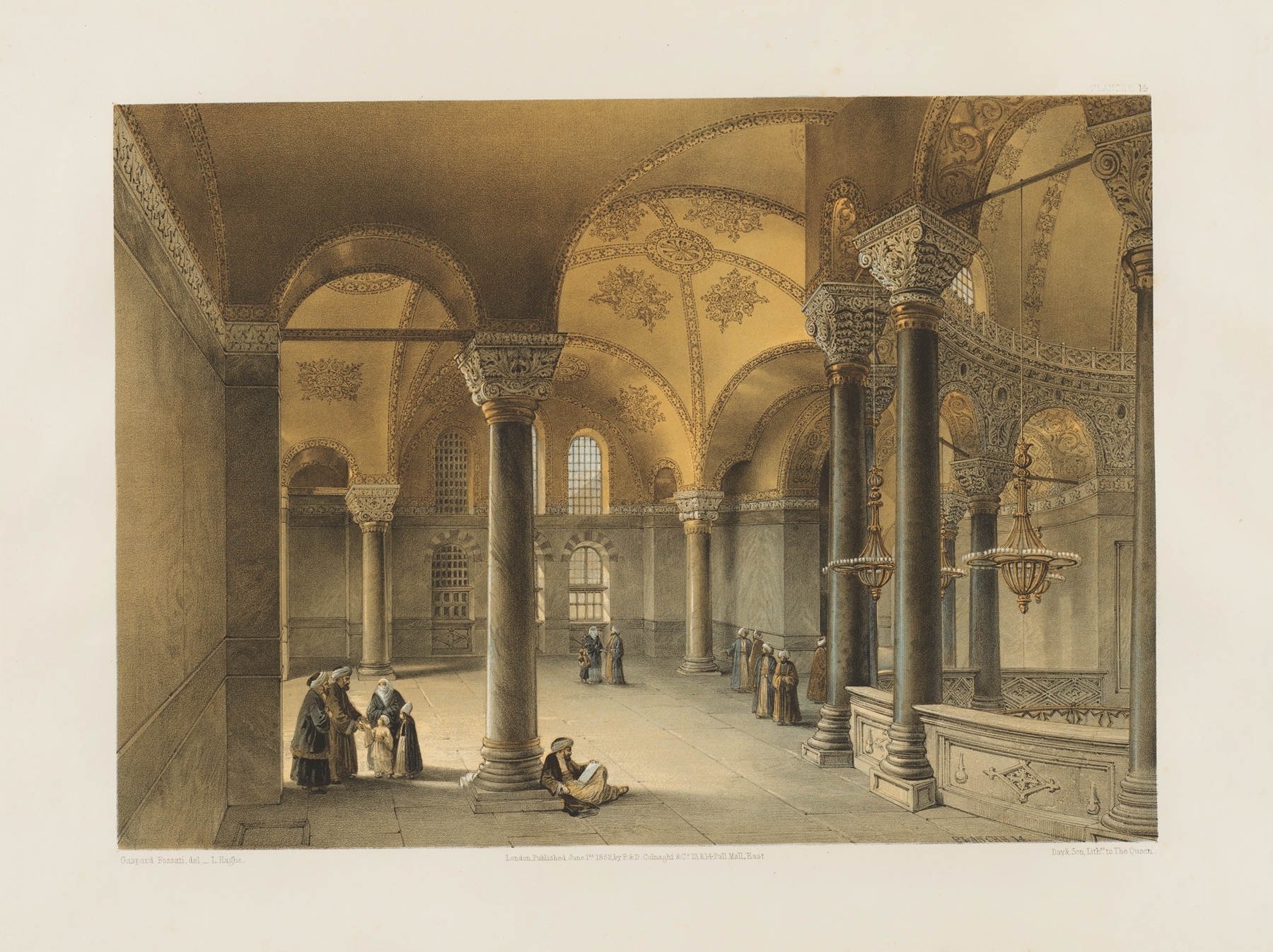
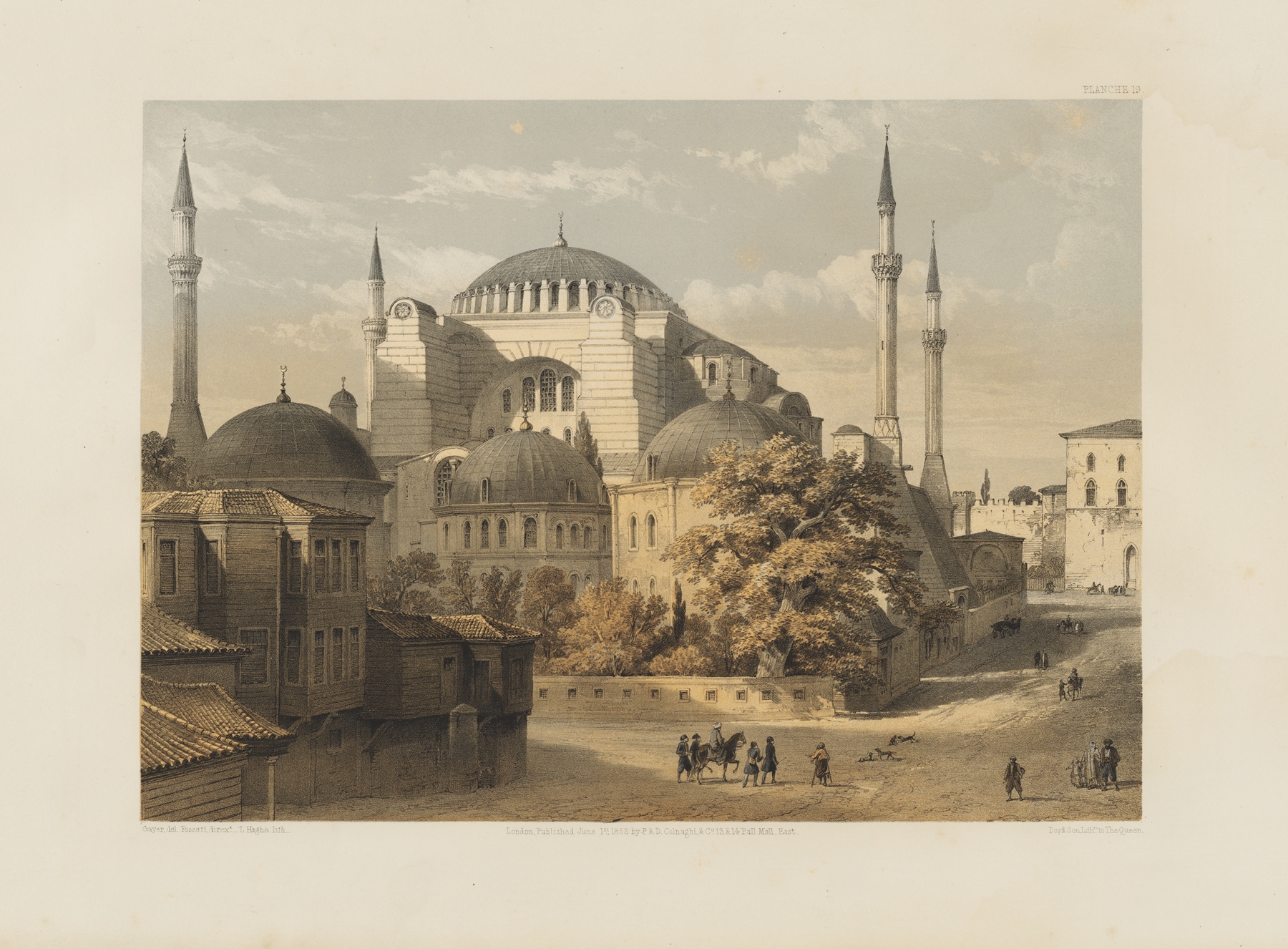
What if beauty was never meant to be finished? In the delicate layers of Aya Sofia, Constantinople, we encounter a place that embodies the poignant tension between time’s passage and the aspirations of humanity. Look to the left at the grand dome, its intricate mosaics gleaming softly as the light filters through stained glass. Notice how Fossati captures the interplay of shadow and illumination, creating a celestial realm that feels suspended between heaven and earth.
The painstaking details of the architectural elements invite the viewer to linger, while the muted yet vibrant palette echoes the whispers of history, hinting at the many souls that have graced this sacred space. Within this restoration lies a haunting duality. The visible marks of age contrast sharply with the careful preservation efforts, a metaphor for our eternal struggle against decay and loss. The grandeur of the structure invokes awe, yet there is an undercurrent of melancholy, reminding us that every monument, no matter how resplendent, carries the weight of its own passage through time.
It speaks to the impermanence of beauty, suggesting that the act of restoration is itself an acknowledgment of the inevitability of change. Gaspare Fossati painted this work in 1852 during a time when he was deeply immersed in the cultural revival of Constantinople. Commissioned by Sultan Abdul-Medjid, Fossati was tasked with documenting the architectural splendor of the Aya Sofia in the midst of significant political and artistic shifts. This piece reflects not just a physical restoration but also an era's yearning to bridge the past with an uncertain future, encapsulating a moment where art became a vessel for collective memory.