Aya Sofia, Constantinople; as recently restored by order of H. M. the sultan Abdul-Medjid Pl.13 — History & Analysis
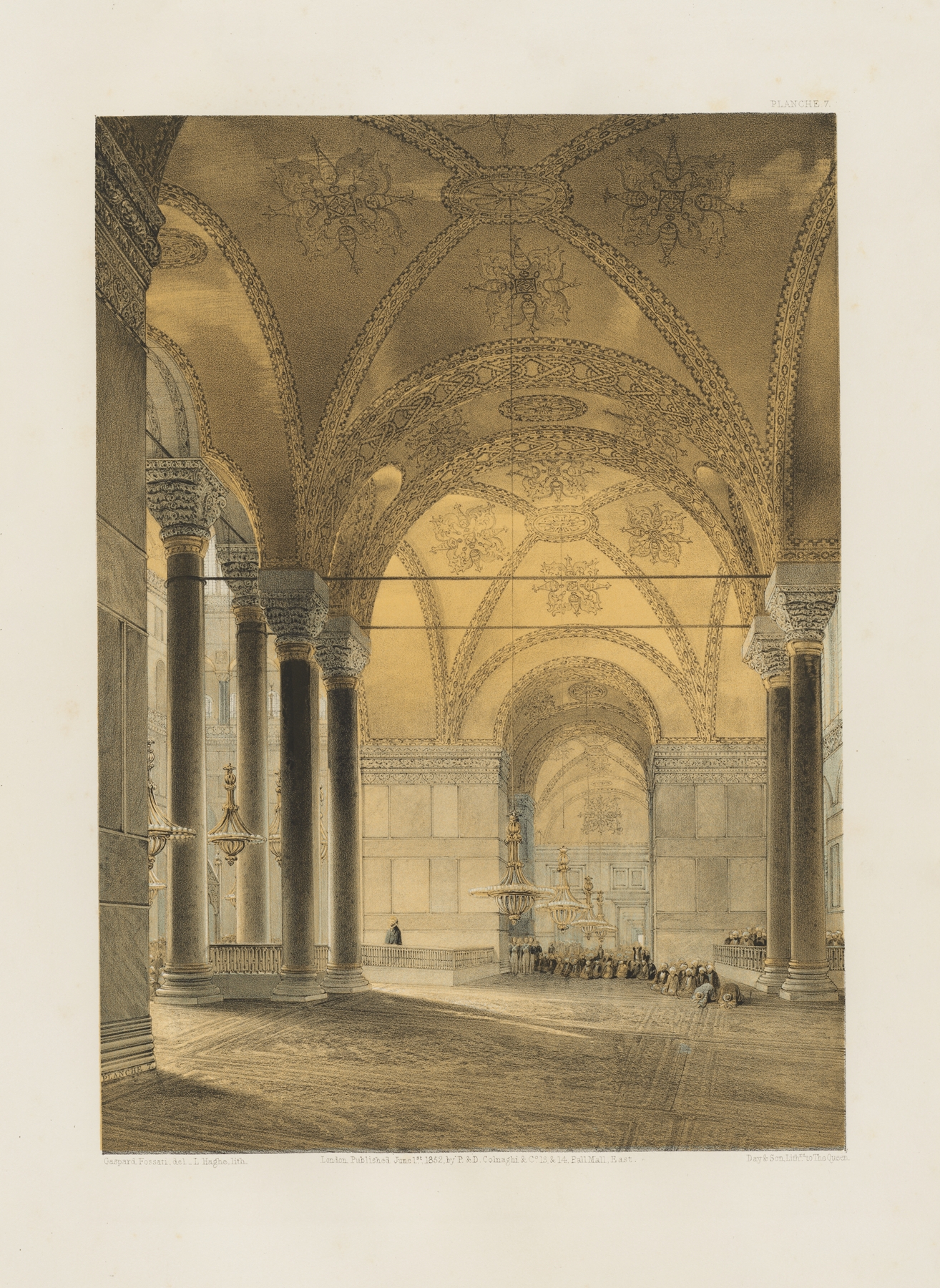
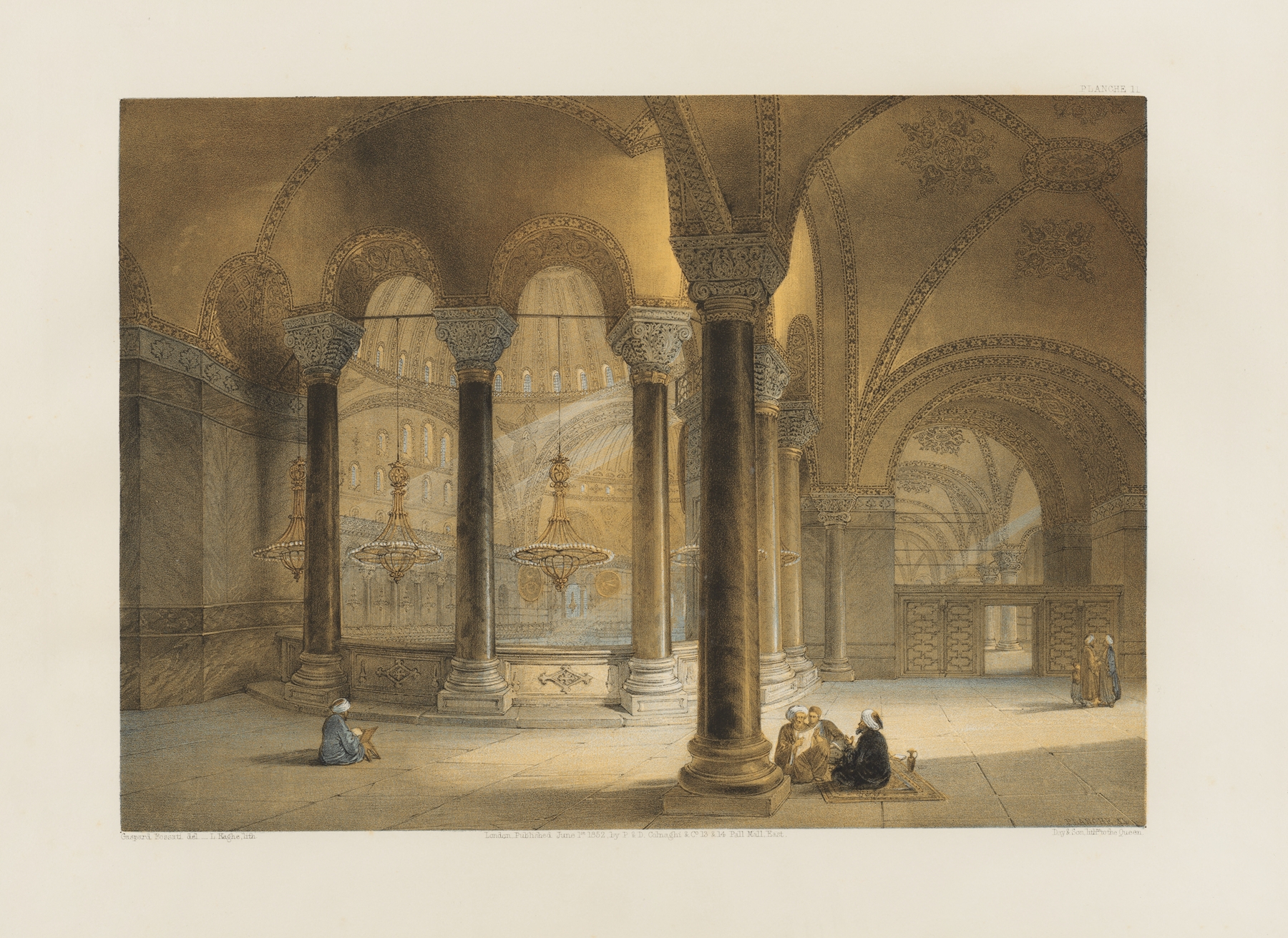
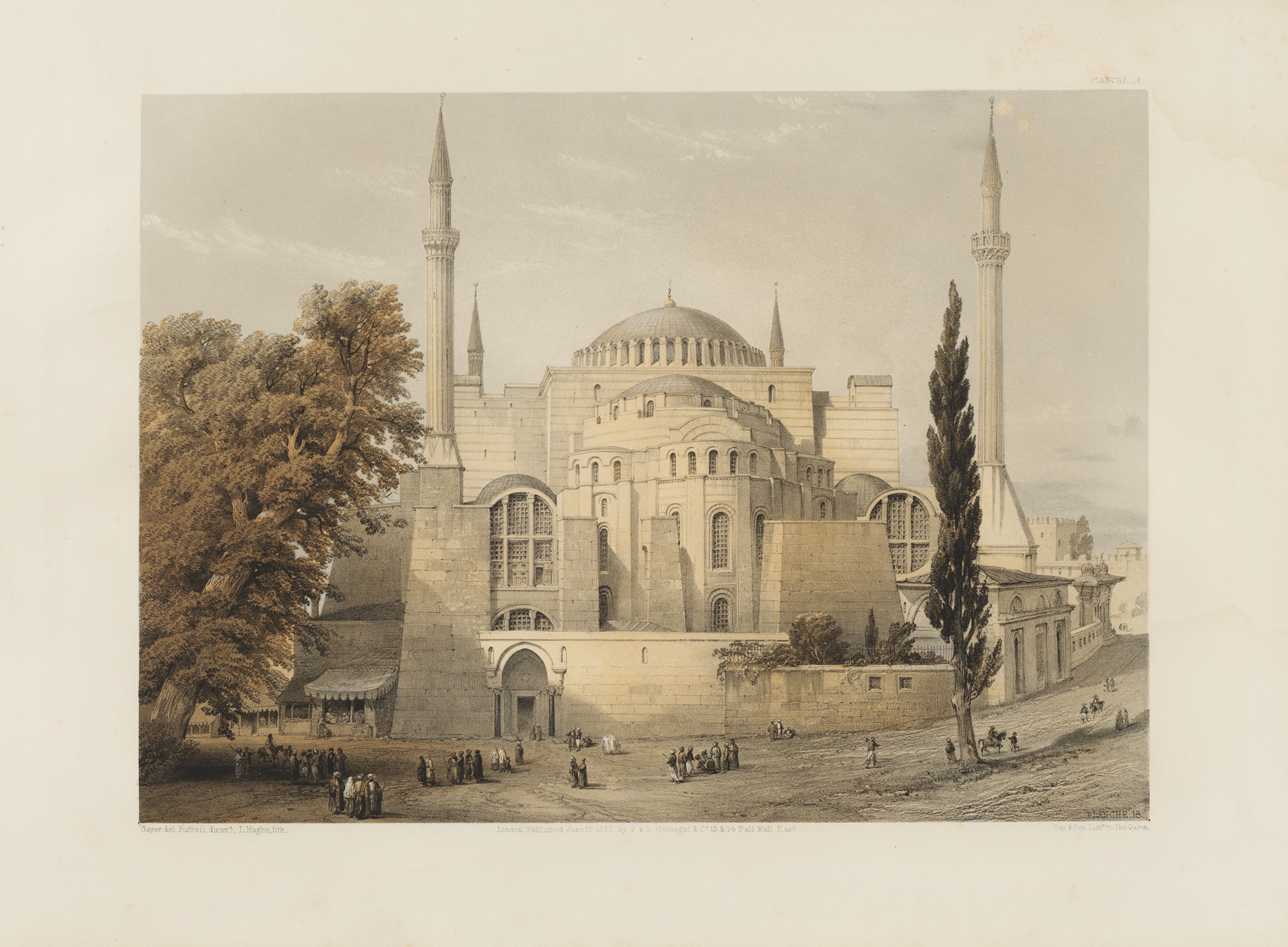
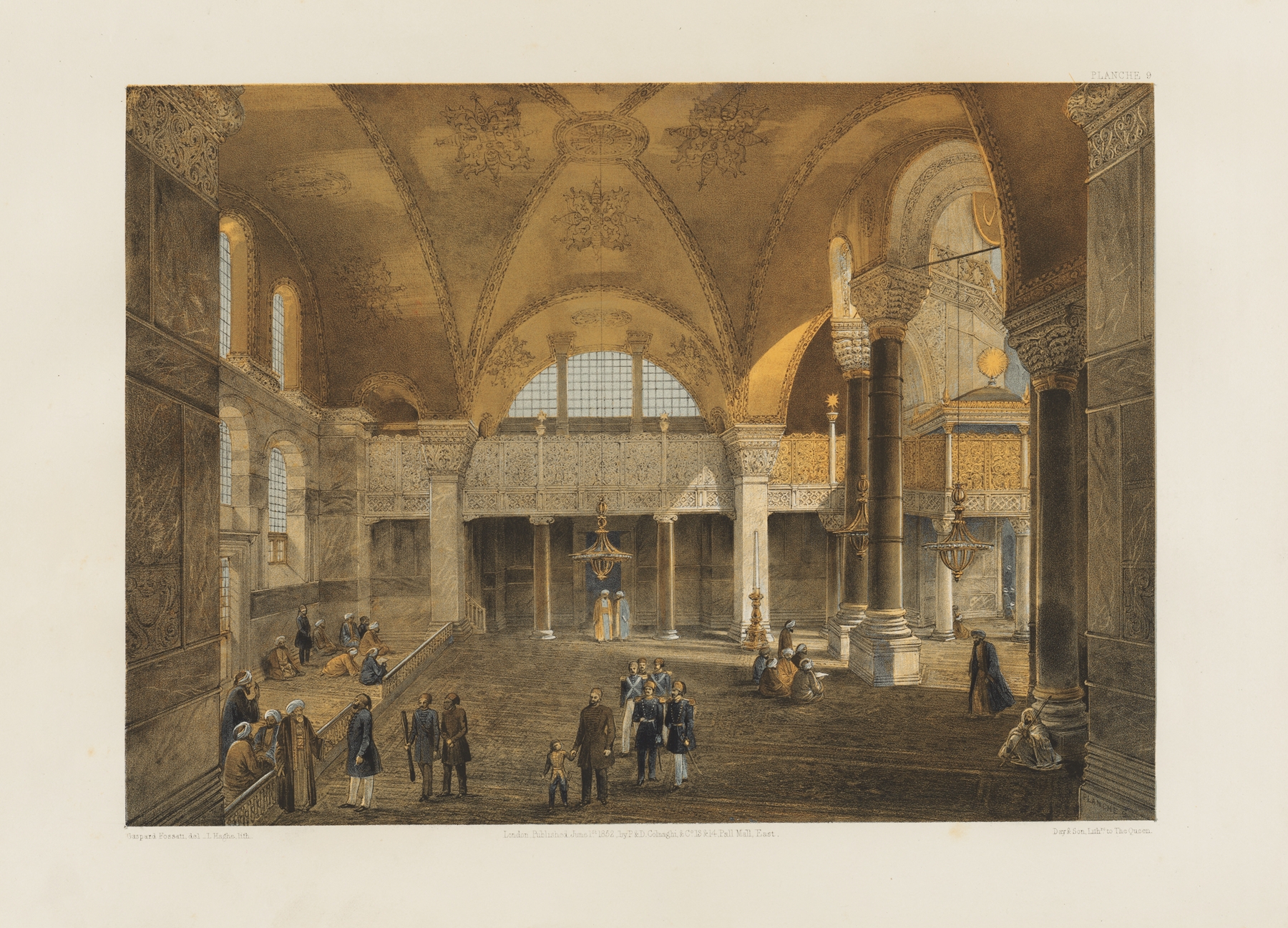
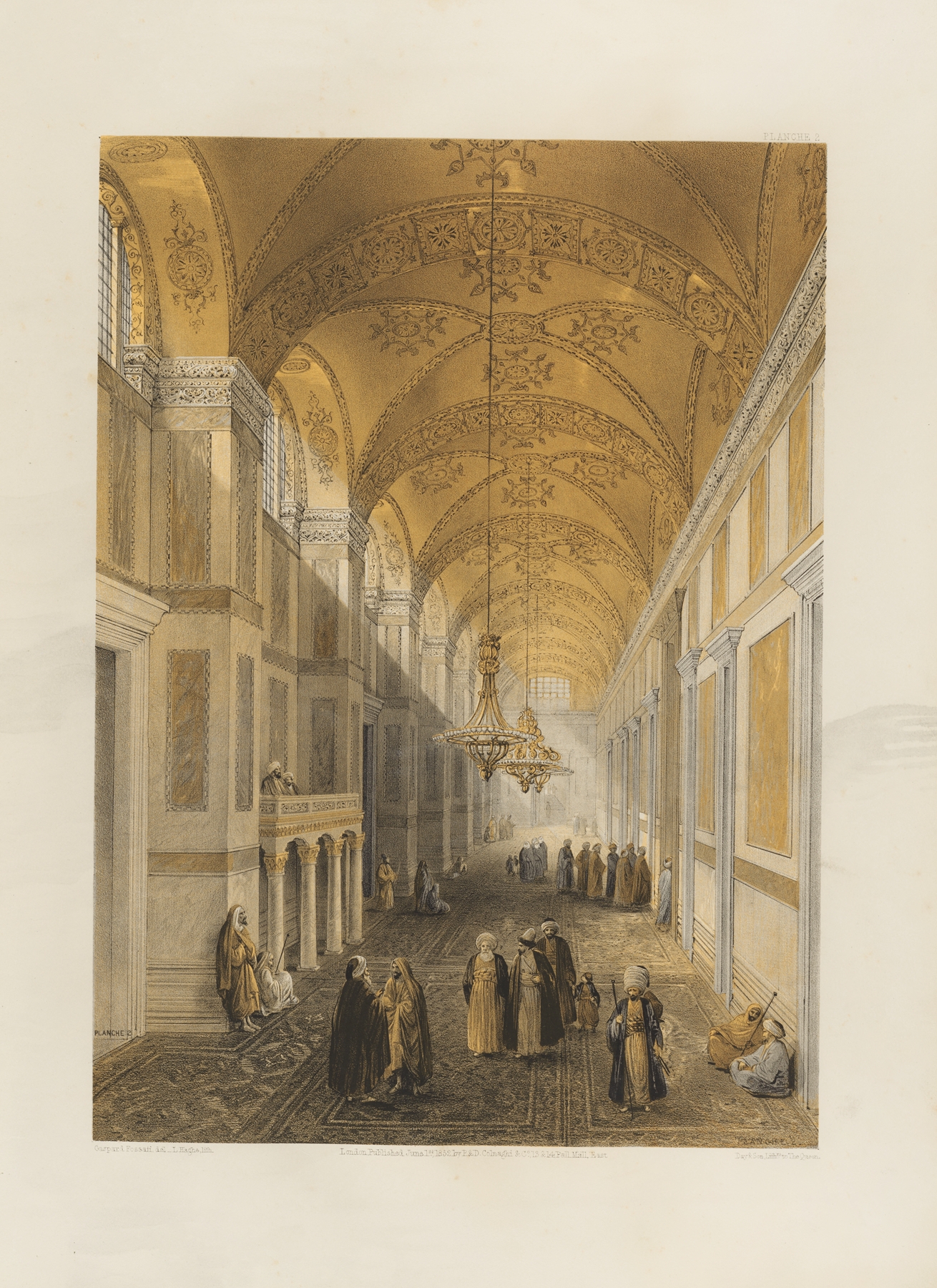
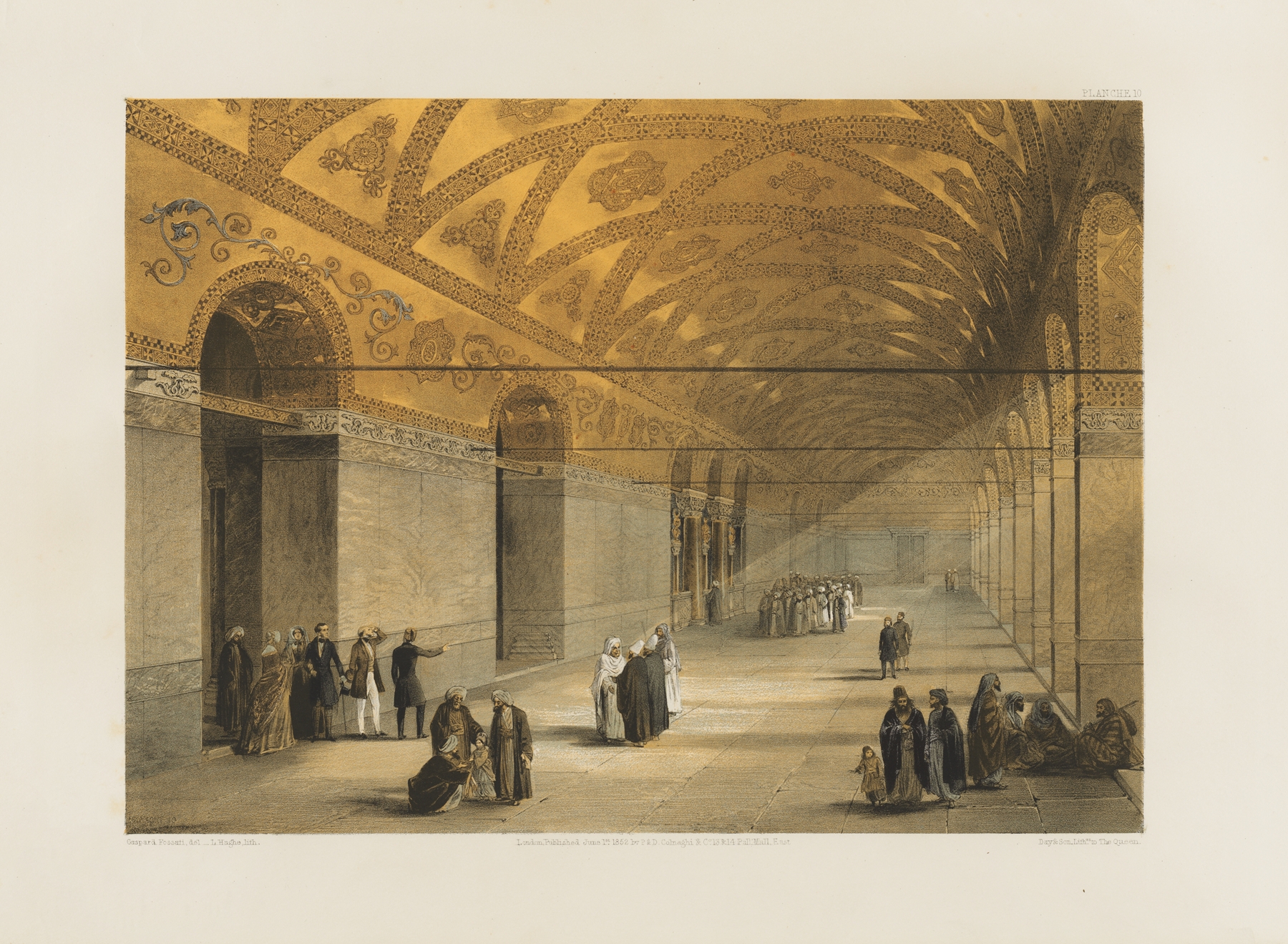
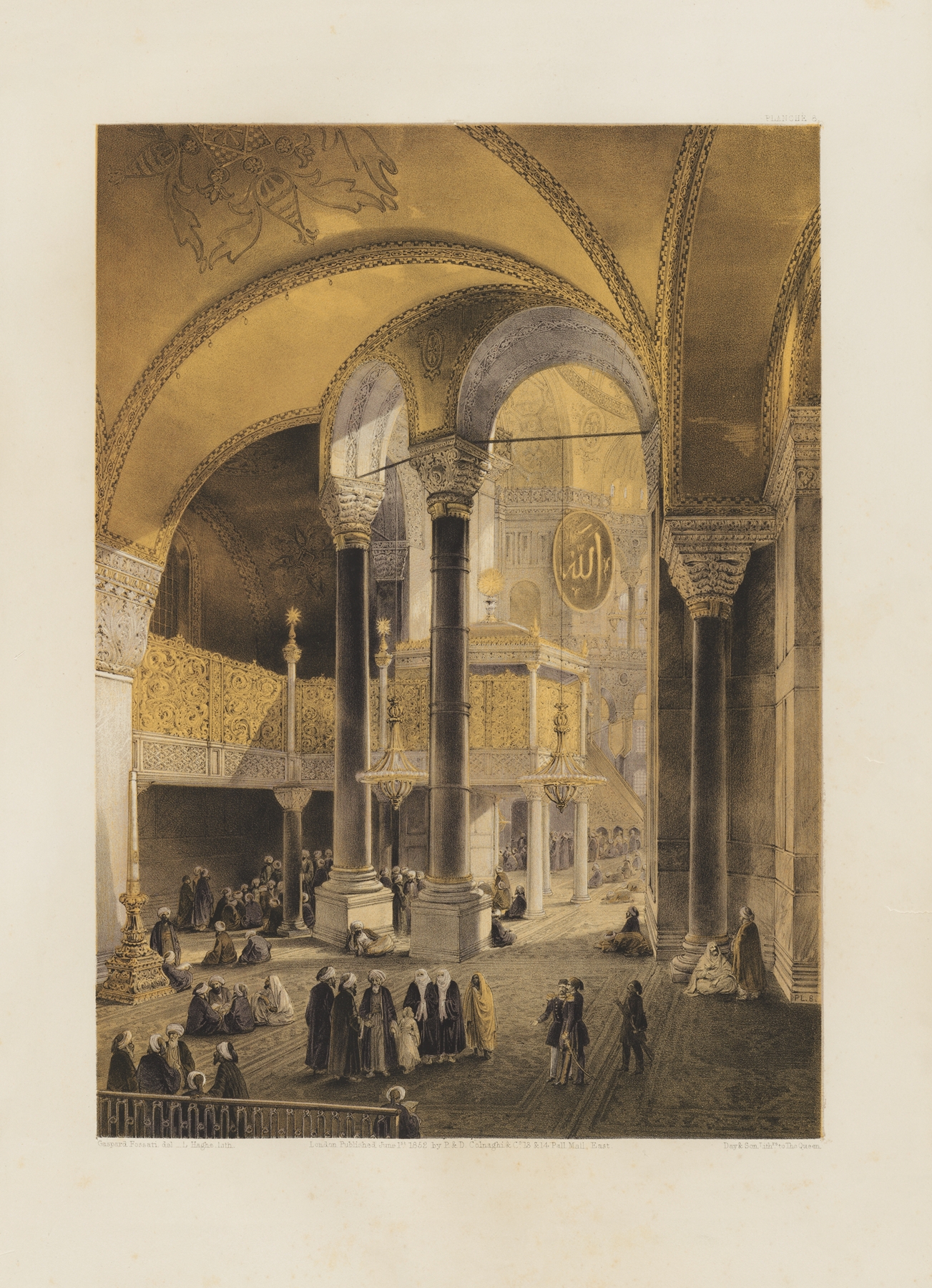
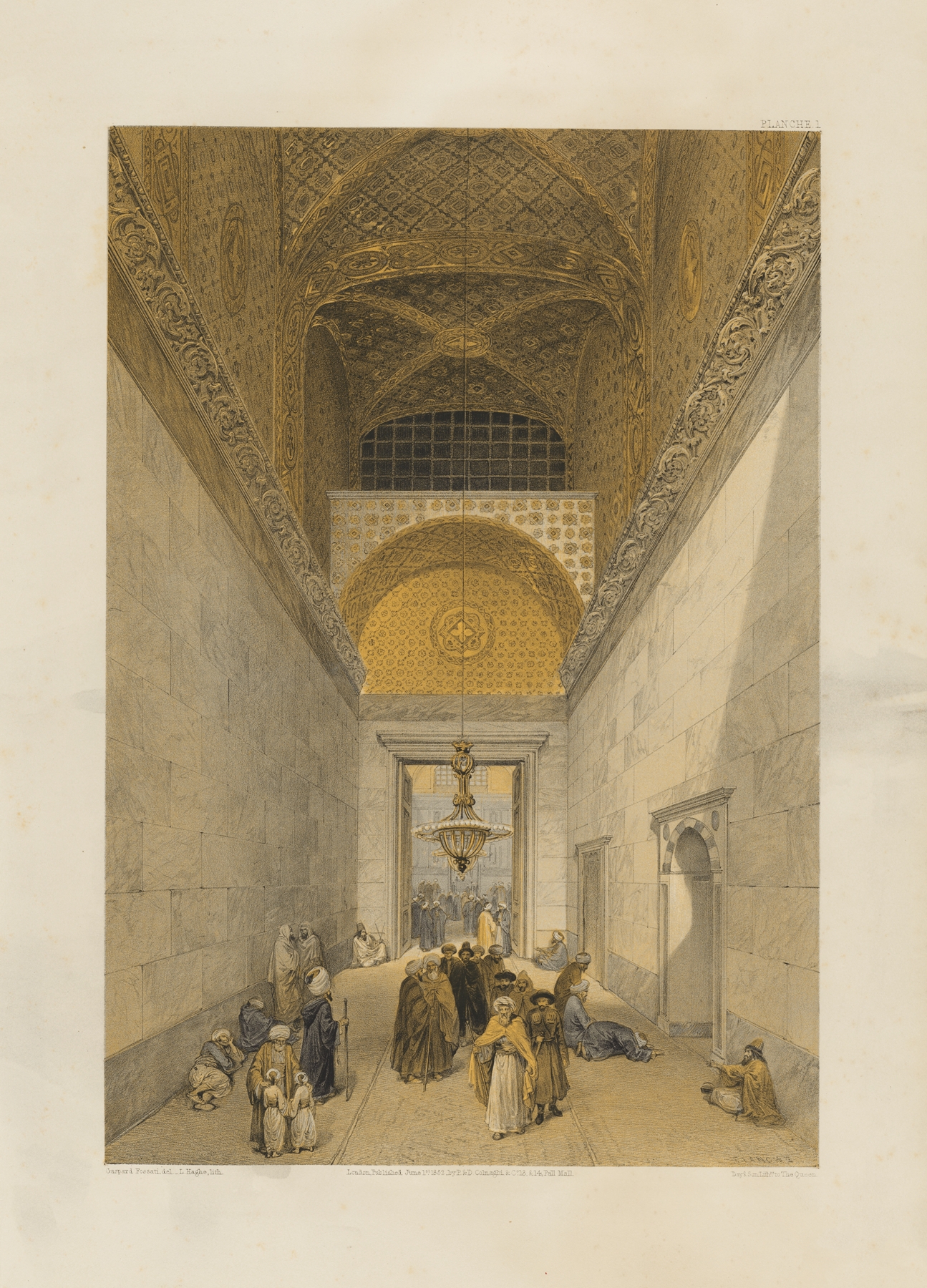
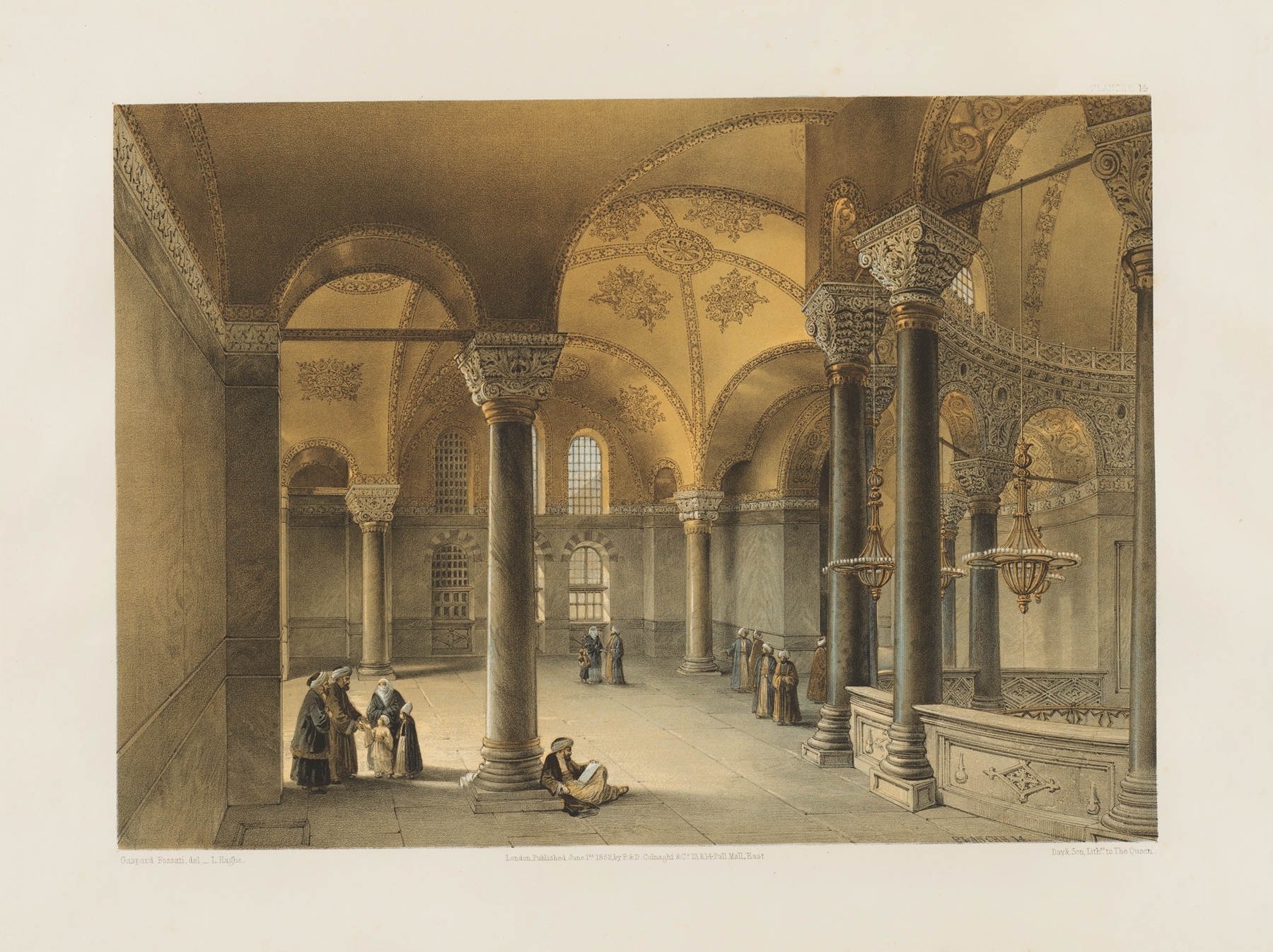
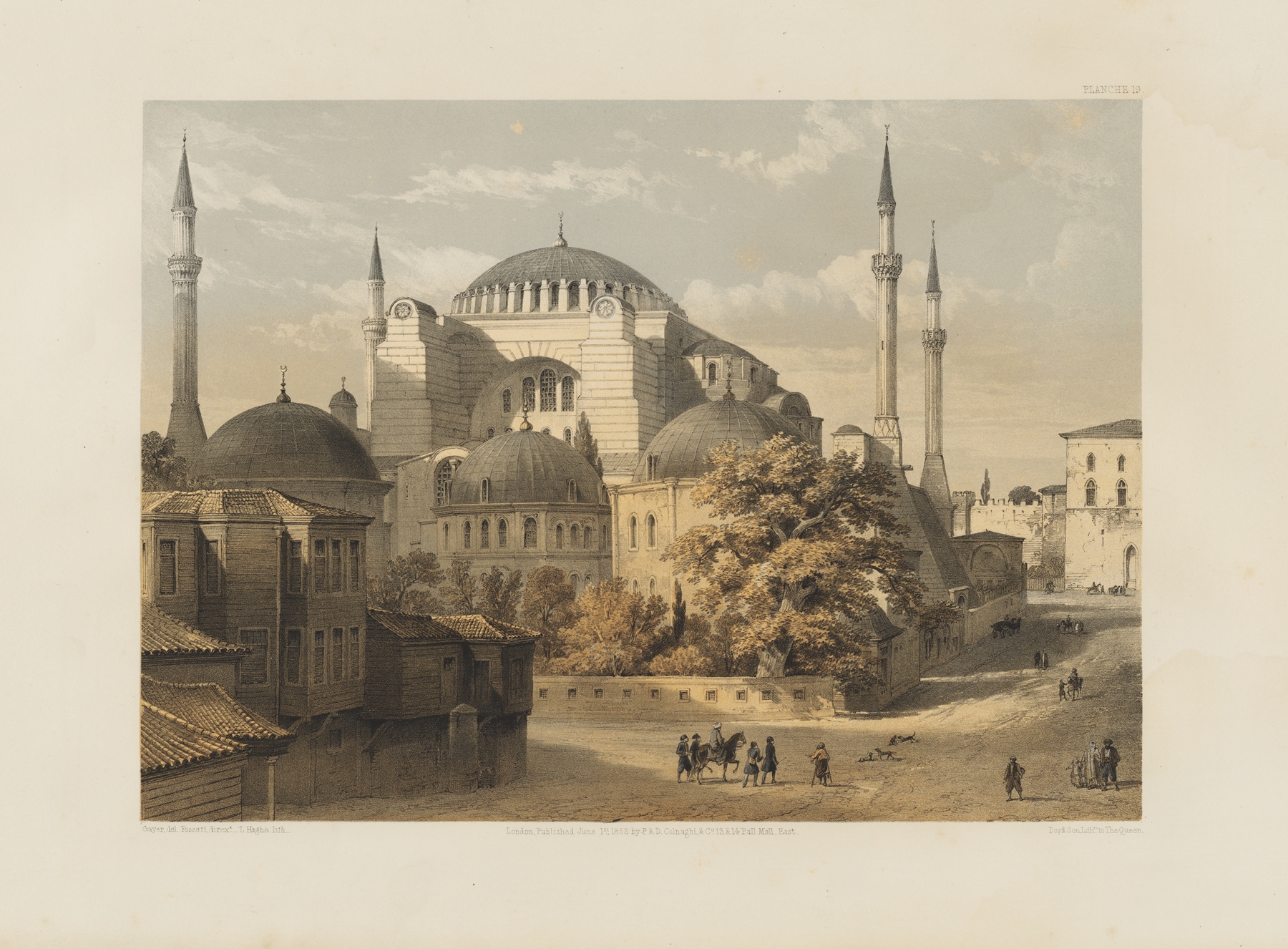
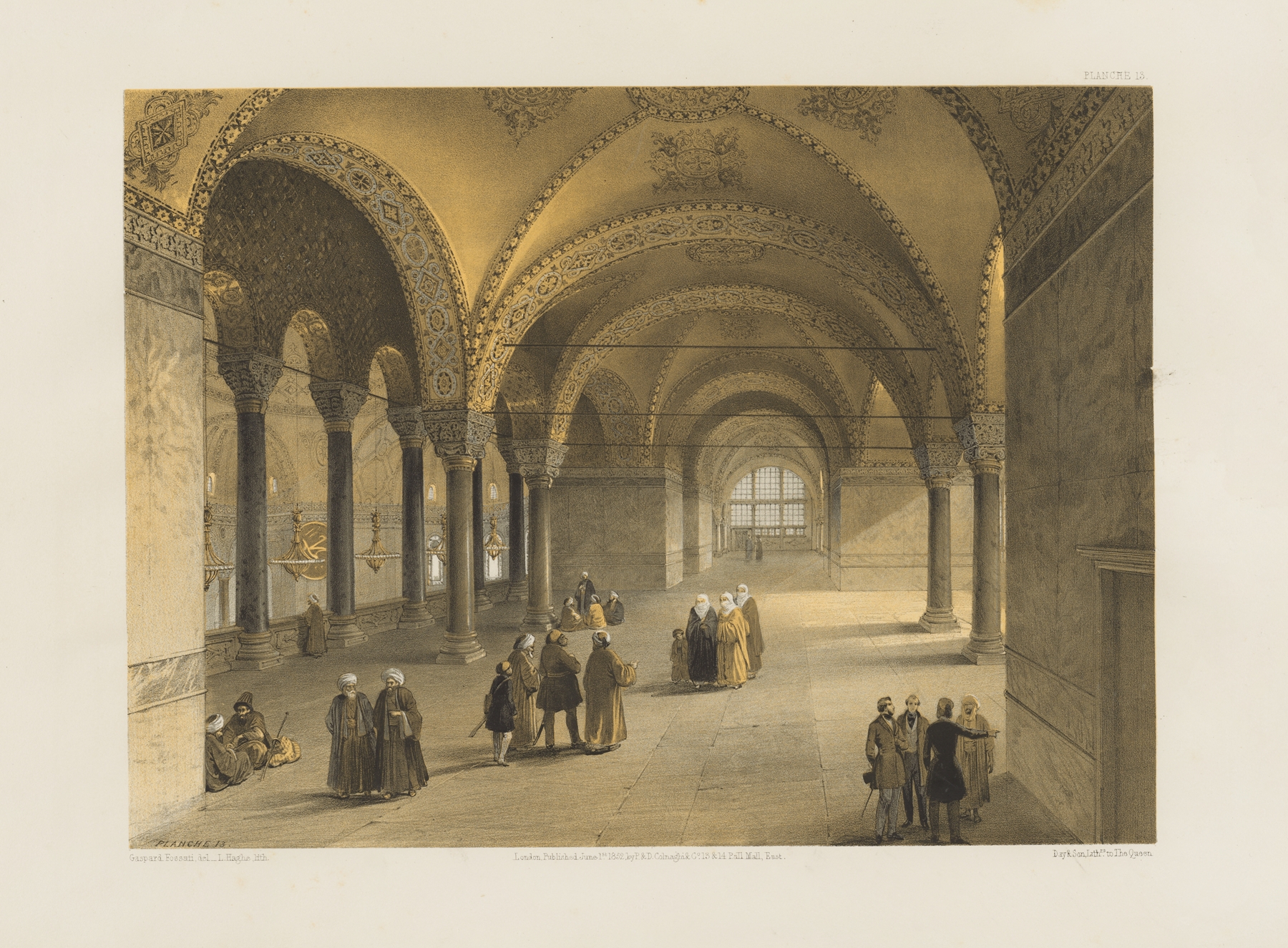
Could beauty survive in a century of chaos? The intricate reflection of light upon the marble and mosaic surfaces of a grand architectural marvel suggests that perhaps it can—at least in the skillful hands of an artist who bears witness to transformation. Look to the left, where the vibrant blues and golds of the mosaics glisten under the soft diffusion of daylight streaming through the immense dome. The play of shadows and light reveals the careful restoration that breathes life back into the iconic space of Aya Sofia.
Notice how the artist meticulously captures the graceful curves and soaring arches, inviting the viewer to ascend in awe, almost as if they are walking beneath that vast ceiling themselves. Amidst the grandeur, contrasts emerge; the modern restoration, while reverent, hints at the tumultuous history this space has endured. Each color speaks not just of aesthetic beauty but also of the layers of culture and religion that have coexisted and clashed in this sphere. There’s a tension between the beauty of the restored parts and the remnants of the past that serve as a haunting reminder of loss and resilience.
Gaspare Fossati painted this piece in 1852, during a period of significant restoration following centuries of neglect and turmoil in the Ottoman Empire. As he worked in Constantinople, Fossati navigated the artistic world, embracing the fusion of Eastern and Western influences as Europe grappled with its own artistic revolutions. His engagement with this iconic structure not only captured a moment of architectural beauty but also marked a crucial point in the historical discourse of art and preservation.