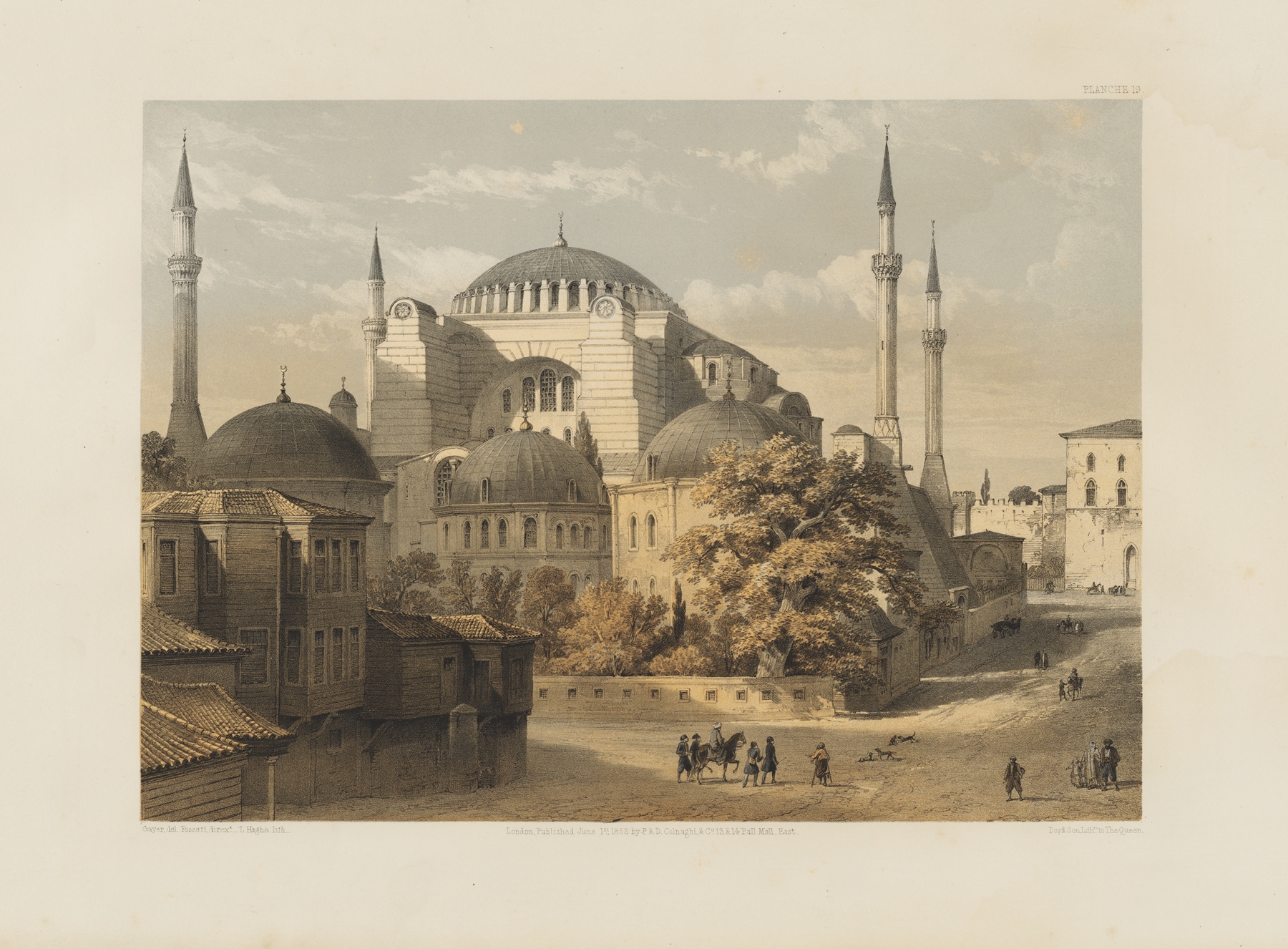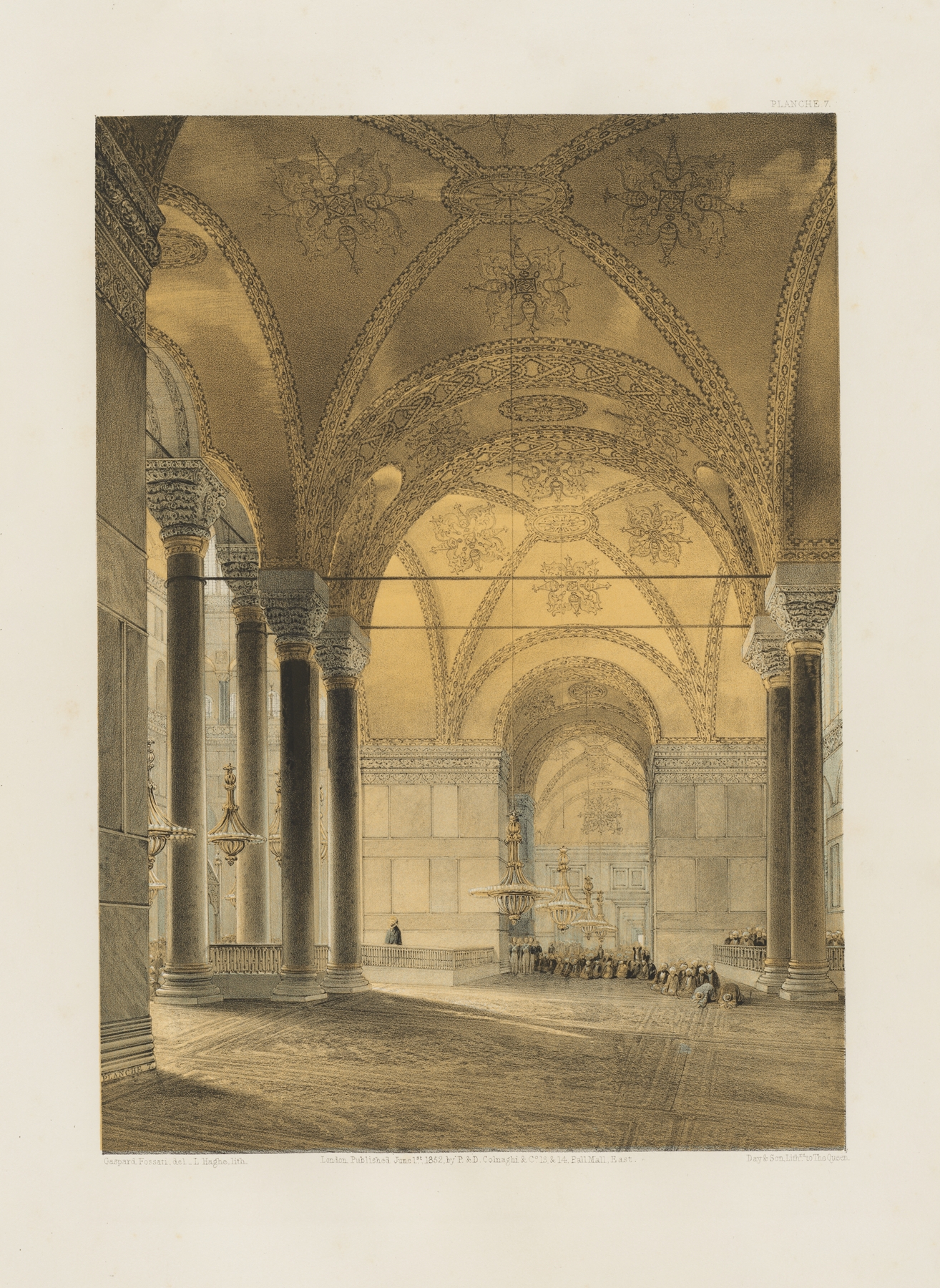
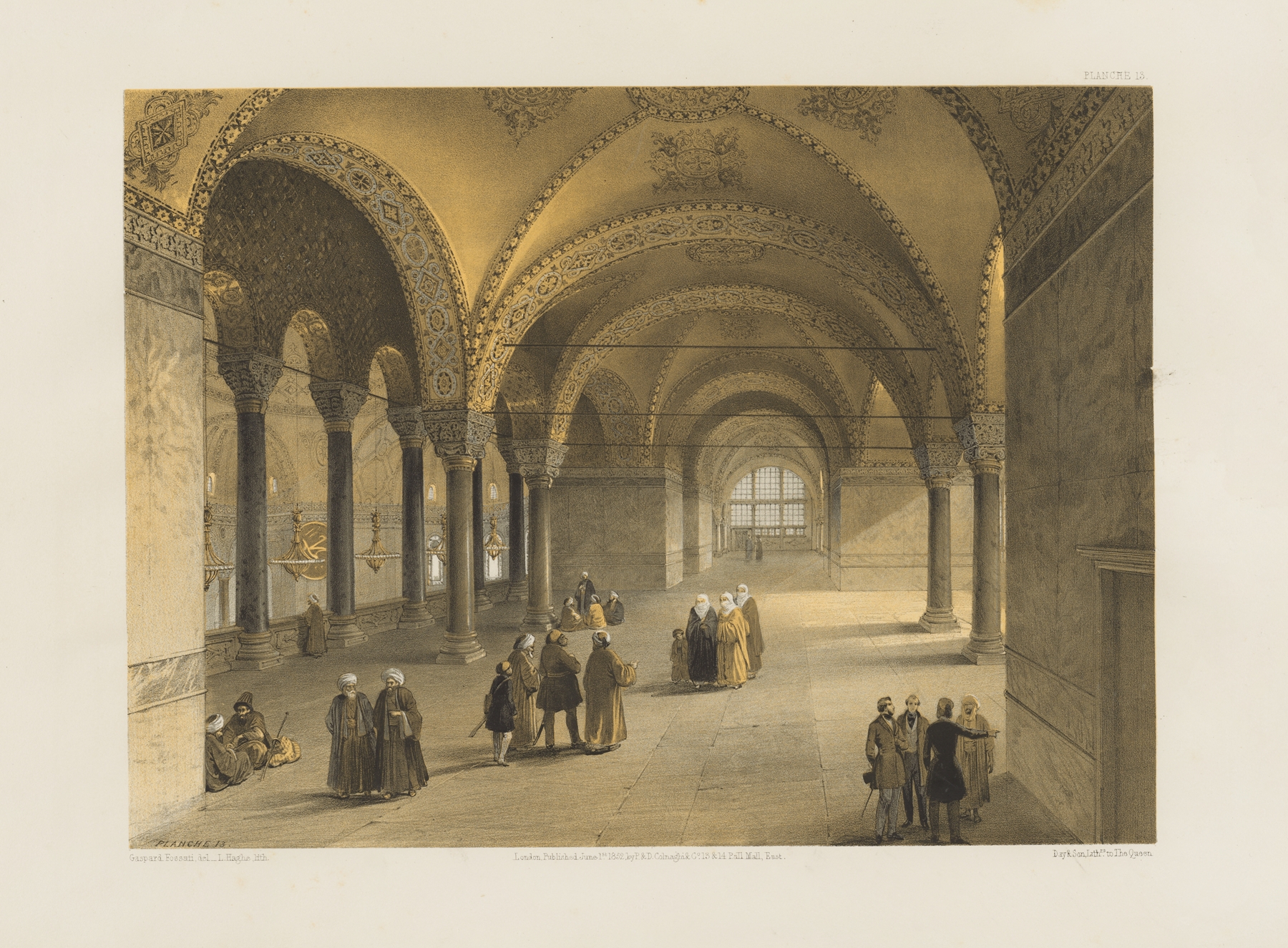
Aya Sofia, Constantinople; as recently restored by order of H. M. the sultan Abdul-Medjid Pl.07 — History & Analysis
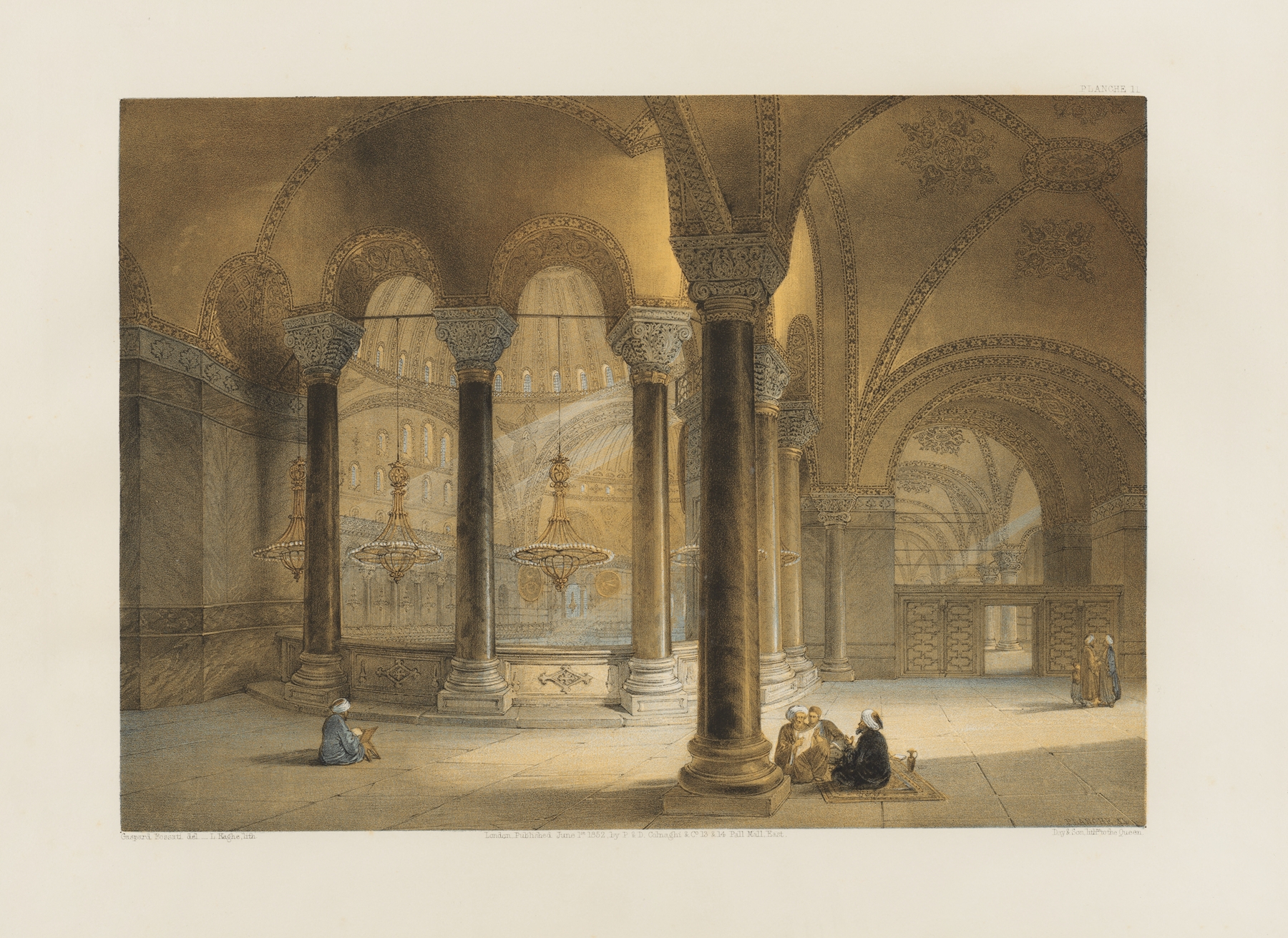
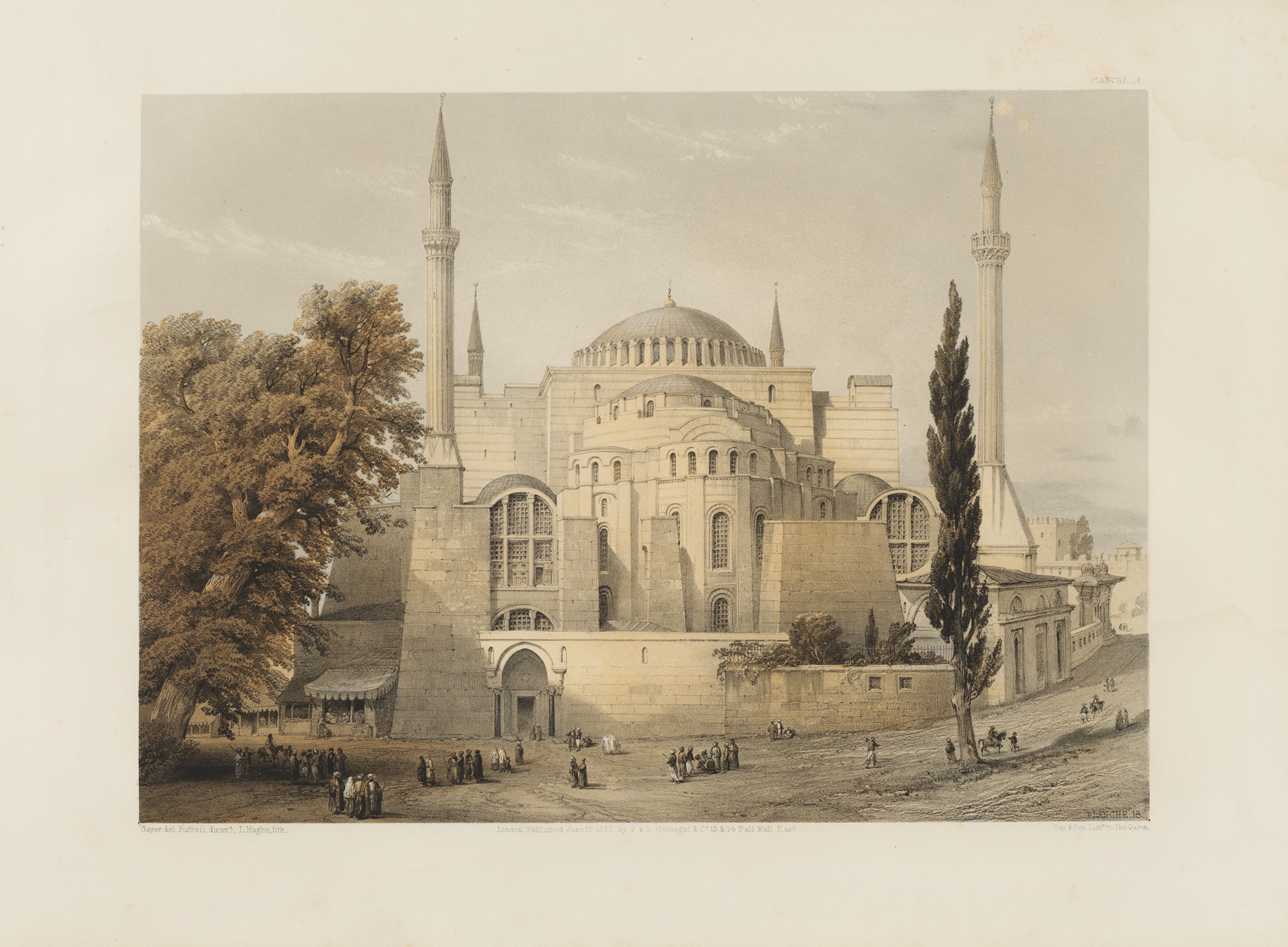
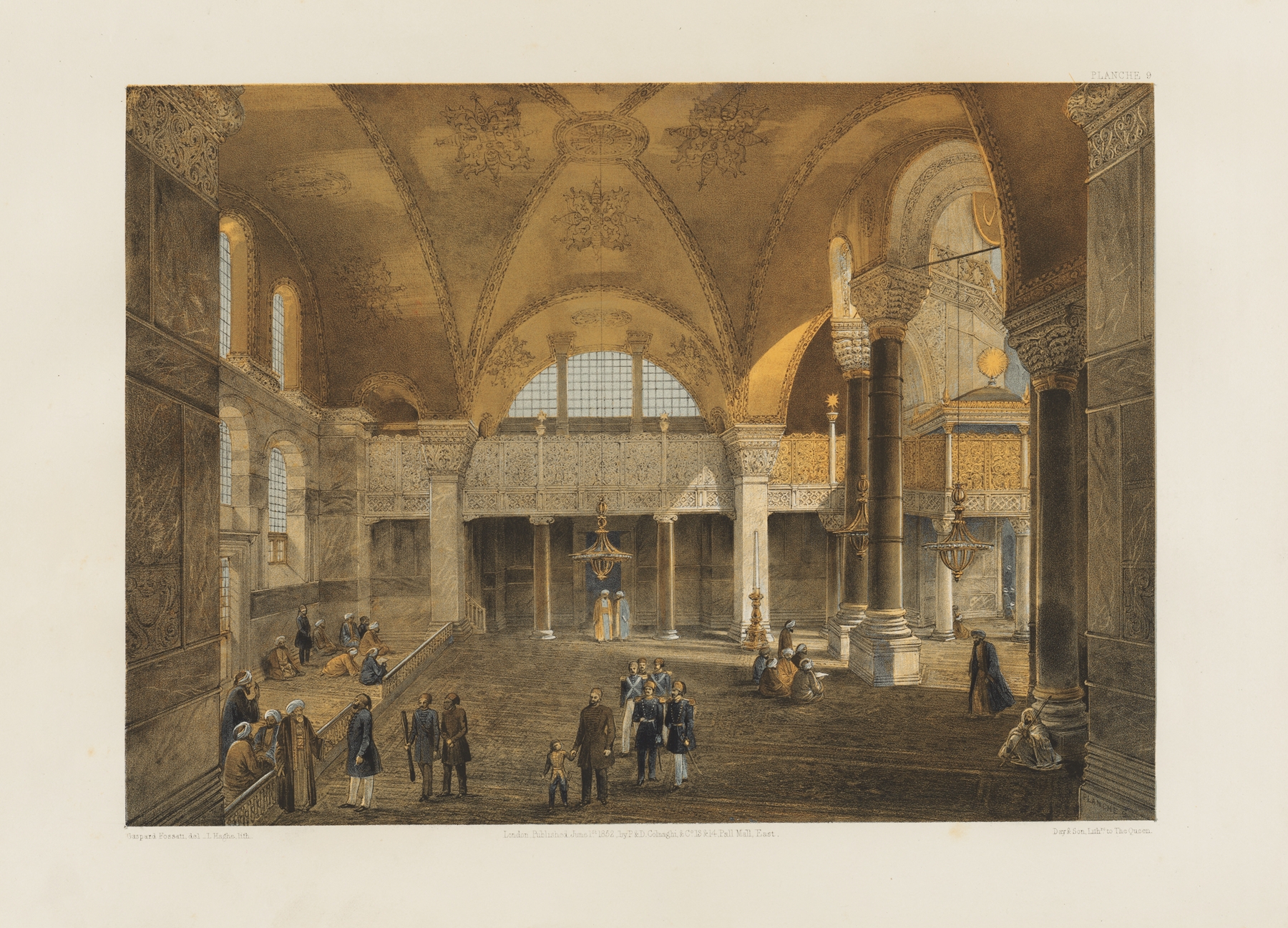
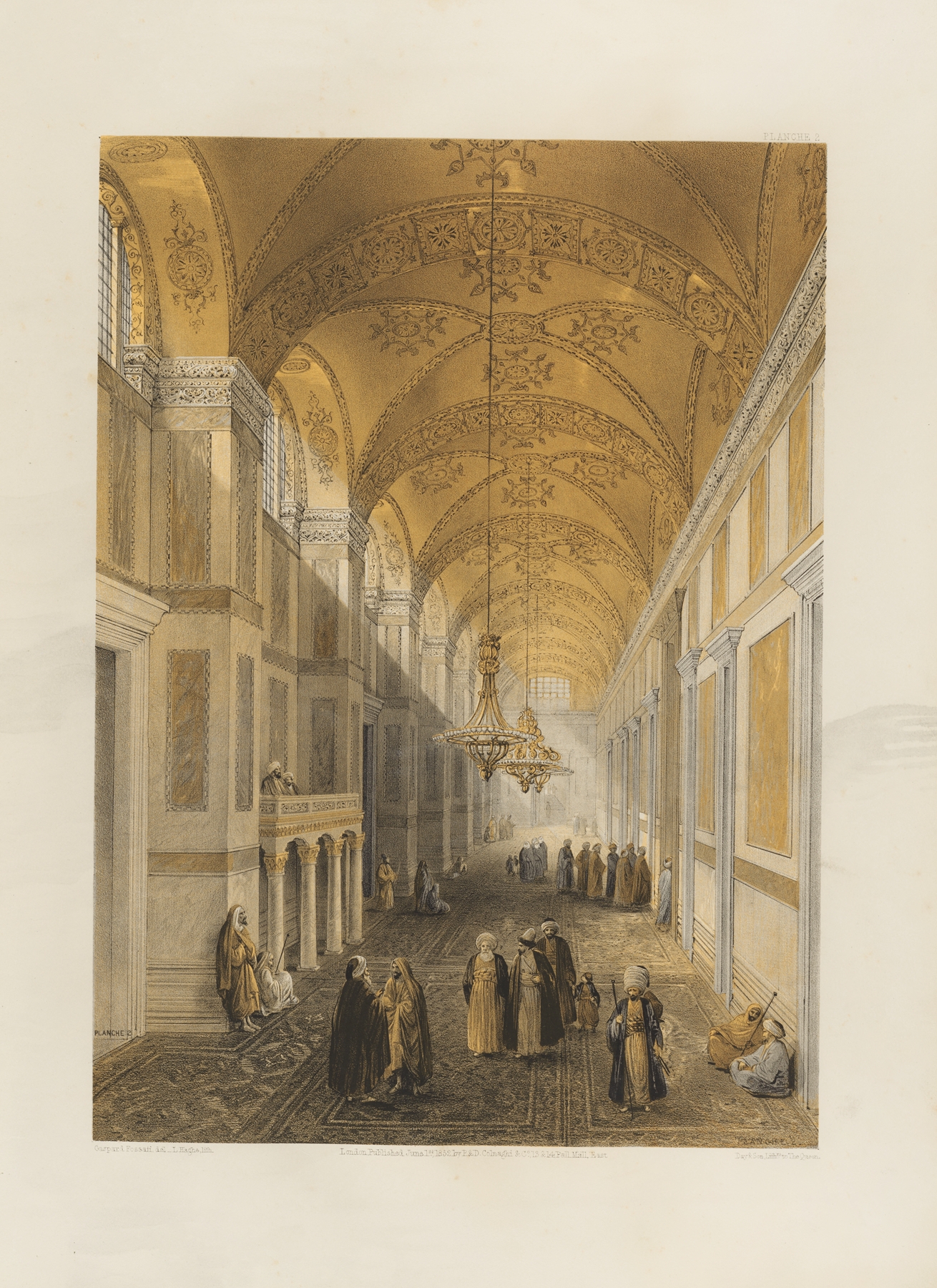
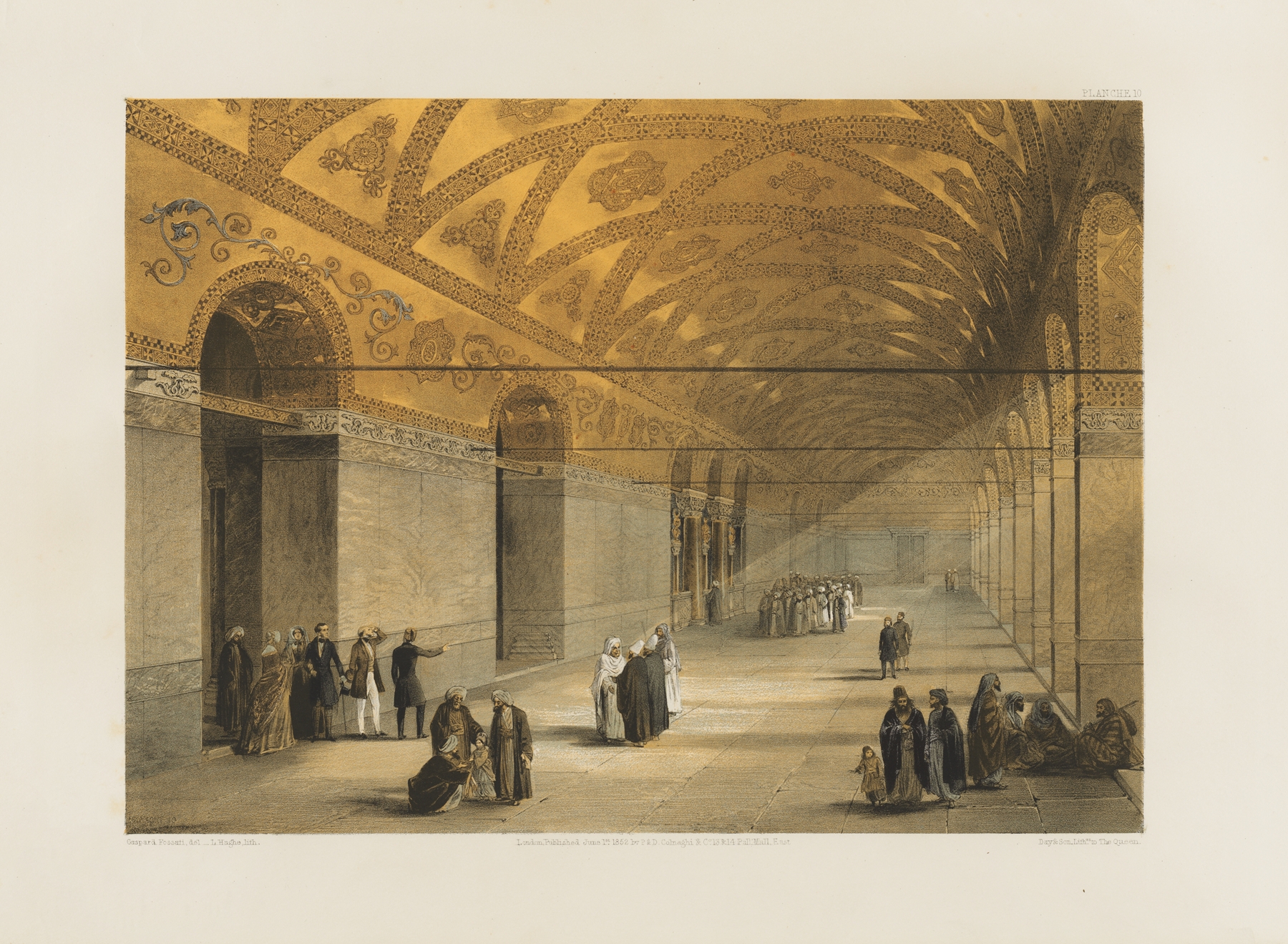
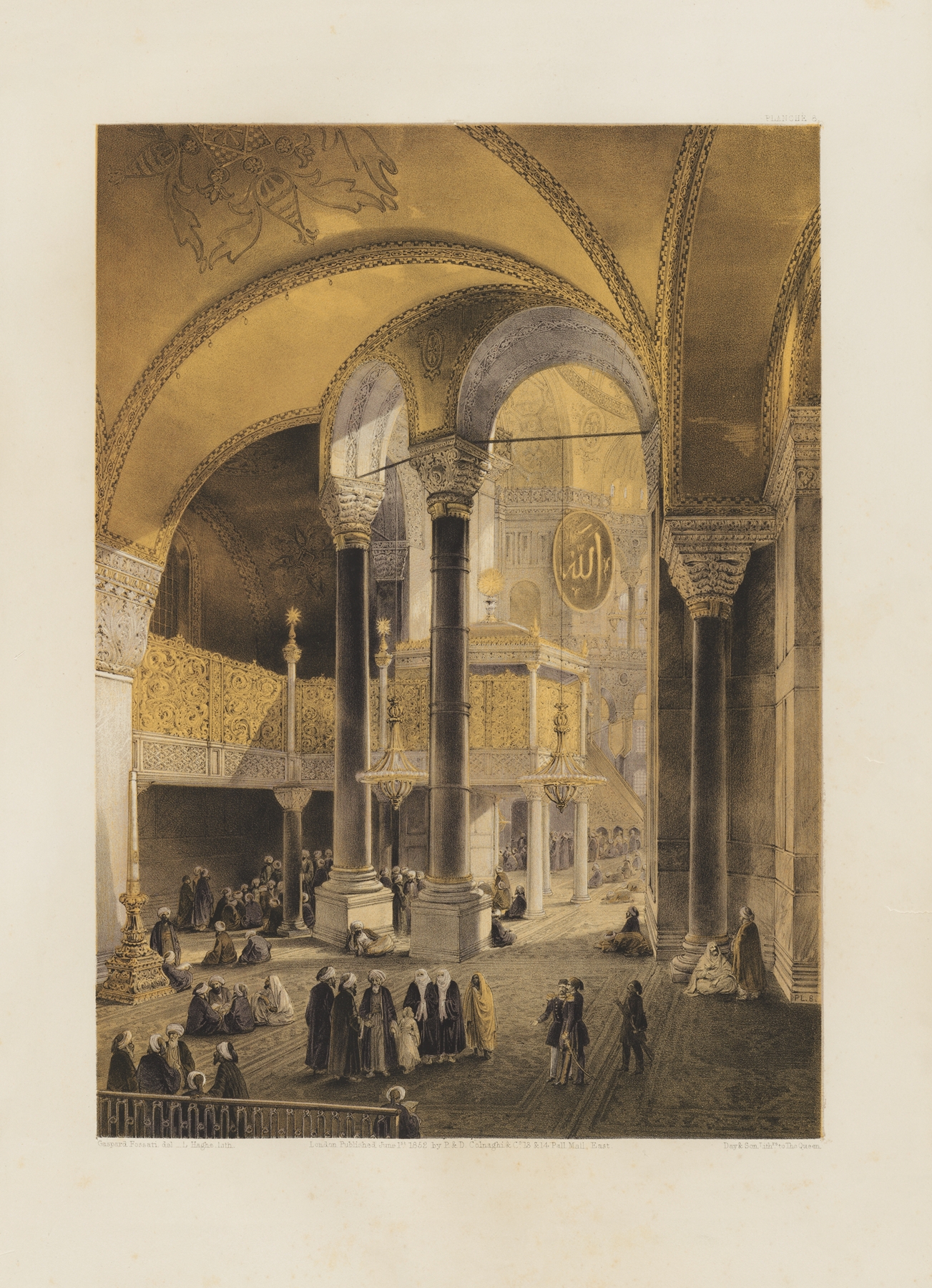
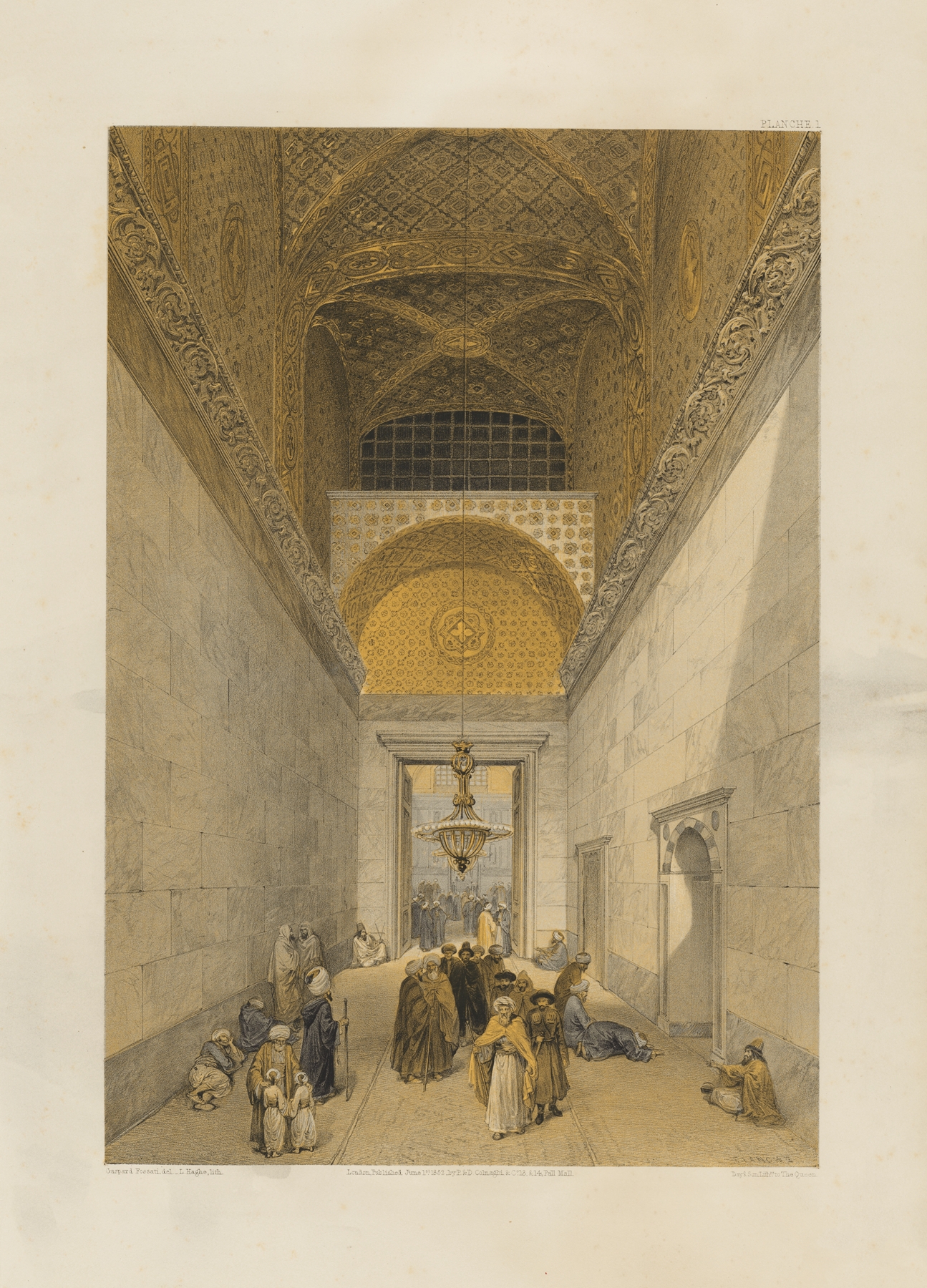
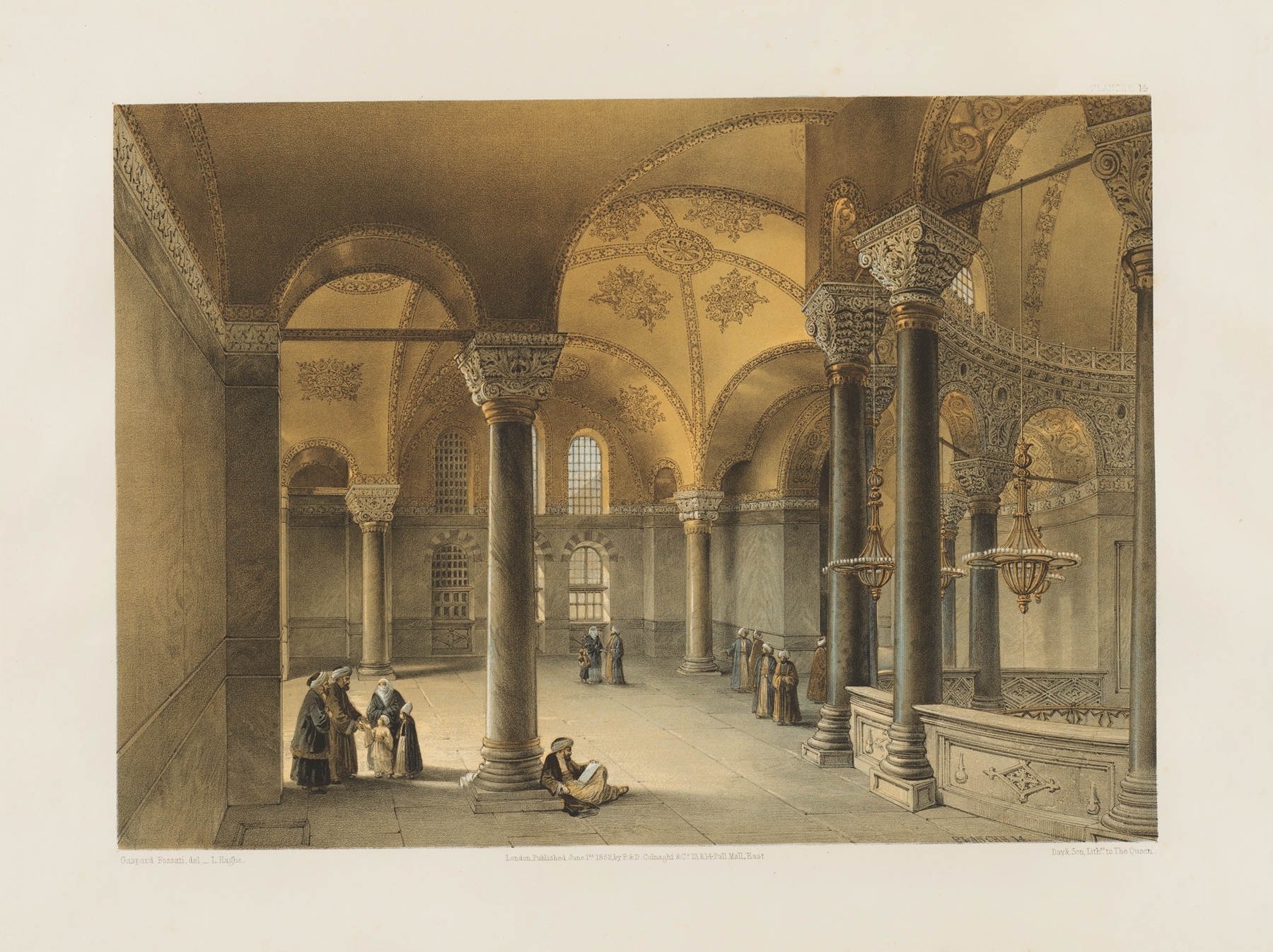
Can paint confess what words never could? In Aya Sofia, Constantinople, the walls echo with histories of faith and power, revealing the bittersweet tale of a once-sacred ground transformed by time and tumult. Look to the left, where the majestic dome rises, bathed in a golden light that filters through the intricately designed windows. Your gaze will naturally follow the sweeping lines of the architecture, drawing attention to the vibrant mosaics that shimmer like memories.
The warm palette of ochre and amber contrasts with the cooler tones of the shadows, highlighting the harmonious interplay between light and darkness, a visual metaphor for the ongoing struggles within this grand space. Beneath the surface, a palpable tension simmers. Each tile, every brushstroke, whispers of a betrayal—a once-unified vision of divinity now fractured by historical divisions. The opulence of the restoration signifies a reverence for the past, yet it also serves as a reminder of the complexity of cultural identity and the sacrifices made along the way.
These hidden layers invite the viewer to contemplate the ghosts of those who have worshipped, rebelled, and ultimately transformed this sacred venue. Gaspare Fossati painted this piece in 1852 during a period of significant restoration under Sultan Abdul-Medjid I, who sought to revive the glory of the Aya Sofia. Living in an era of political upheaval, Fossati was immersed in the dialogue between Eastern and Western aesthetics, capturing a moment where history meets art in a city that straddled two worlds, forever marked by its turbulent past.