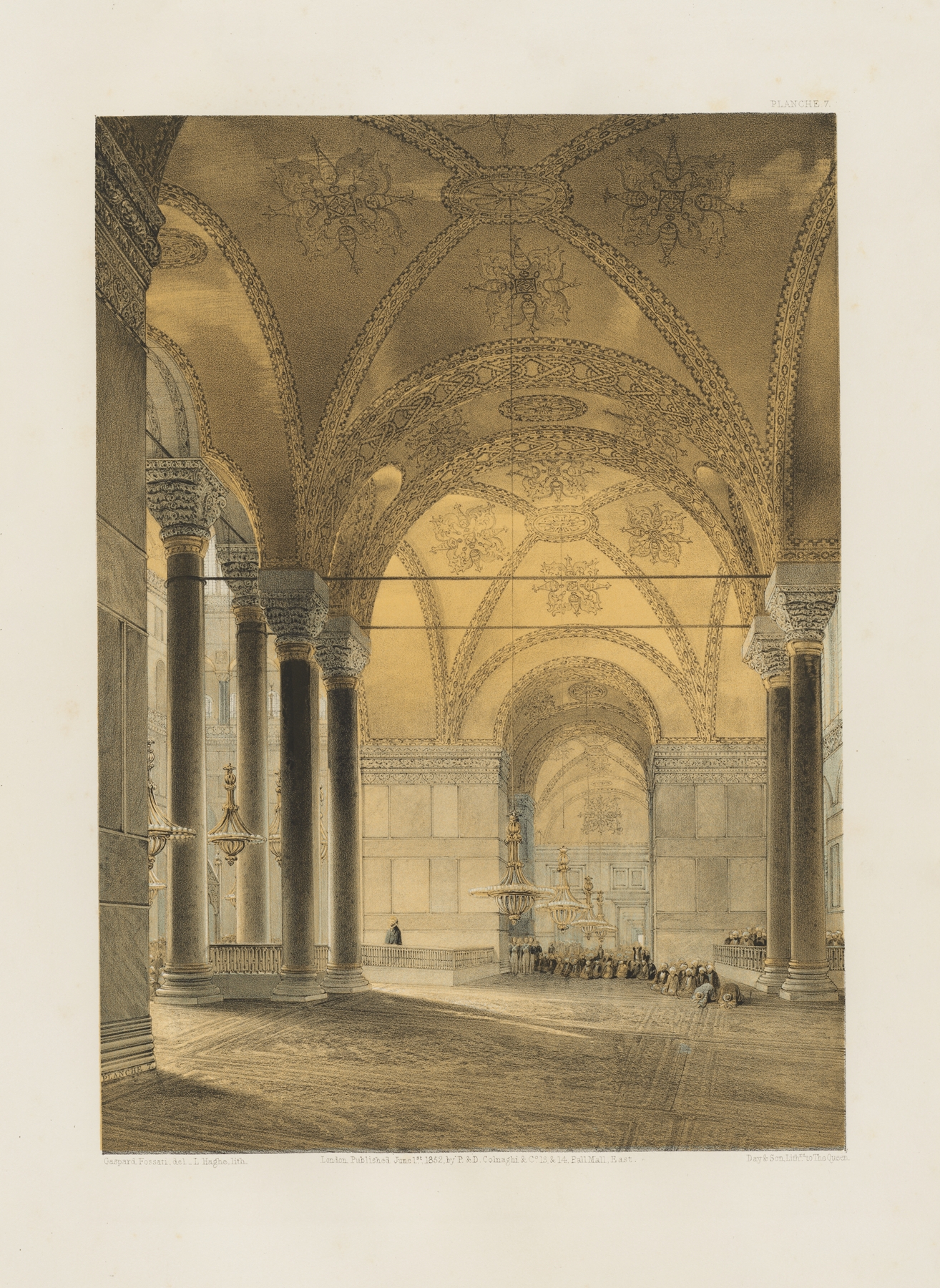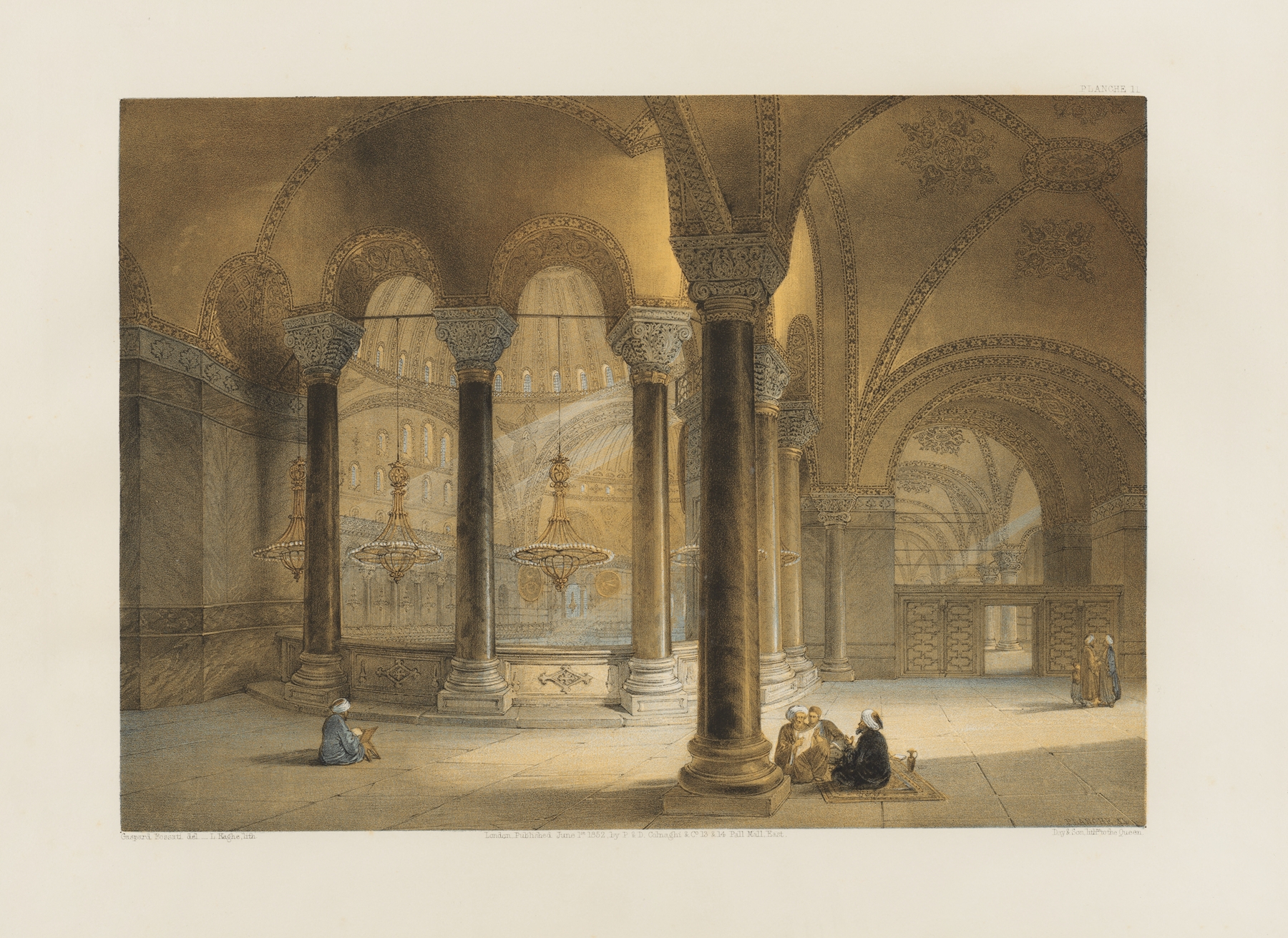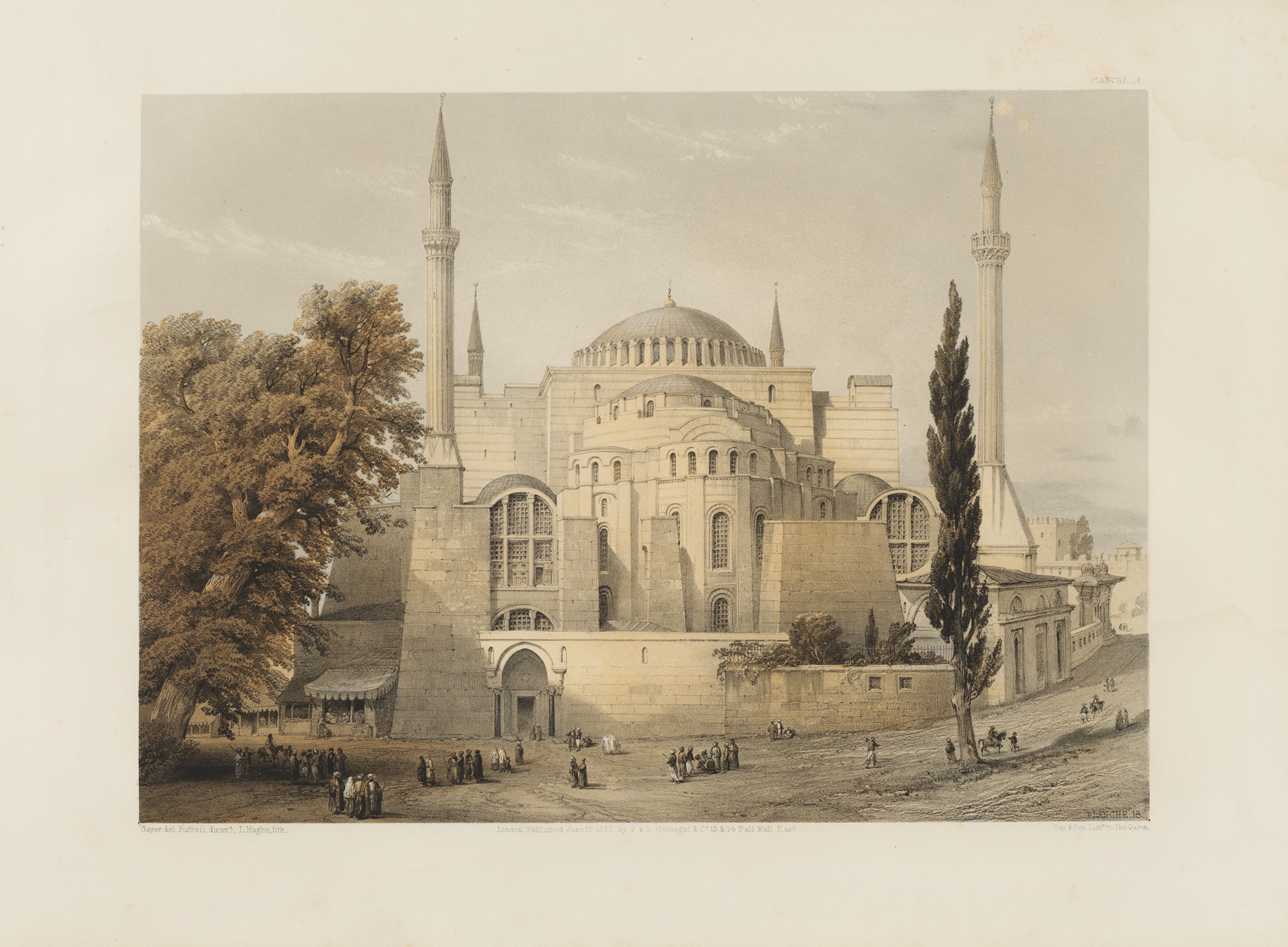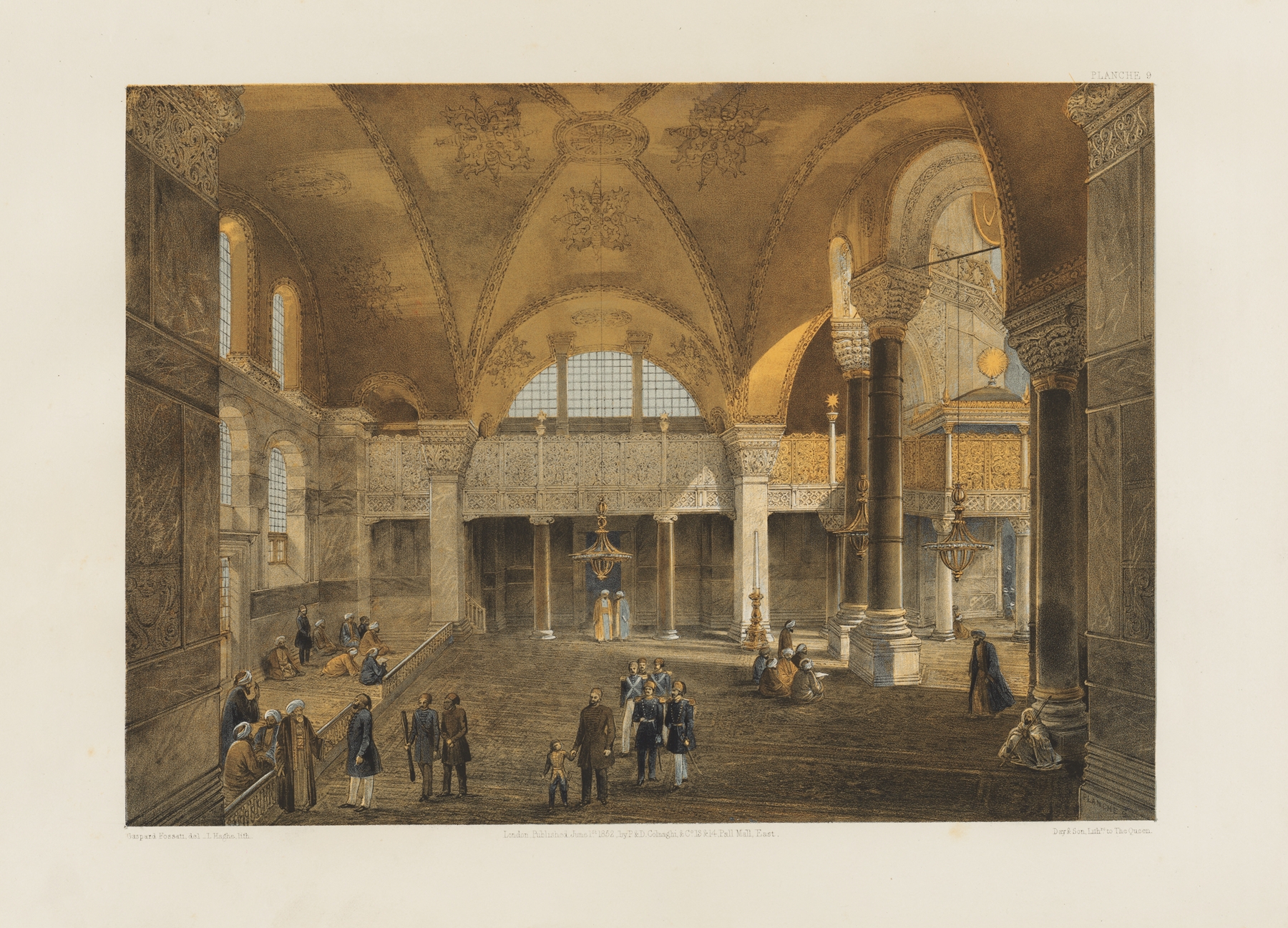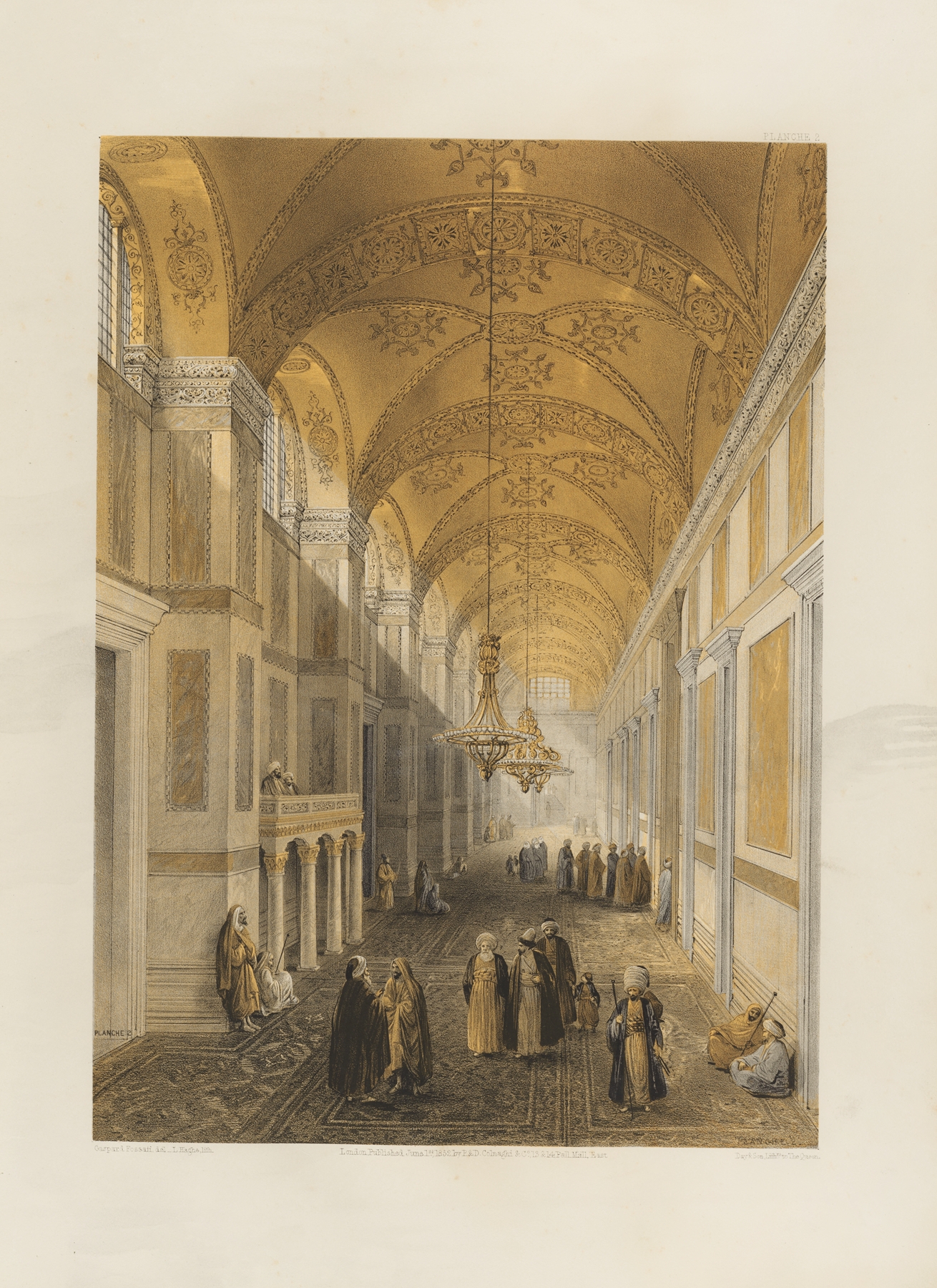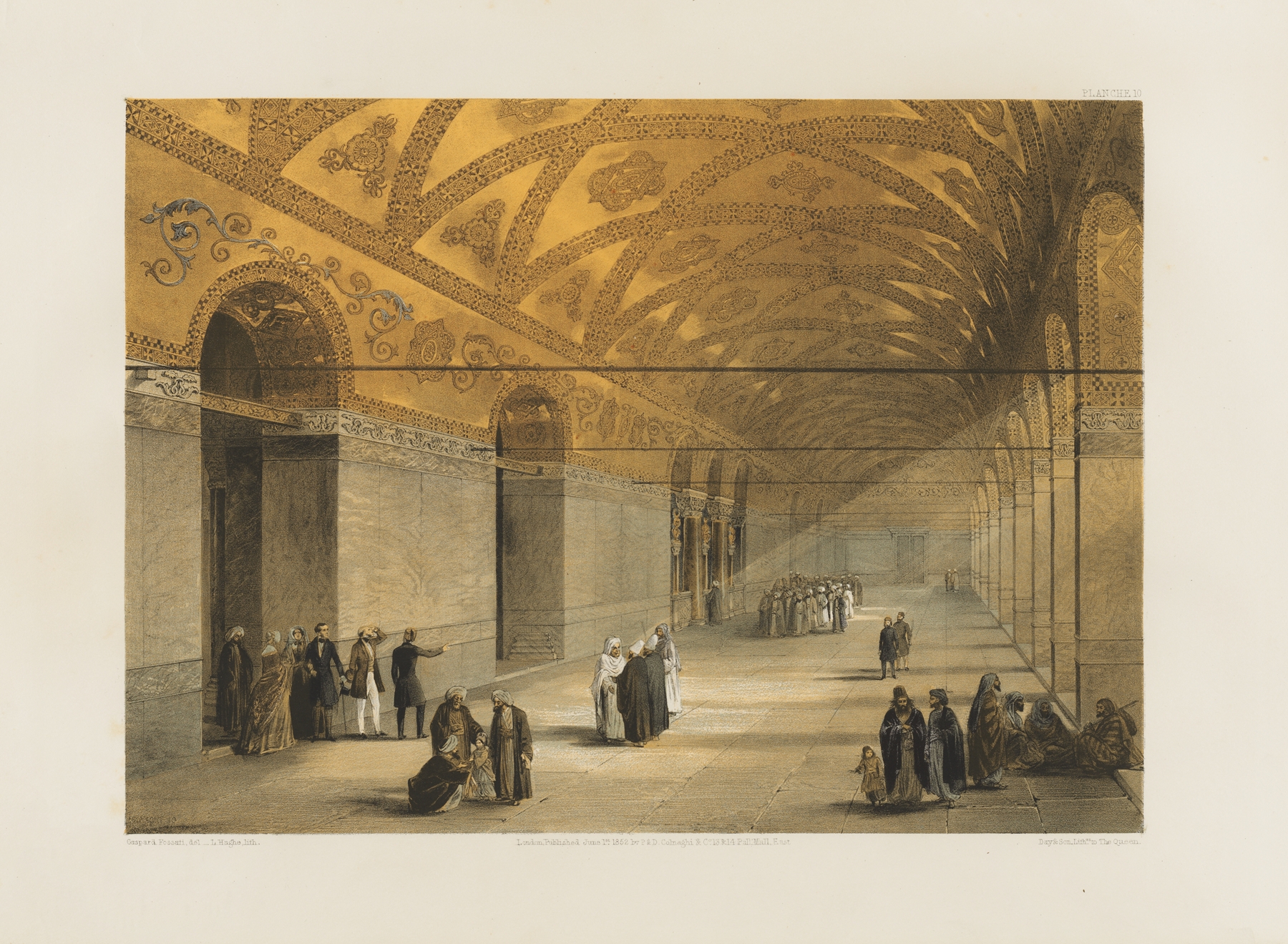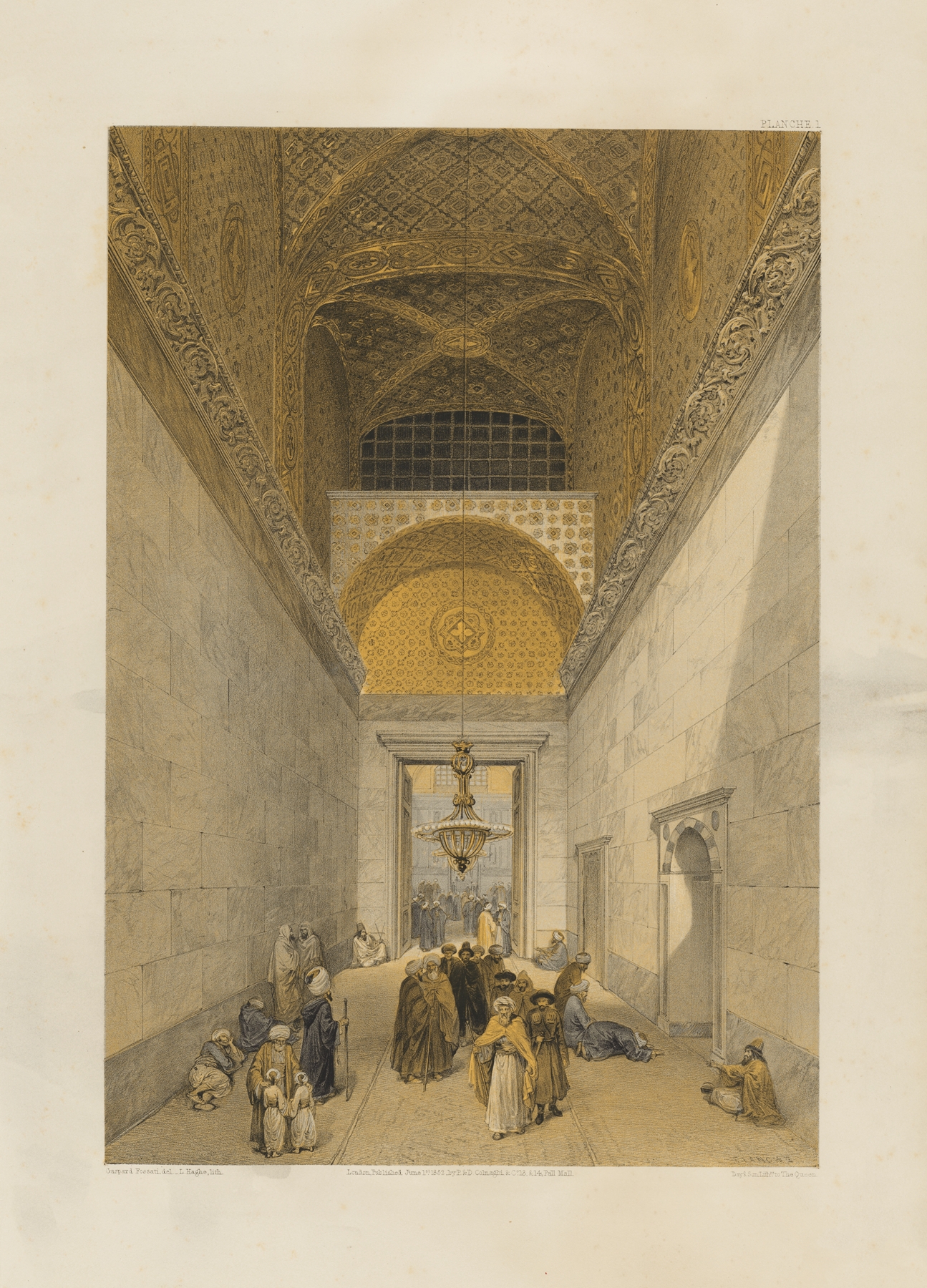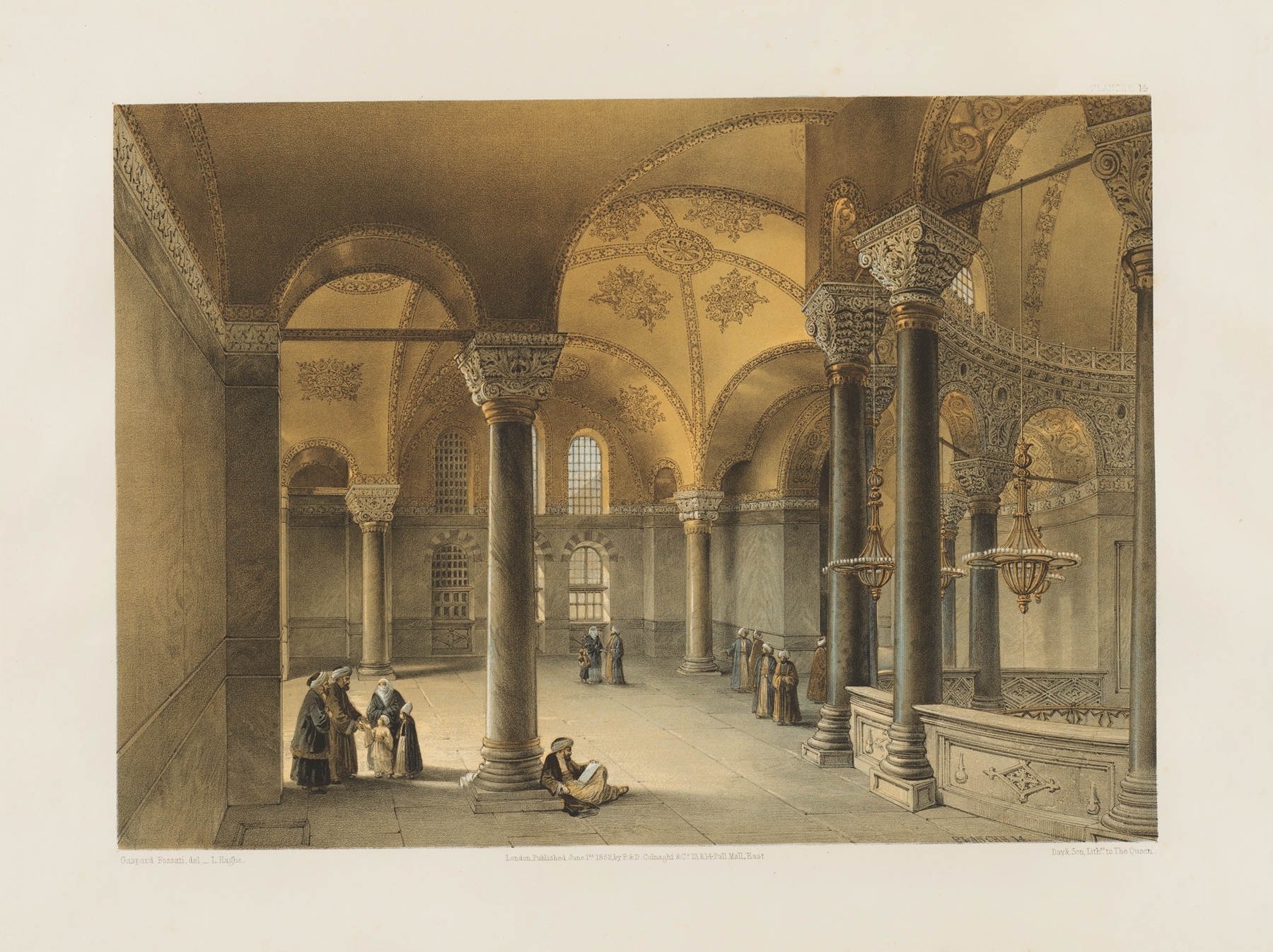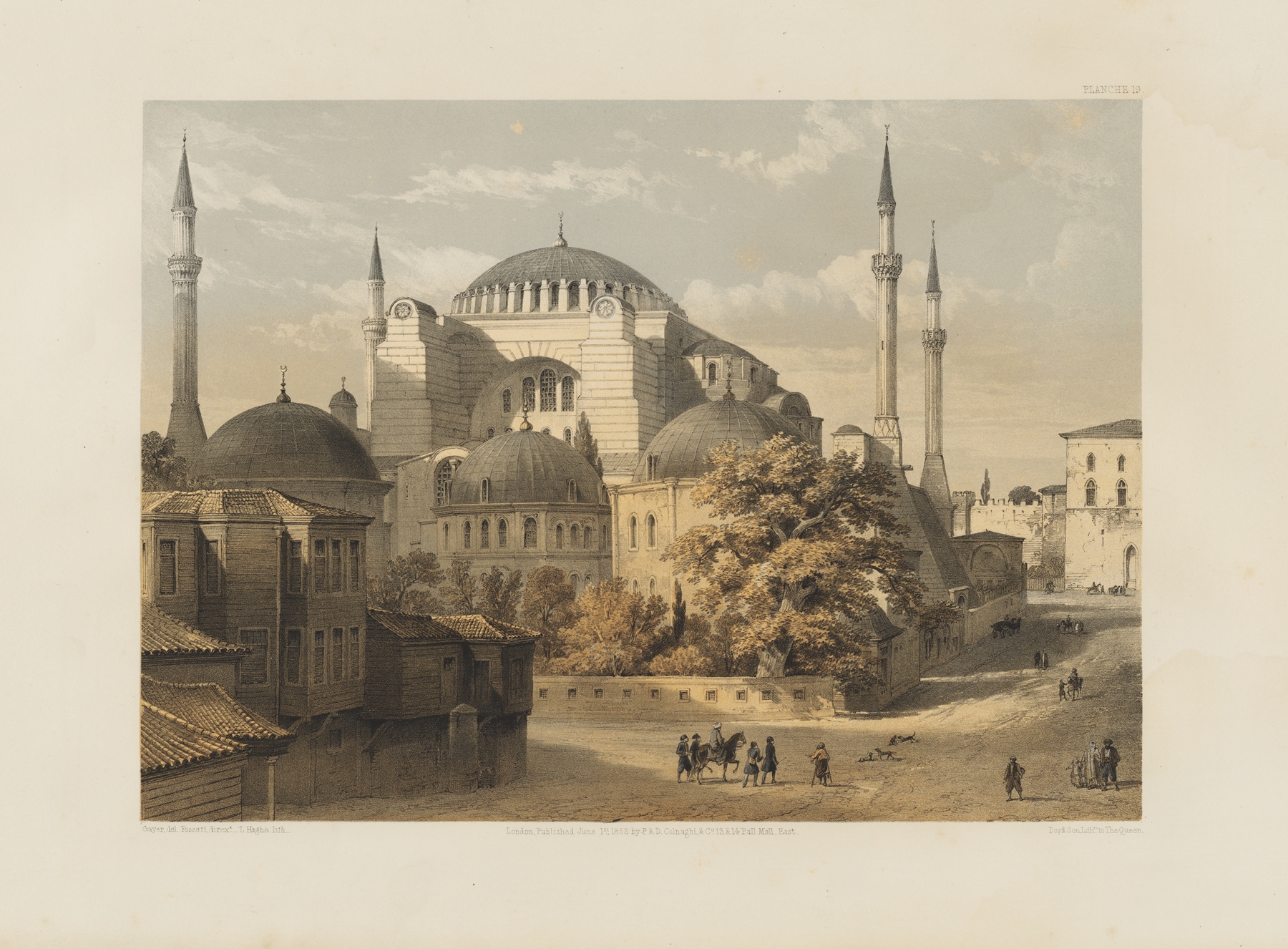
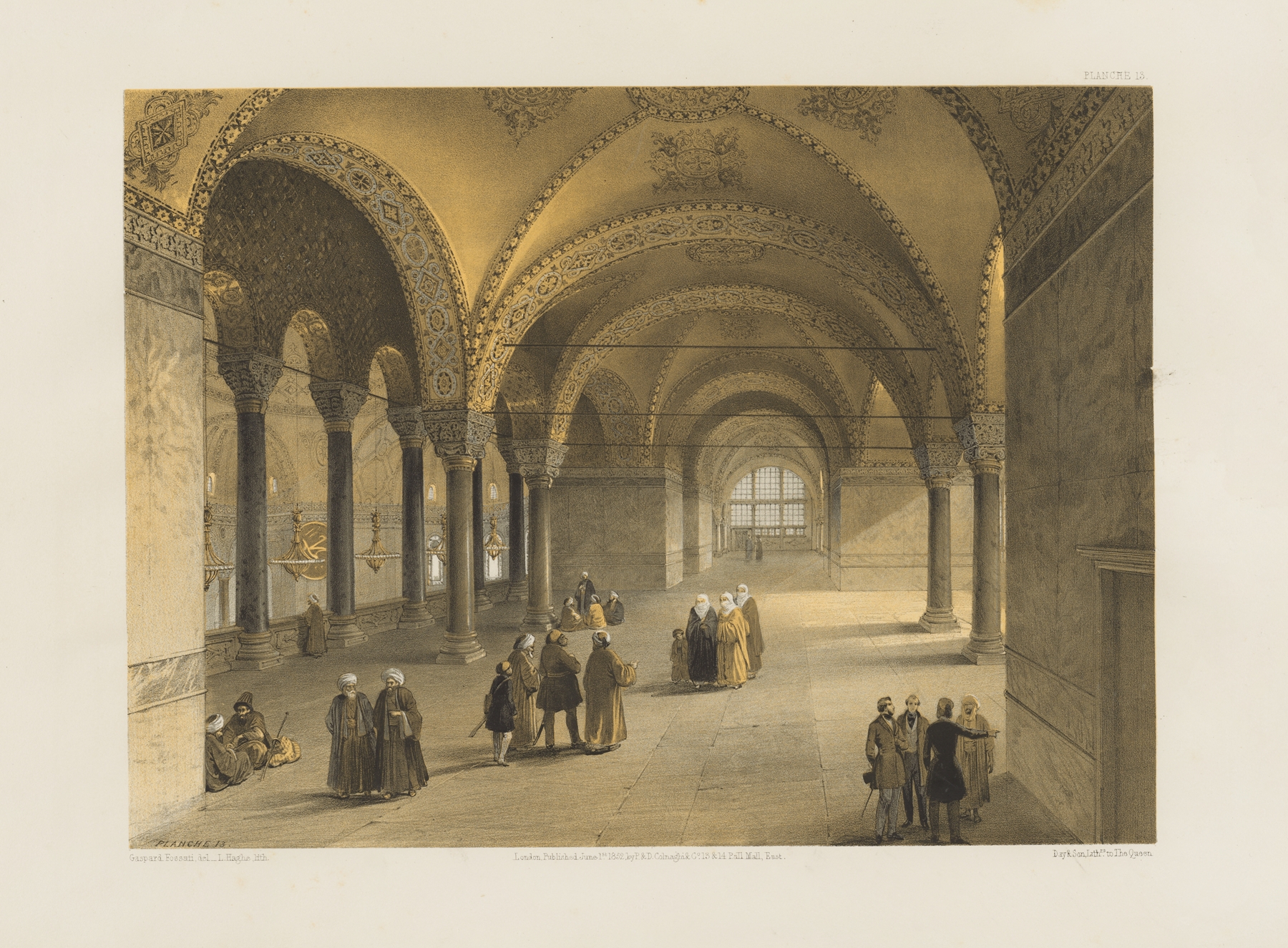
Aya Sofia, Constantinople; as recently restored by order of H. M. the sultan Abdul-Medjid Pl.08 — History & Analysis
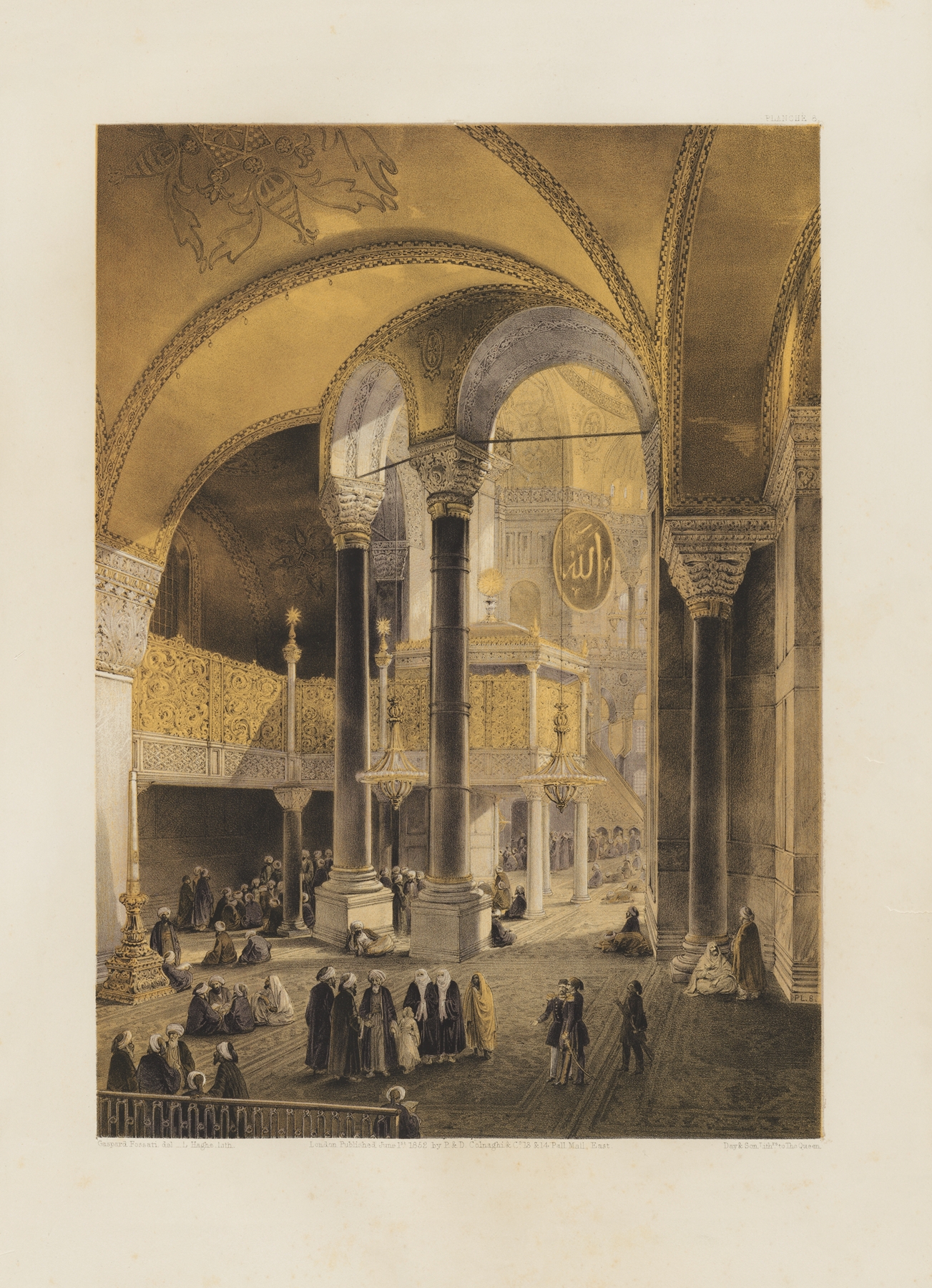
Can beauty exist without sorrow? In Aya Sofia, Constantinople; as recently restored by order of H. M. the sultan Abdul-Medjid Pl.08, this question resonates deeply, as the ancient structure stands reborn, yet echoes of its tumultuous past linger like shadows in the light. Focus first on the majestic dome, rising with an ethereal grace at the center of the canvas.
Notice how the delicate light penetrates through the intricately designed windows, illuminating the vibrant mosaics that tell stories of faith and artistry. The warm palette of ochres and golds contrasts with the cool blues of the sky visible through the arches, creating a harmonious interplay that draws the eye upward, inviting contemplation and reverence. Yet, beneath this serene facade lies a haunting contrast. The meticulous restoration speaks to a rebirth, but one must consider the history of erosion and change that the building has endured. Each arch and column reflects a resilience shaped by centuries of conquest and devotion, while the melancholy of lost empires whispers through every brushstroke.
The artwork captures not only the beauty of the structure but also the bittersweet acknowledgment of time's passage and its impact on cultural identity. In 1852, Gaspare Fossati painted this piece during a period of significant restoration efforts in Constantinople, commissioned by Sultan Abdul-Medjid I. At this time, the city was a confluence of cultures, balancing its rich heritage with modernization. Fossati, an architect and painter, used his background to convey the architectural grandeur of the Aya Sofia, marking it as both a historical landmark and a symbol of cultural resilience amidst the shifting tides of history.