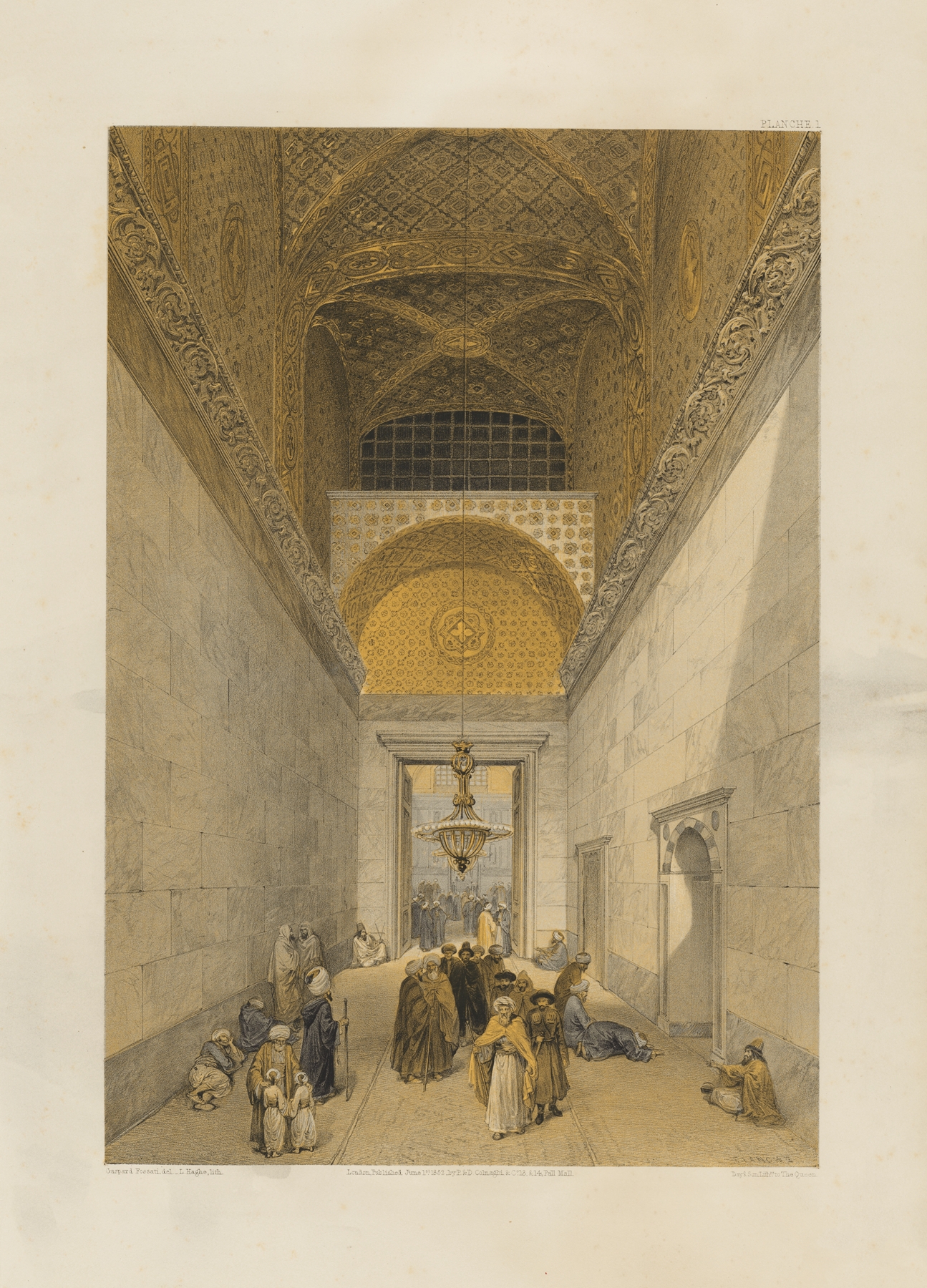
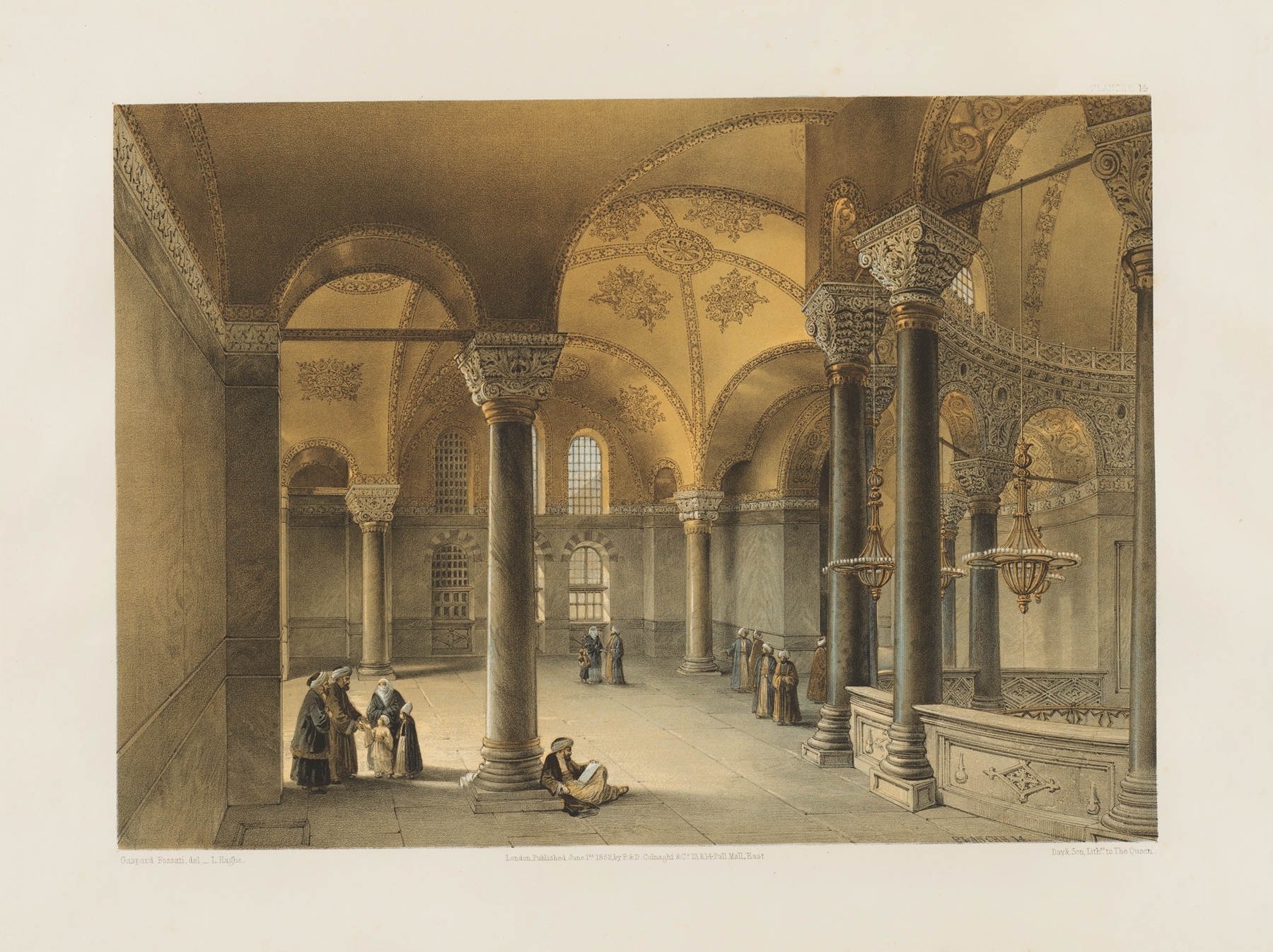
Aya Sofia, Constantinople; as recently restored by order of H. M. the sultan Abdul-Medjid Pl.19 — History & Analysis
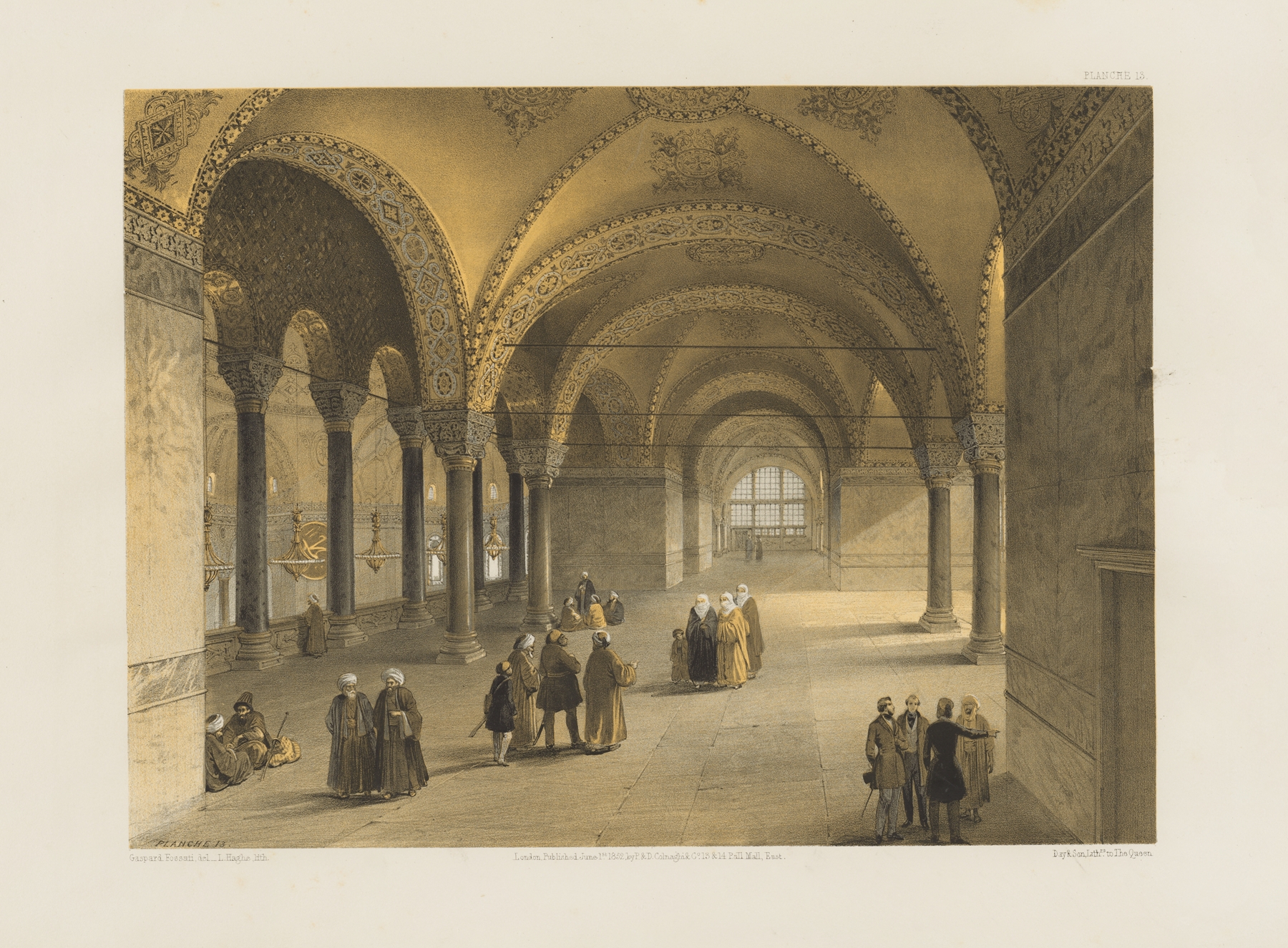
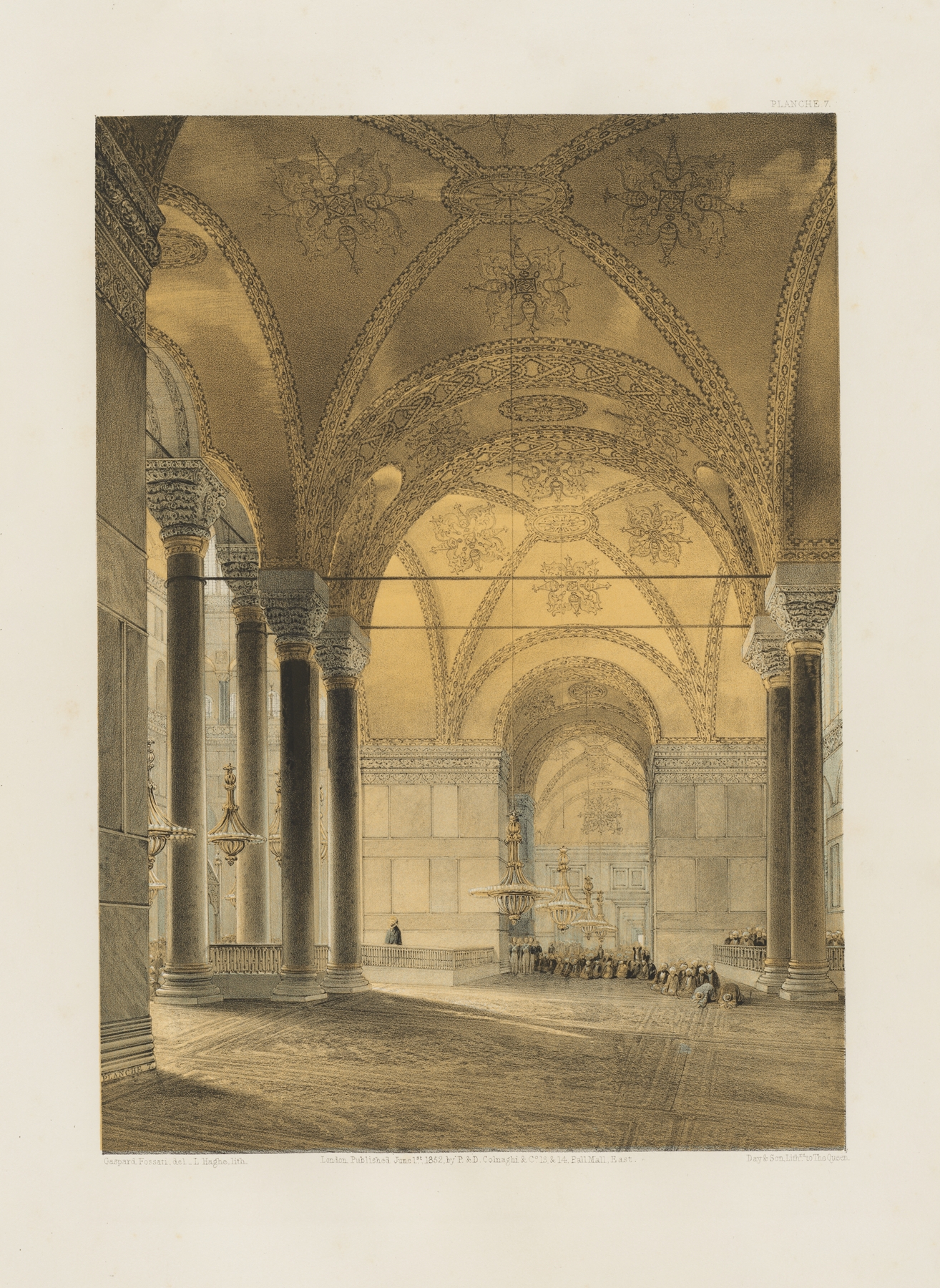
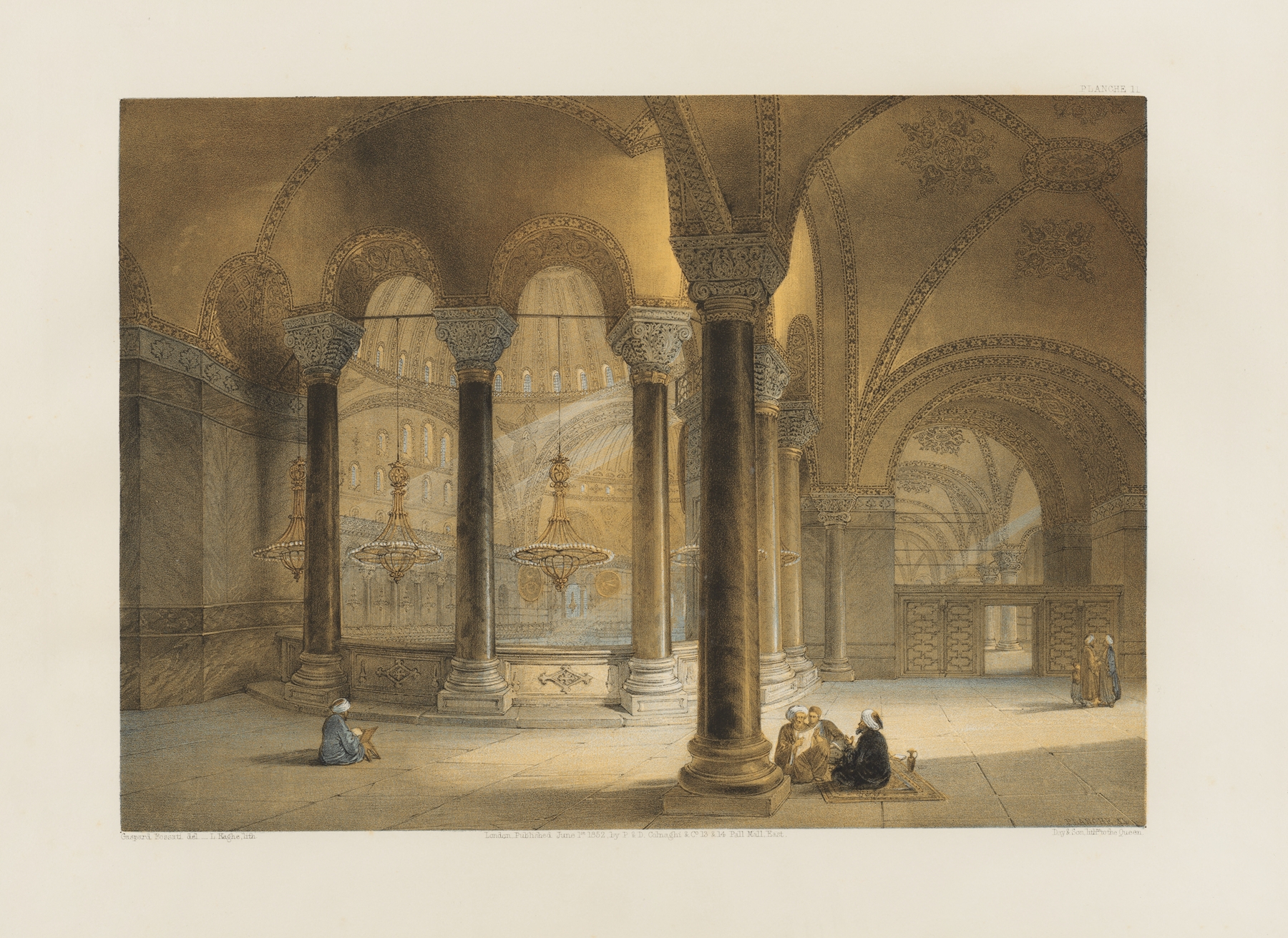
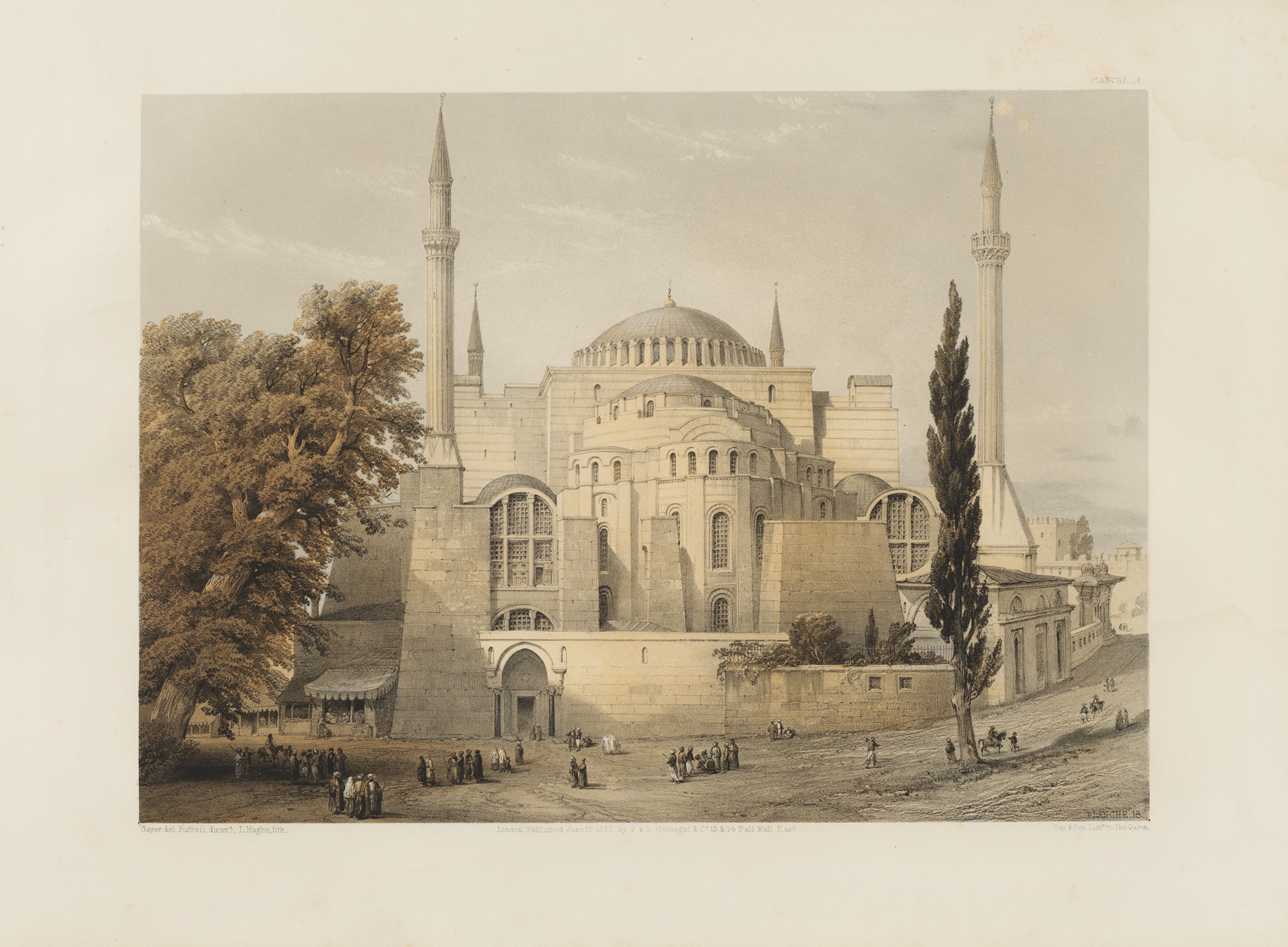
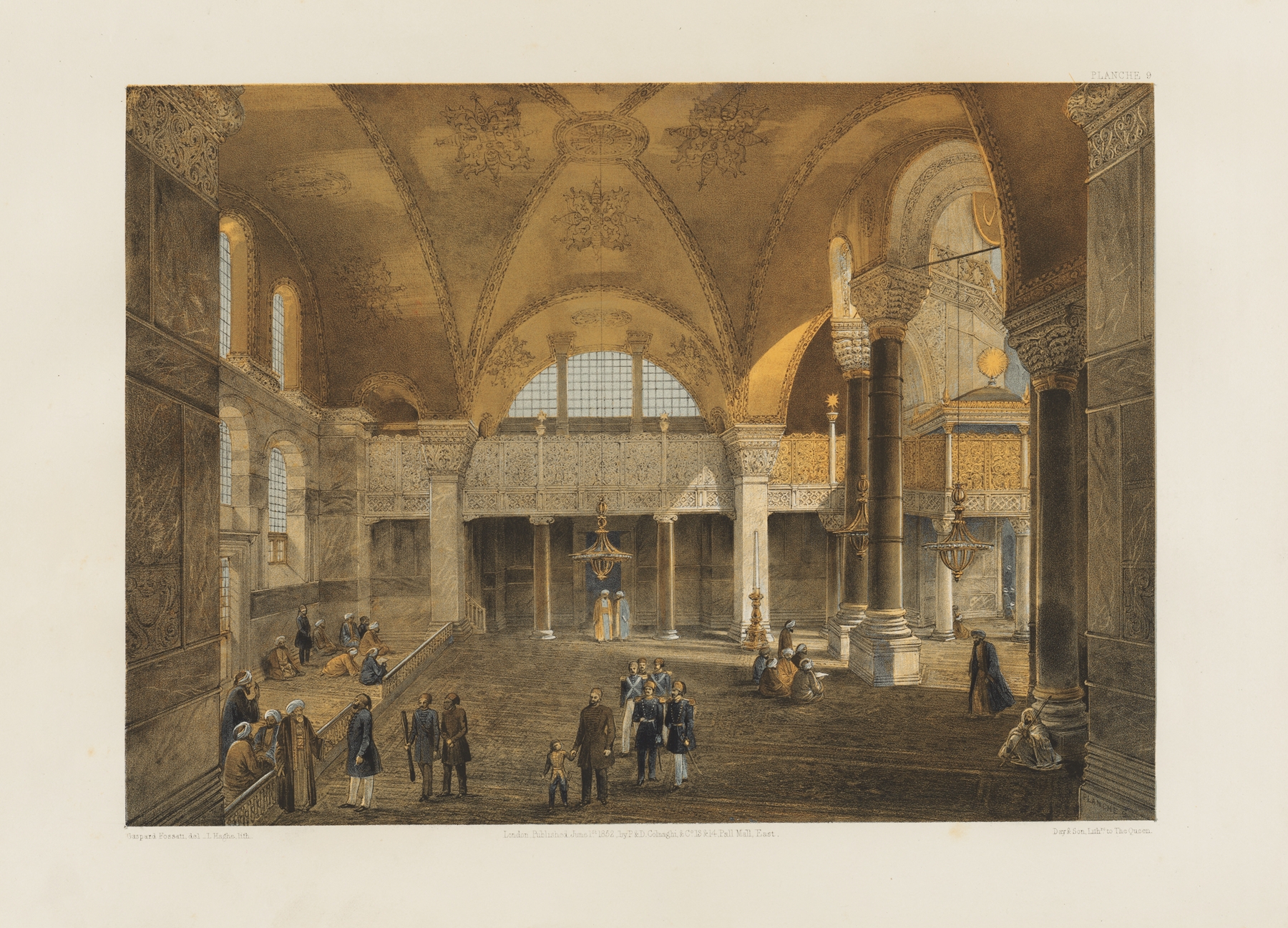
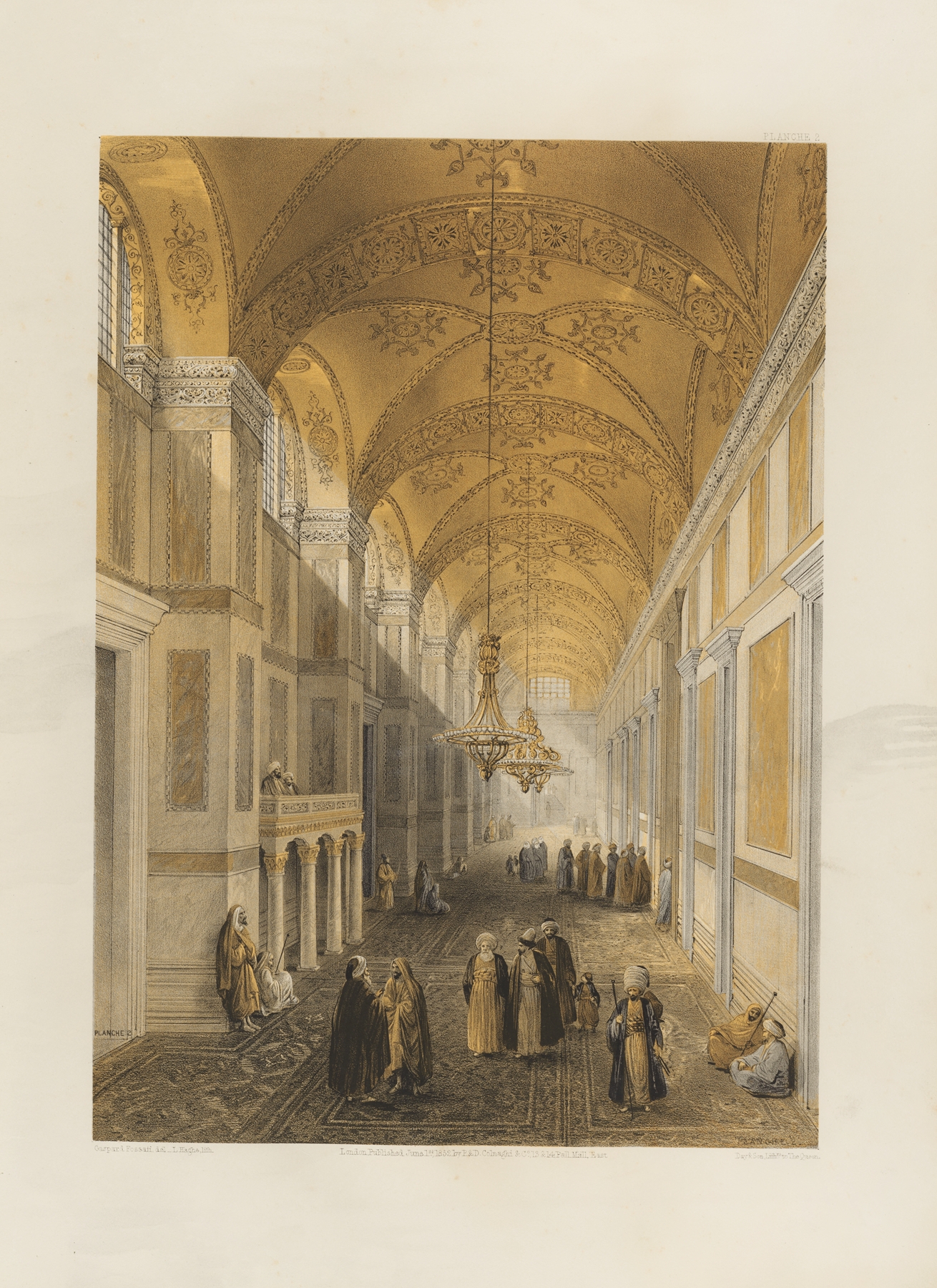
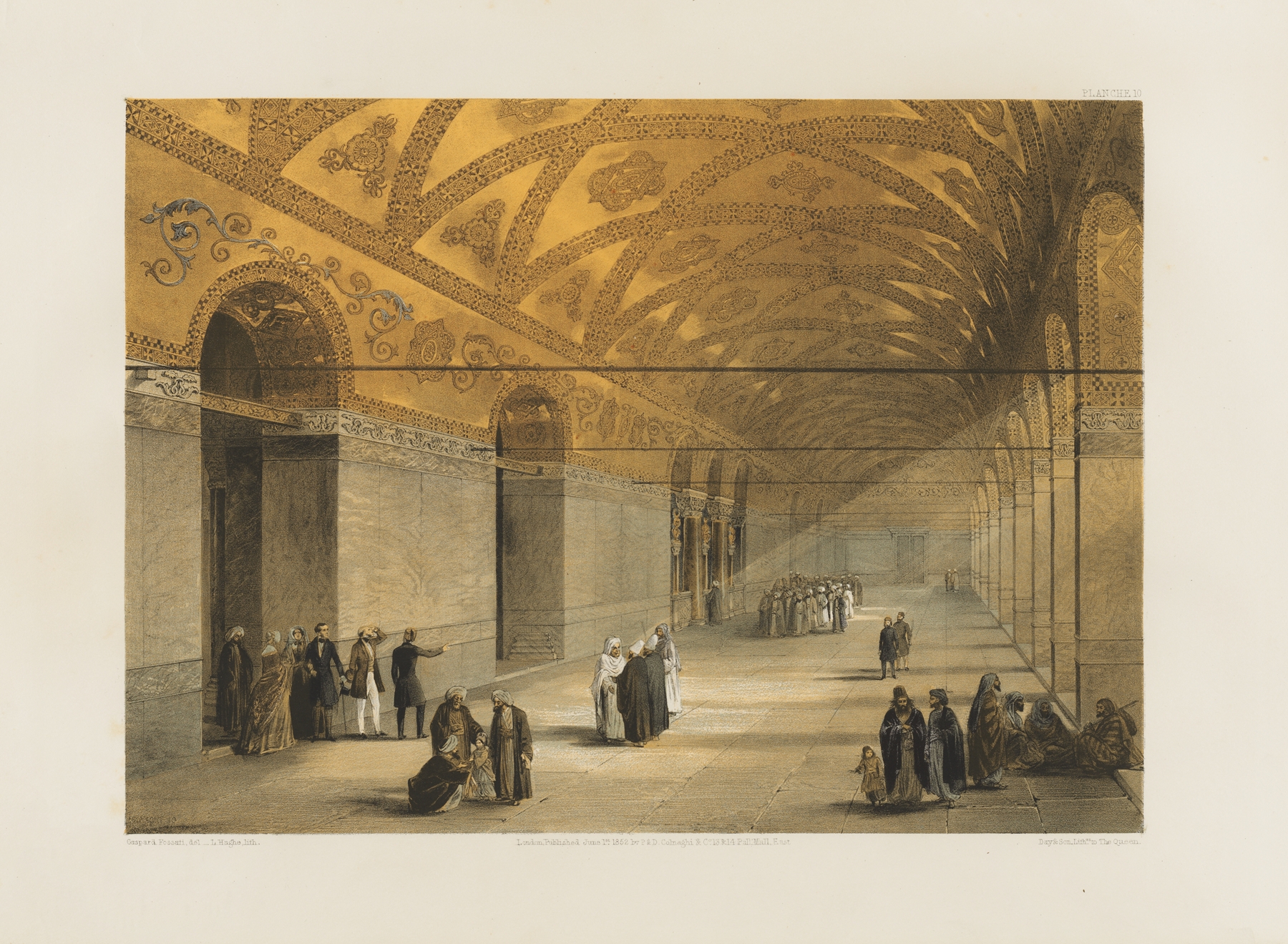
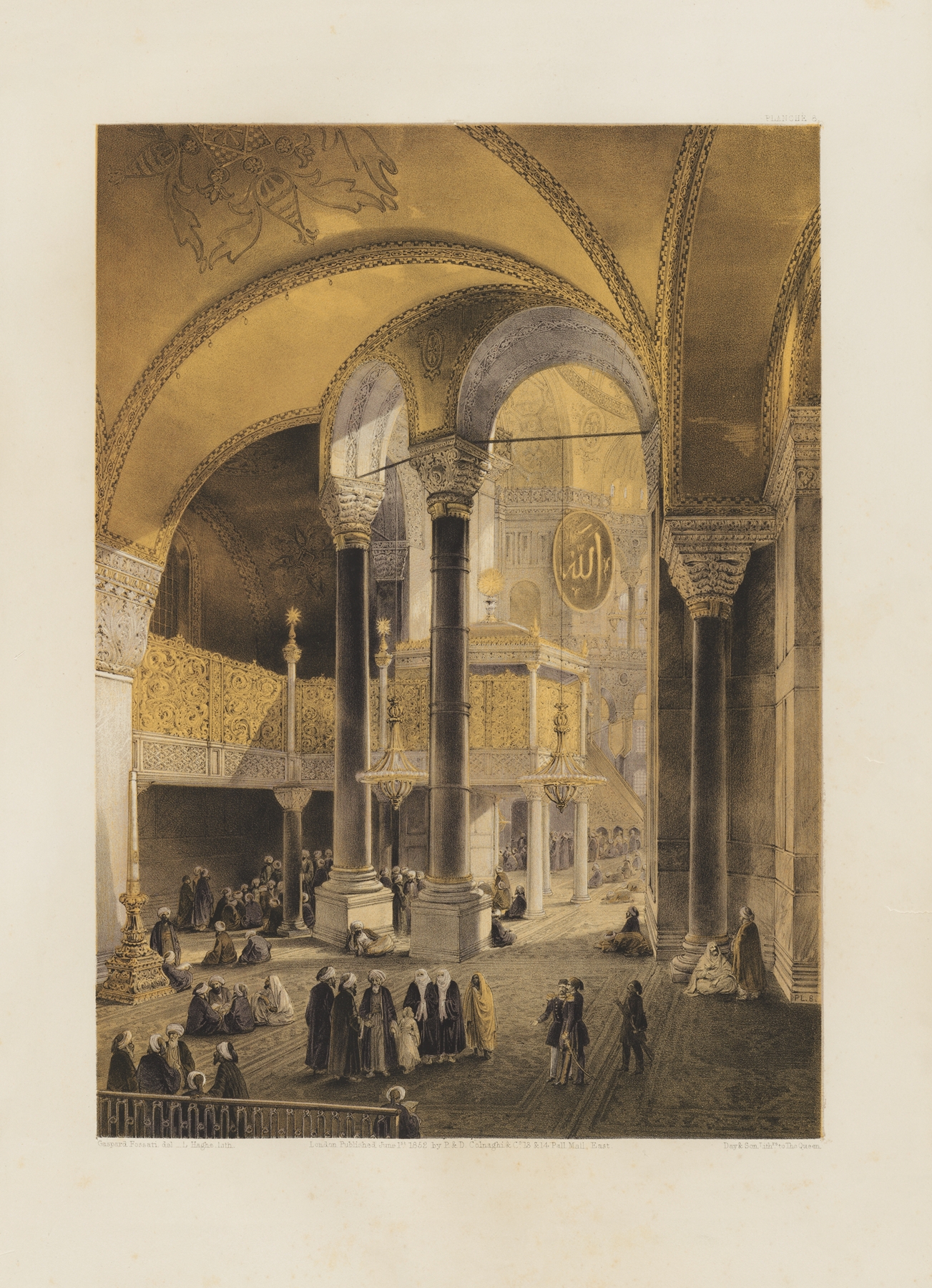
“Every brushstroke is a heartbeat remembered.” In the stillness of a dream, the majestic Aya Sofia emerges, not just as a monument of stone, but as a vessel of history and spirit. It beckons the viewer to delve into the layers of time, inviting an exploration of its once-treasured beauty. Look to the center, where the grand dome rises like a whisper against a backdrop of cerulean skies. The warm glow of sunlight spills through the windows, casting intricate patterns on the marble floors below.
Notice how the colors — ochres, deep blues, and warm golds — meld together, creating an atmosphere that is both reverent and alive. Every detail, from the ornate mosaics to the graceful arches, speaks of restoration and rebirth, a testament to the enduring allure of this architectural wonder. Yet, amid the awe-inspiring beauty lies a poignant contrast: the remnants of a forgotten past intertwine with the vibrancy of new life. The harmonious blend of Christian and Islamic elements reflects a tapestry of faith and culture, urging us to ponder the coexistence of these identities in a city that has seen centuries of change.
The gentle brushstrokes evoke nostalgia, allowing us to feel the breaths of countless worshippers and dreamers who found solace within these walls. Gaspare Fossati painted this remarkable work in 1852, during a time when the Ottoman Empire was grappling with modernization and the preservation of its rich heritage. As a prominent scene in Constantinople, the Aya Sofia was undergoing restoration under the orders of Sultan Abdul-Medjid II, marking a pivotal moment in the preservation of cultural memory. Fossati, a Swiss painter and architect, was deeply invested in capturing the essence of this iconic structure, seeking to bridge the past and present through his art.