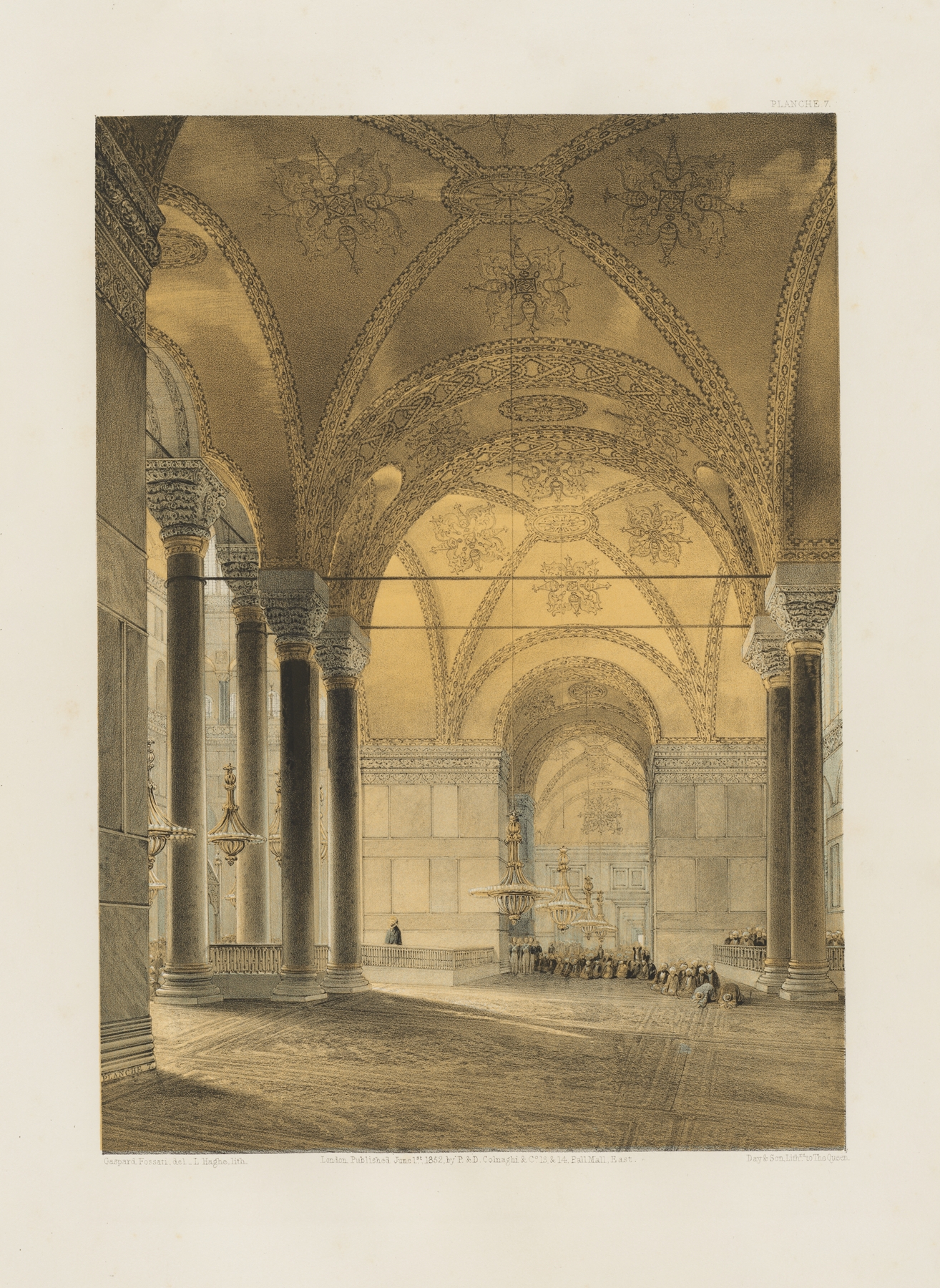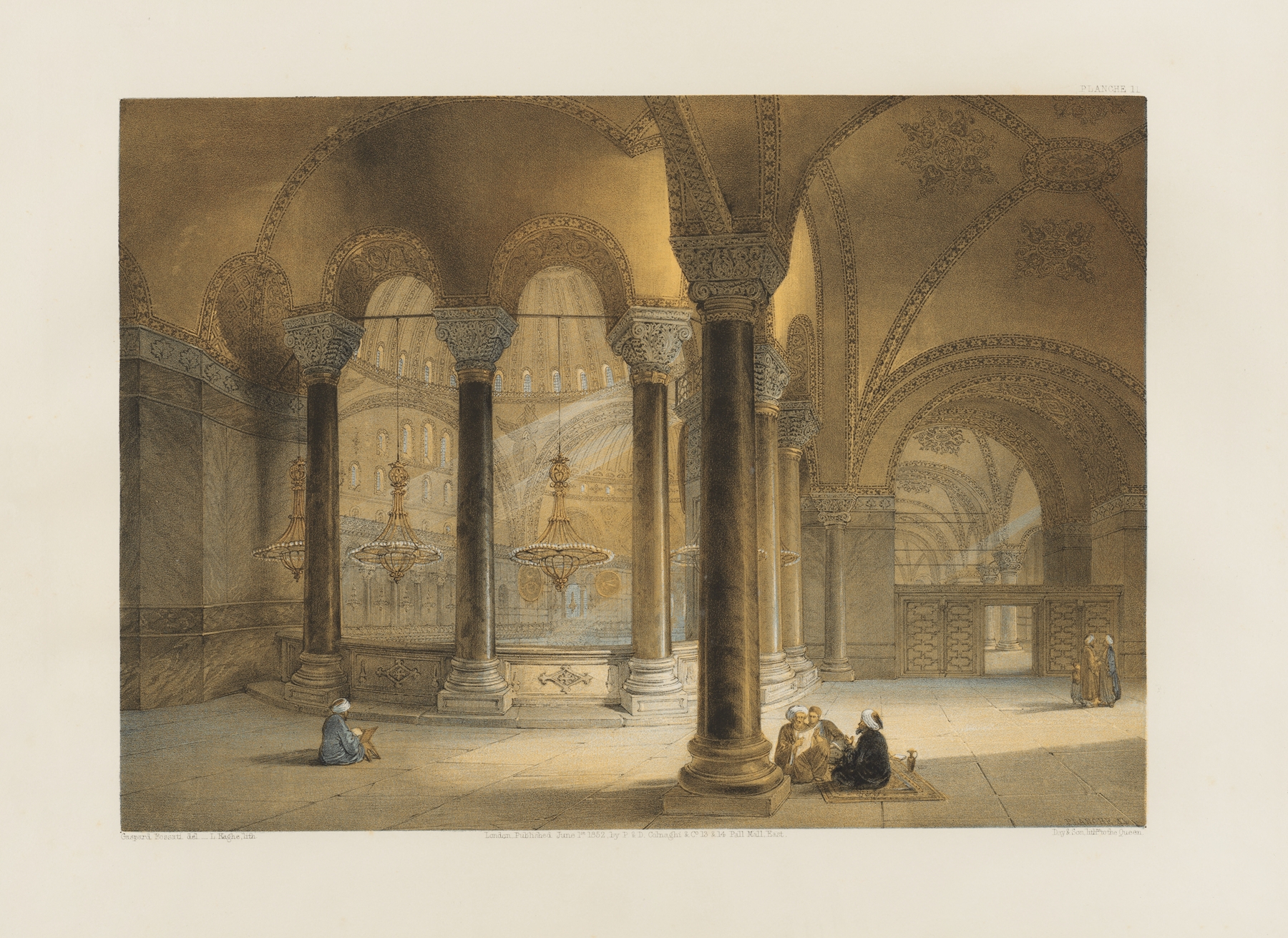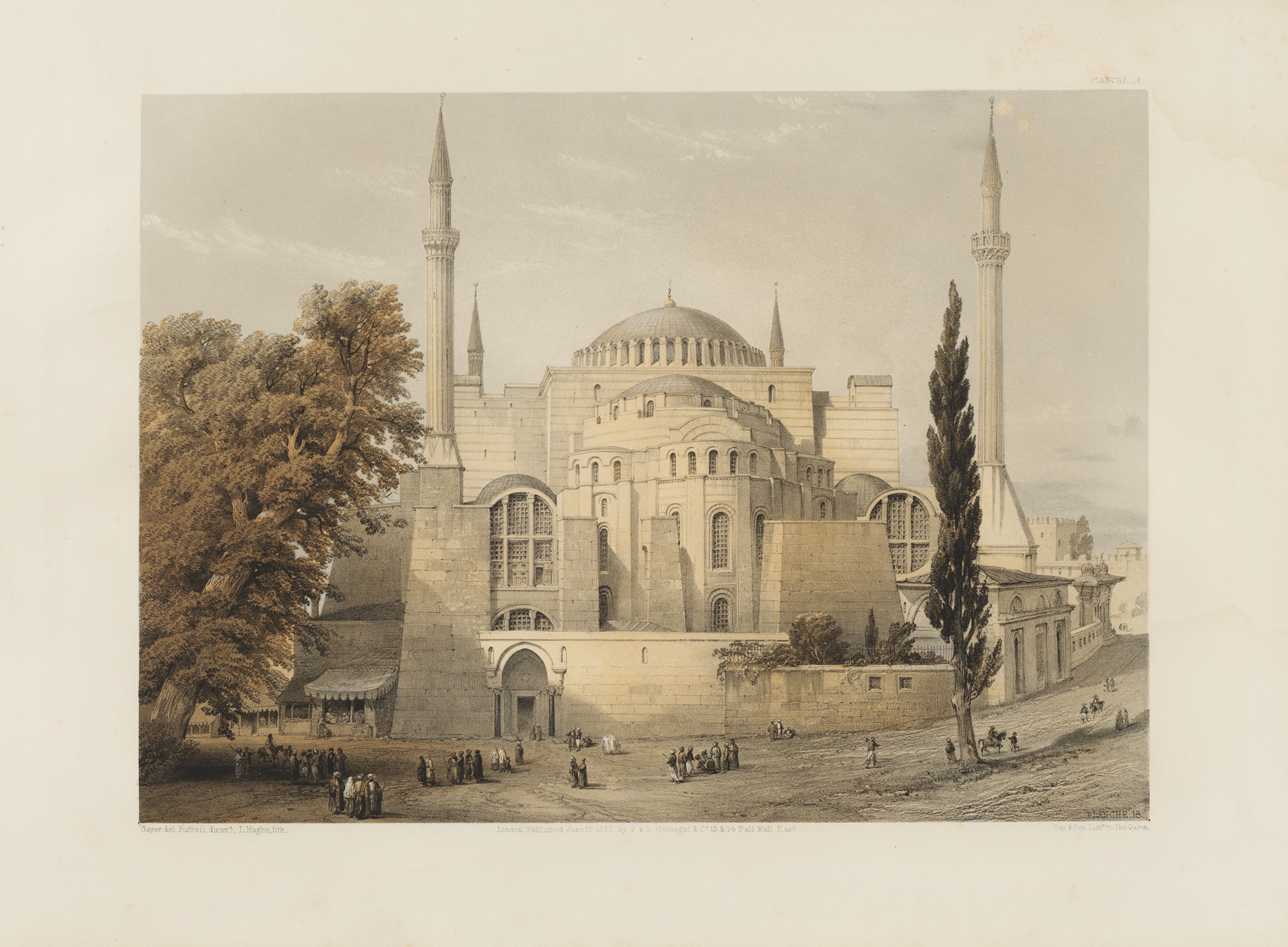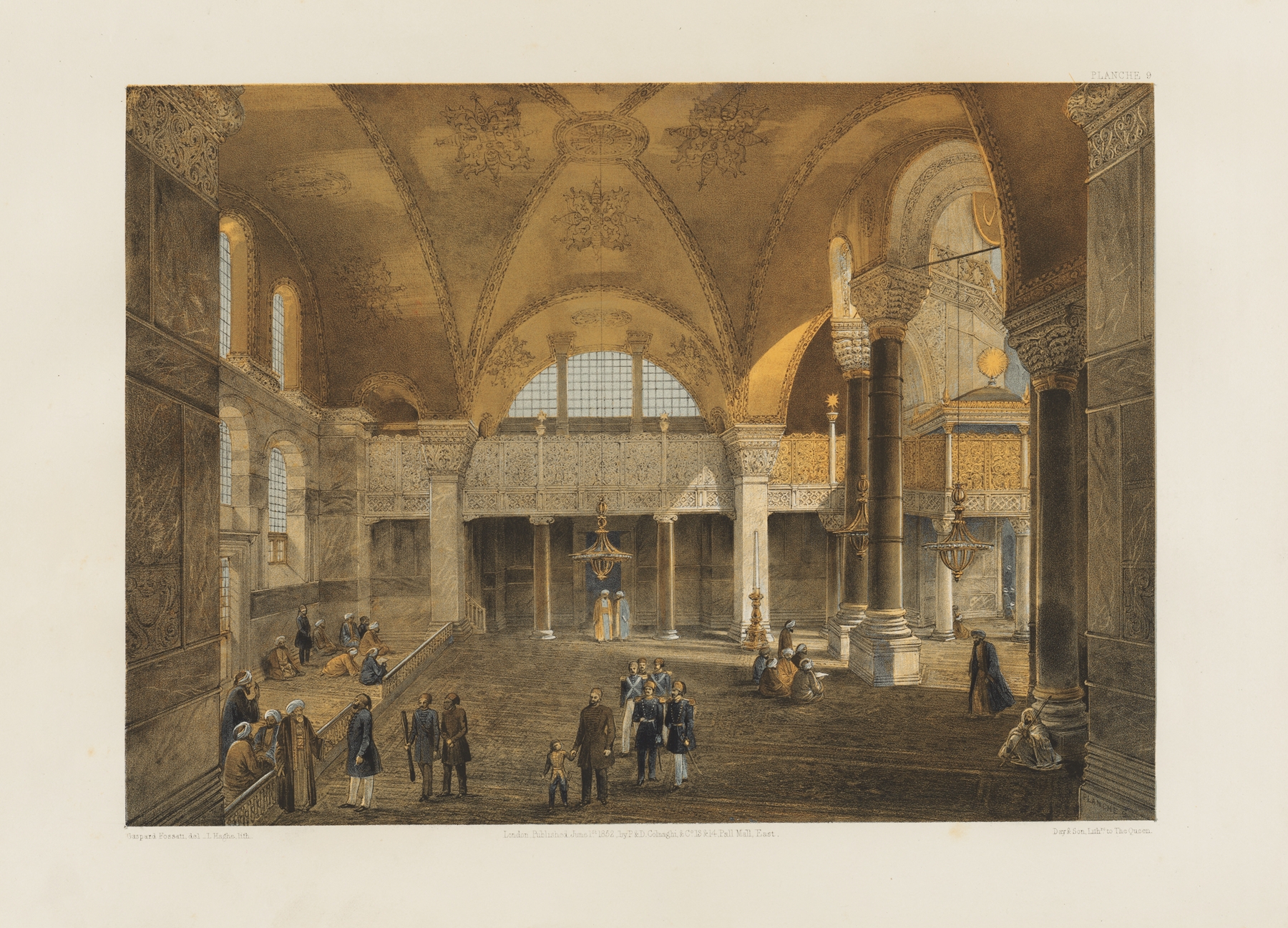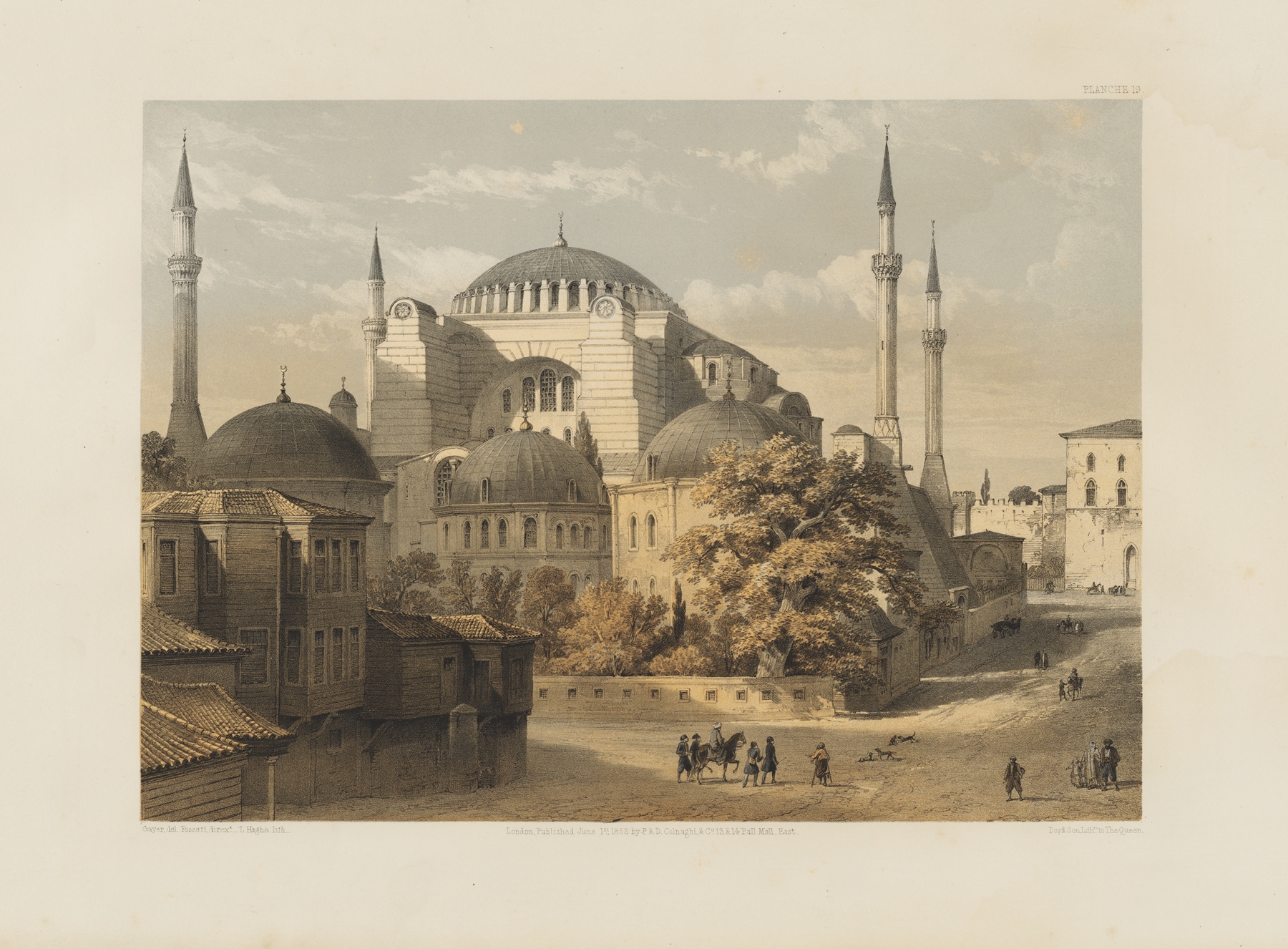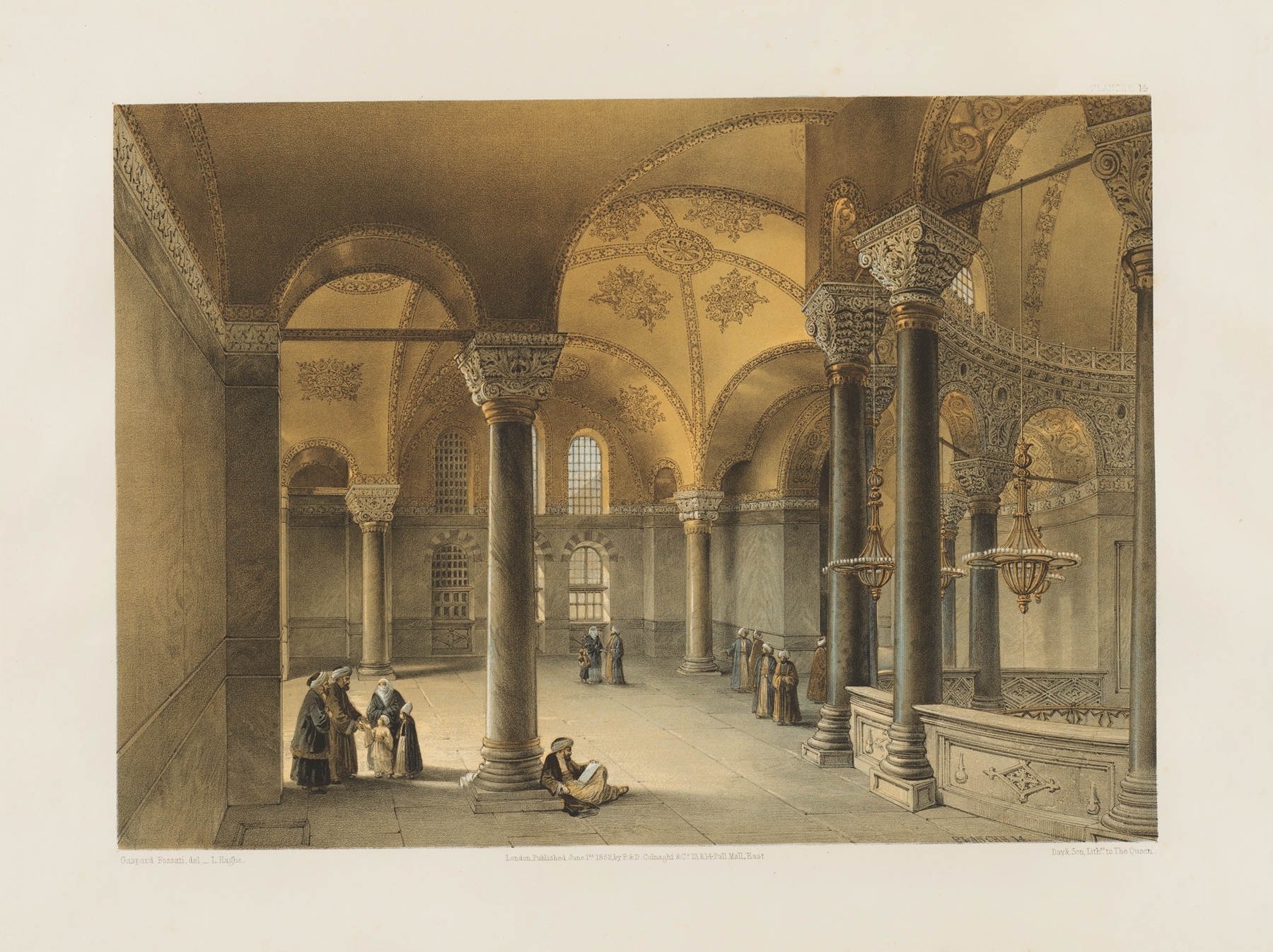
Aya Sofia, Constantinople; as recently restored by order of H. M. the sultan Abdul-Medjid Pl.14 — History & Analysis
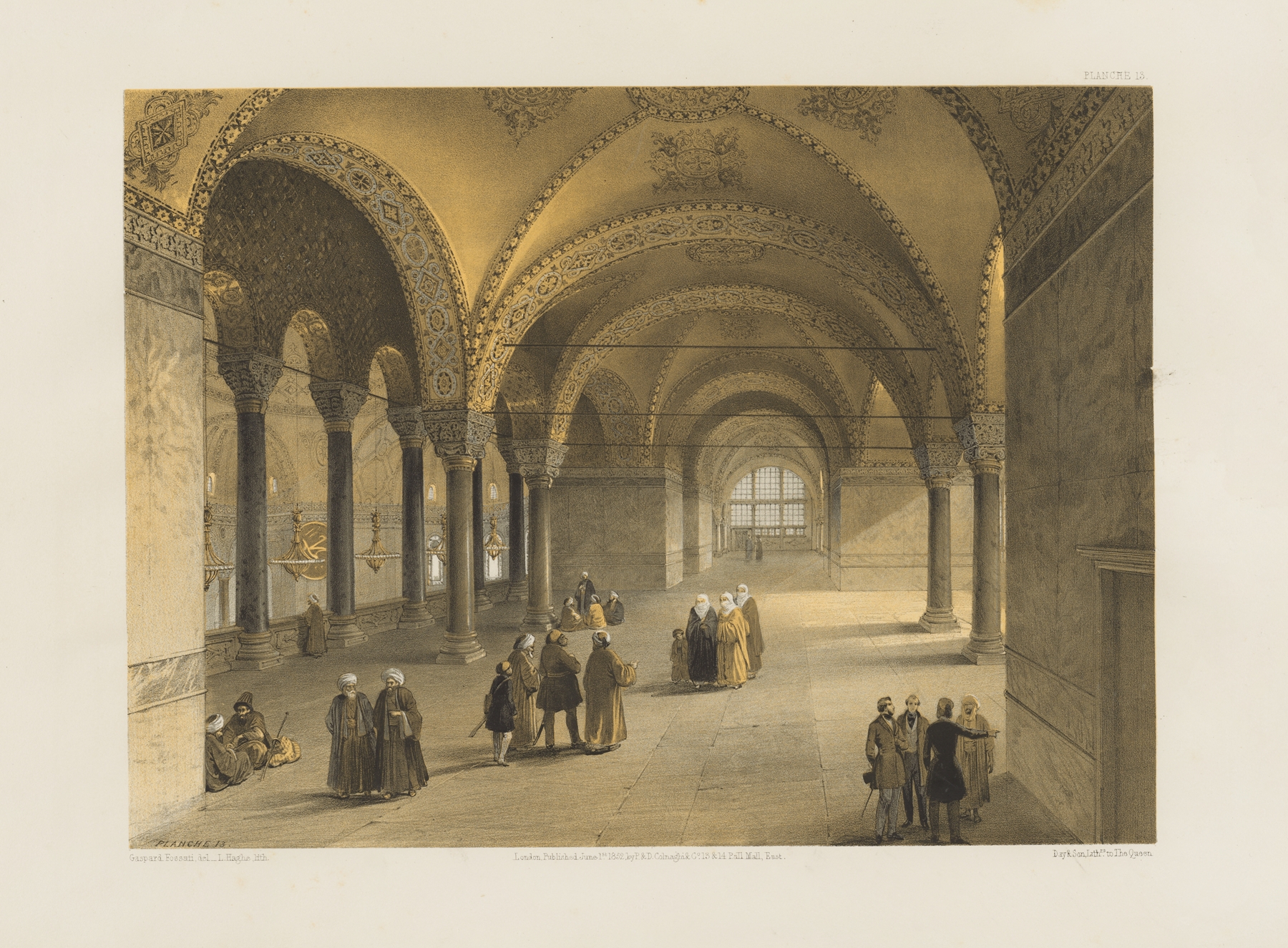
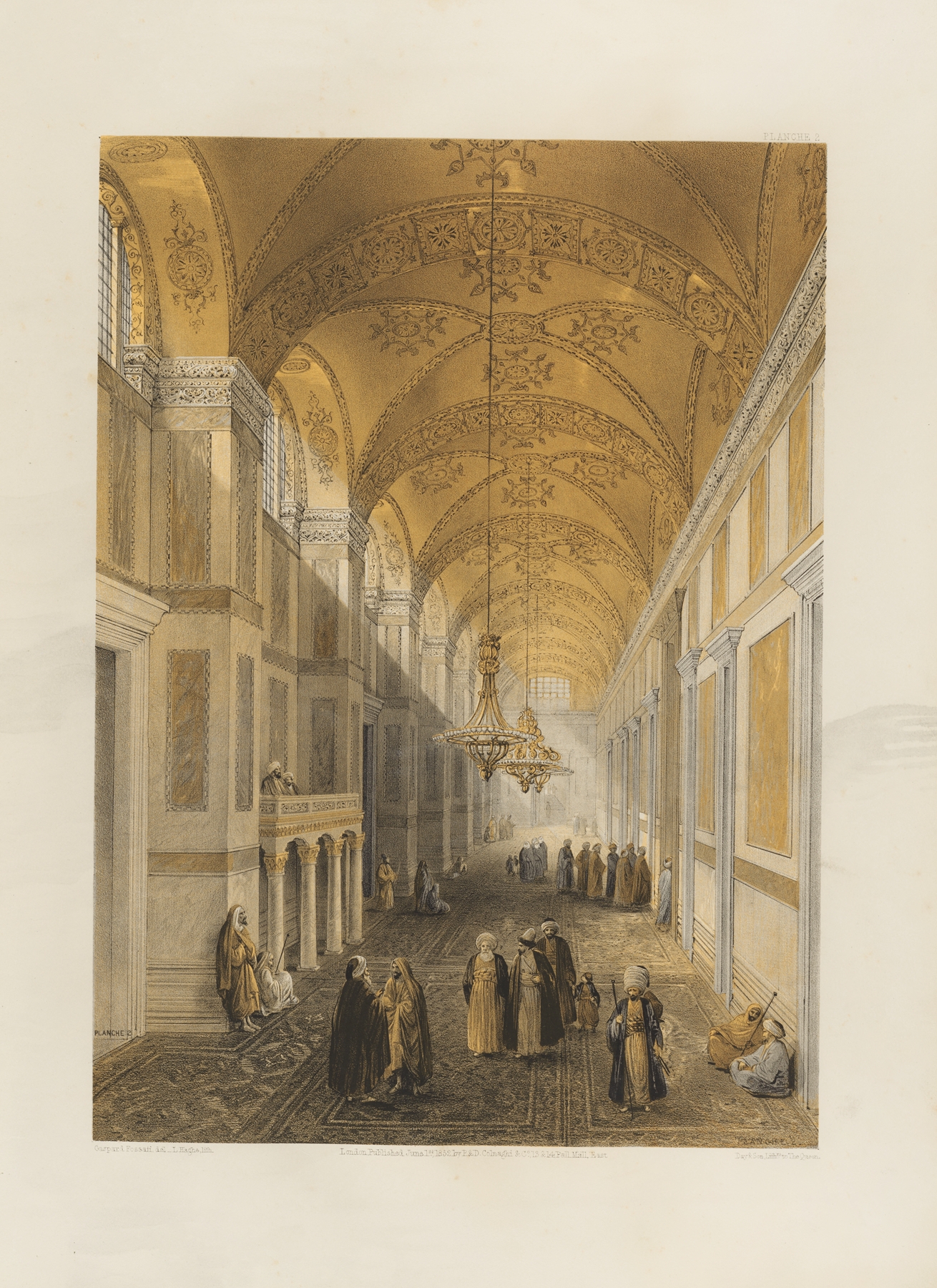
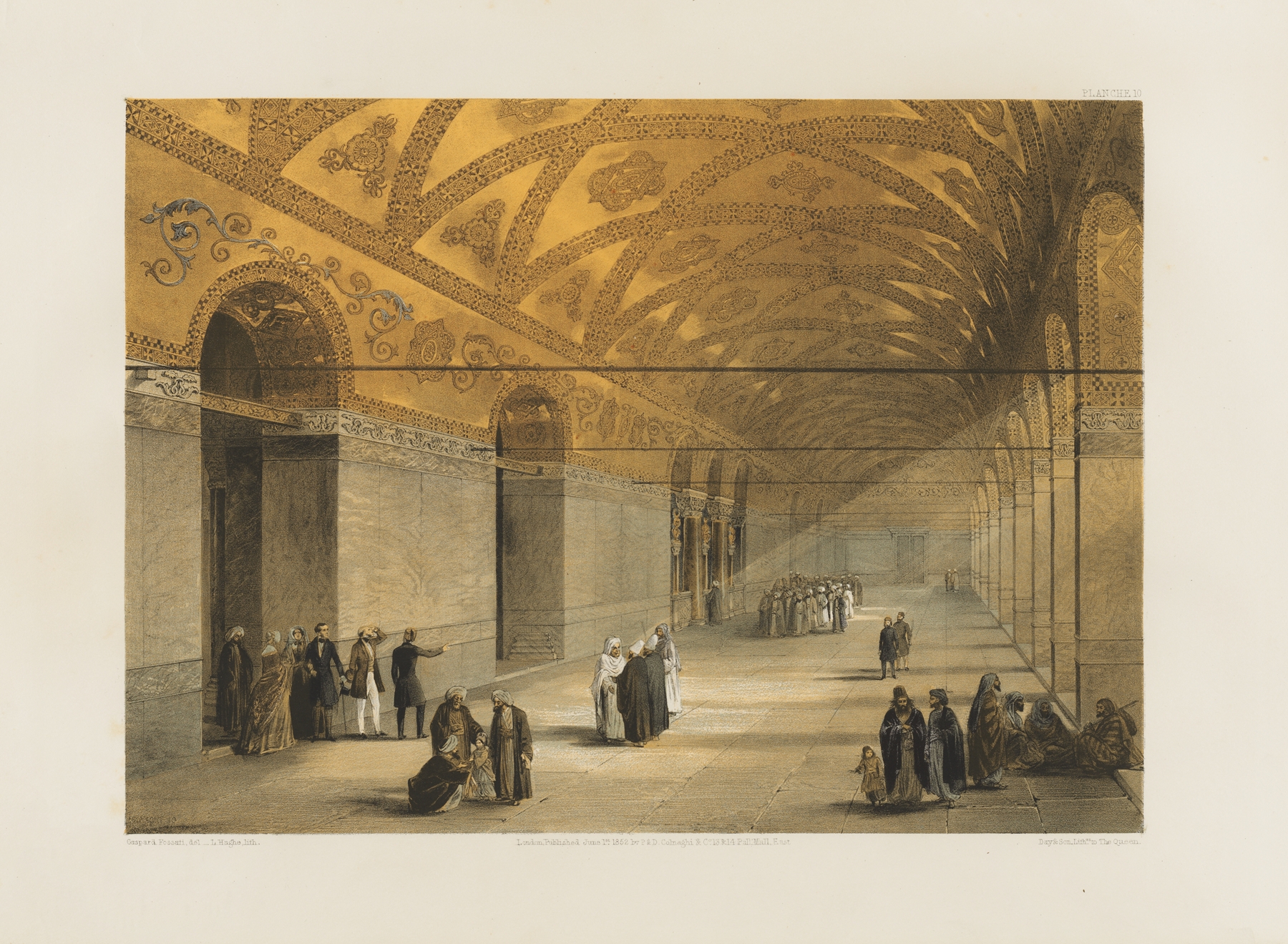
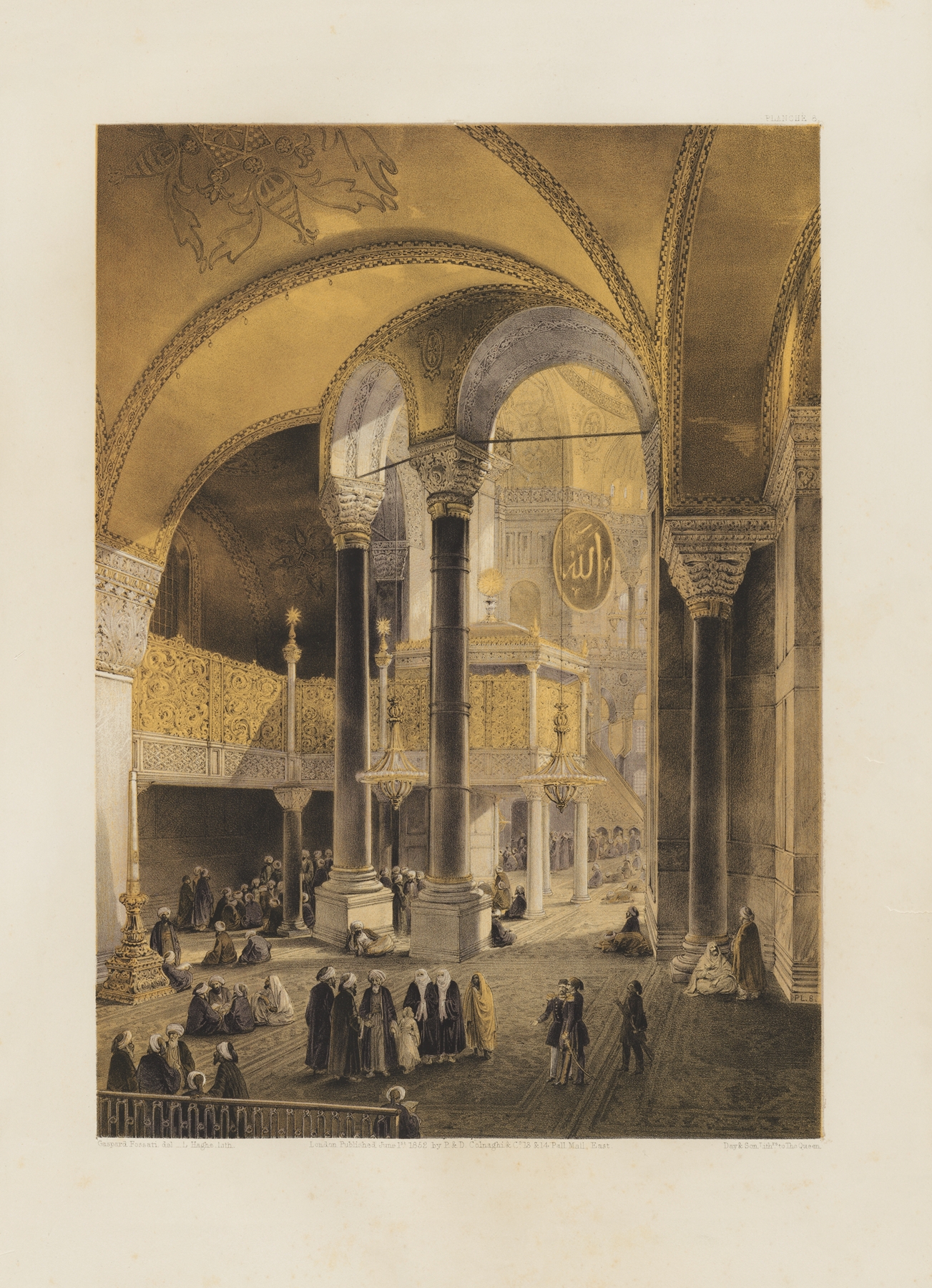
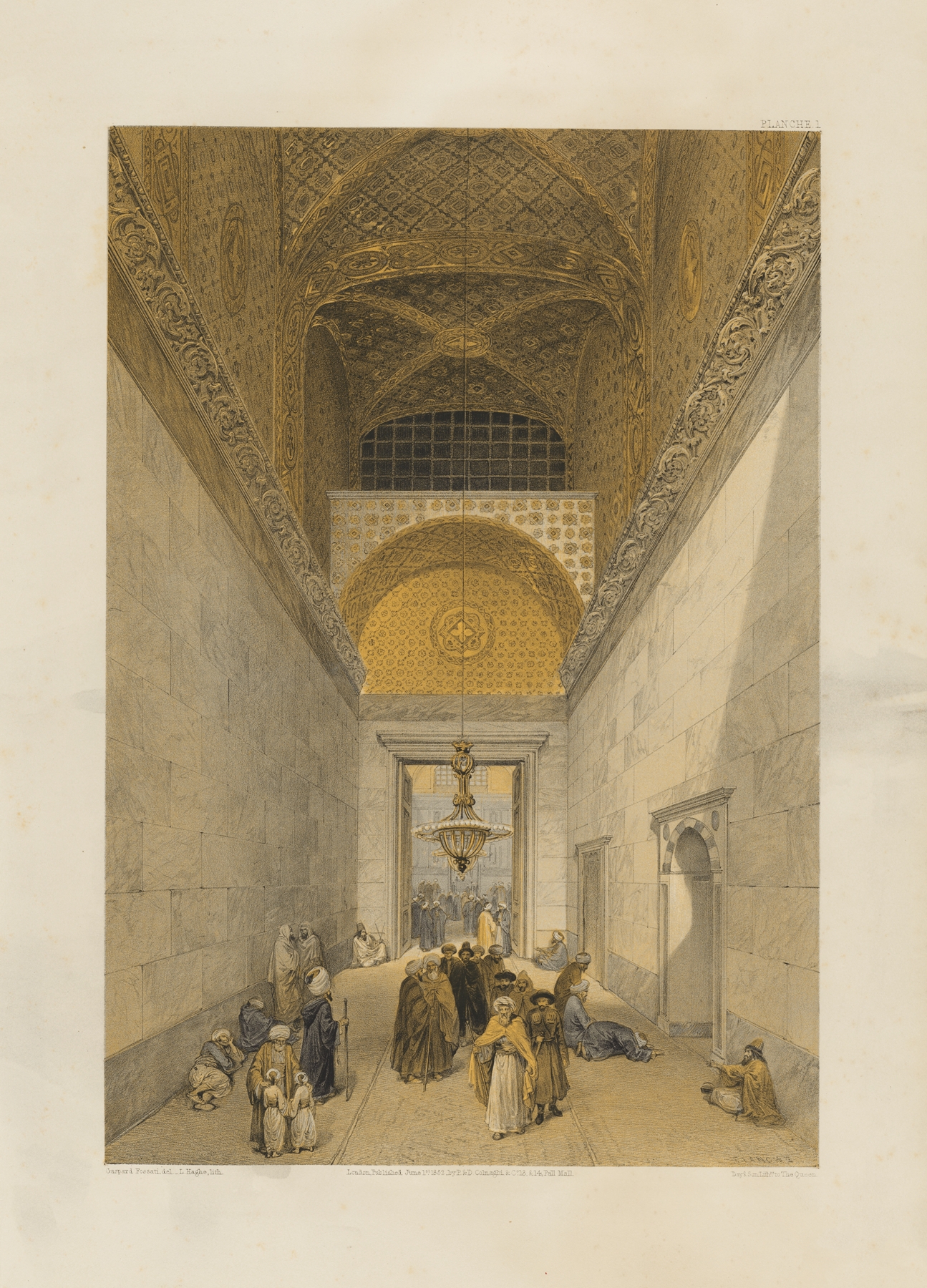
“Every brushstroke is a heartbeat remembered.” In the delicate tapestry of history, the fragility of beauty often lies in the details. Look to the right at the graceful curves of the dome, where intricate patterns intertwine, each line a whisper of centuries past. The soft glow of light filters through the windows, casting ethereal shadows that play across the ornate marble floors. Notice how the artist captures the restored brilliance of the walls, their colors vibrating with life yet echoing the passage of time.
The composition draws the eye upwards, inviting contemplation of the heavens and evoking the weight of cultural significance embedded within this architectural marvel. Beneath the surface, the artwork resonates with emotional tension. The juxtaposition of restoration and decay speaks to the impermanence of human achievements—the struggle to preserve what time seeks to erode. This is not just a depiction of a physical space but a meditation on memory and loss, as every element reflects the collective yearning to hold onto the past.
The interplay of light and shadow underscores a deeper narrative, one of resilience amid the fragility of existence. Gaspare Fossati painted this piece in 1852 during a time when Constantinople was undergoing significant transformations under Sultan Abdul-Medjid. As the empire sought to modernize and restore its architectural heritage, Fossati was tasked with documenting these efforts. The intricate interplay of East and West in this artwork mirrors the broader shifts occurring within both the artist's life and the evolving landscape of art at that time, merging tradition with the aspirations of a new era.