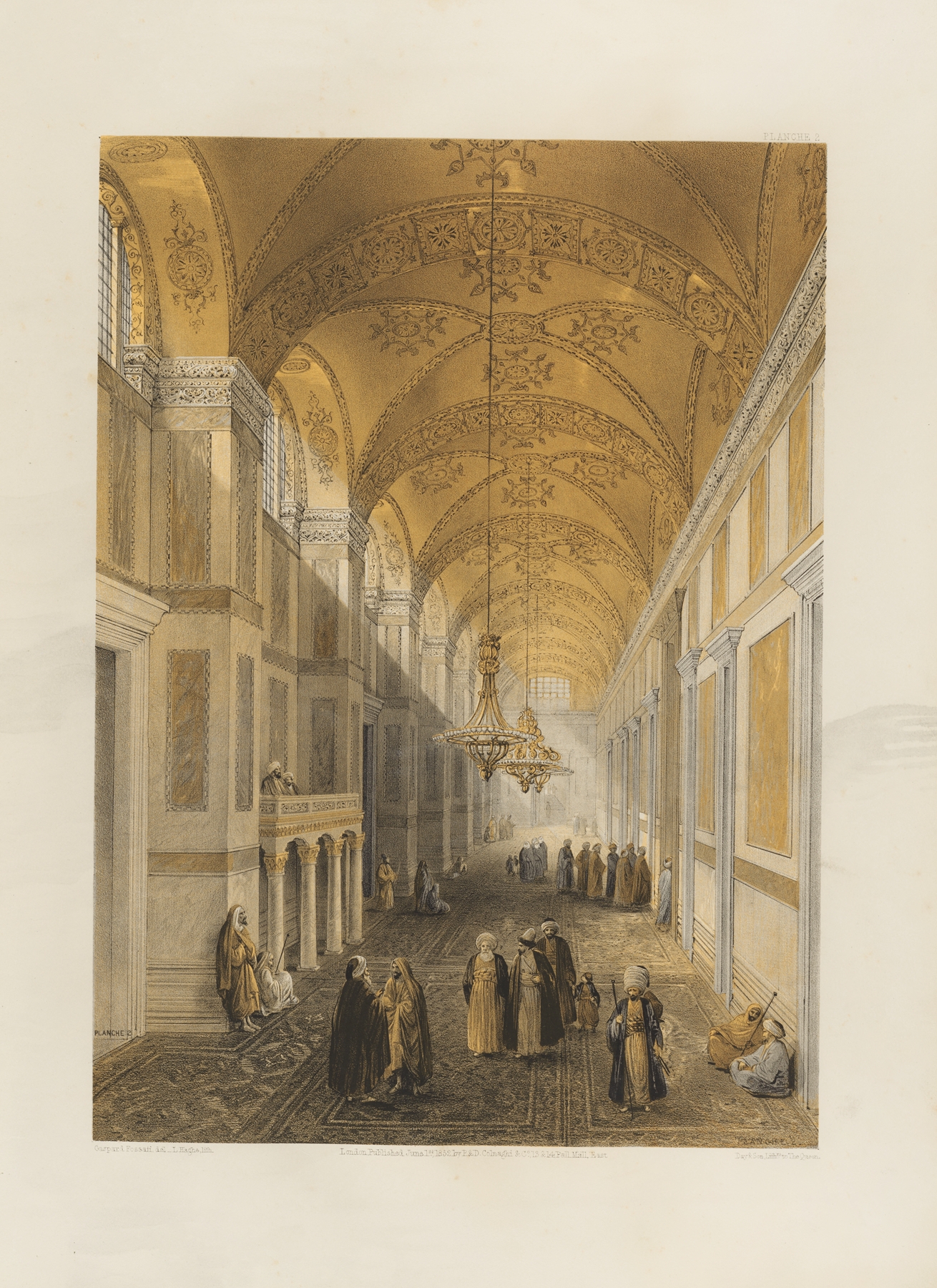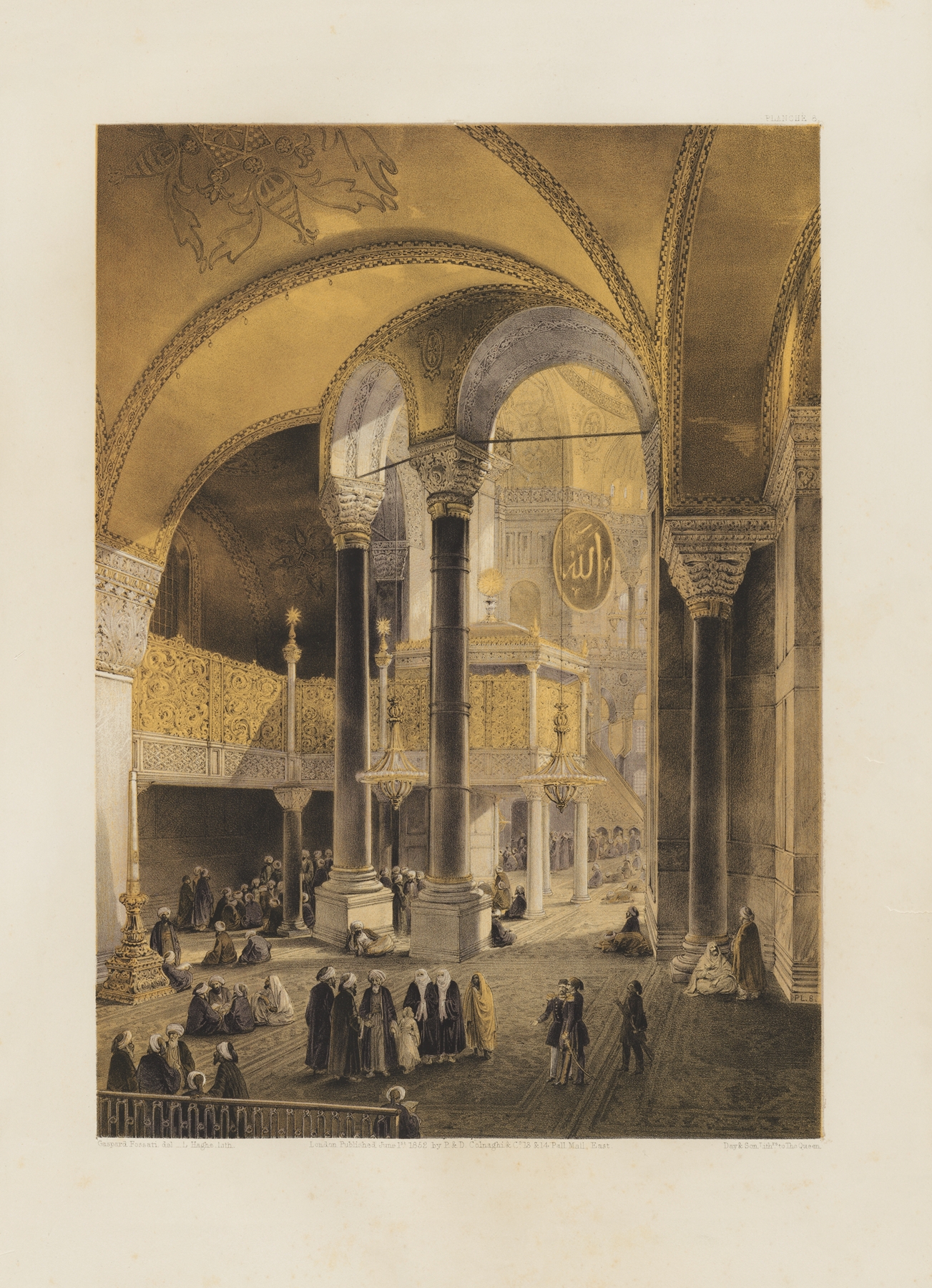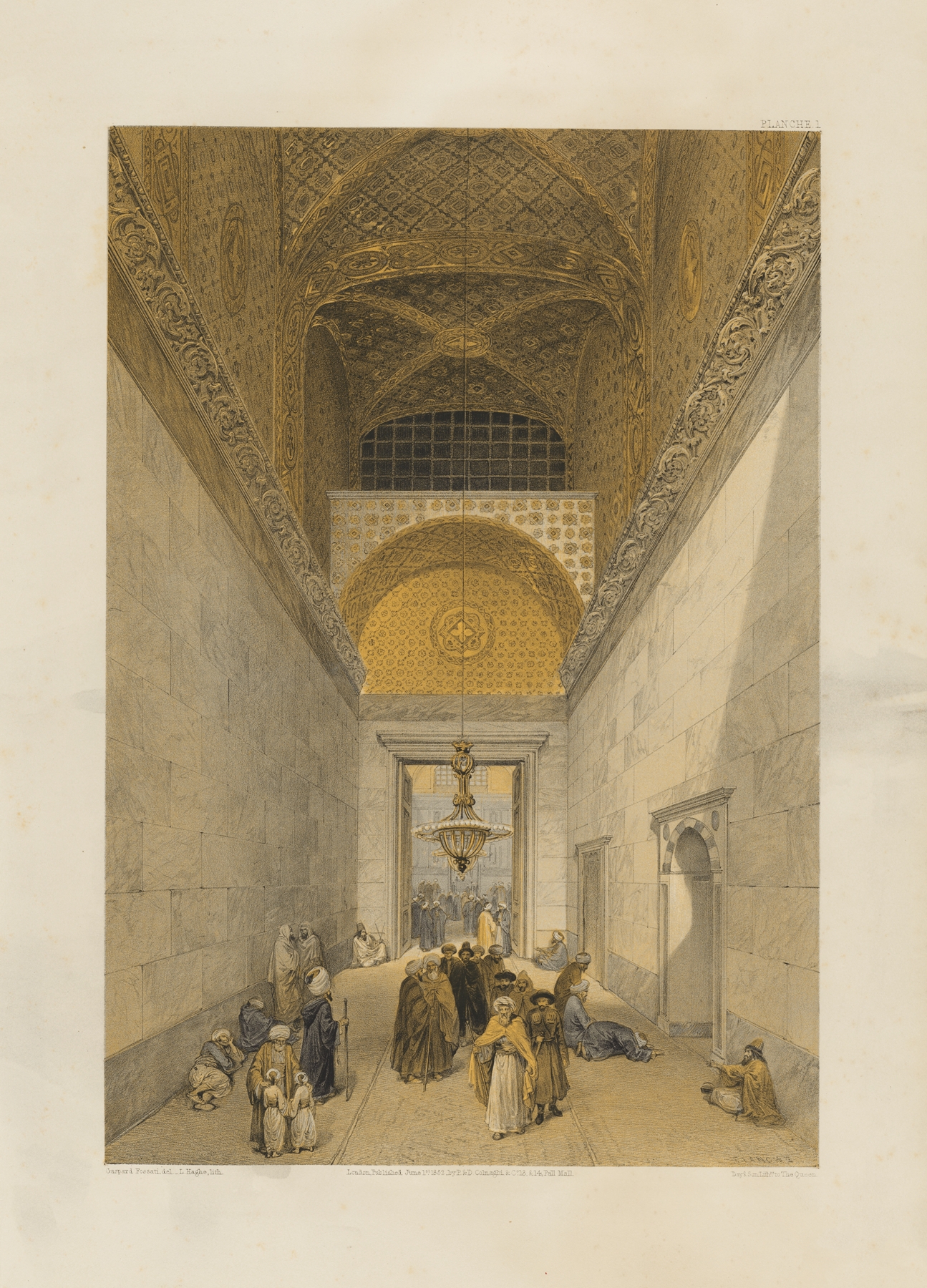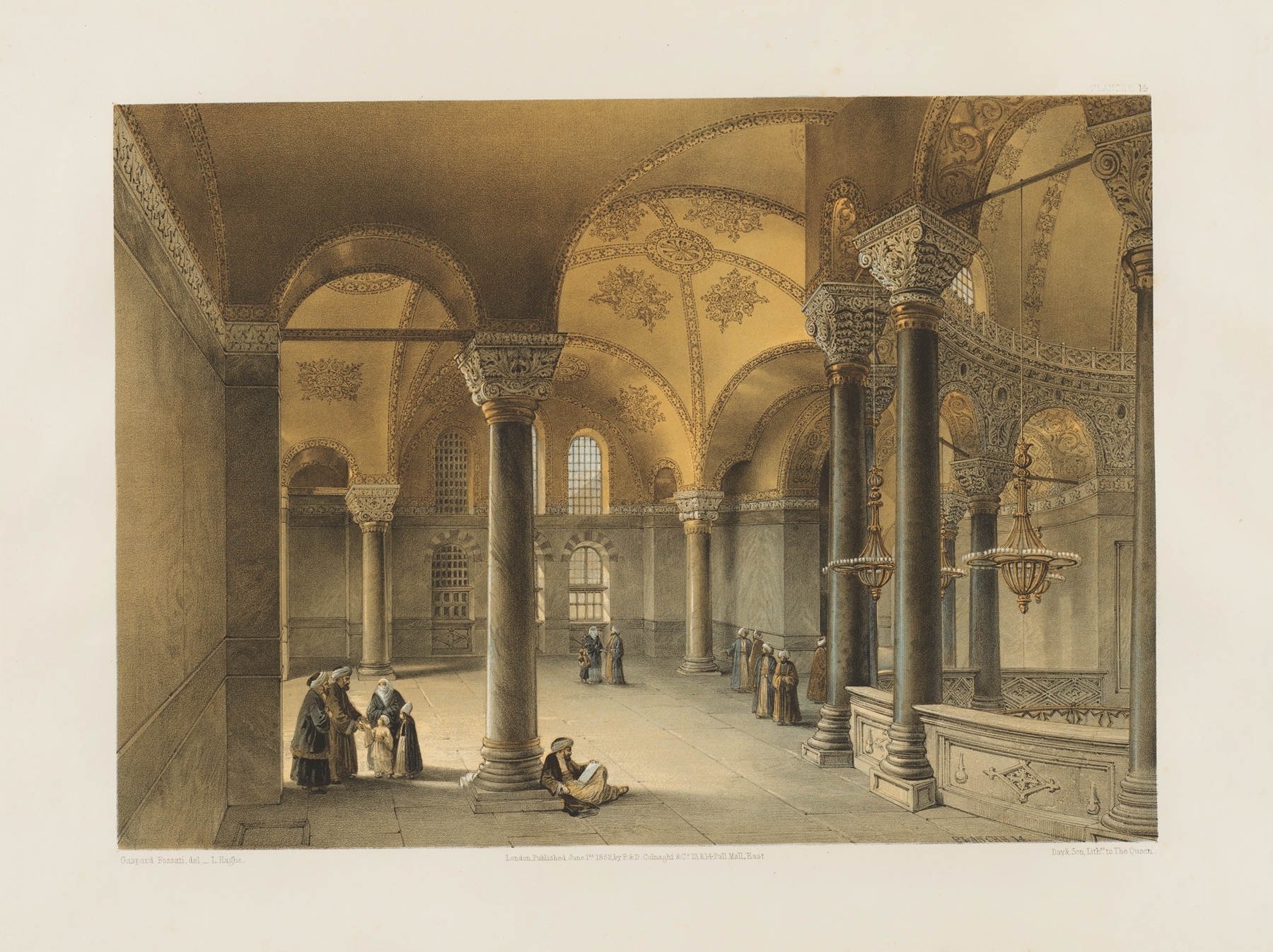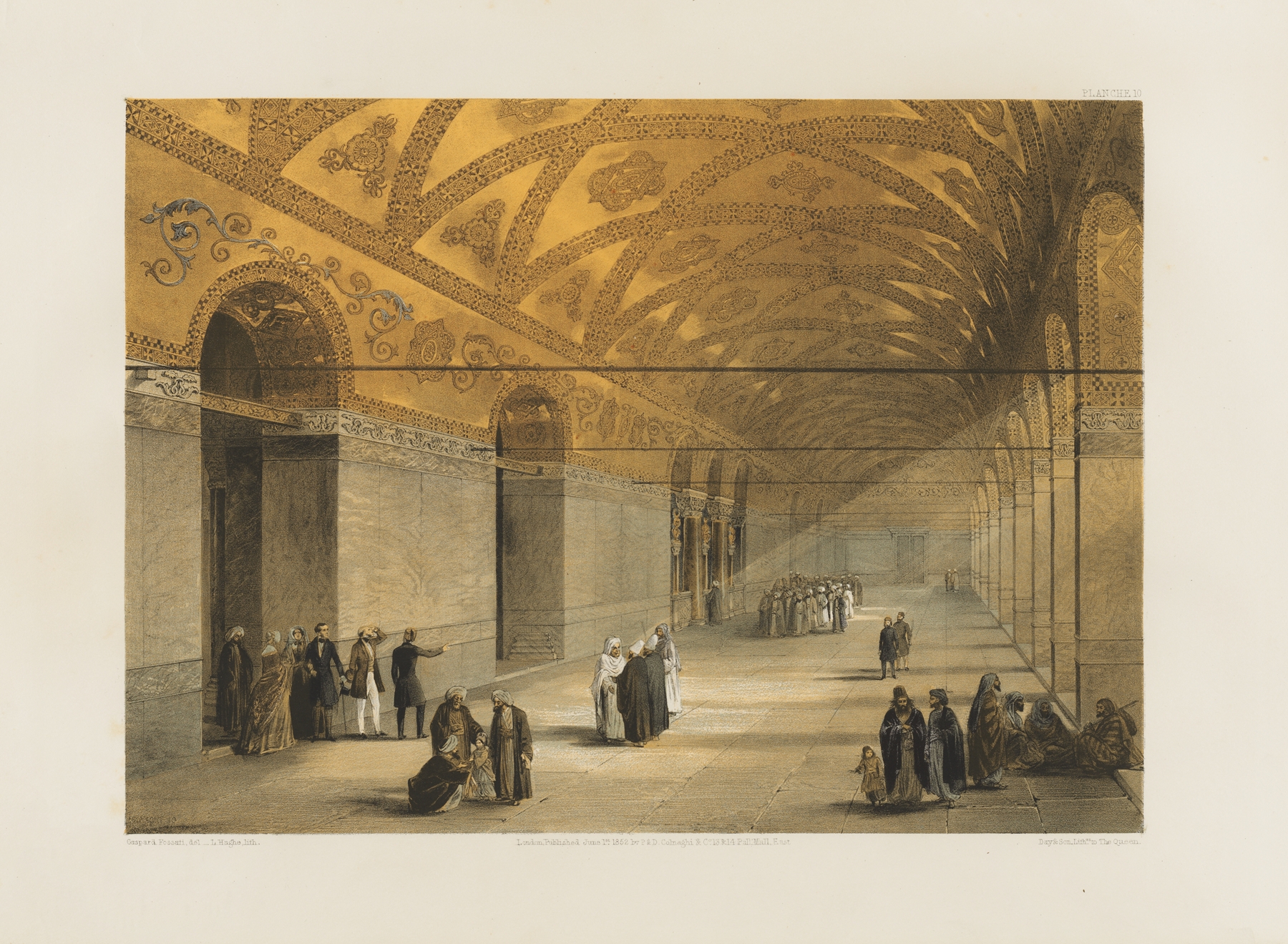
Aya Sofia, Constantinople; as recently restored by order of H. M. the sultan Abdul-Medjid Pl.10 — History & Analysis
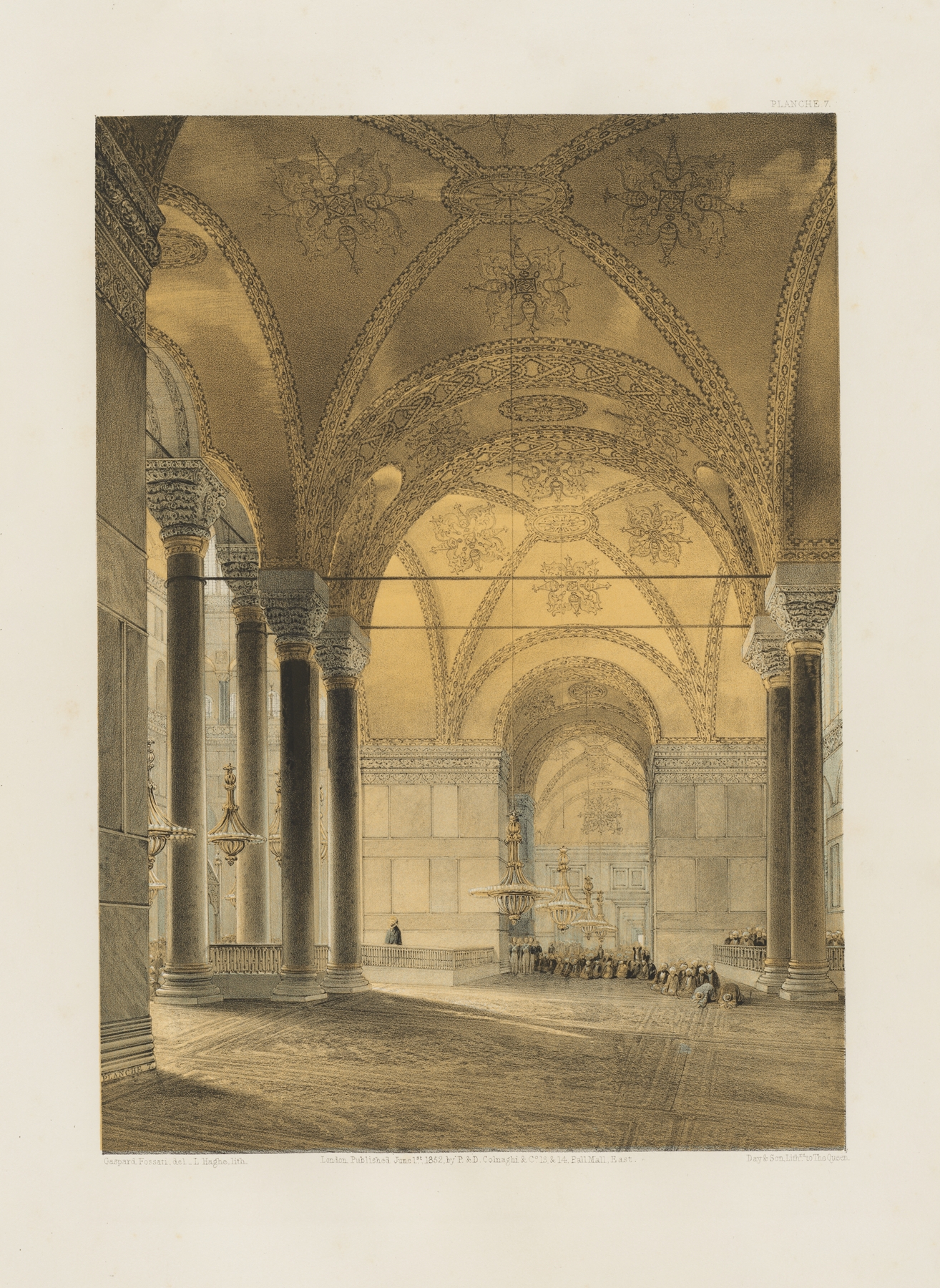
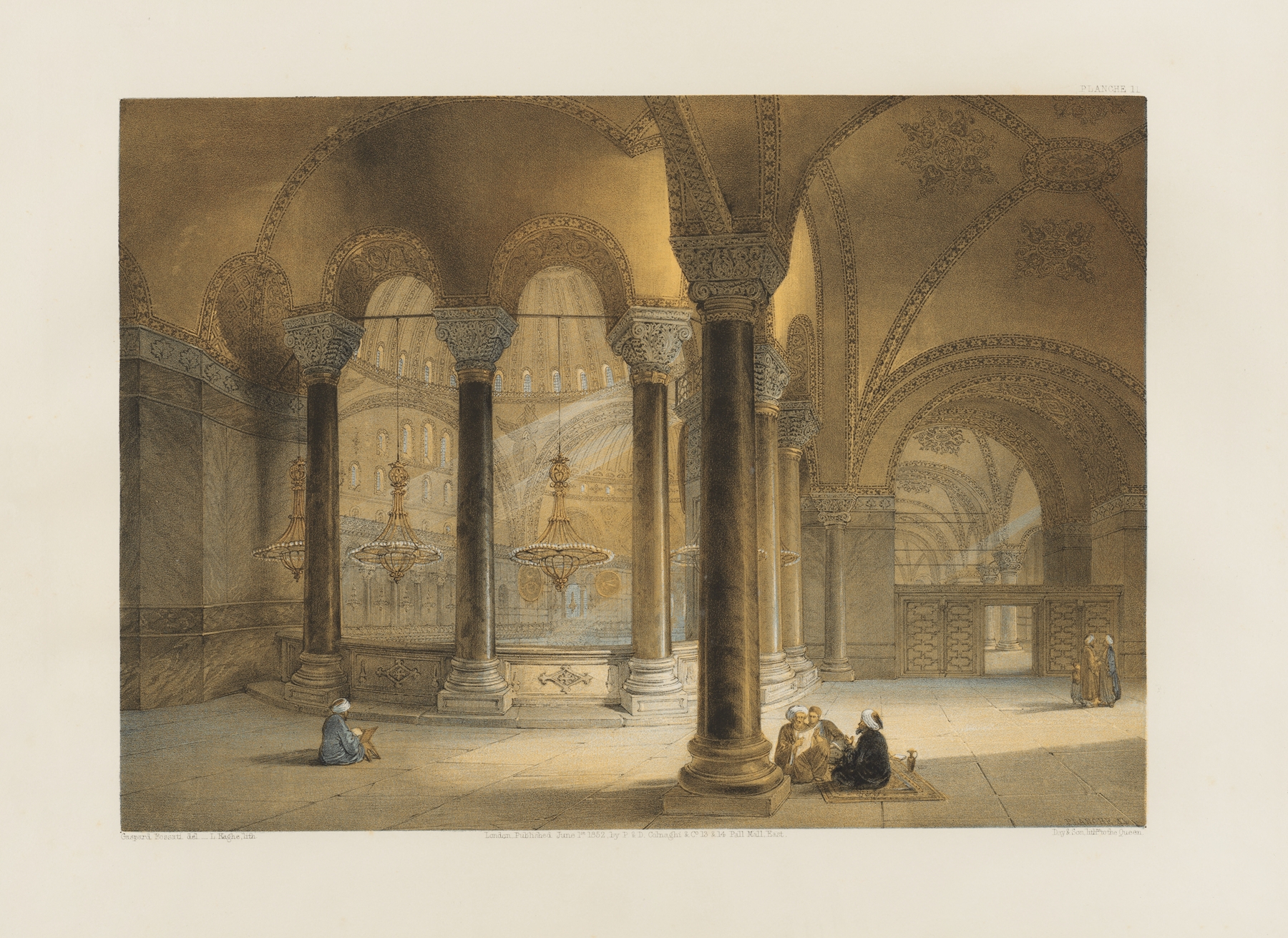
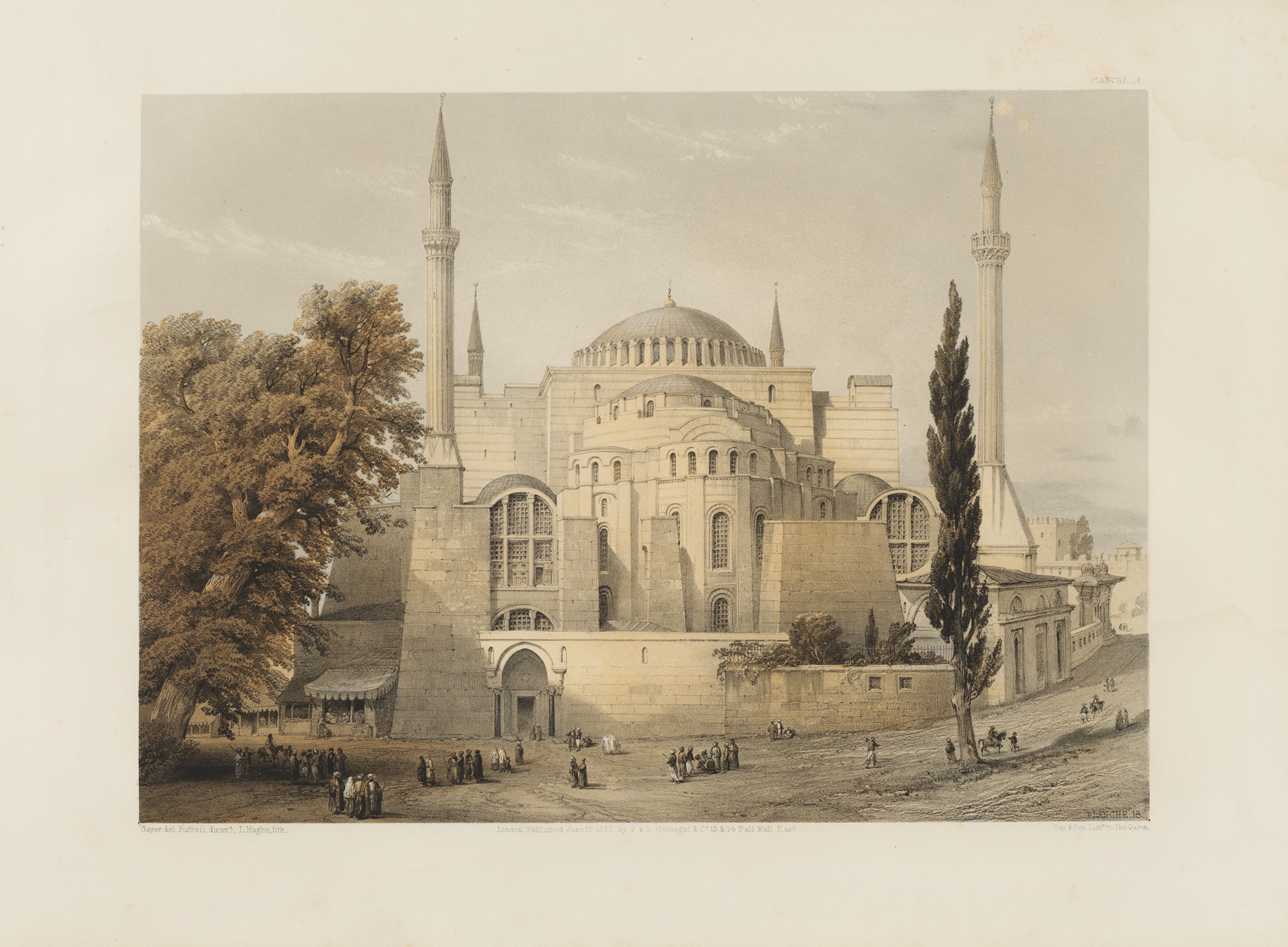
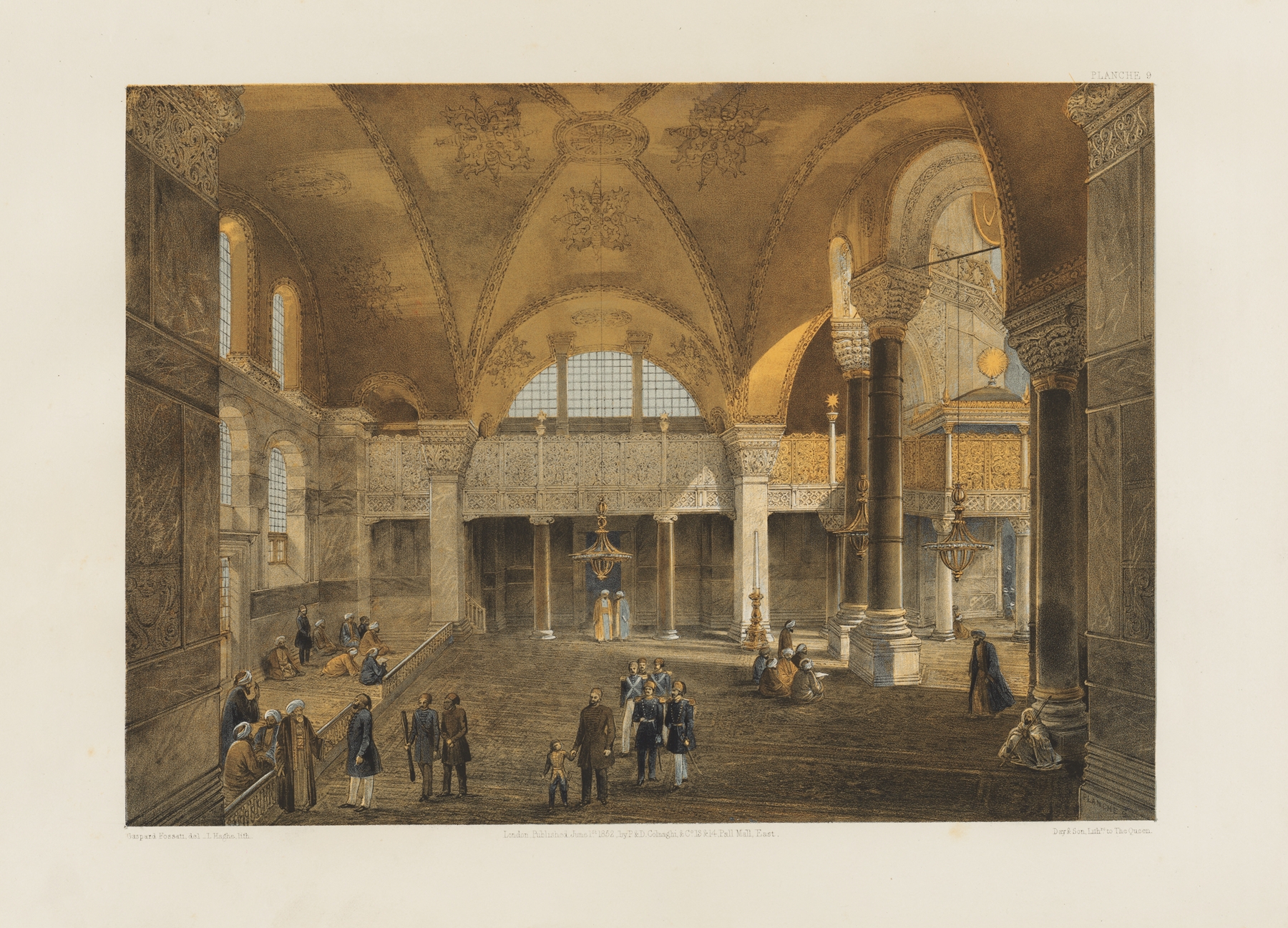
Can paint confess what words never could? Within the luminous confines of Aya Sofia, a dreamscape unfolds, where the ethereal whispers of history linger in the air. Look to the center, where the grand dome rises majestically, intricately adorned with golden mosaics that shimmer under the gentle caress of light streaming through the vast windows. Notice how Fossati captures the delicate interplay of shadows and illumination, emphasizing the architectural marvel that is both a sanctuary and a testament to human aspiration.
The rich hues of blue and gold create a symphony of color, inviting the viewer to lose themselves in the reverie of this sacred space. Delve deeper into the artwork’s layers, where the contrast between the solidity of the stone structure and the fluidity of the light reveals an emotional tension. The ghosts of worshippers past seem to inhabit the air, their presence felt in the silent devotion that reverberates within the chamber. The juxtaposition of the restored beauty against the echoes of time speaks to the resilience of faith and culture, inviting contemplation on what has been lost and what has endured.
Gaspare Fossati painted Aya Sofia, Constantinople in 1852, during a period of renewal and restoration for the iconic mosque under the order of Sultan Abdul-Medjid. At this time, Fossati was deeply immersed in the vibrant world of Ottoman art and architecture, seeking to document the splendor of this historical monument. His work stands as both a record and an homage to an era of cultural convergence, capturing the essence of a city that has long been a bridge between East and West.