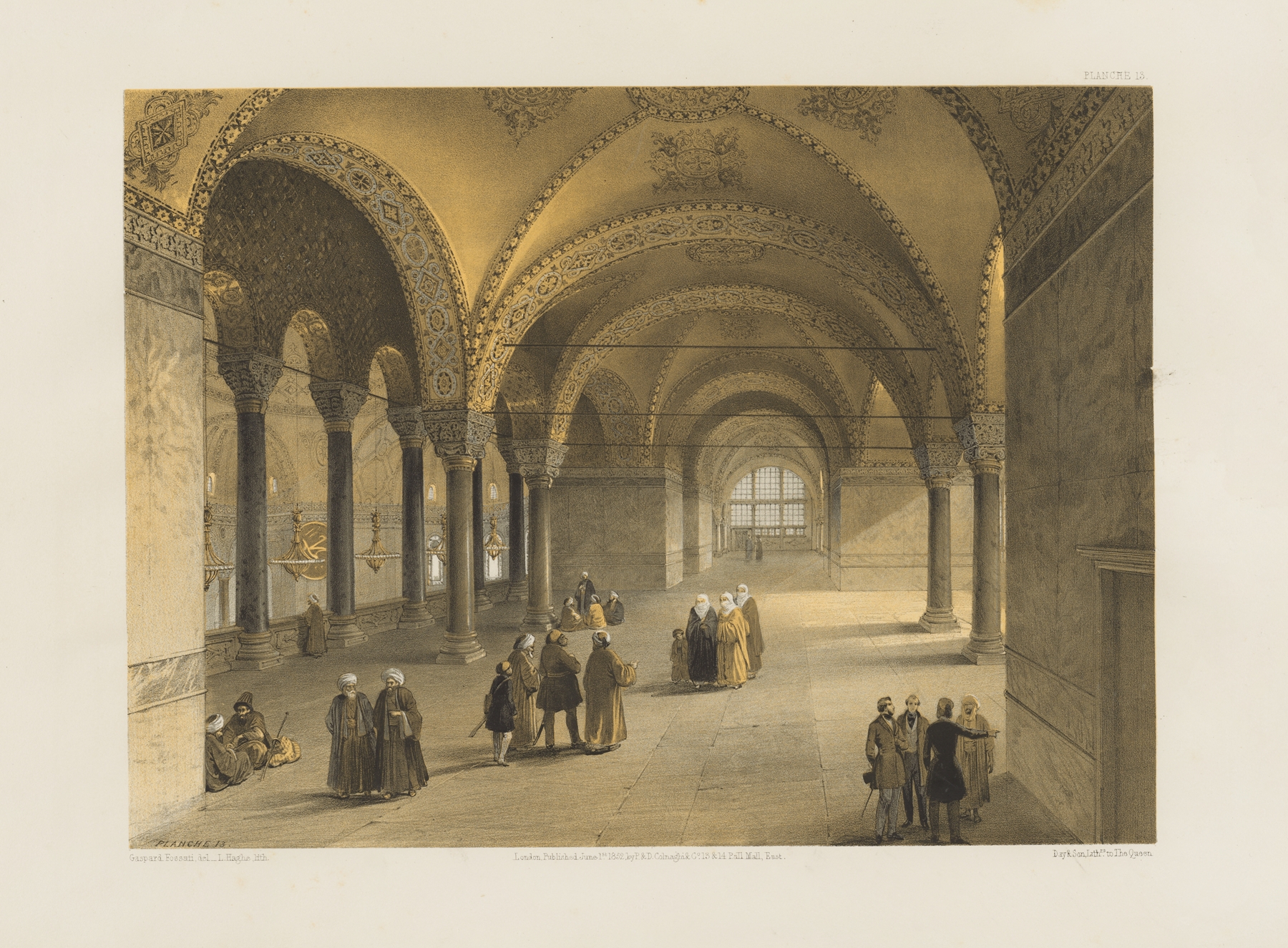
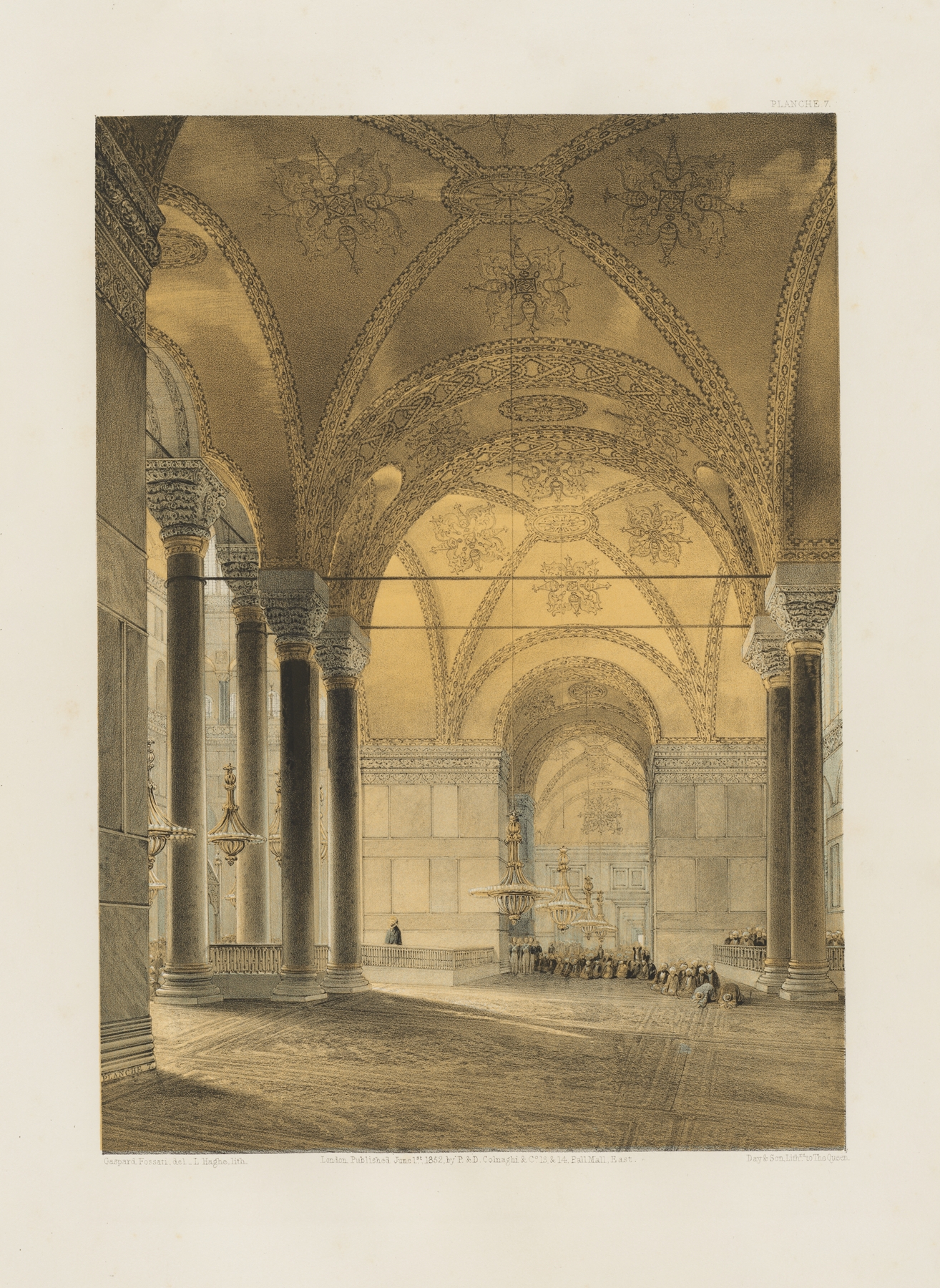
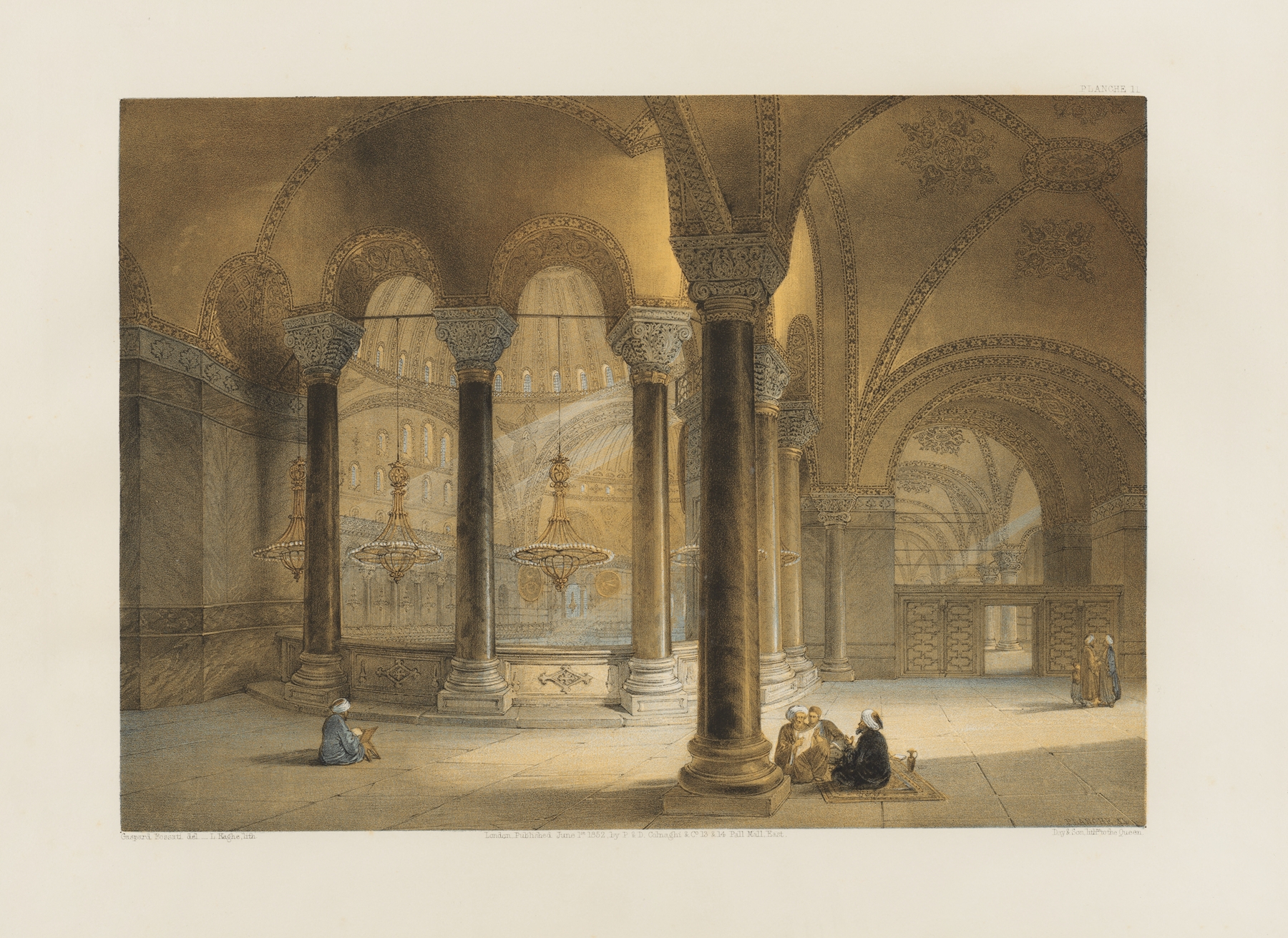
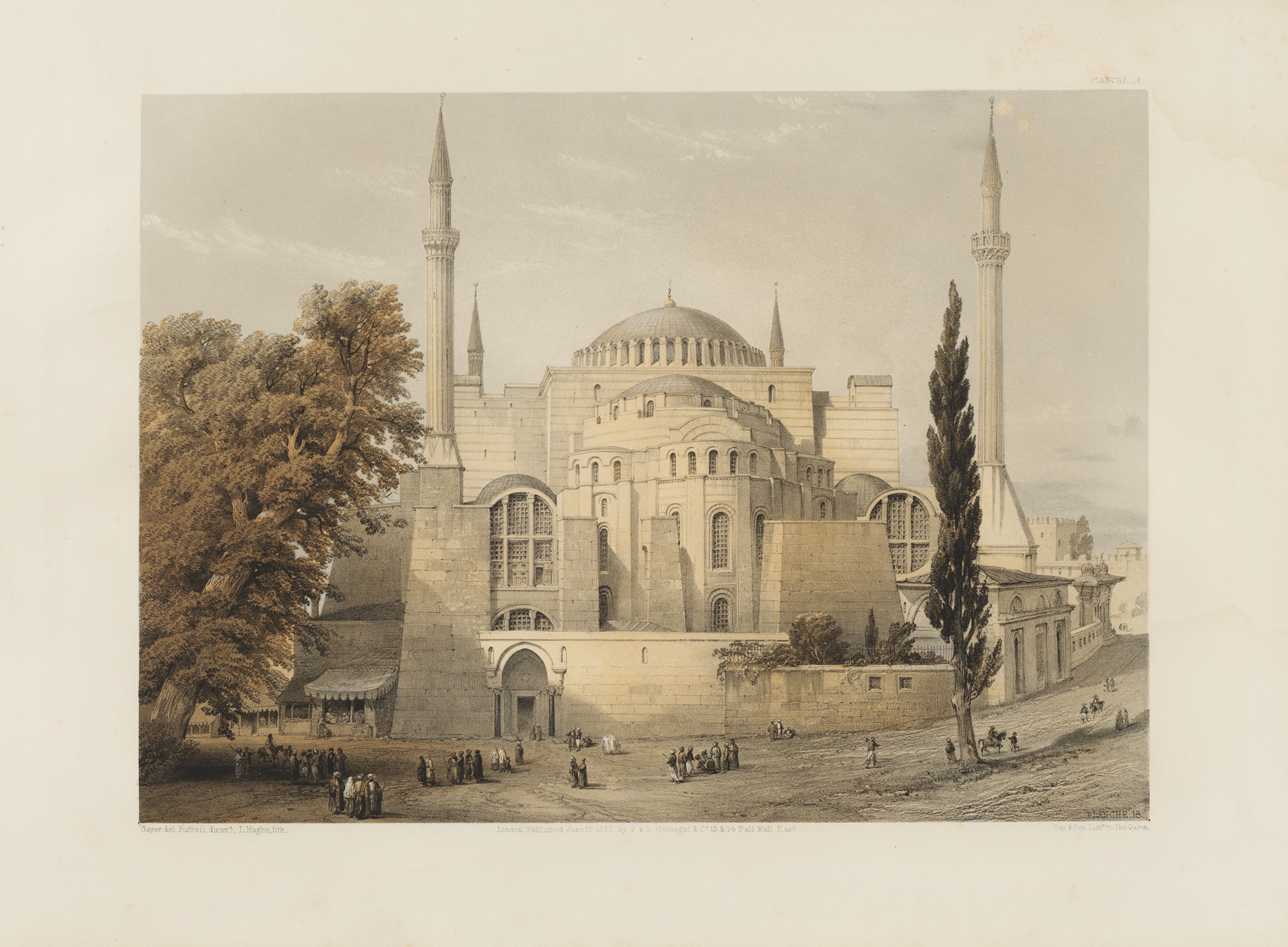
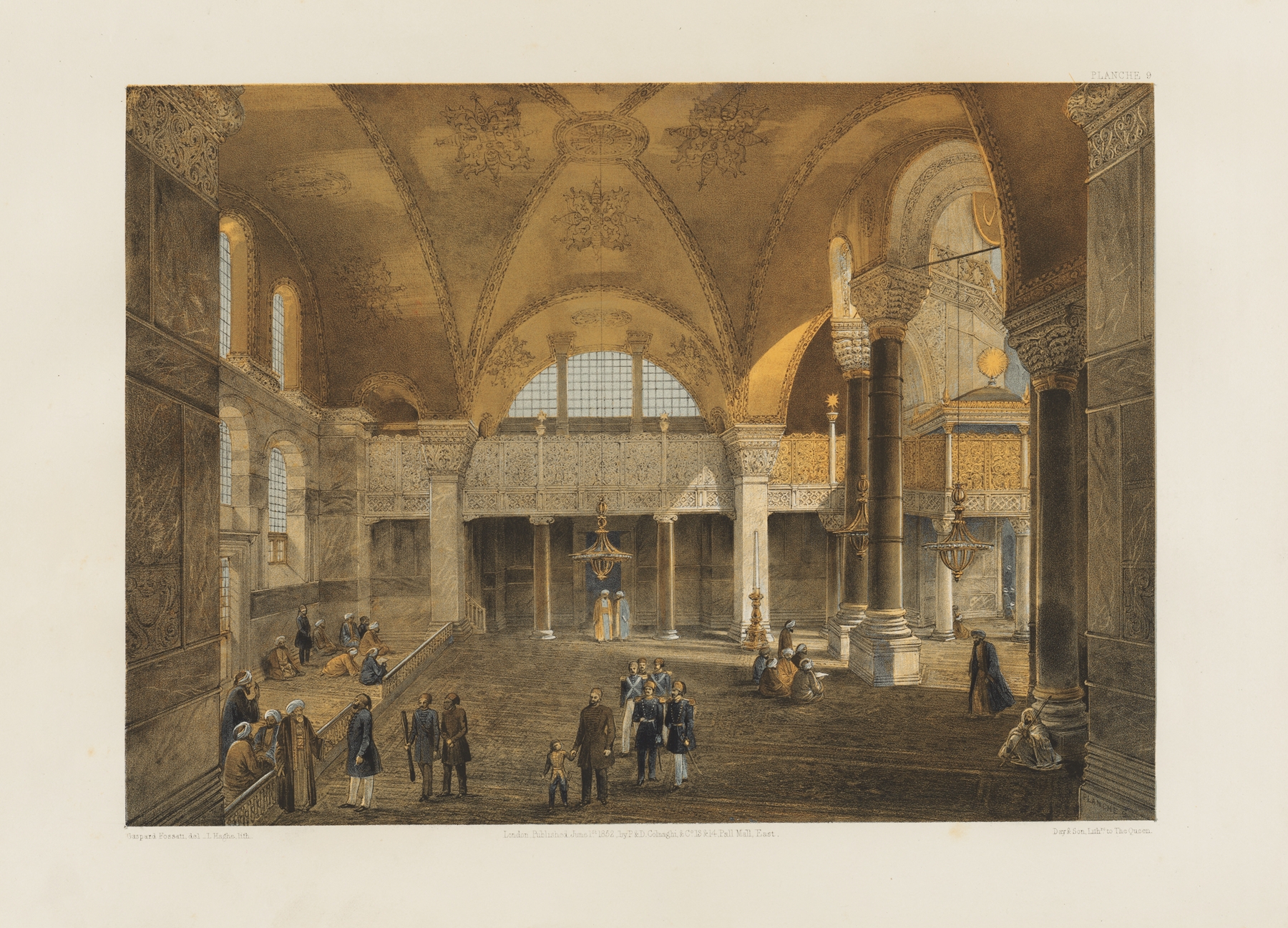
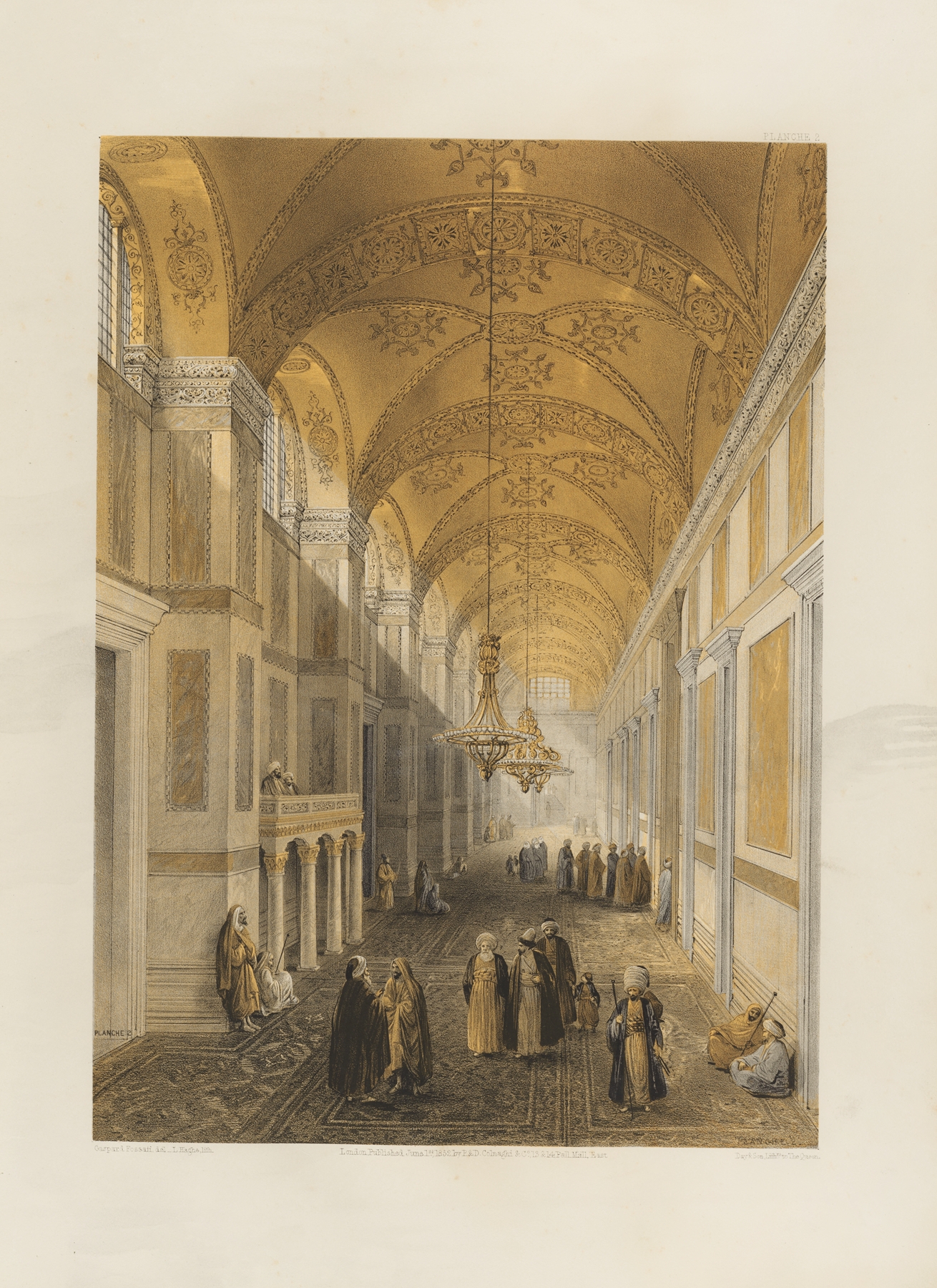
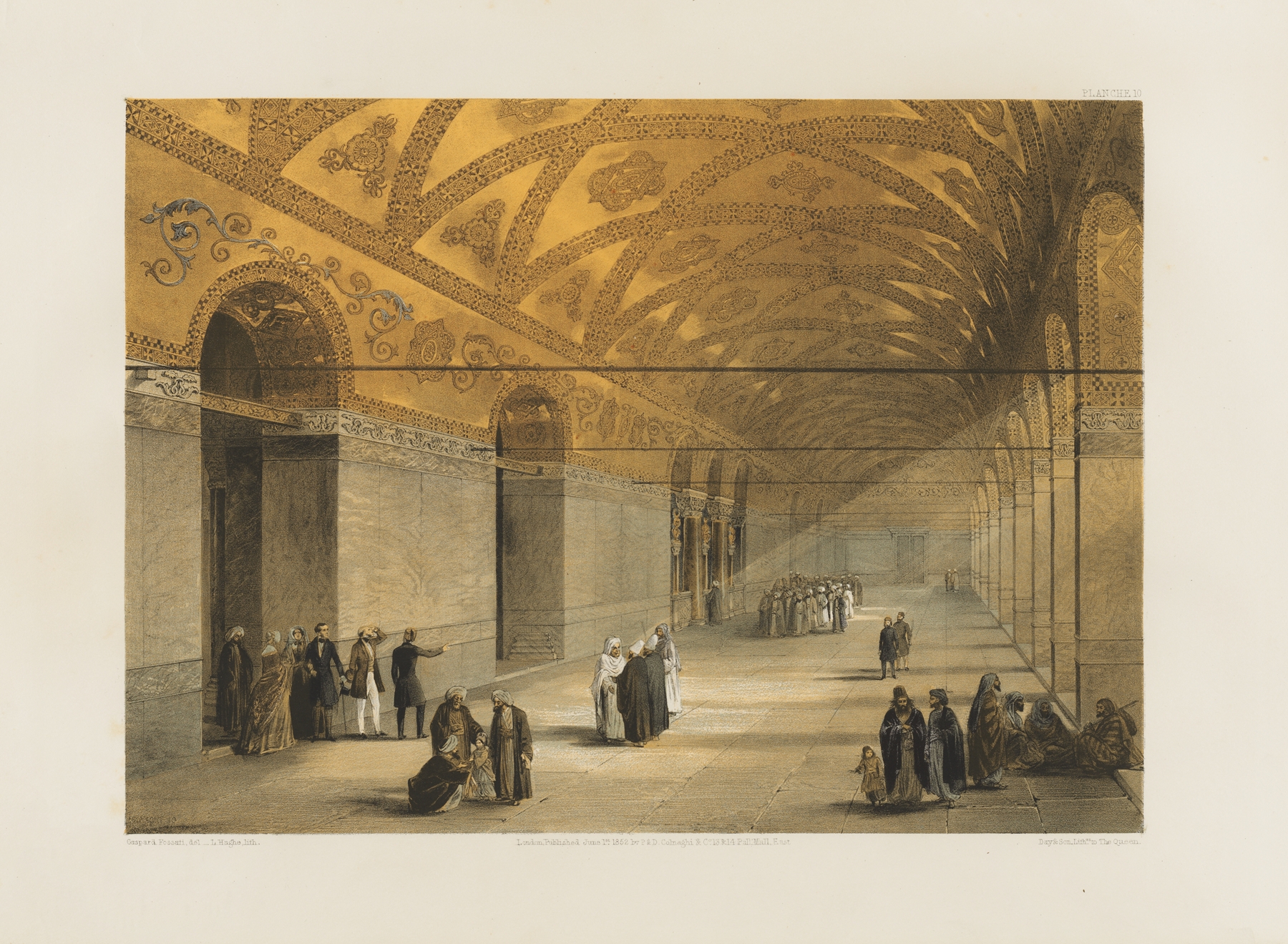
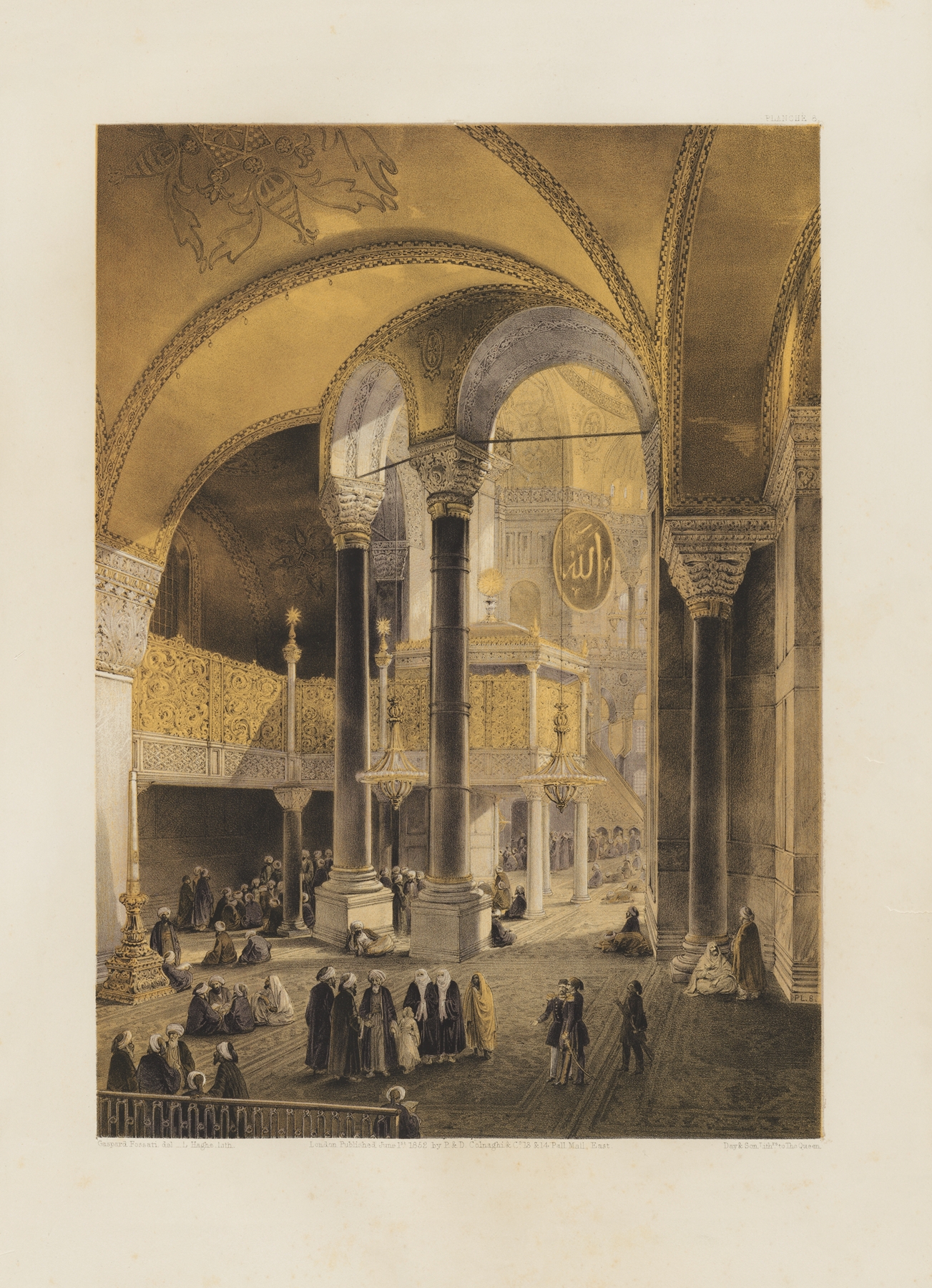
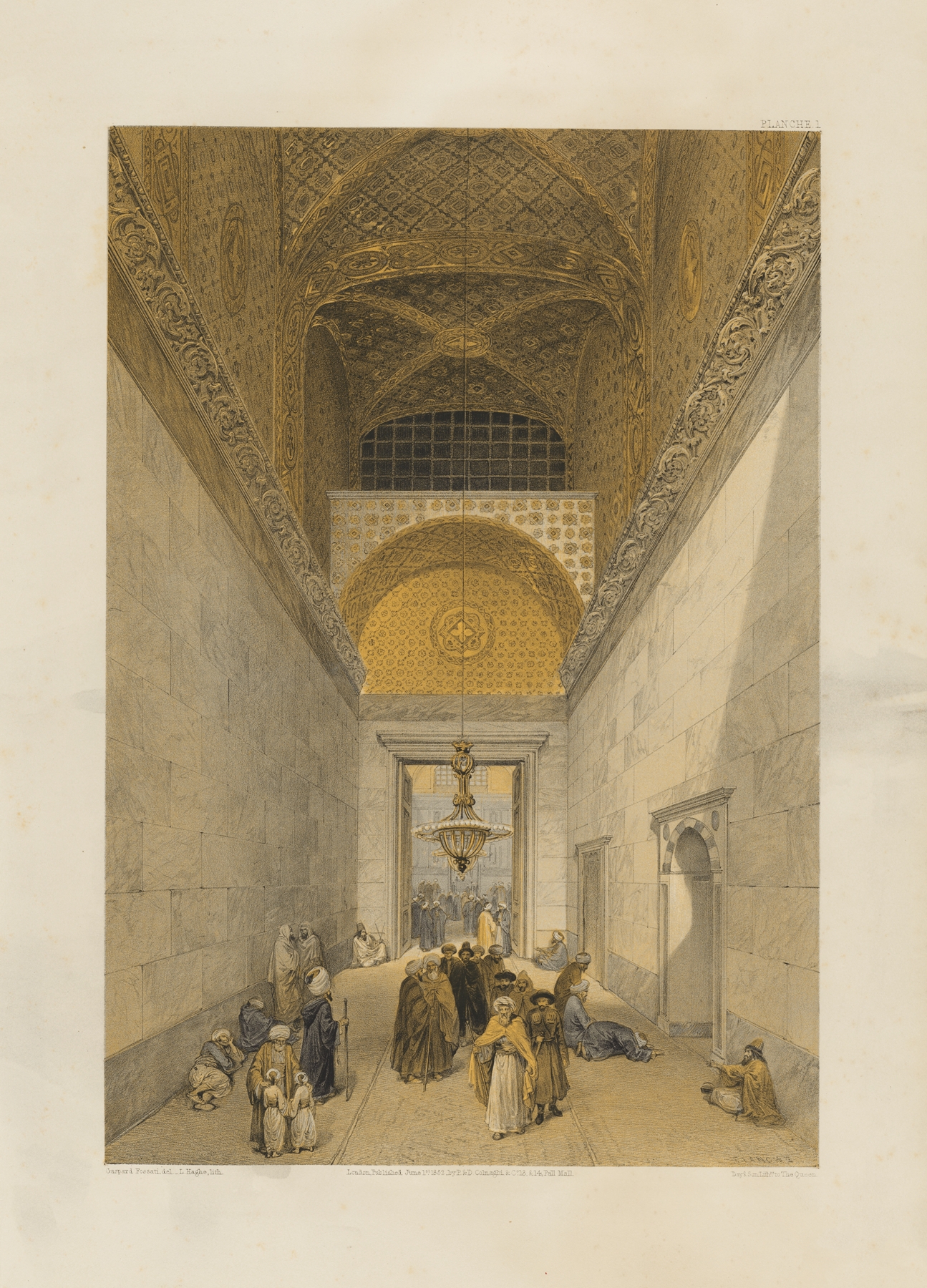
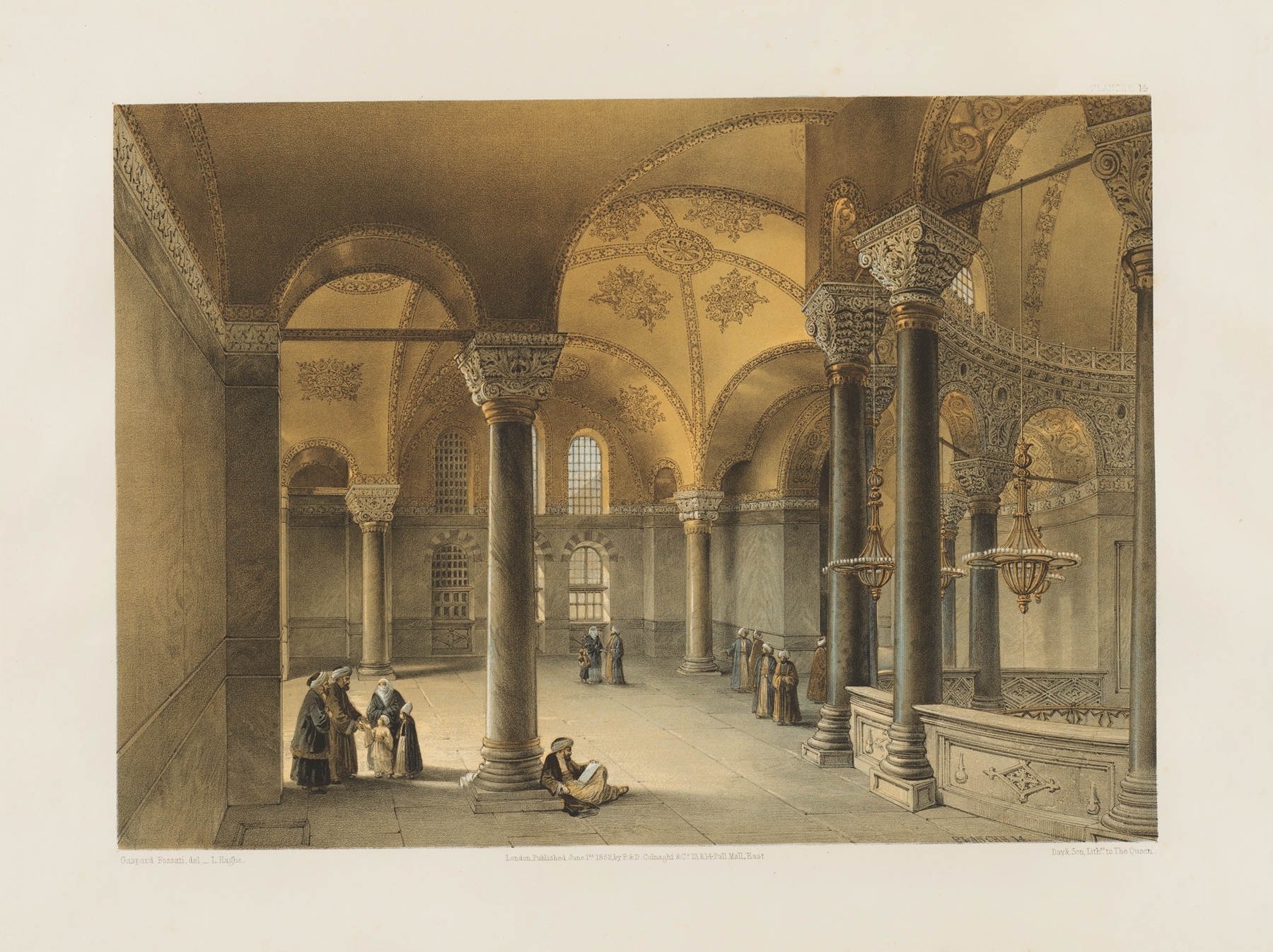
Aya Sofia, Constantinople; as recently restored by order of H. M. the sultan Abdul-Medjid Pl.03 — History & Analysis
“Art reveals the soul when the world turns away.” In the stillness of a moment, an empty space transforms into a sacred realm, beckoning contemplation and introspection. The void invites us to peer deeper, to explore the echoes of history that linger within. Look to the center of the canvas where the majestic dome of the Aya Sofia rises, its grandeur heightened by the interplay of light and shadow. Notice the intricate mosaics that glisten like whispered secrets, their colors both vibrant and subdued, evoking a sense of reverence.
The perspective draws you in, guiding your gaze through the vast expanse of the architectural marvel, while the subtle hues of the restoration breathe new life into the aged stones. The emotional tension lies in the juxtaposition of the sacred and the human-made; the intricate details of the Islamic calligraphy intertwine with the remnants of Byzantine art, symbolizing a dialogue between cultures. This harmonious blend suggests a resurrection of history, as whispers of the past resonate within the restored walls. Each brushstroke carries the weight of devotion and loss, urging us to reflect on what is preserved and what remains void.
In 1852, Gaspare Fossati meticulously documented the Aya Sofia during its restoration, a time marked by significant political change in the Ottoman Empire. As he painted in Constantinople, Fossati navigated a world where East and West converged, both architecturally and culturally. His work not only captured the grandeur of the monument but also served as a testament to a crucial moment of preservation amid the shifting tides of history.