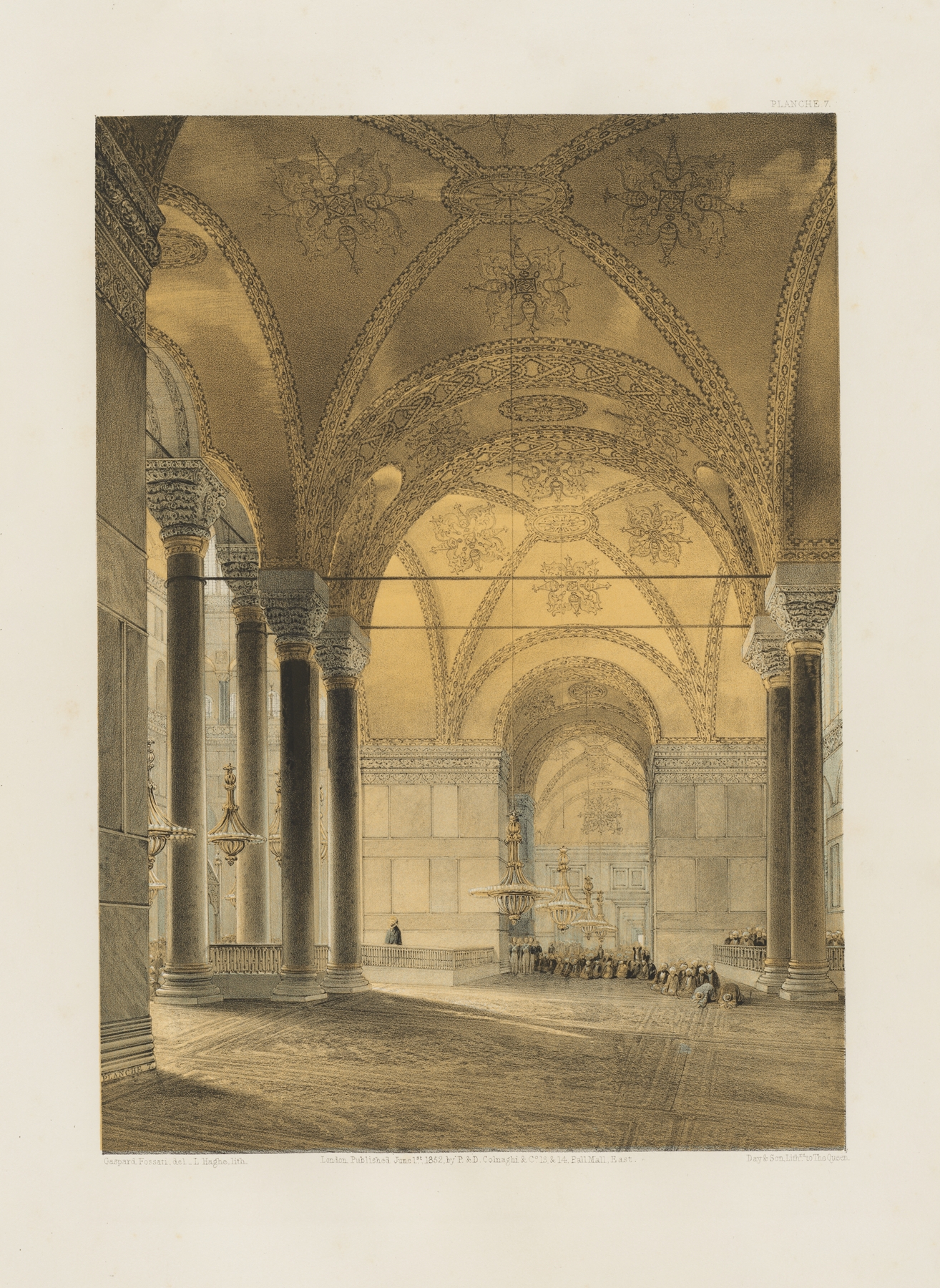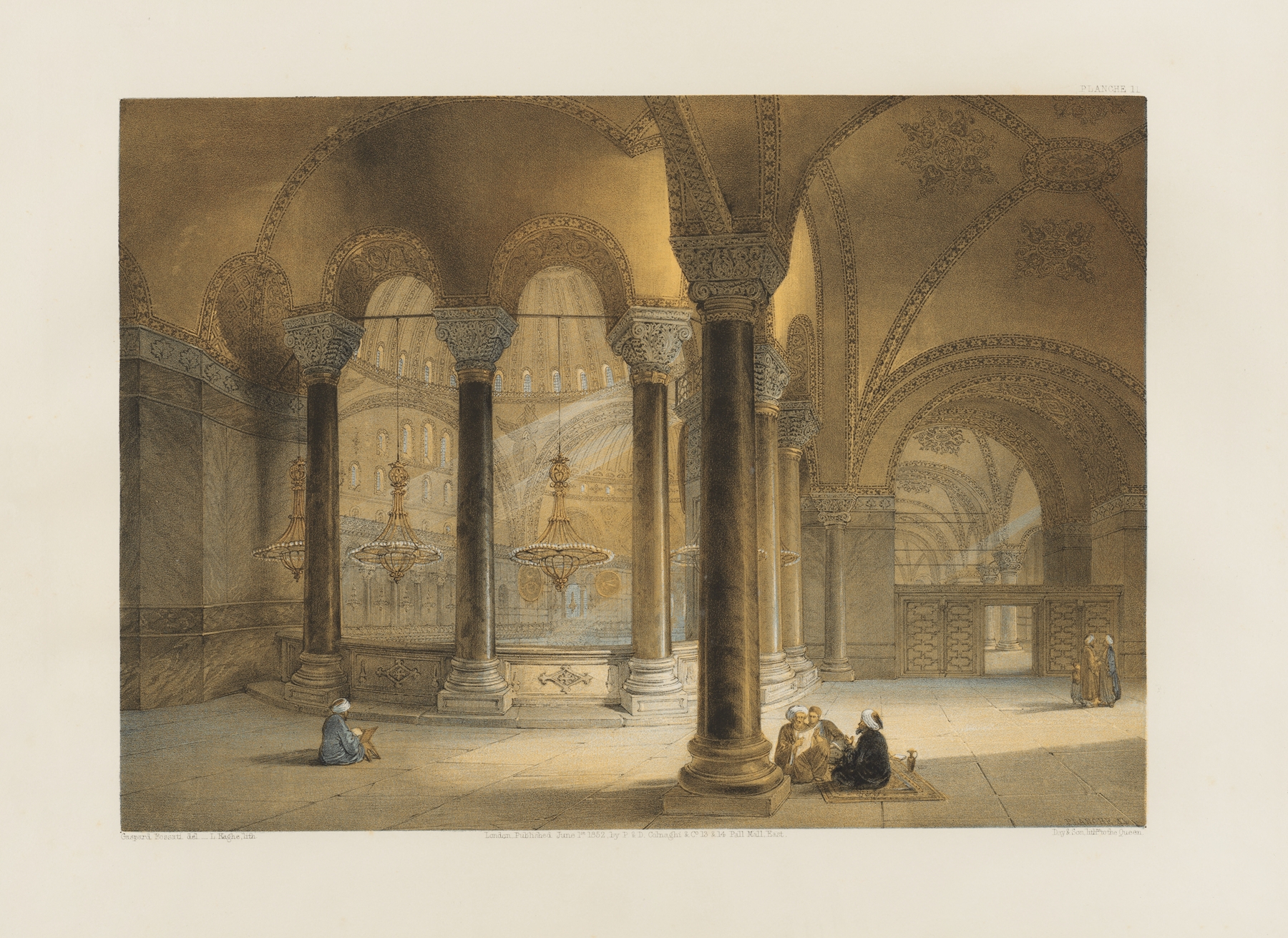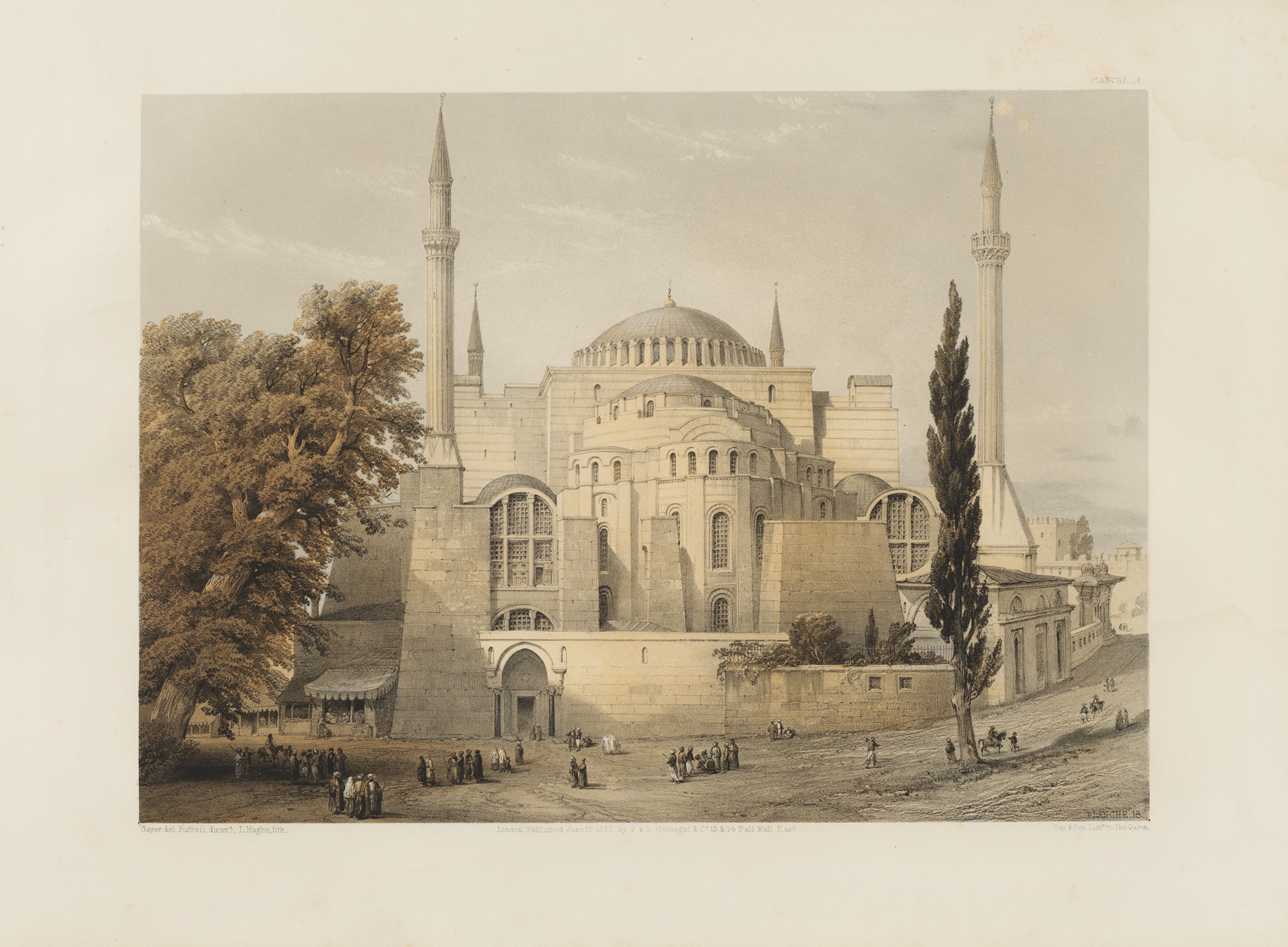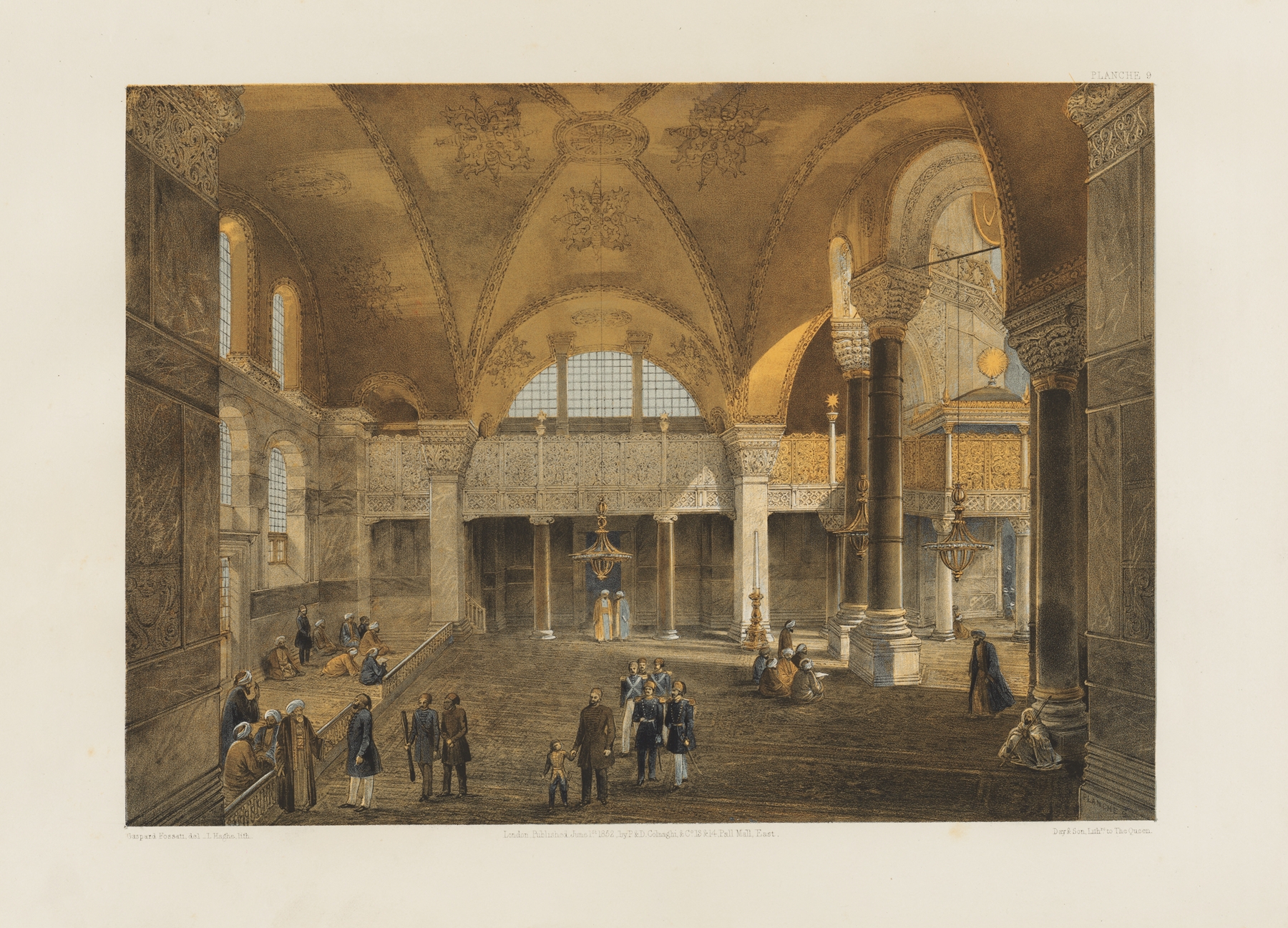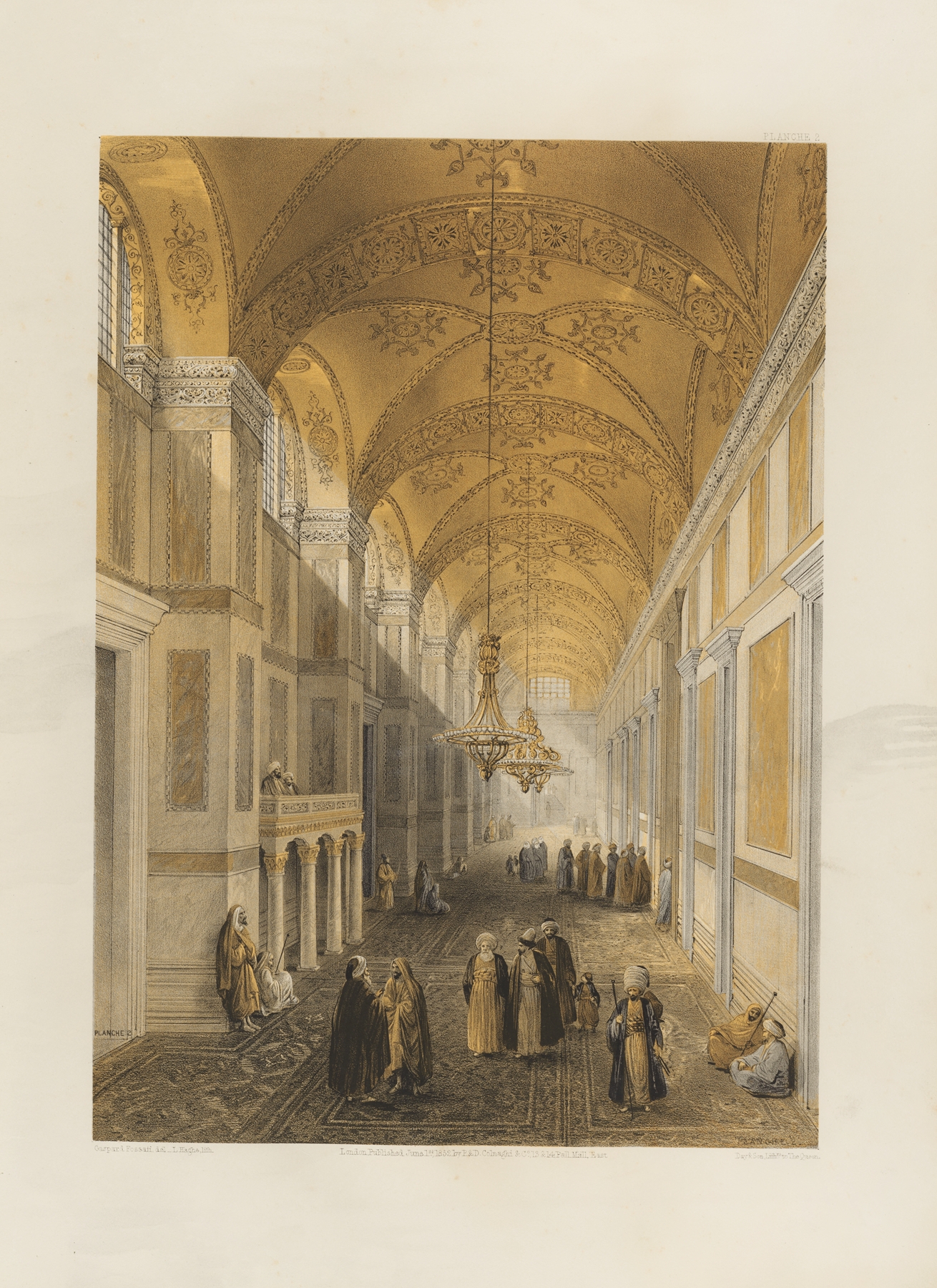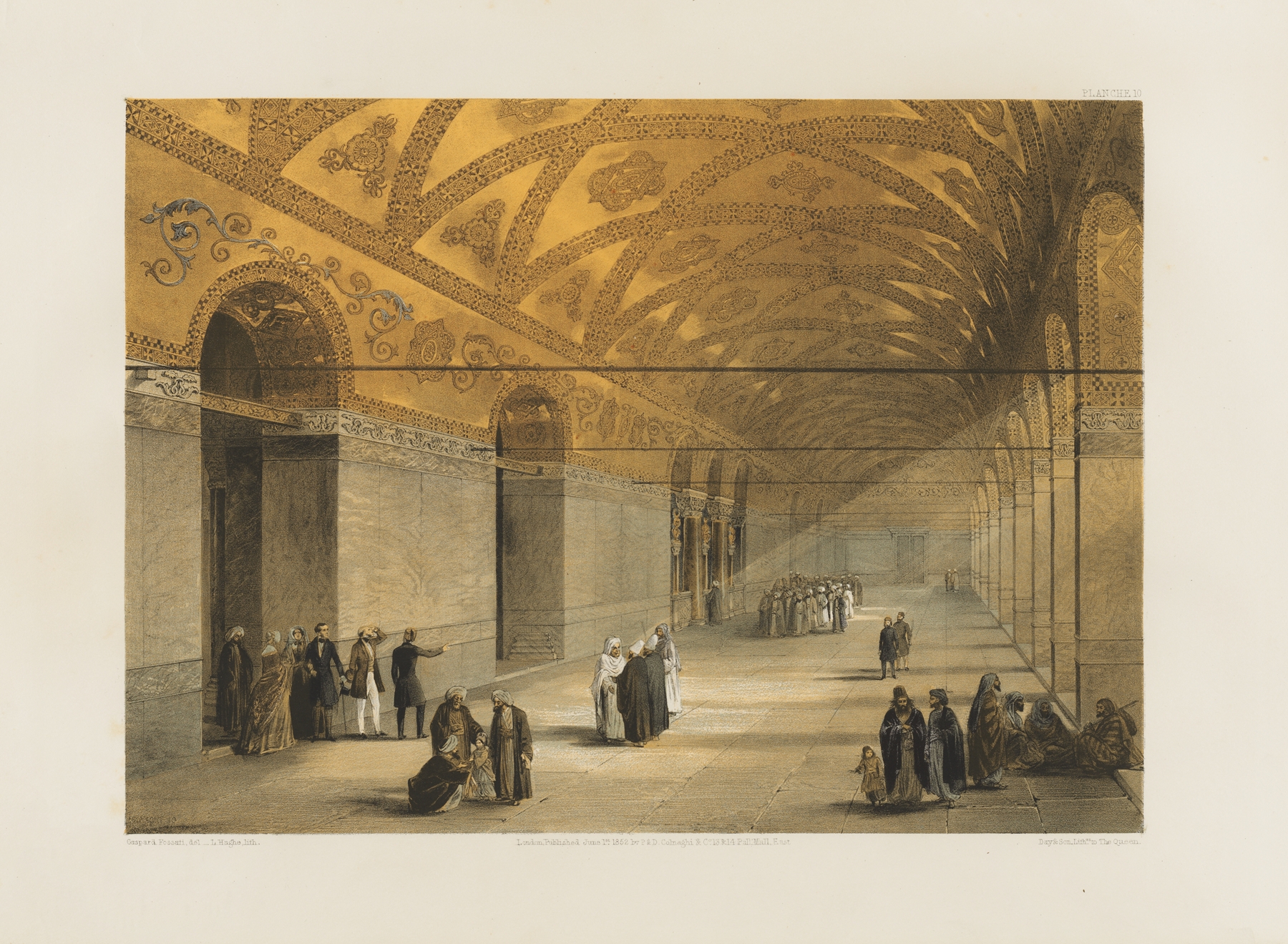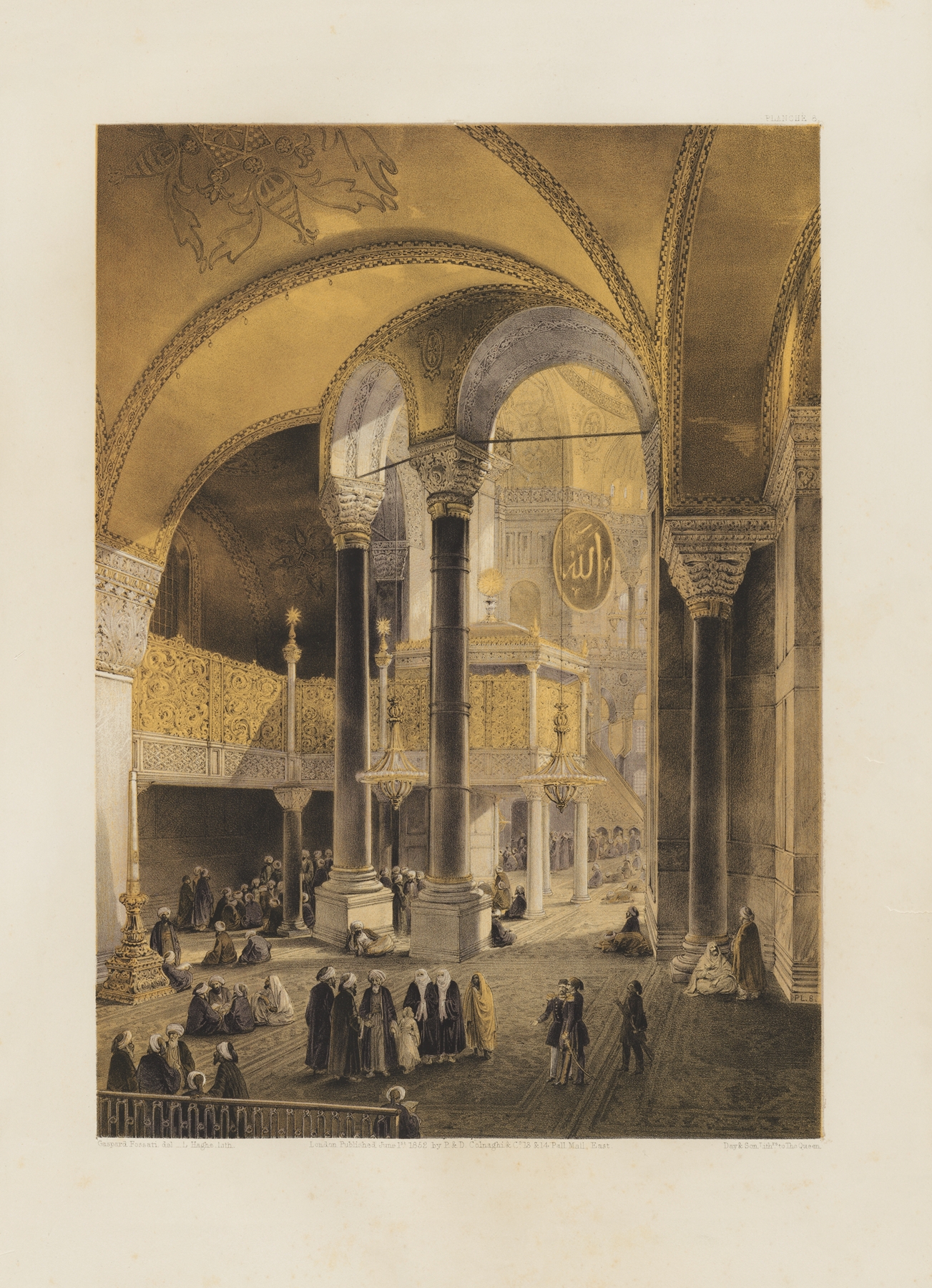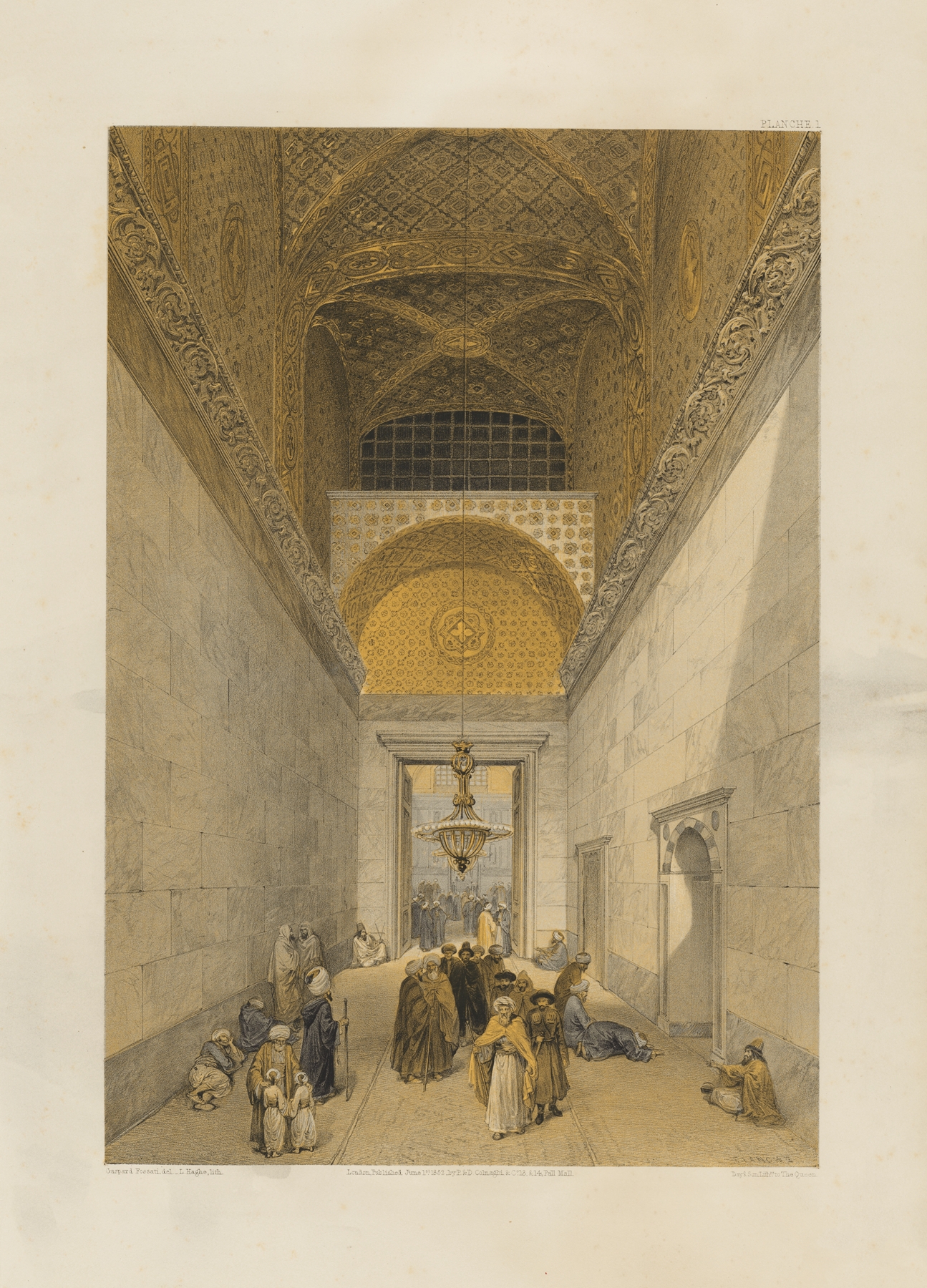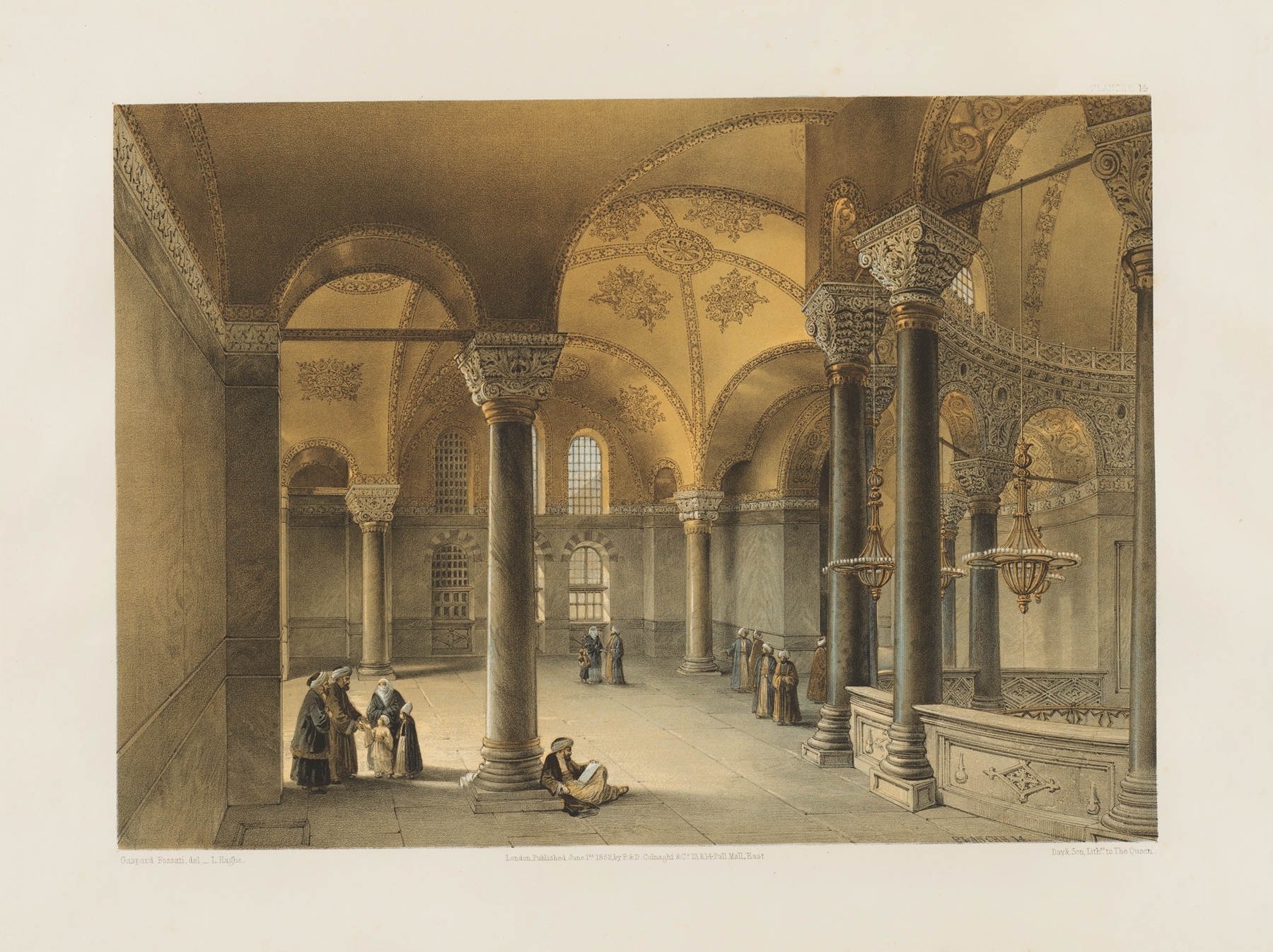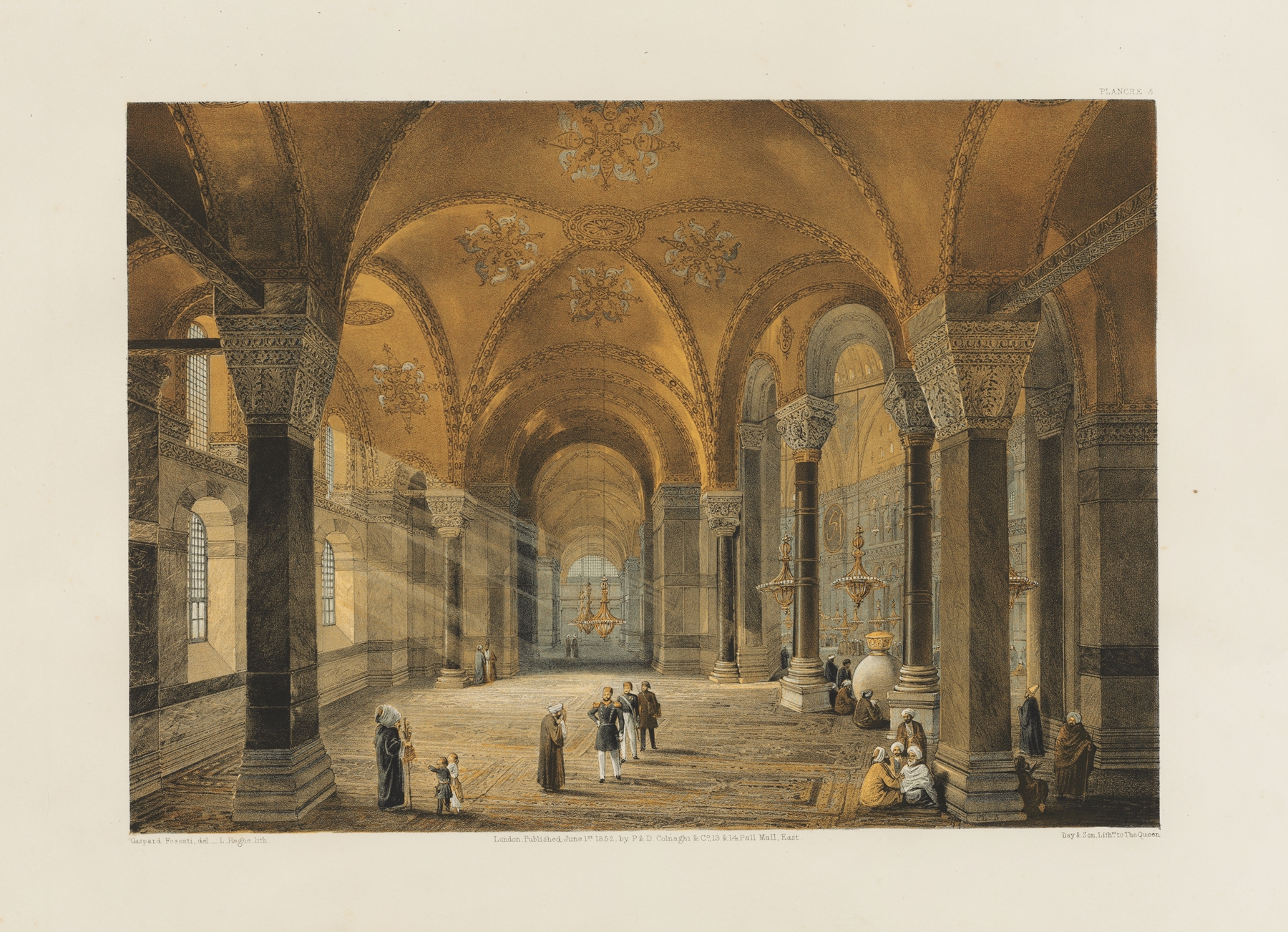
Aya Sofia, Constantinople; as recently restored by order of H. M. the sultan Abdul-Medjid Pl.05 — History & Analysis
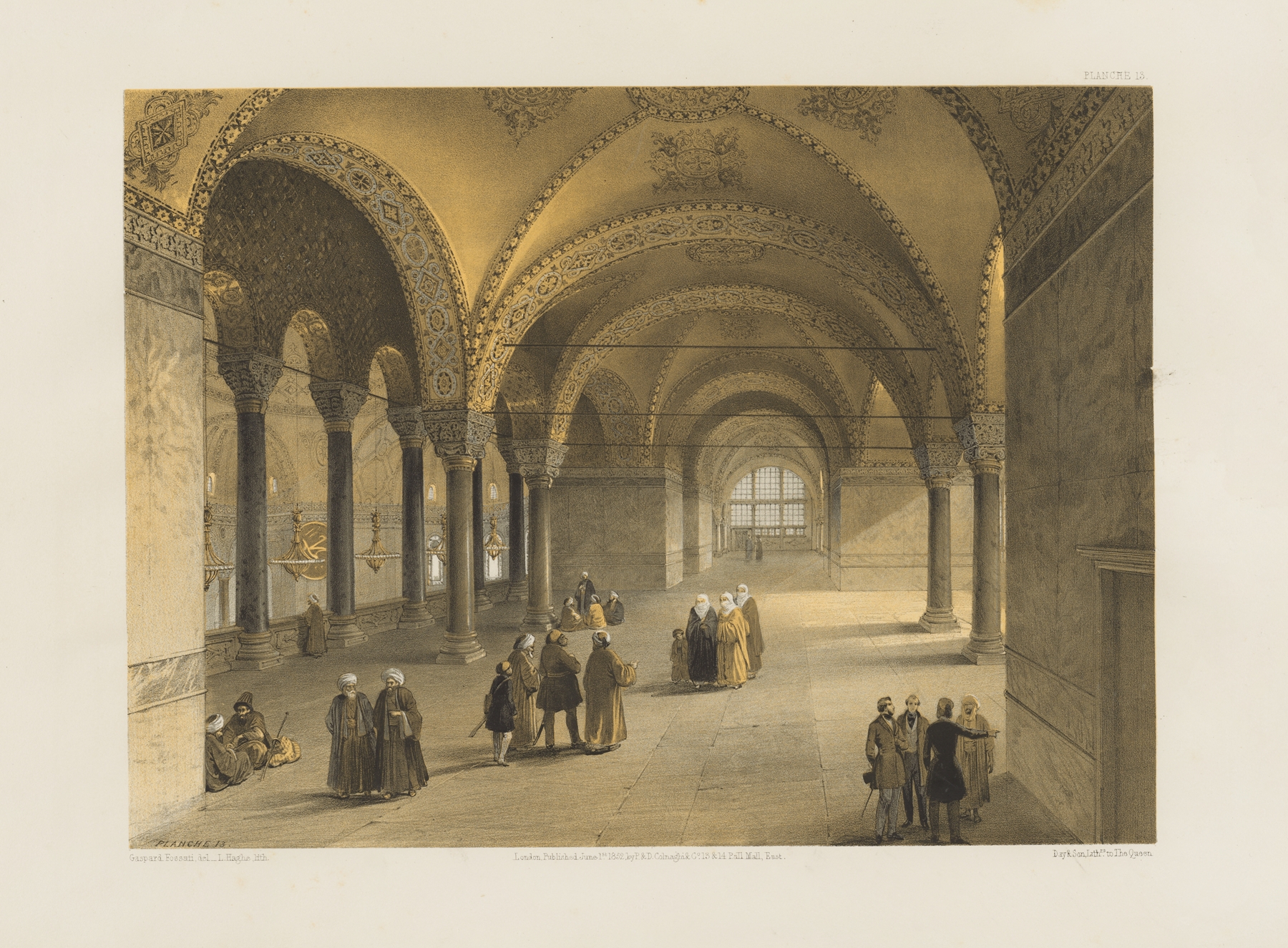
Who listens when art speaks of silence? The stillness captured in this work invites contemplation, beckoning us to explore the depths of fear that lie beneath its serene facade. Look to the intricate details of the dome, where light filters through stained glass, casting a kaleidoscope of colors onto the cool, marble floor. Notice how the arches rise majestically, their forms echoing the weight of history. Each column tells a story, meticulously rendered in Fossati's delicate brushwork, while the soft hues evoke a sense of reverence and awe.
The composition draws your gaze upward, inviting a spiritual journey through the grandeur that both inspires and intimidates. Hidden within this architectural marvel are the whispers of a city's tumultuous past. The interplay of light and shadow evokes a tension between the sacred and the secular, a reminder of the fear and uncertainty that often accompany change. As the restoration breathes new life into the fading walls, one wonders—what remnants of the past have been silenced?
The absence of figures in this scene amplifies the feeling of isolation, emphasizing the building's profound role as both sanctuary and witness to countless stories of joy and sorrow. Gaspare Fossati painted this work in 1852 during a period of significant restoration efforts commissioned by Sultan Abdul-Medjid. The artist, who was deeply immersed in the cultural revival of Constantinople, sought to capture the essence of a landmark that stood at the crossroads of East and West, reflecting the complexities of a world in transition. This moment was pivotal, as the city grappled with its identity amidst the echoes of a fading empire and the whispers of a new age.