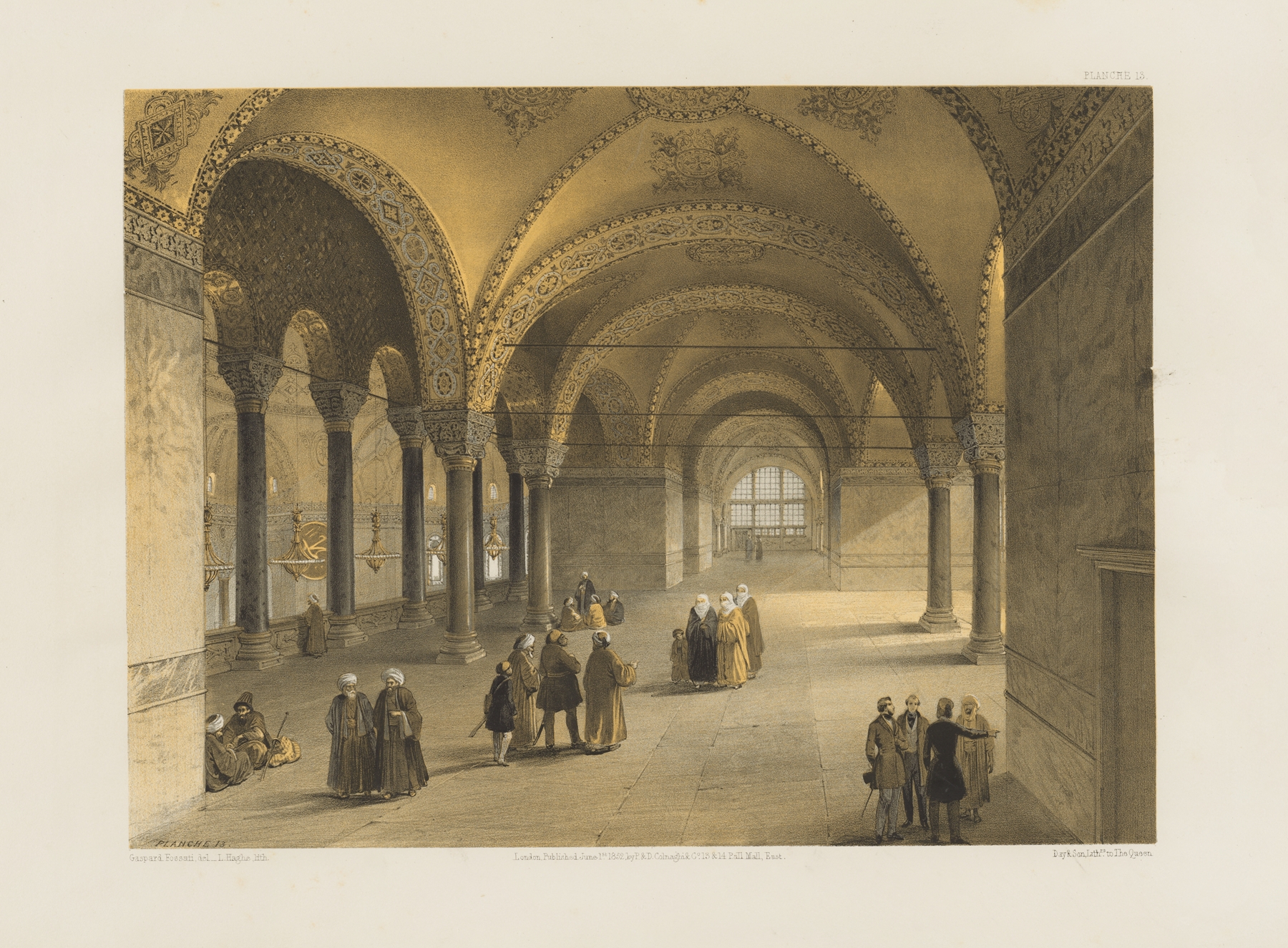
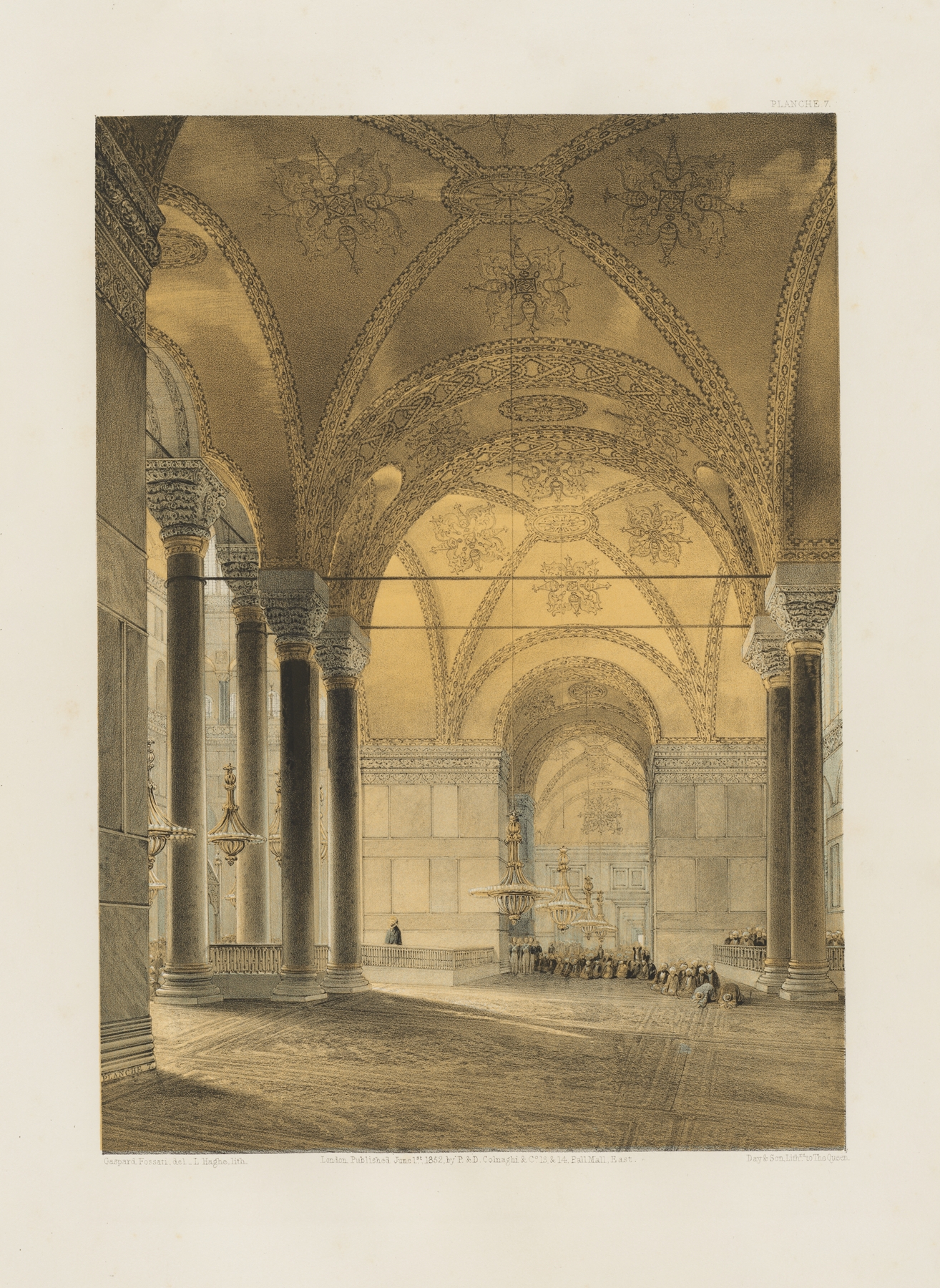
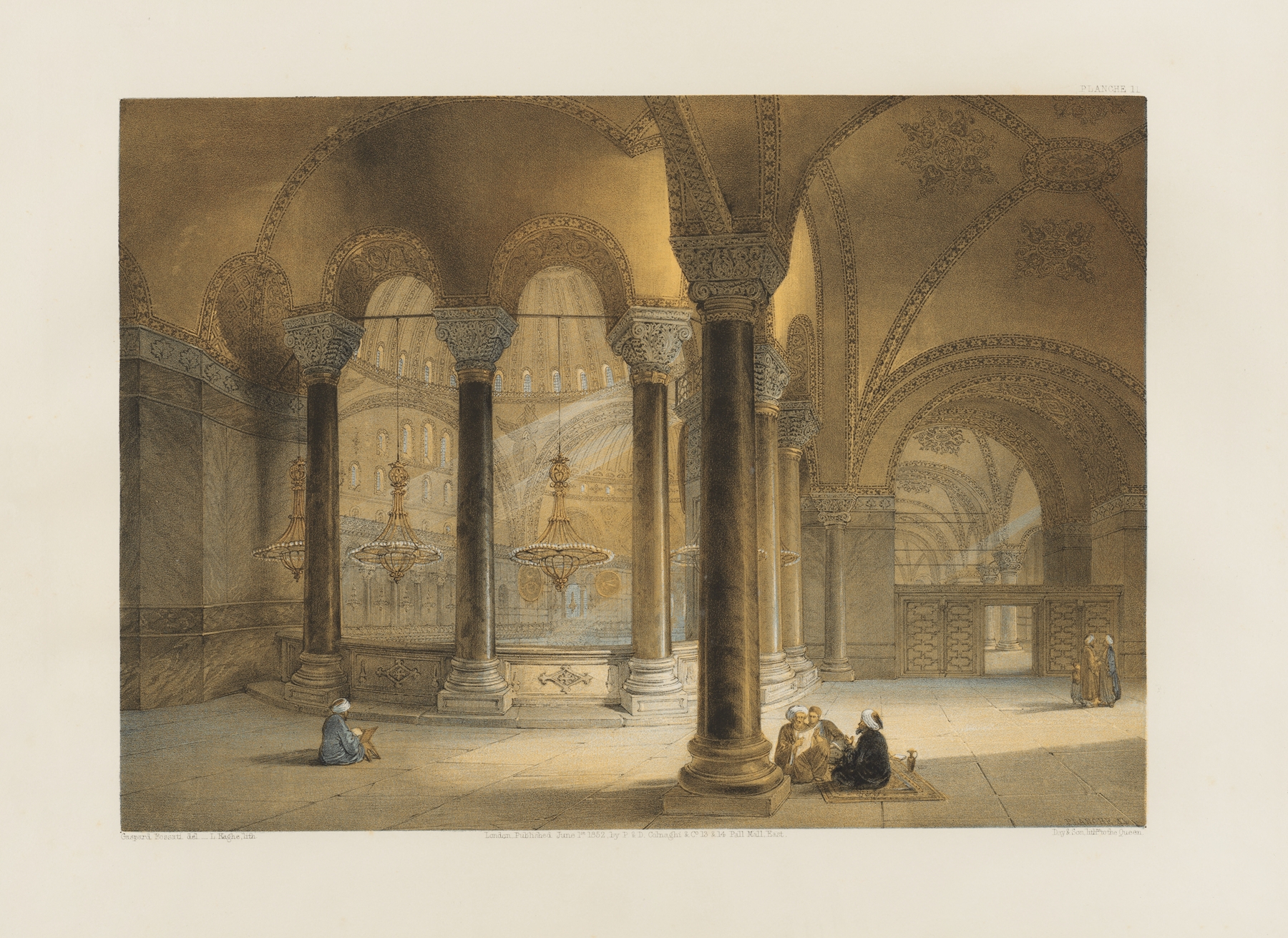
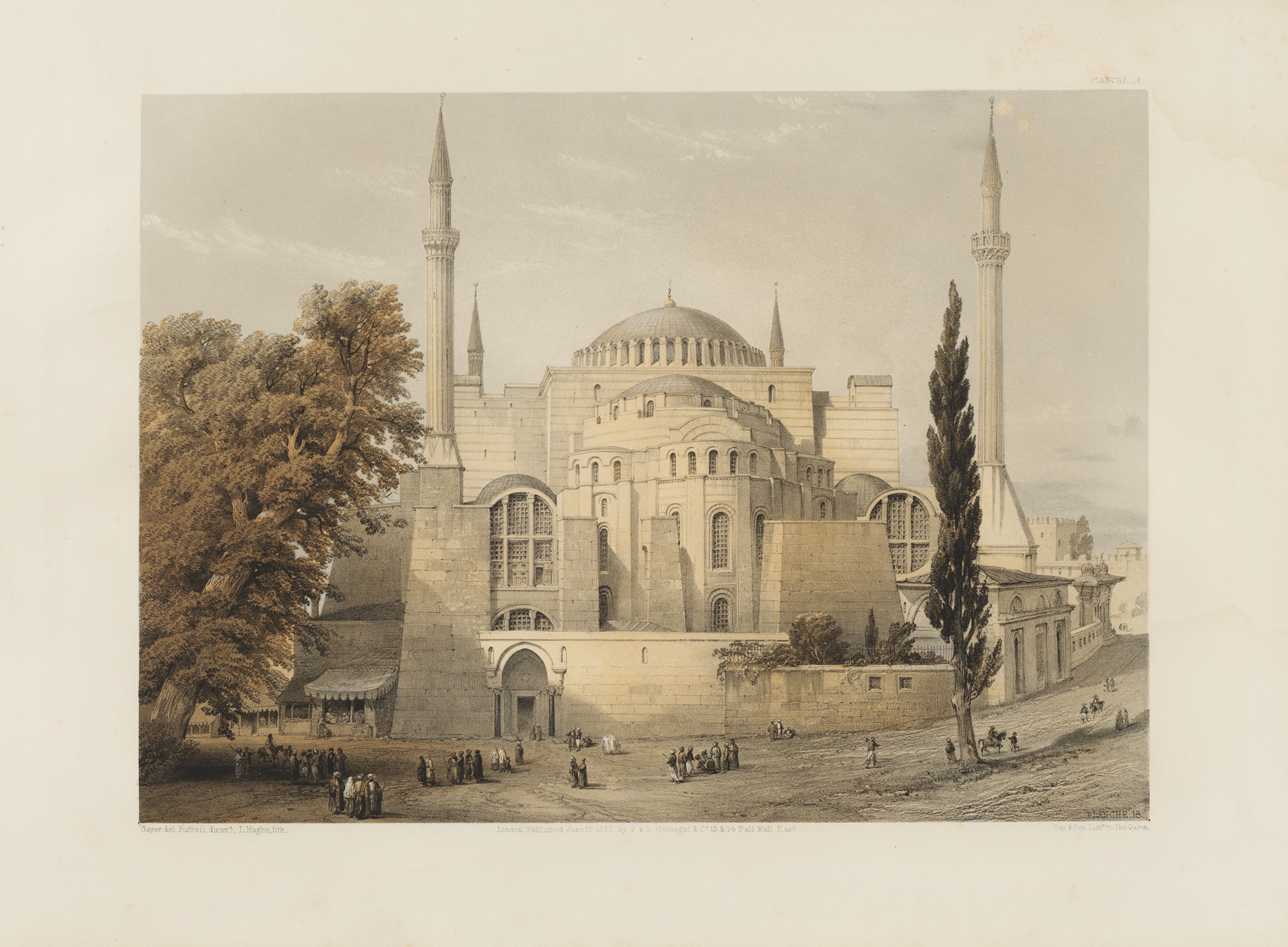
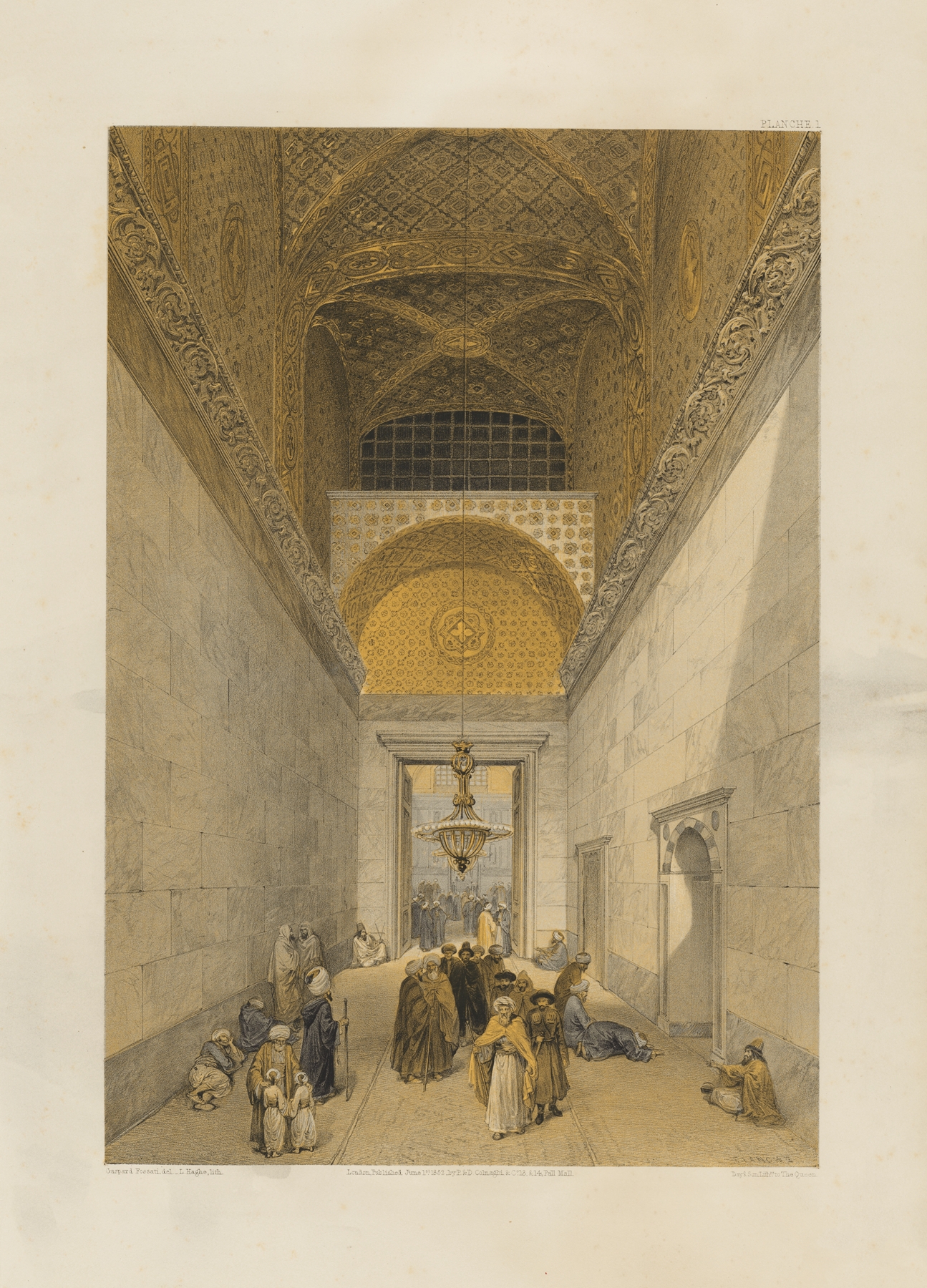
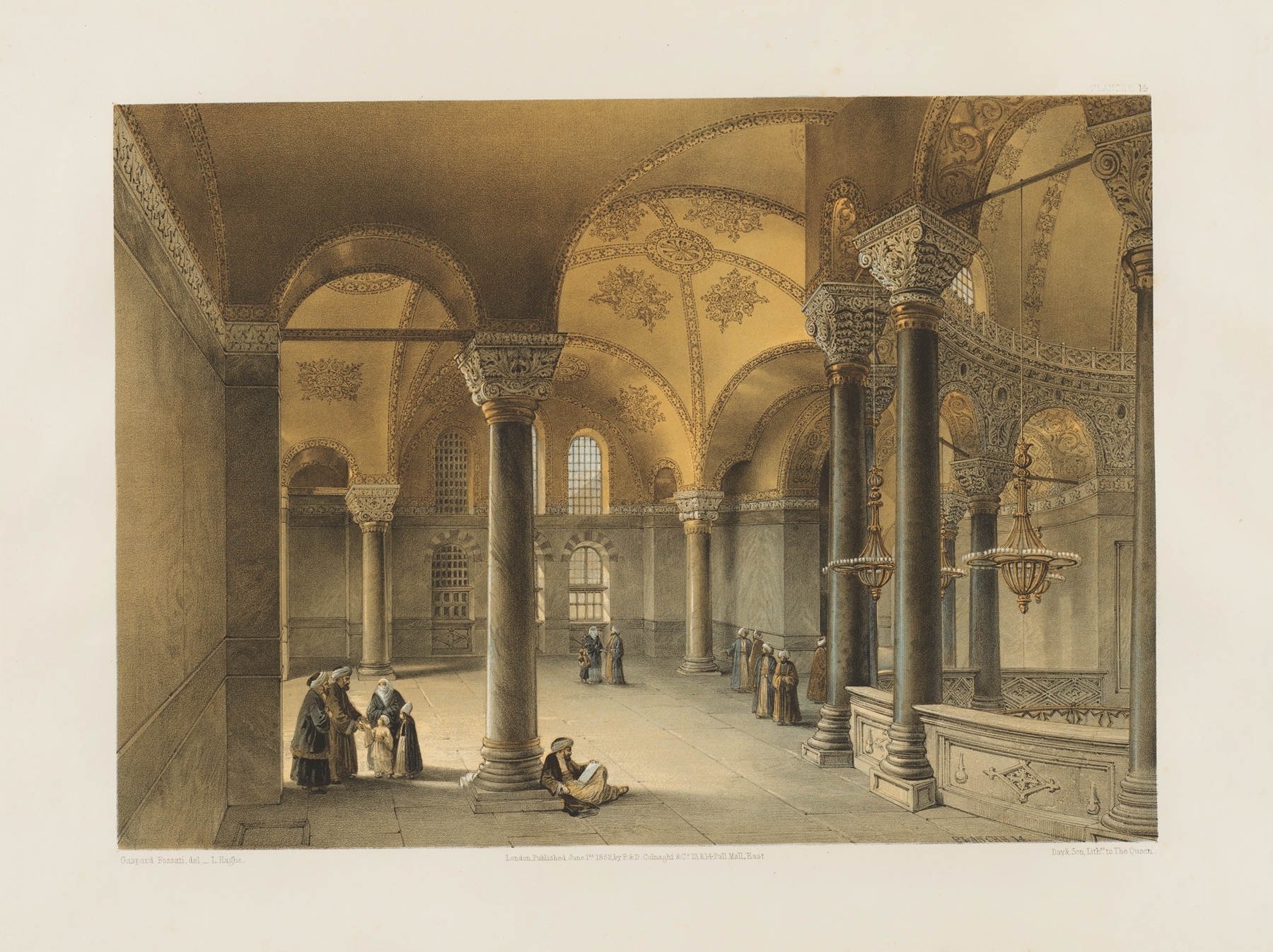
Aya Sofia, Constantinople; as recently restored by order of H. M. the sultan Abdul-Medjid Pl.12 — History & Analysis
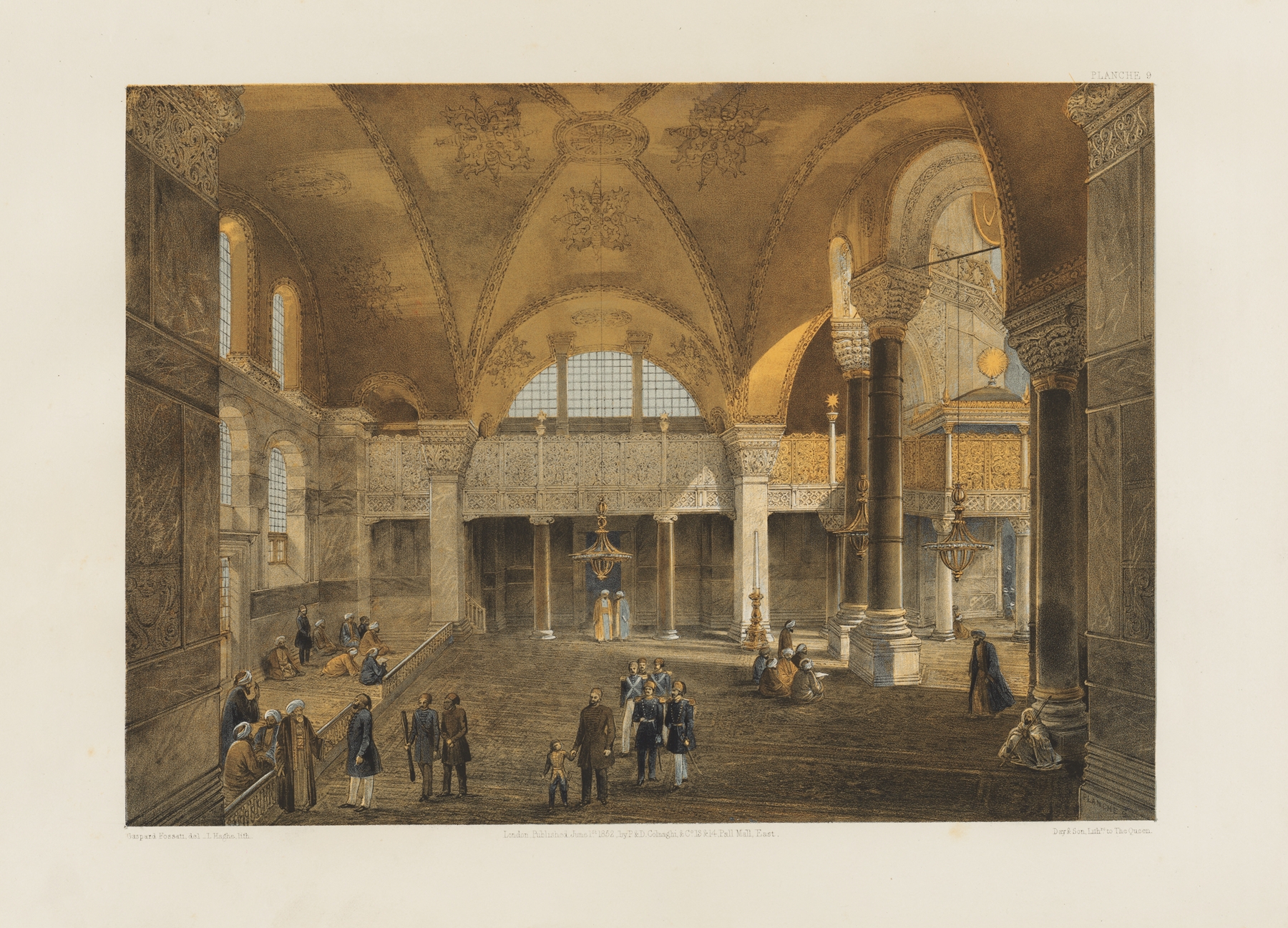
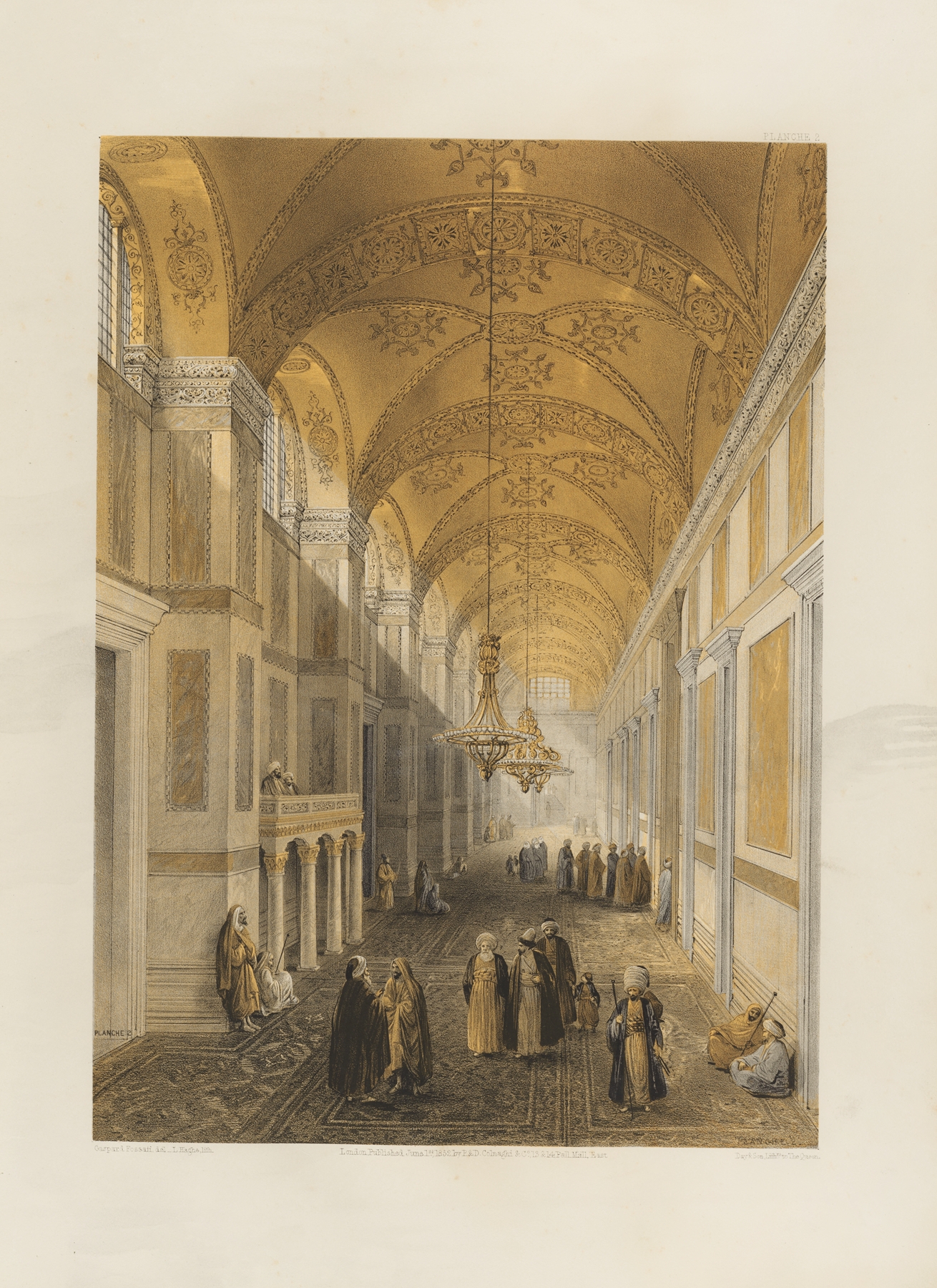
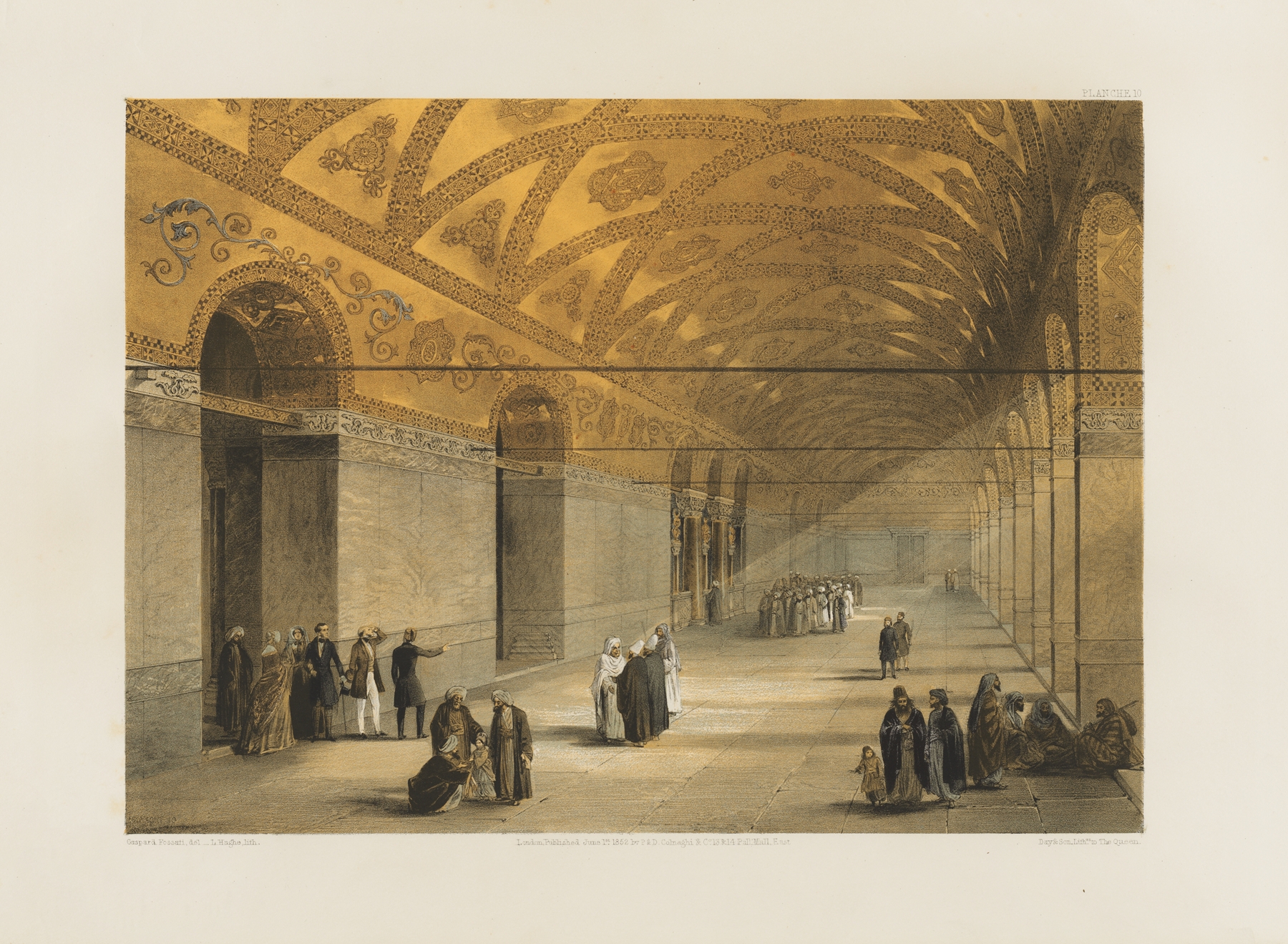
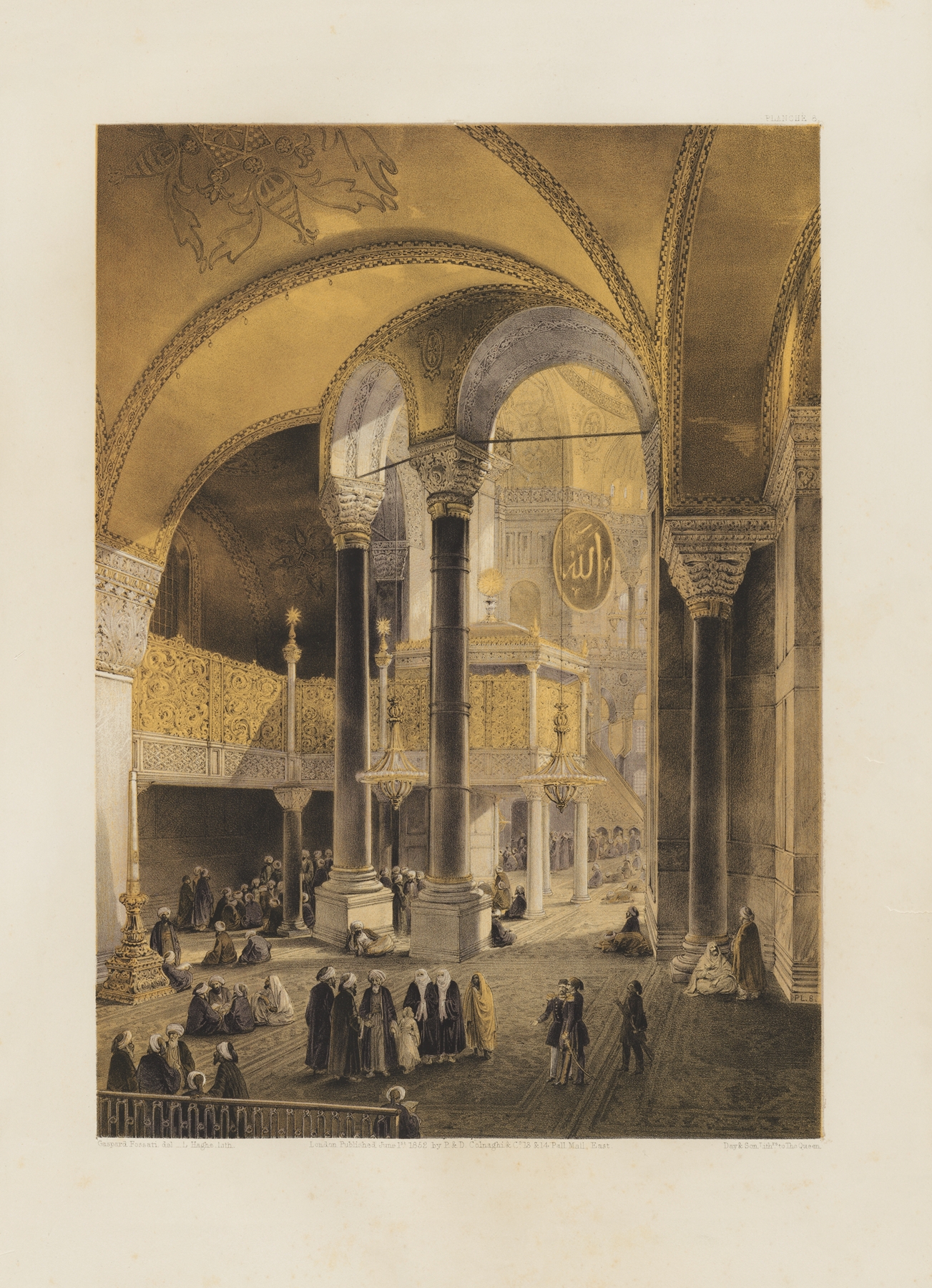
What secret hides in the quiet of the canvas? In the serene yet chaotic façade of a great monument, the echoes of history and madness intertwine. Look to the intricate details that emerge from the shadows; the delicate arabesques and ornate calligraphy draw you into the depths of the Aya Sofia. Notice how the light filters through the grand dome, illuminating the mosaics that seem alive, reflecting the vibrant past of Constantinople.
The meticulous symmetry of the architecture juxtaposes against the enchanting disorder of colors, inviting the viewer to unravel the layers of meaning embedded in each stroke. Beneath the surface, the painting pulsates with emotional tensions—the clash between the sacred and the secular, the historical weight of the structure contrasting with the artist's modern vision. Examine the subtle interplay of light and shadow; it suggests a madness that lies beneath the tranquil exterior, hinting at the complex relationship between man, faith, and the passage of time. Each element, from the flicker of candles to the towering pillars, whispers of stories untold, of a city constantly in flux.
Gaspare Fossati painted this work in 1852, during a period of significant change for the Ottoman Empire. Tasked with restoring the Aya Sofia, he found himself at the confluence of cultures, grappling with both Western artistic influences and the rich traditions of the East. This moment marked a pivotal time in his career, as he sought to capture the essence of a monumental edifice and its tumultuous history, forever framed in the context of restoration and new beginnings.