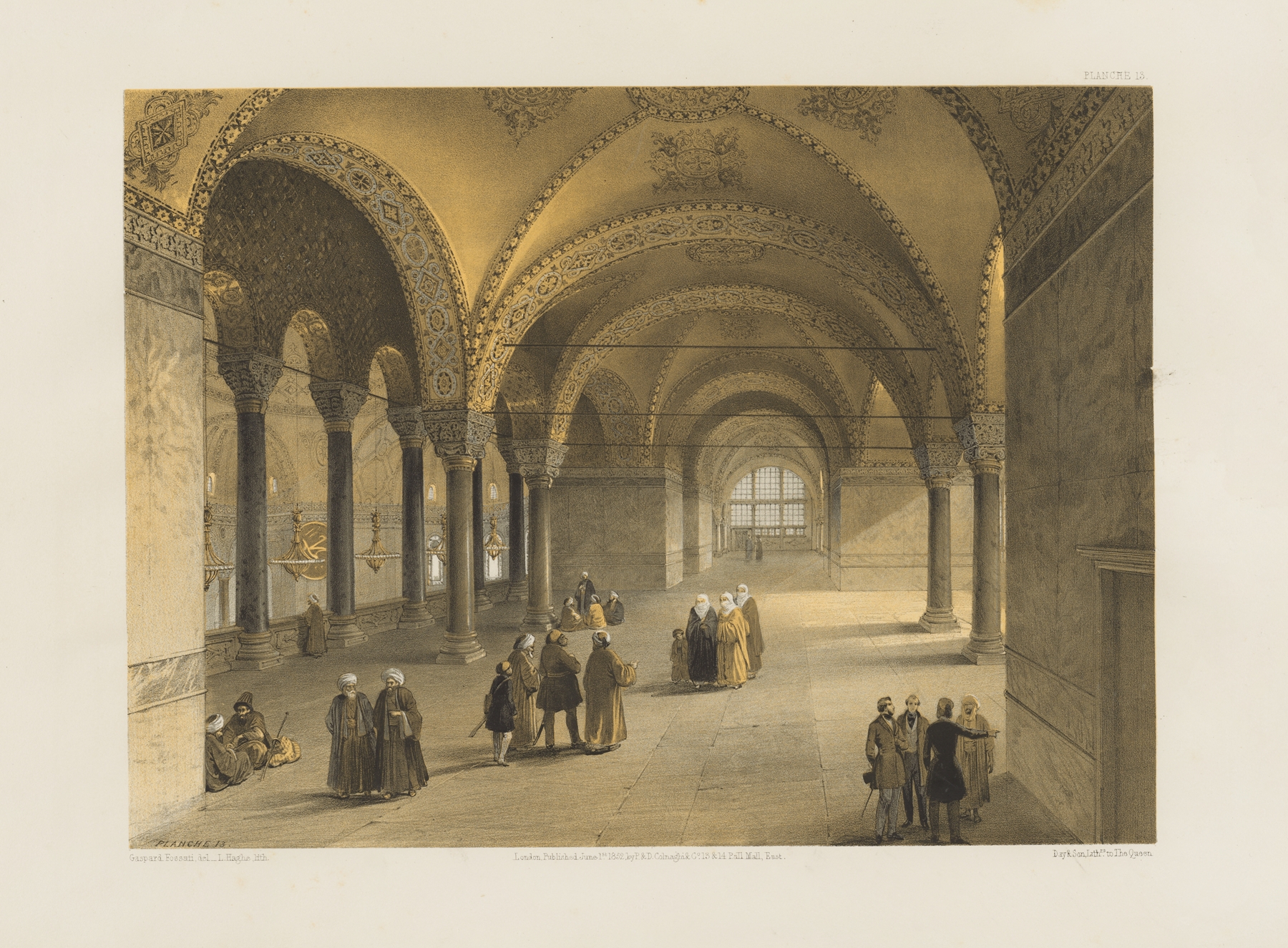
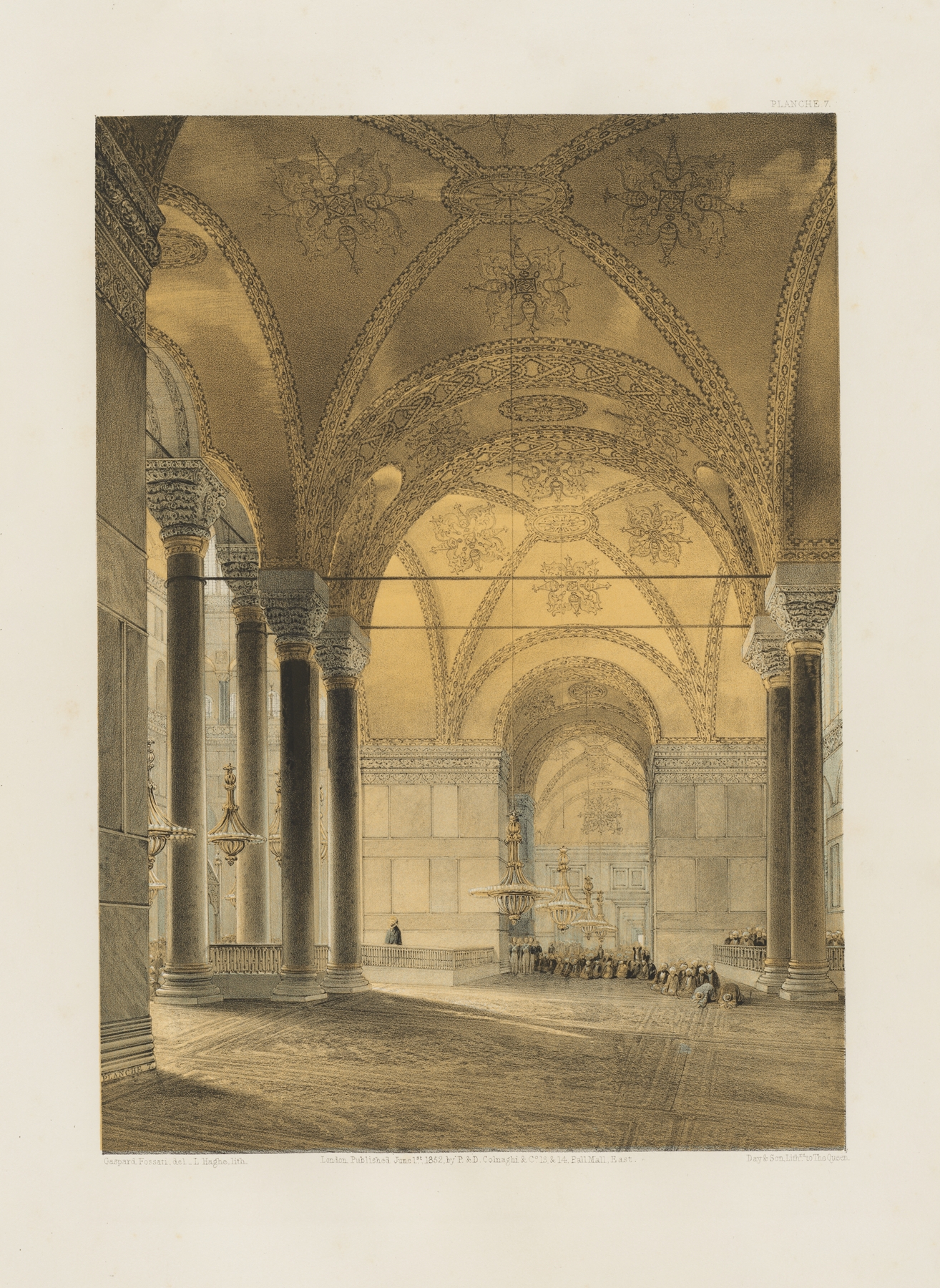
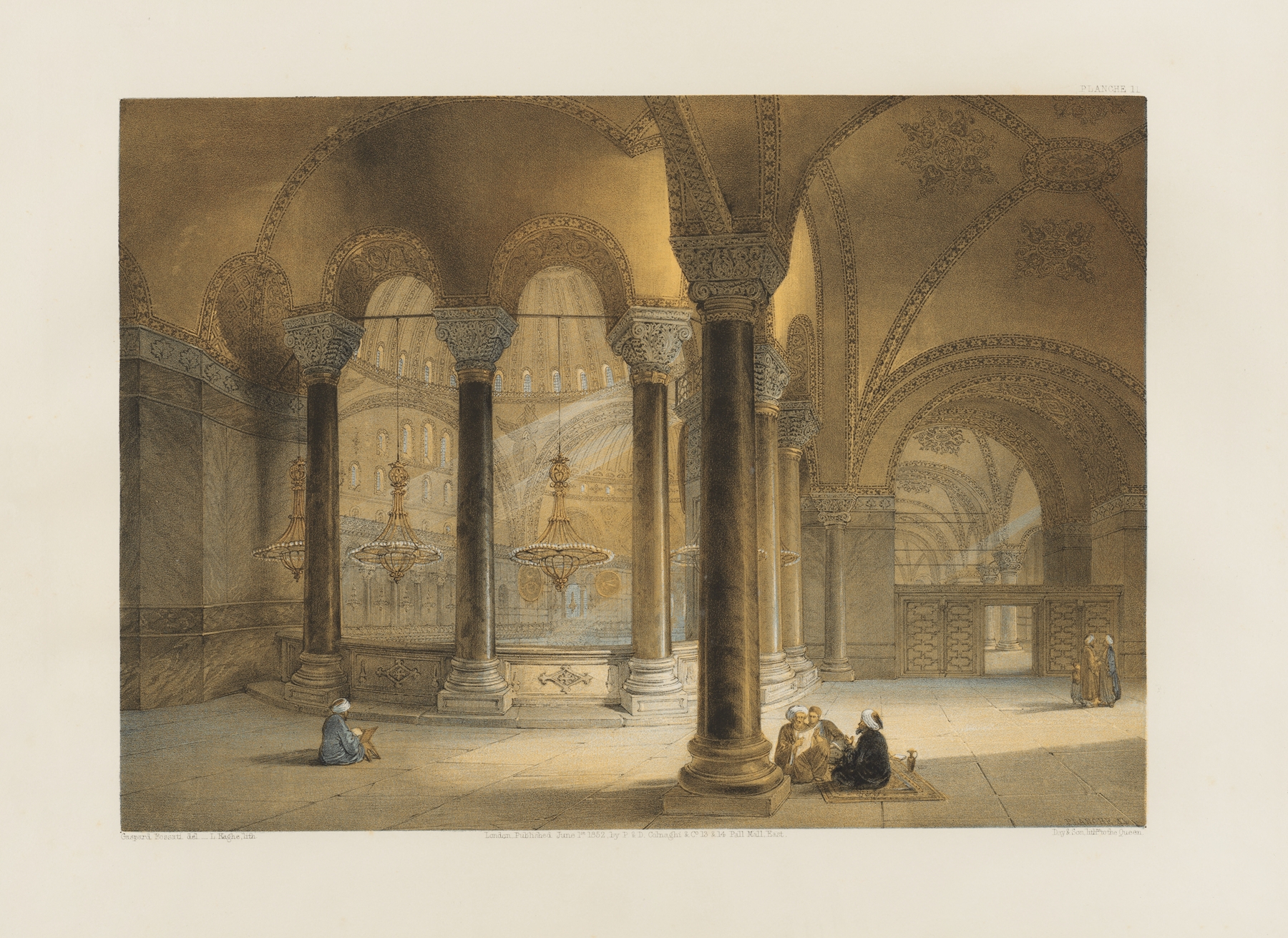
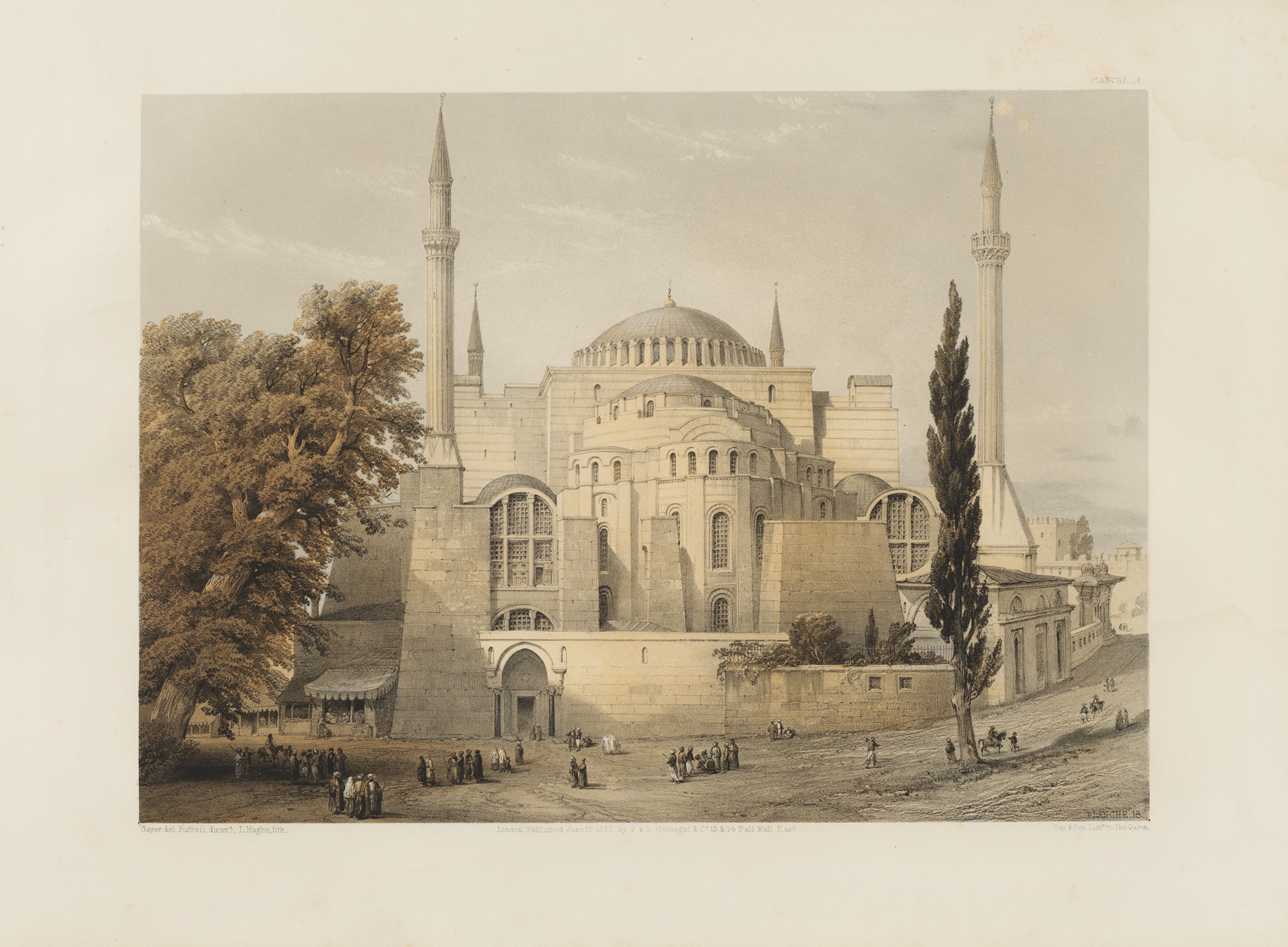
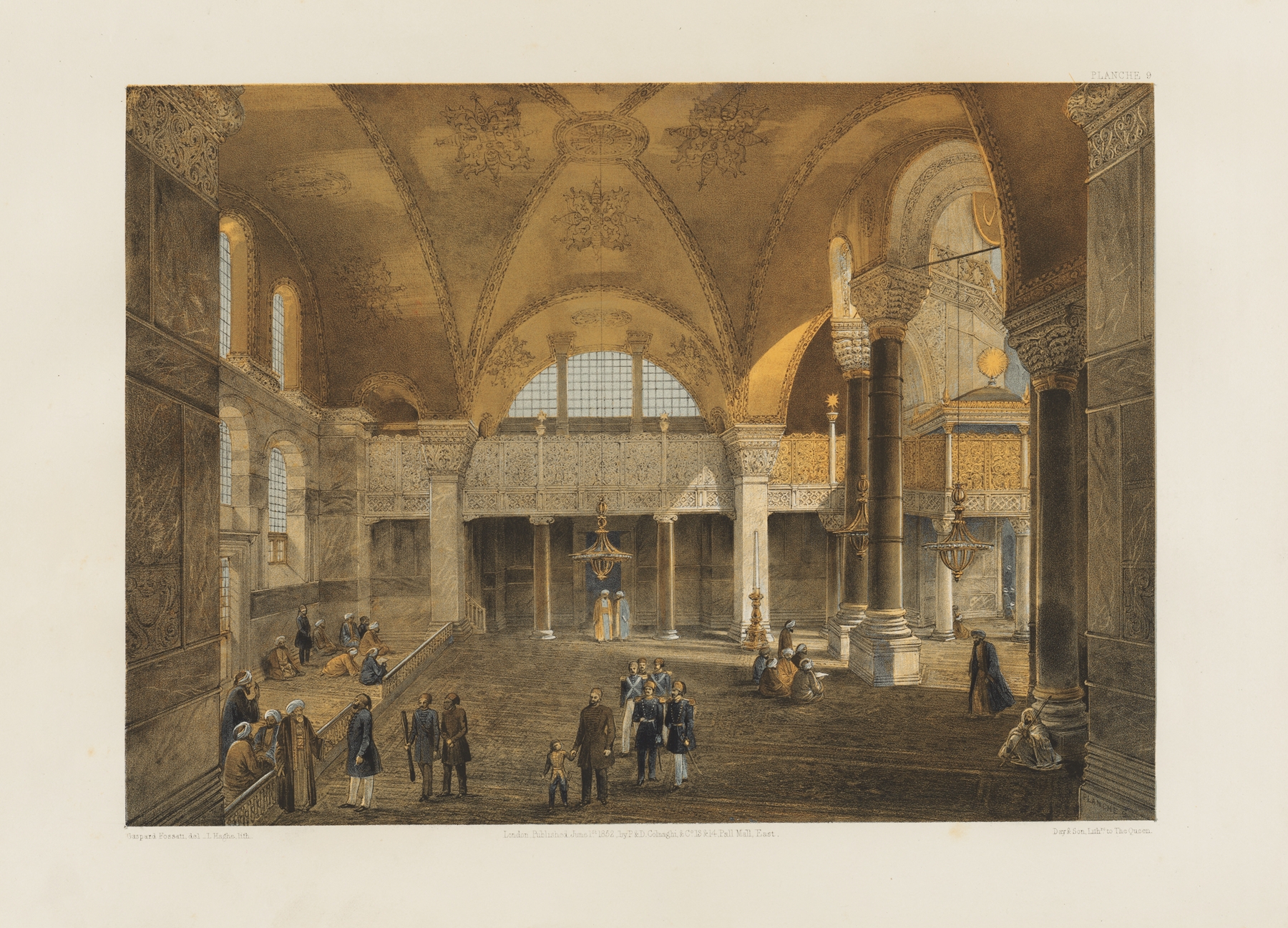
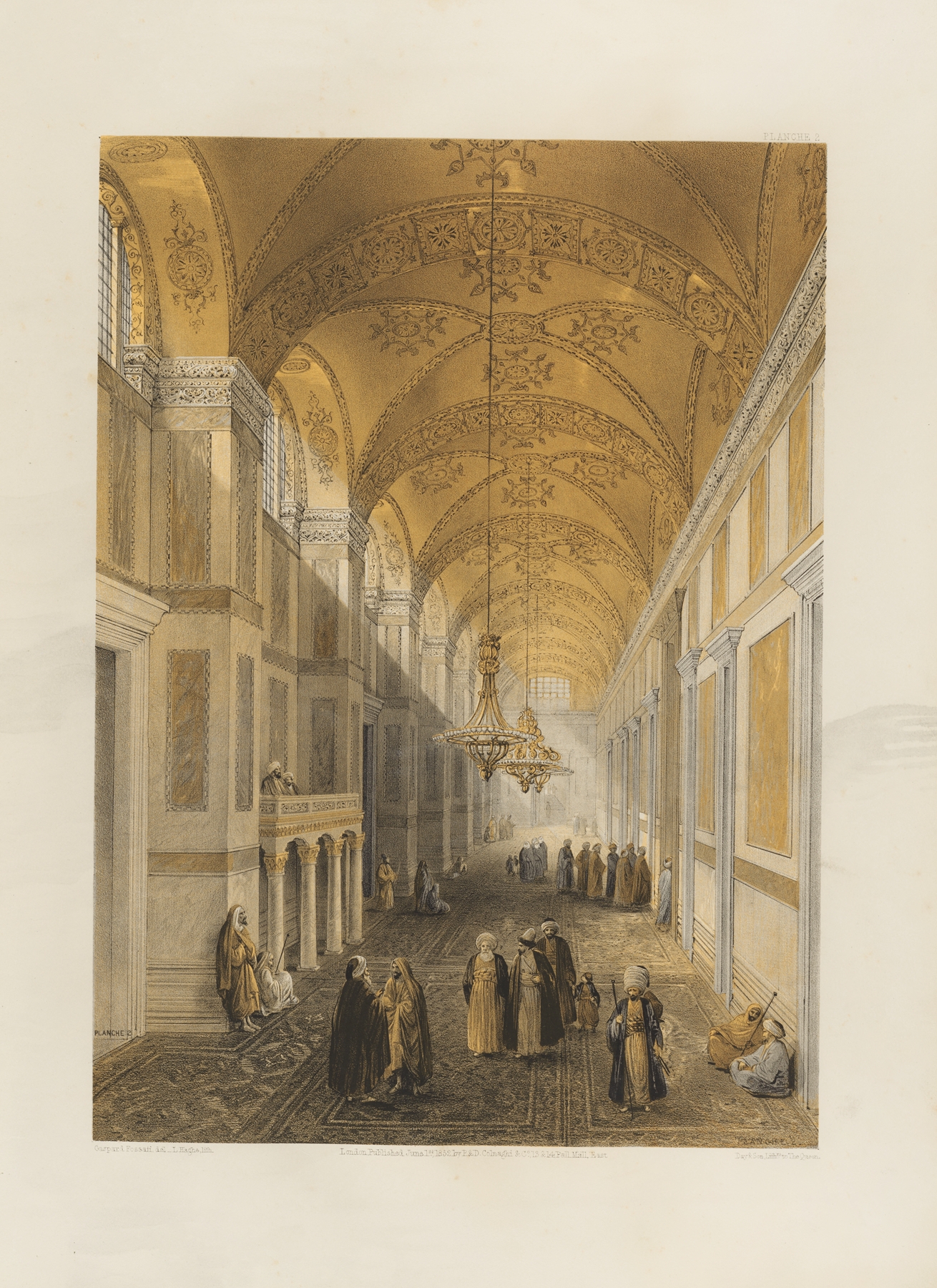
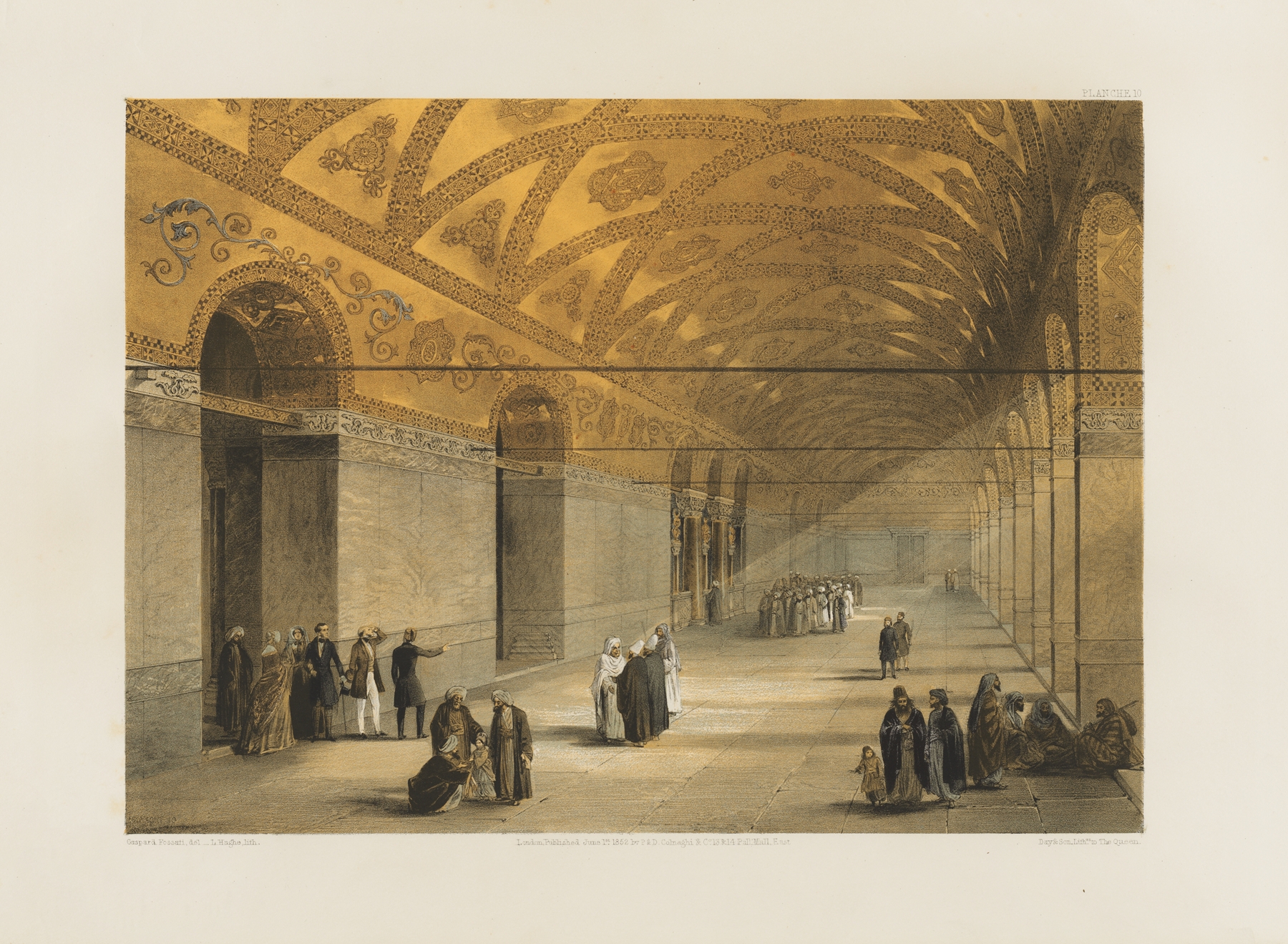
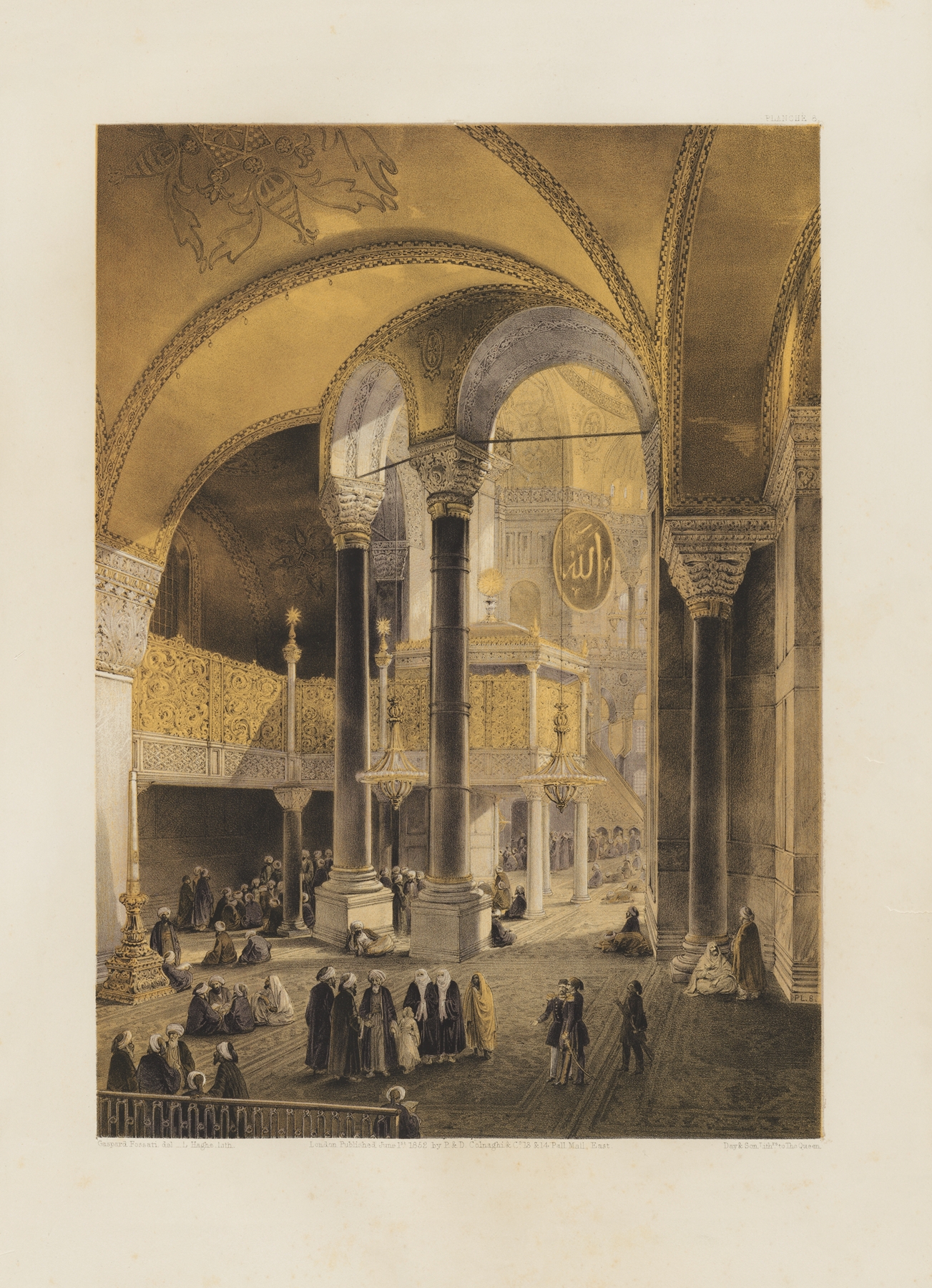
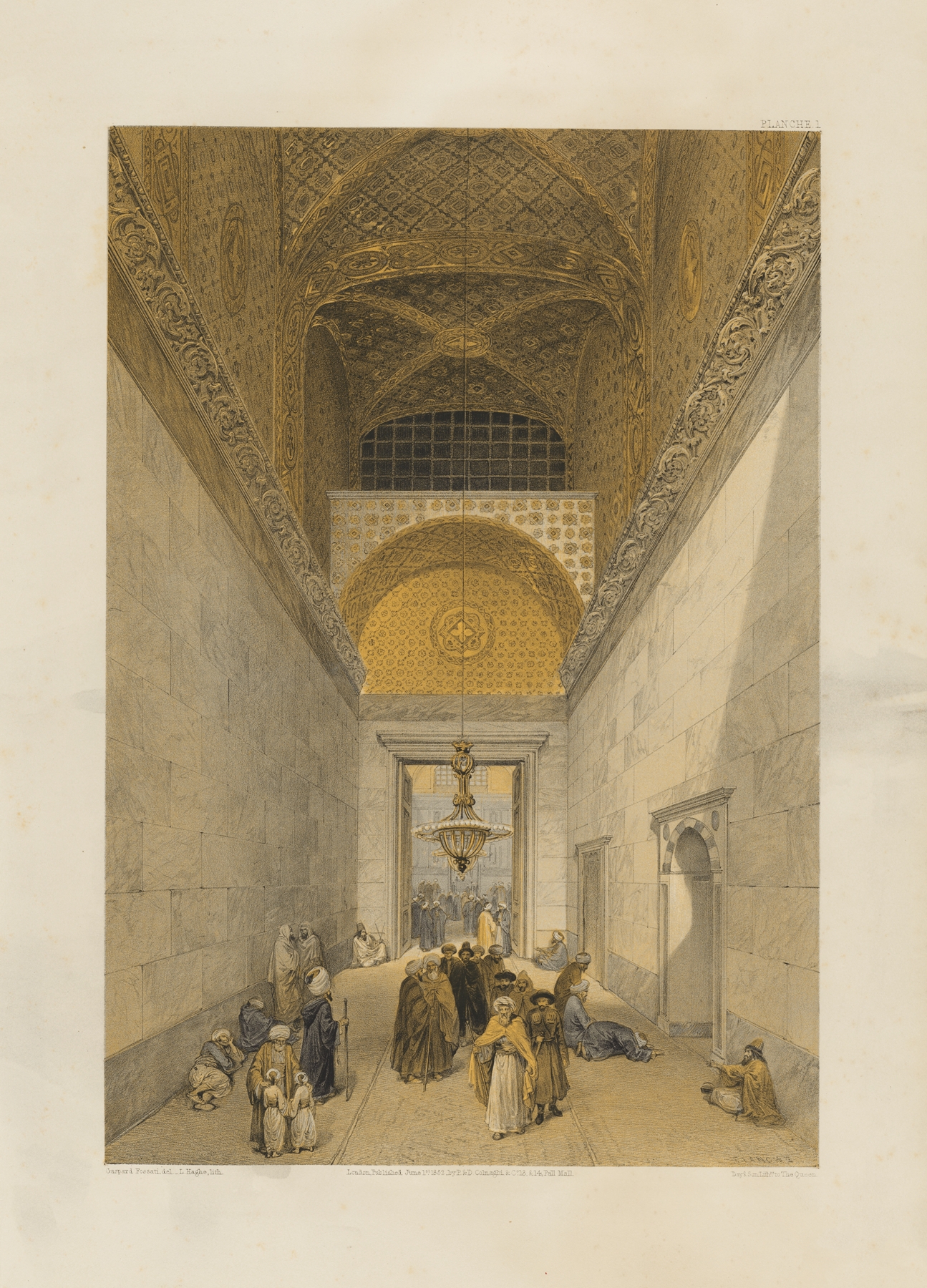
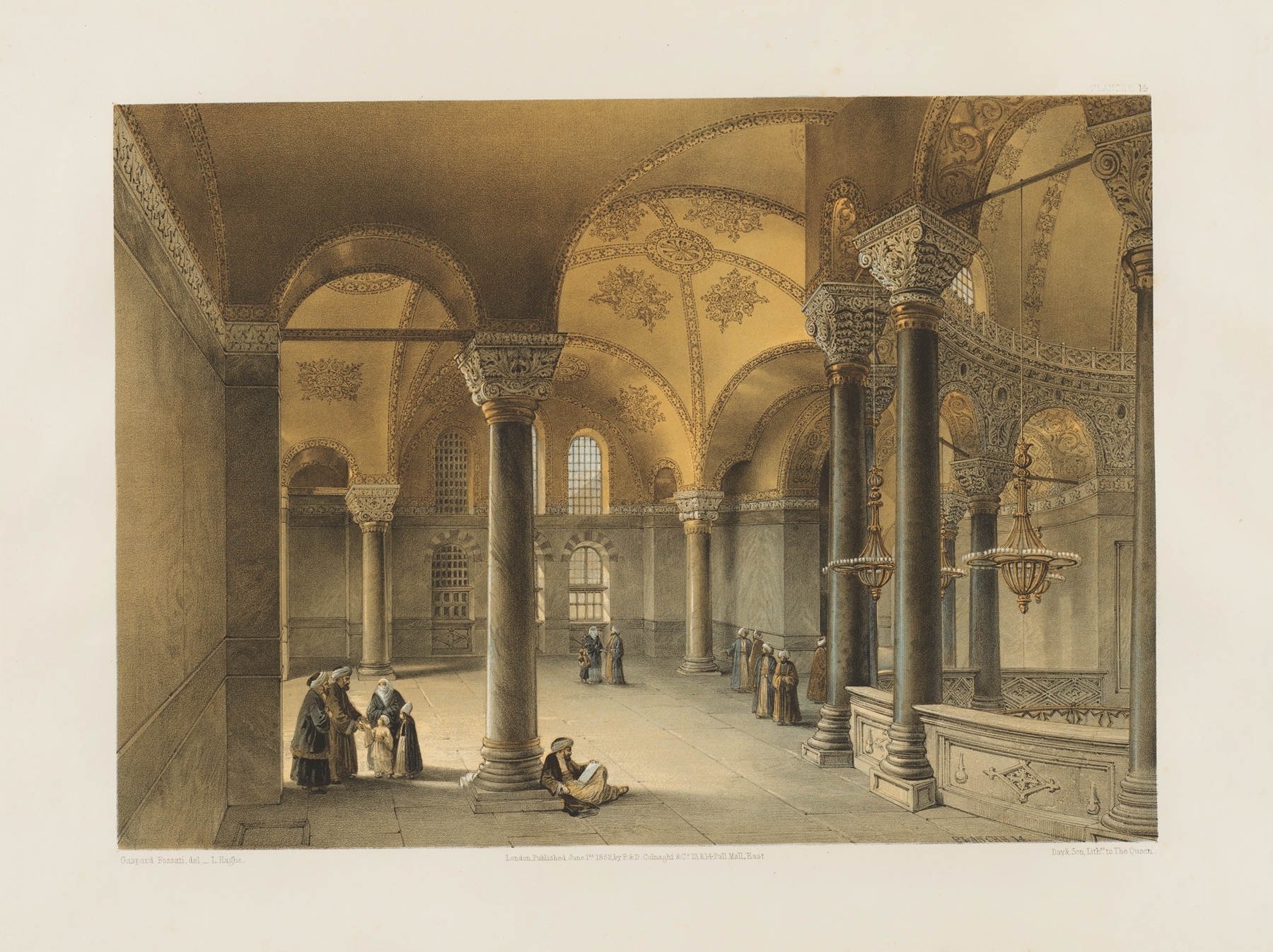
Aya Sofia, Constantinople; as recently restored by order of H. M. the sultan Abdul-Medjid Pl.15 — History & Analysis
Is this a mirror — or a memory? The interplay of light and shadow in this artwork invites reflection, transporting us to a time long past and yet undeniably present. Focus your gaze on the luminous dome of the Aya Sofia, where golden rays filter through intricately designed arches, illuminating the intricate mosaics that adorn the walls. Notice how Fossati skillfully captures the contrast between the radiant light and the cooler tones of the surrounding stone, drawing the viewer’s attention to the sacred ambiance of the structure.
The meticulous detail in each section speaks to a reverence for the past, while the clarity of the scene feels intimately immediate. Deeper meanings unfold as you consider the juxtaposition of ancient and modern. Fossati’s representation of the restored architecture serves as a testament to resilience, echoing the spirit of a city that has witnessed centuries of history. The light cascading through the windows does not merely illuminate; it symbolizes hope and renewal amidst the layers of time.
Each decorative element tells a story, inviting us to explore the dialogue between the sacred space and the viewer's own memories. In 1852, while residing in Constantinople, Gaspare Fossati embarked on this important commission during a period of significant restoration of the historic structure. At a time when the Ottoman Empire was grappling with modernization, Fossati found himself at the intersection of art and architectural preservation, documenting the splendor of a cultural icon now transformed under the Sultan Abdul-Medjid's order. This moment in his career not only highlighted Fossati's artistic prowess but also underscored the evolving narrative of a city steeped in history.